The St. James's Collection
The Galleries
Immerse yourself in Art at The St. James's Collection Galleries
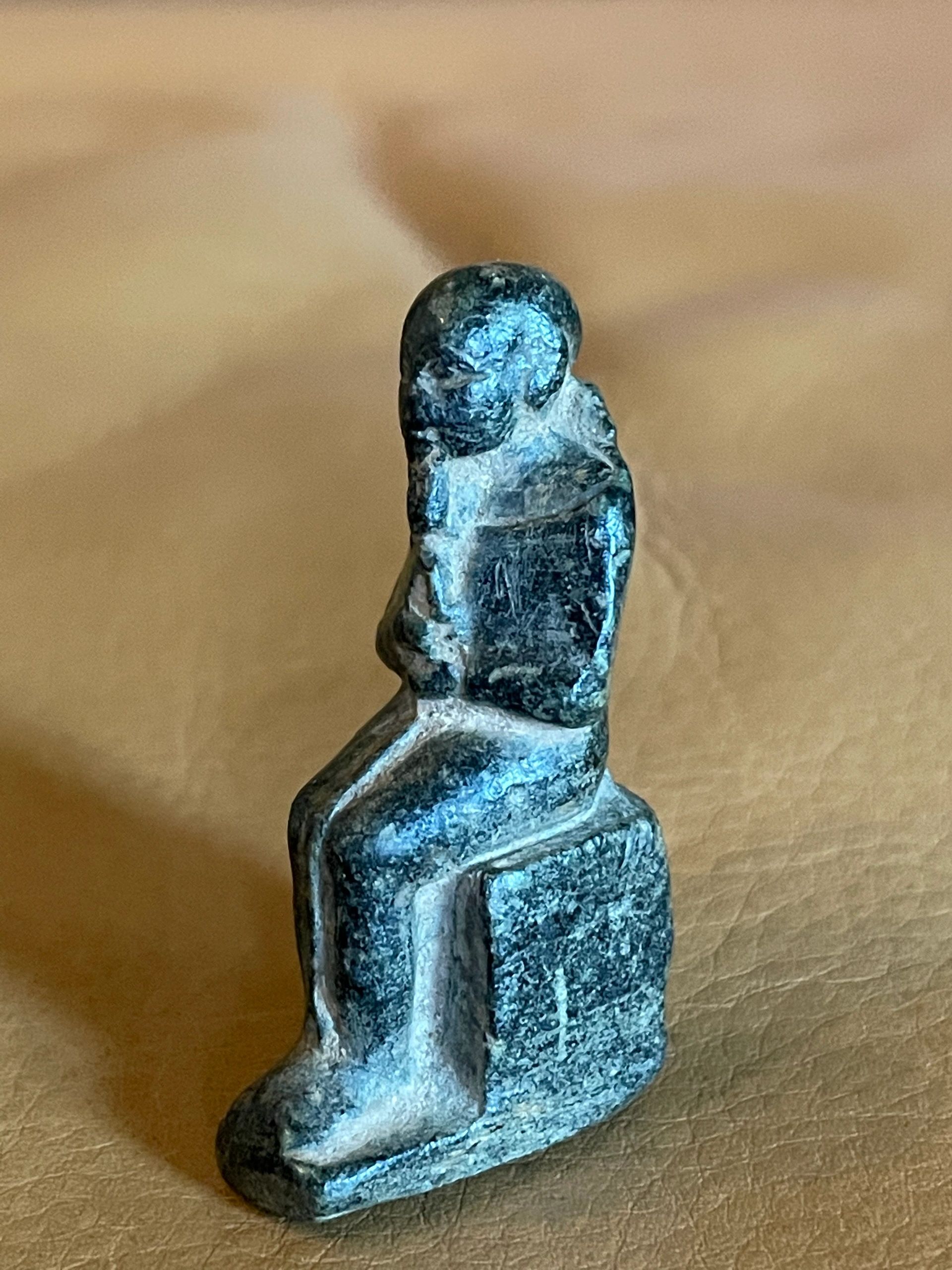
Ptah - the Ancient Egyptian Arch Deity. Black basalt, 6th Dynasty c.2250 BC
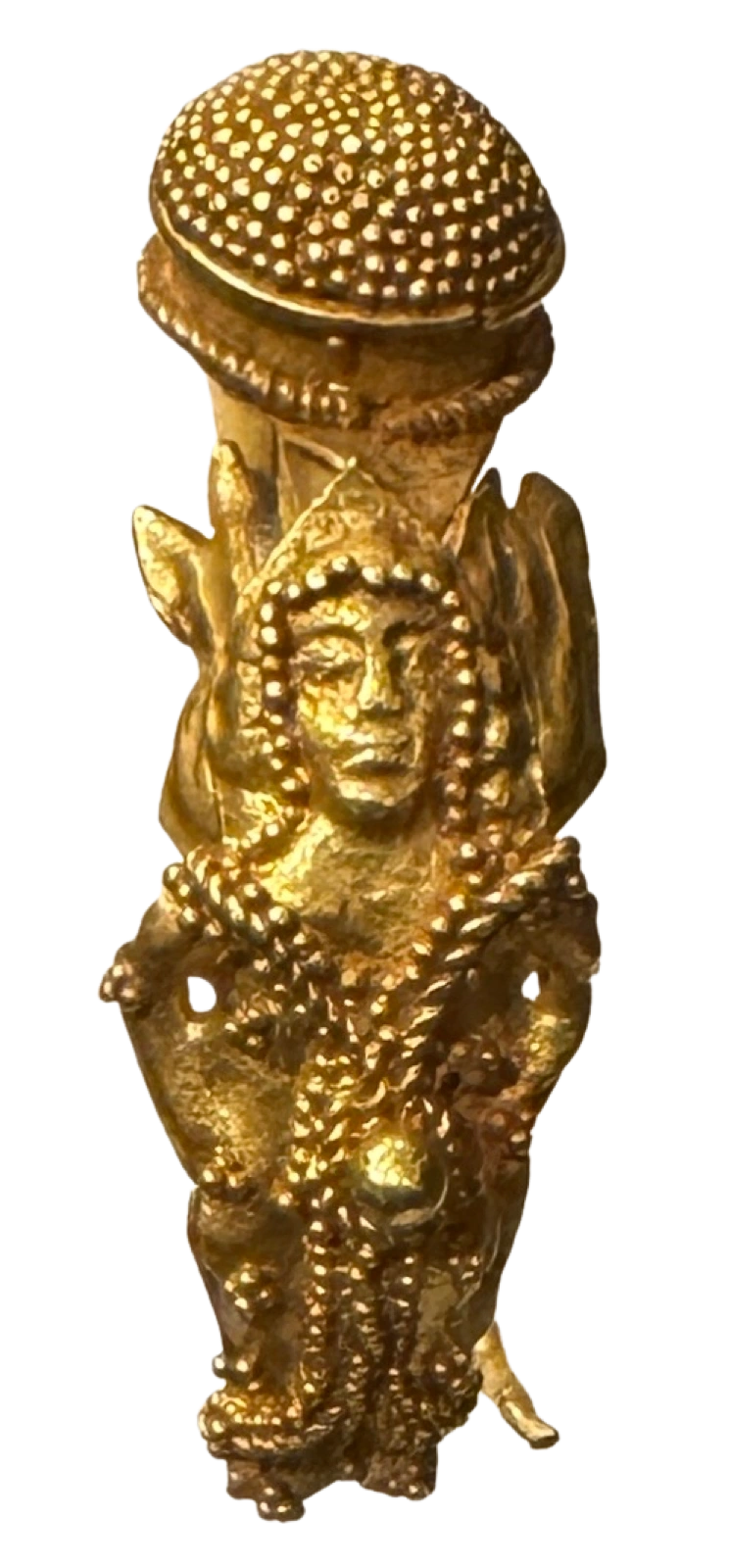
Etruscan gold earring. Perugia, 4th century BC.
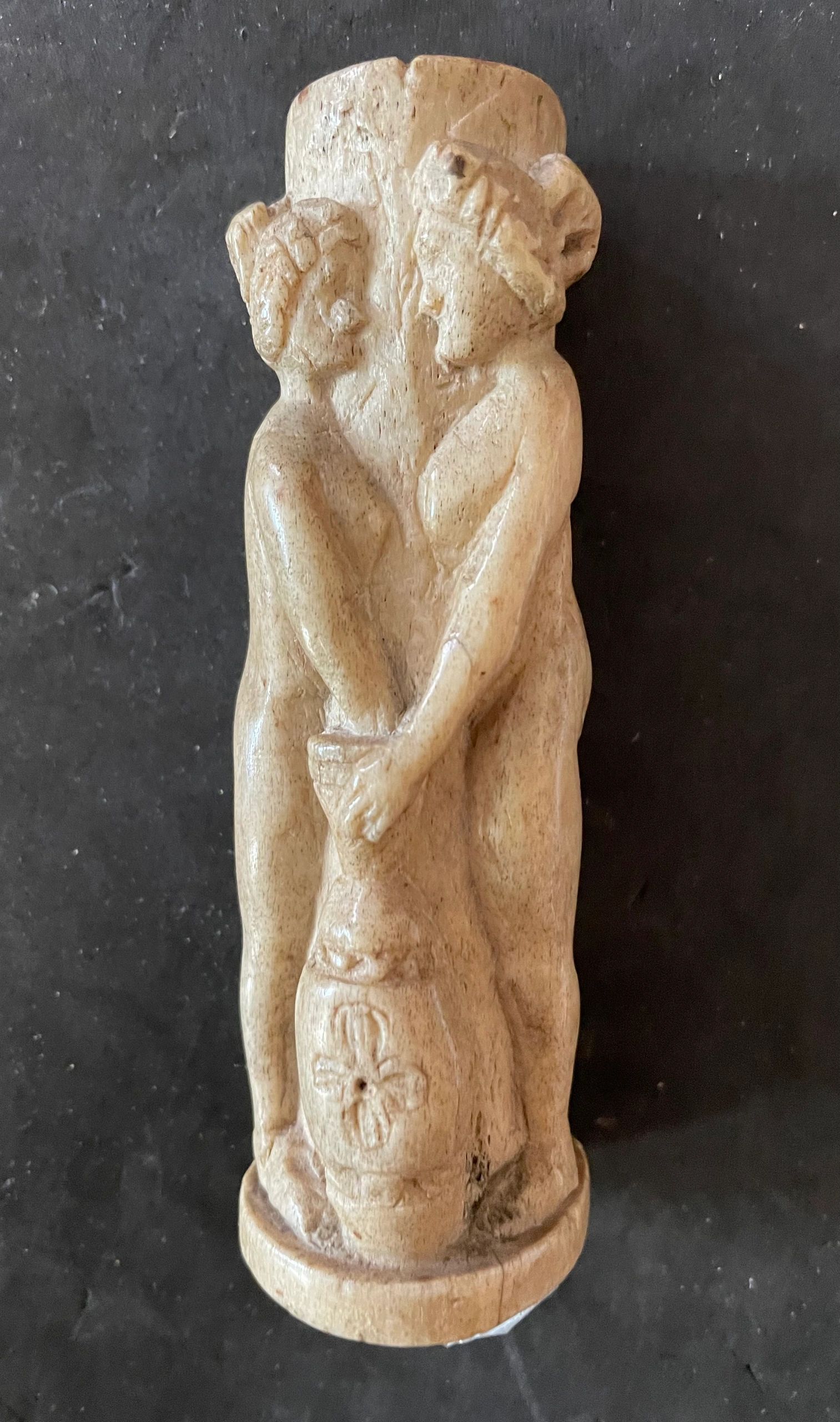
Early representation of a holy water stoup (font), flanked by two maidens. Note the Christian quatrefoil symbol. Anatolia, 5th century.
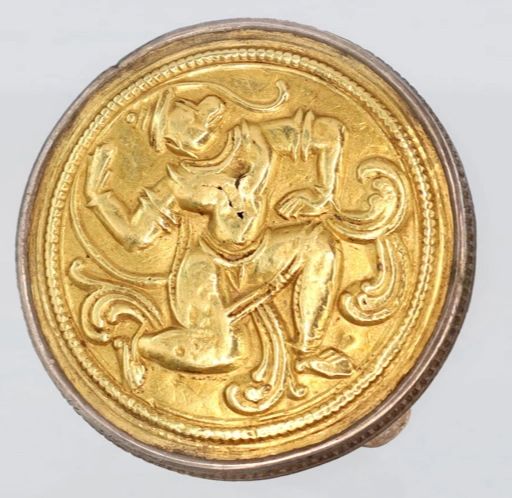
Gold medallion depicting Hanuman. Cham Kingdom, c.1000 AD.
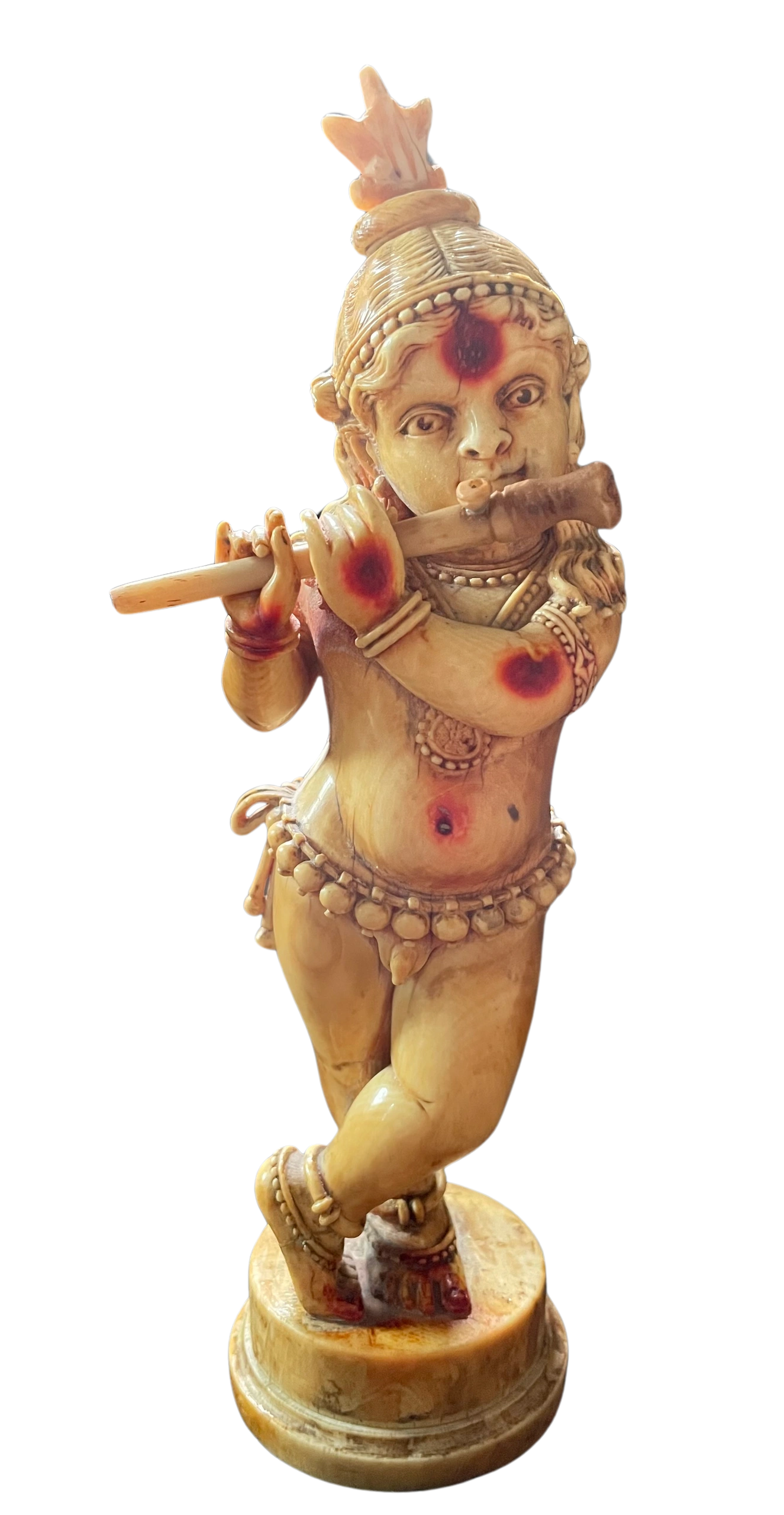
BalaKrishna Venugopala (Baby Krishna with flute), adorned with multiple Tilaks (blessings), Ivory. Madurai, Nayak era, 17th century.
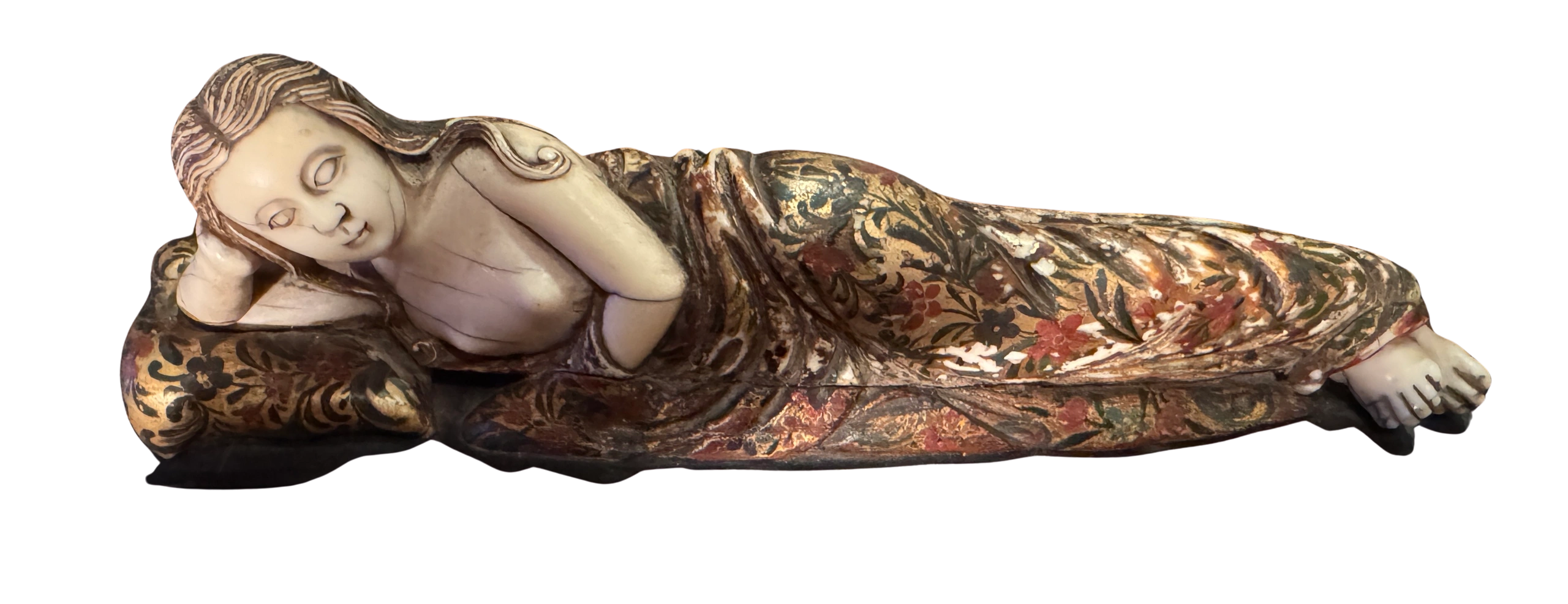
Ivory, wood & gesso sculpture depicting a recumbent St. Mary Magdelaine with estofado technique of gold & polychrome decoration. Sangley Artisan, Hispano Filipino c.1700.
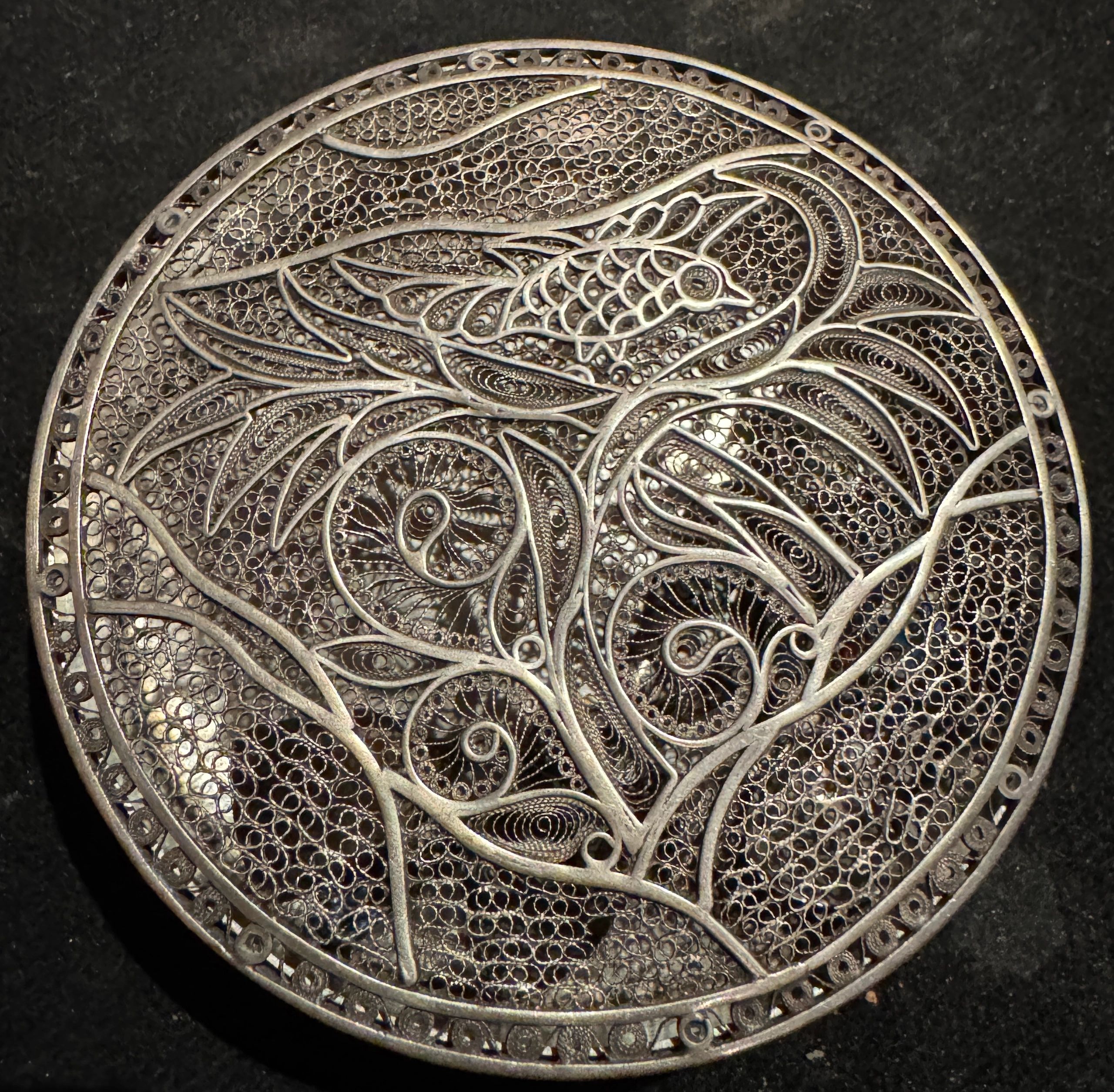
Filigree box, silver. Karimnagar, (Telangana) Deccan. India, c.1800
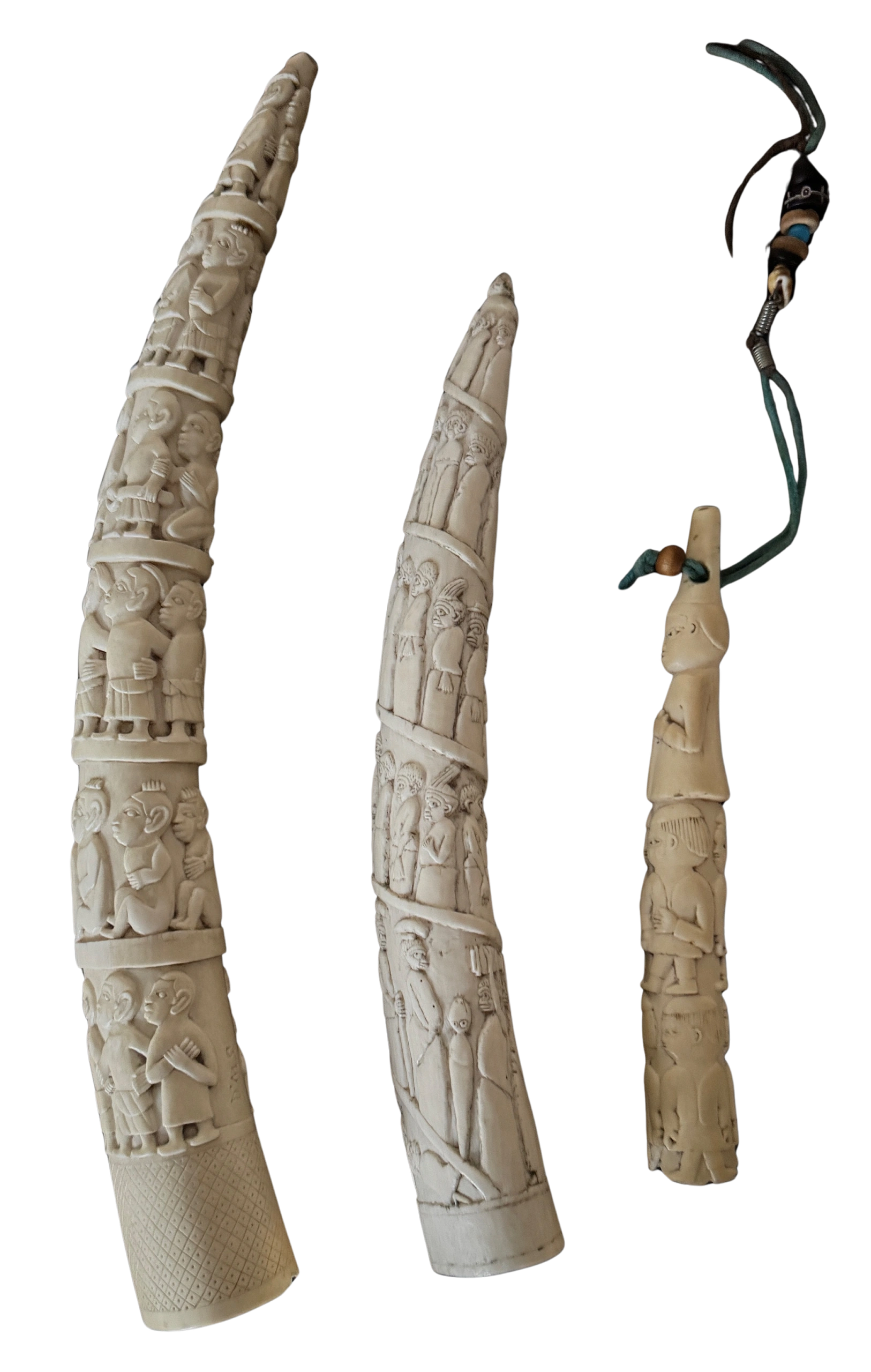
Figure/story tusks. Vili peoples, Loango c.1850
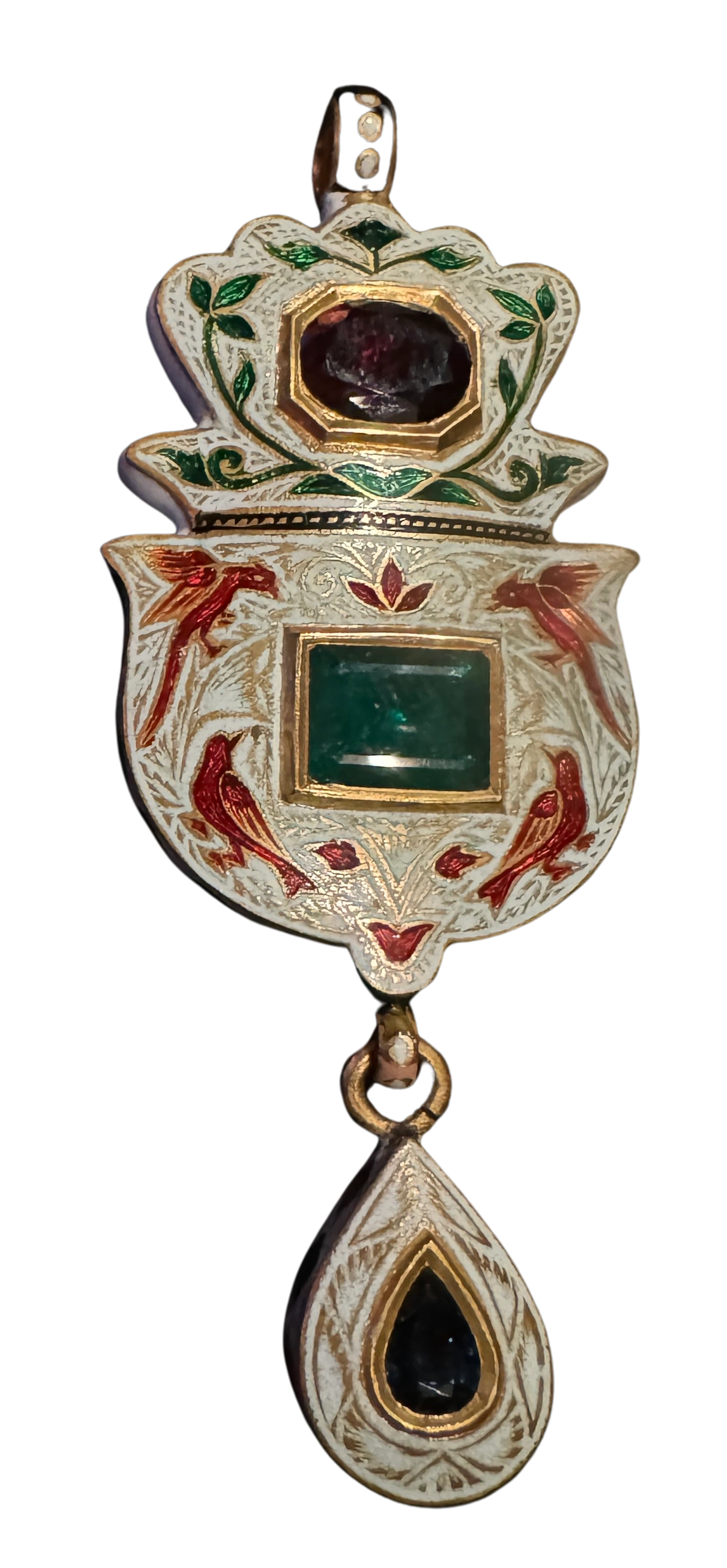
Safeda (White Meenakarii) & Kundam Meenakari enameled gold Maang Tikka set with a ruby, an emerald and a sapphire. Jaipur or Delhi.
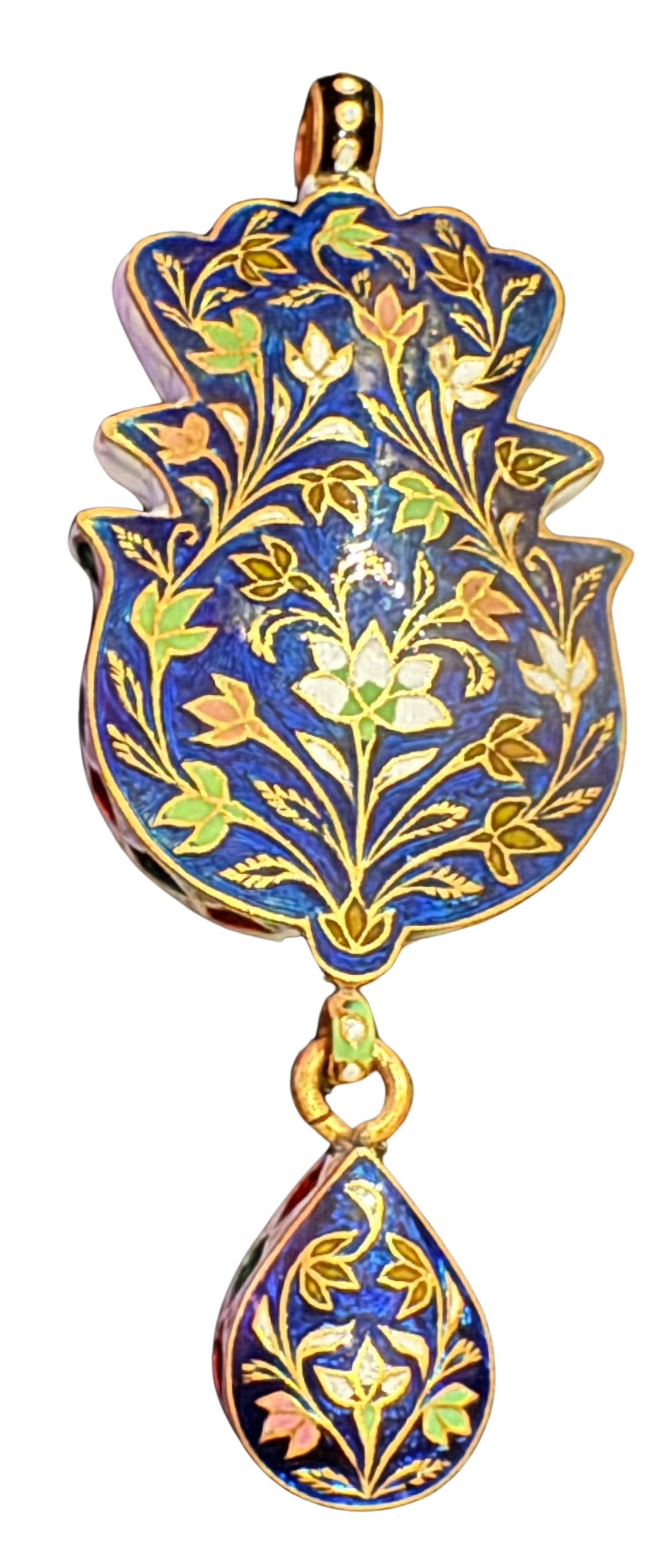
Reverse of Maang Tikka
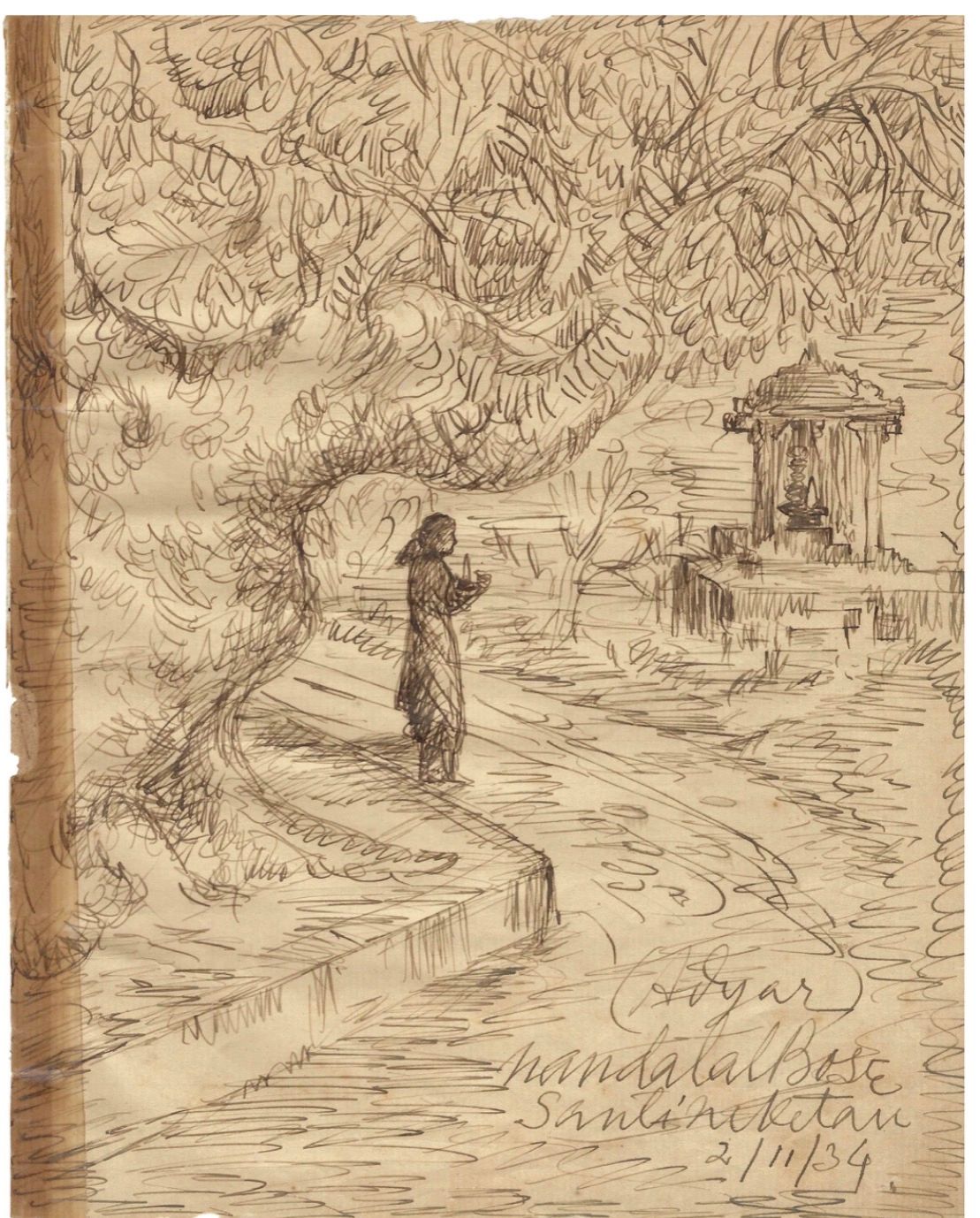
Shrimati Rukmini Devi - puja at Kalakshetra, November 1934. Nandalal Bose, ink on paper.

Russian agate Kovsch mounted in gold set with precious stones
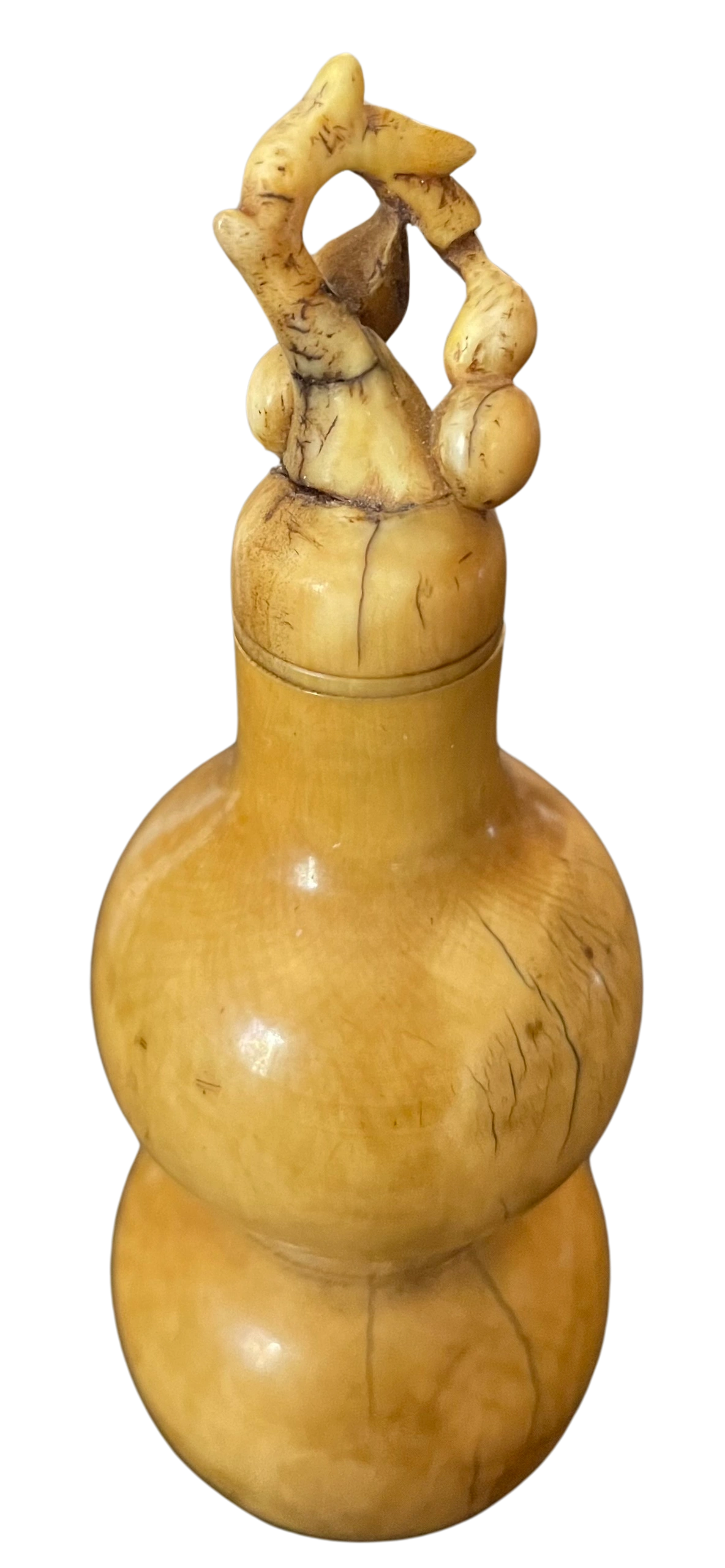
Ivory medicine or snuff bottle, in hulu form, the double gourd completely hollowed out. Ming dynasty
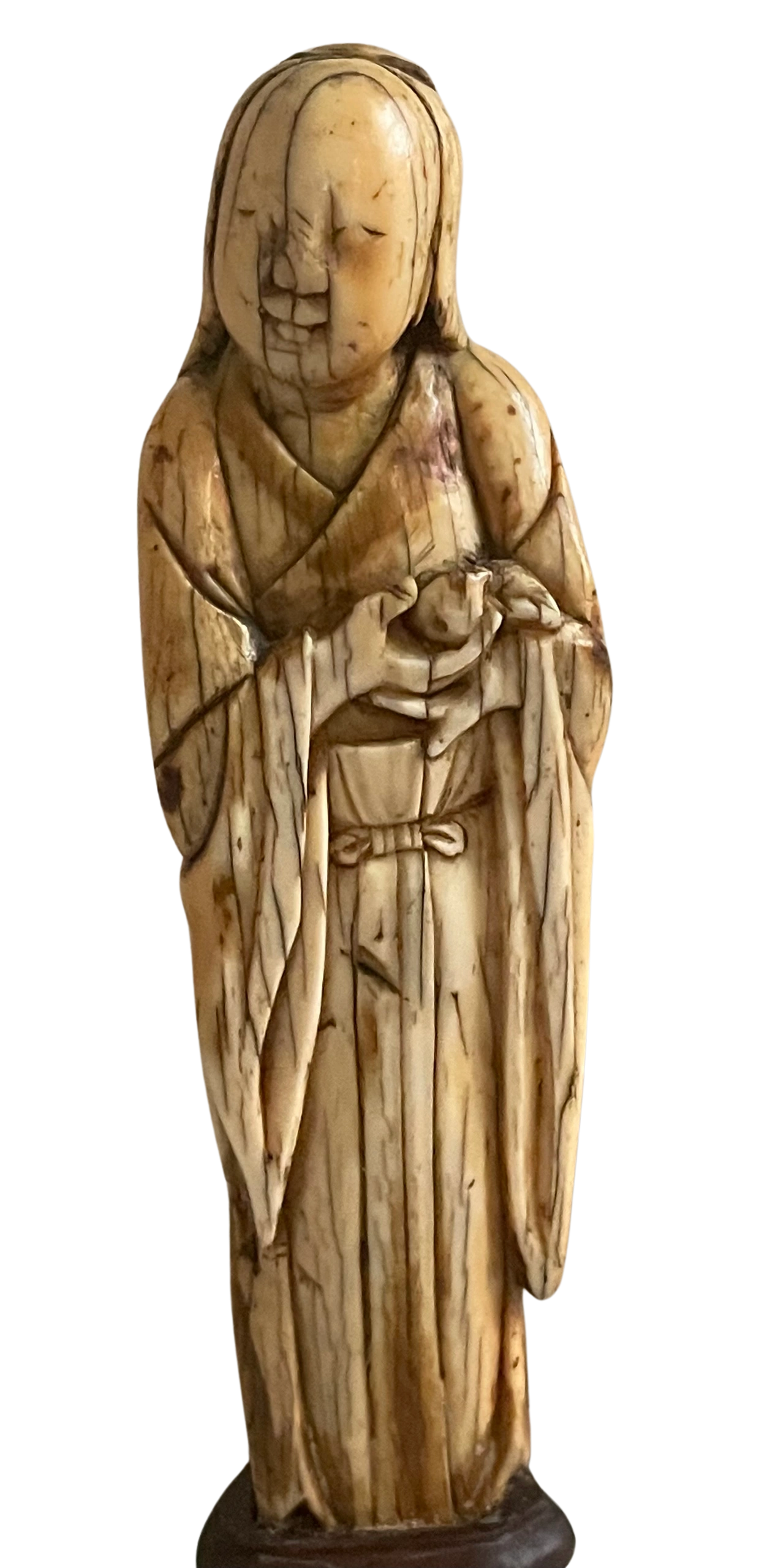
Xi Wang Mu - Chinese Goddess of the West with the Peaches of Immortality. Ming dynasty
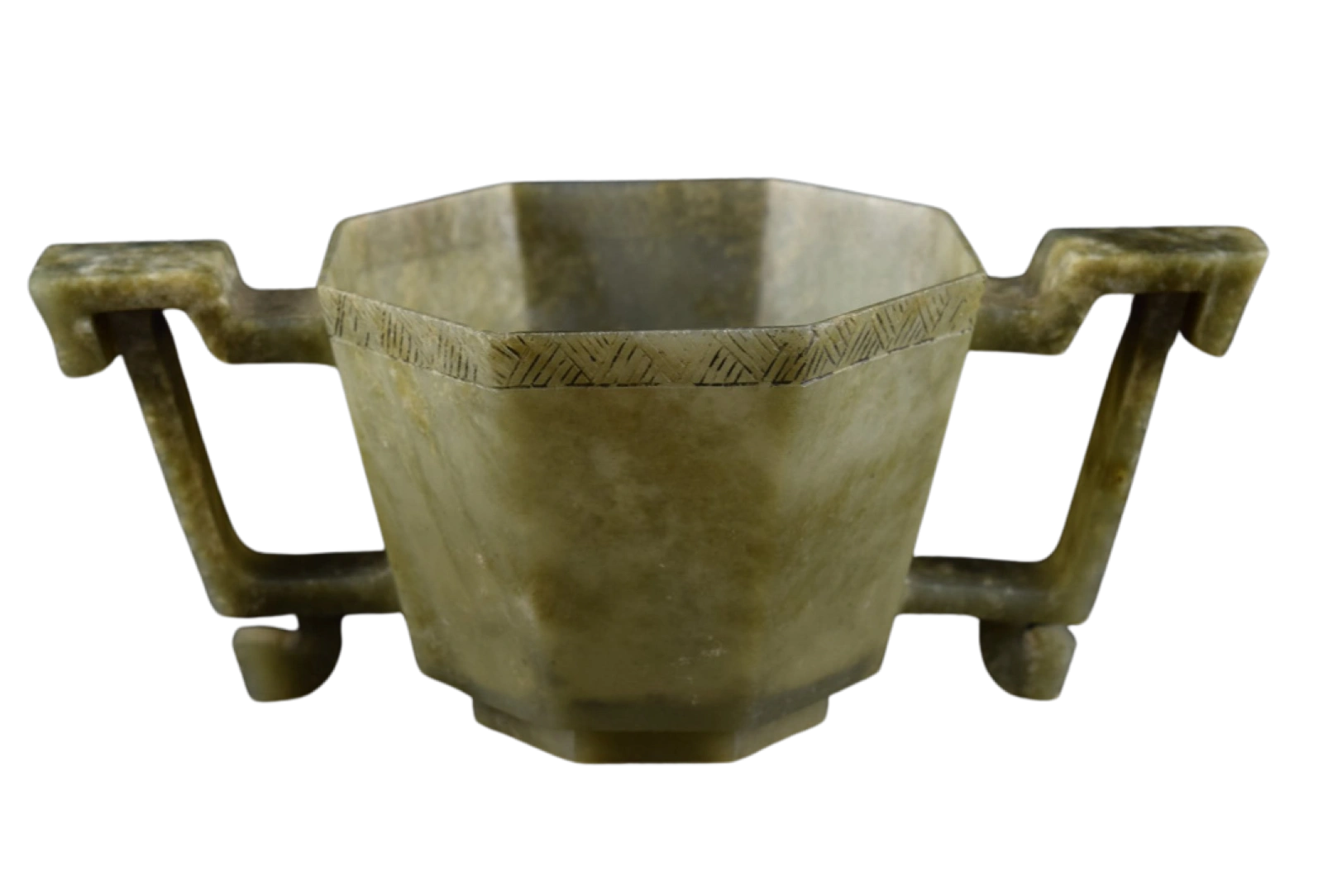
Jade libation cup in Mughal style. Ming dynasty,
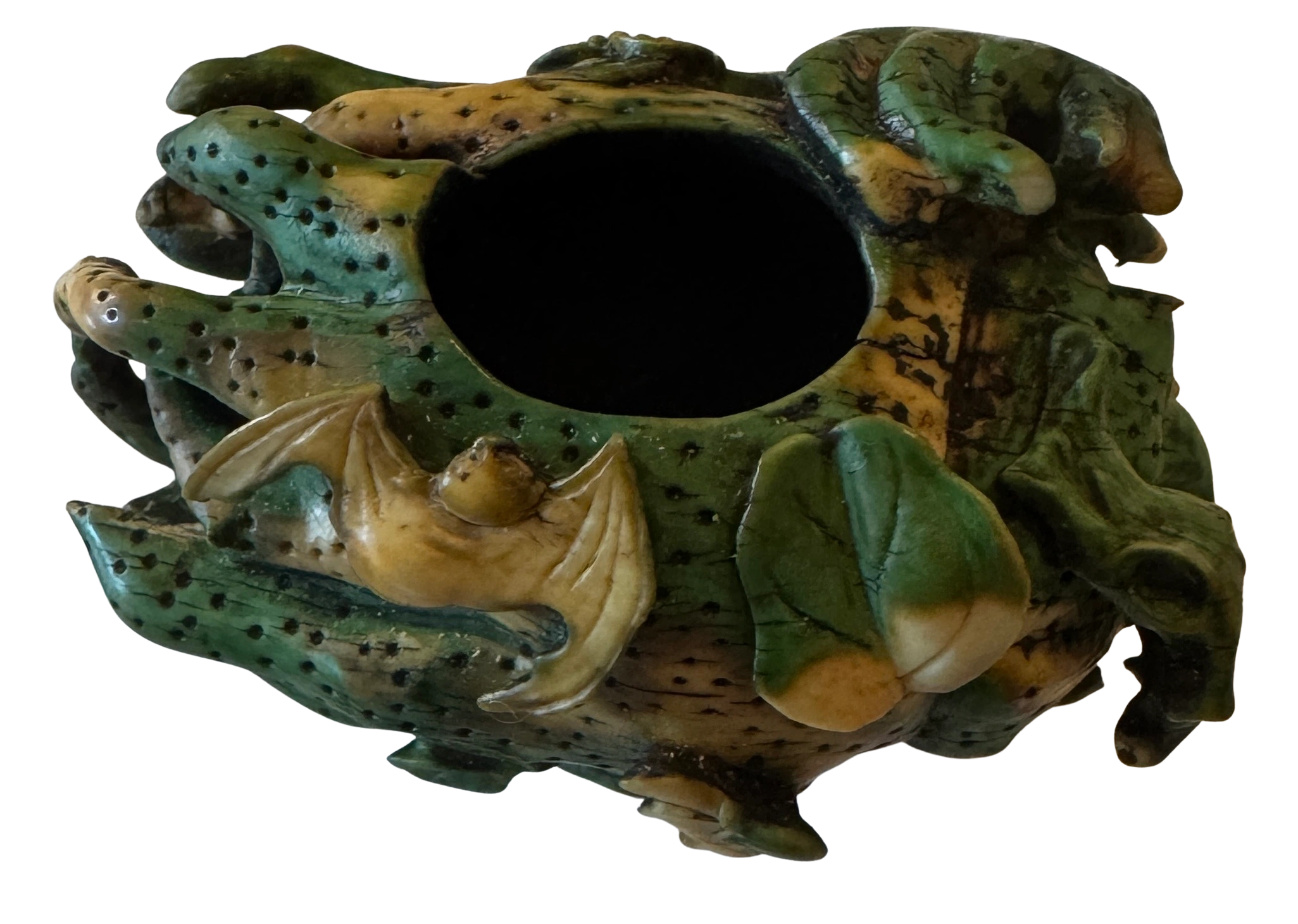
Stained ivory brush washer carved as a Buddha’s Hand plant. Qing dynasty.
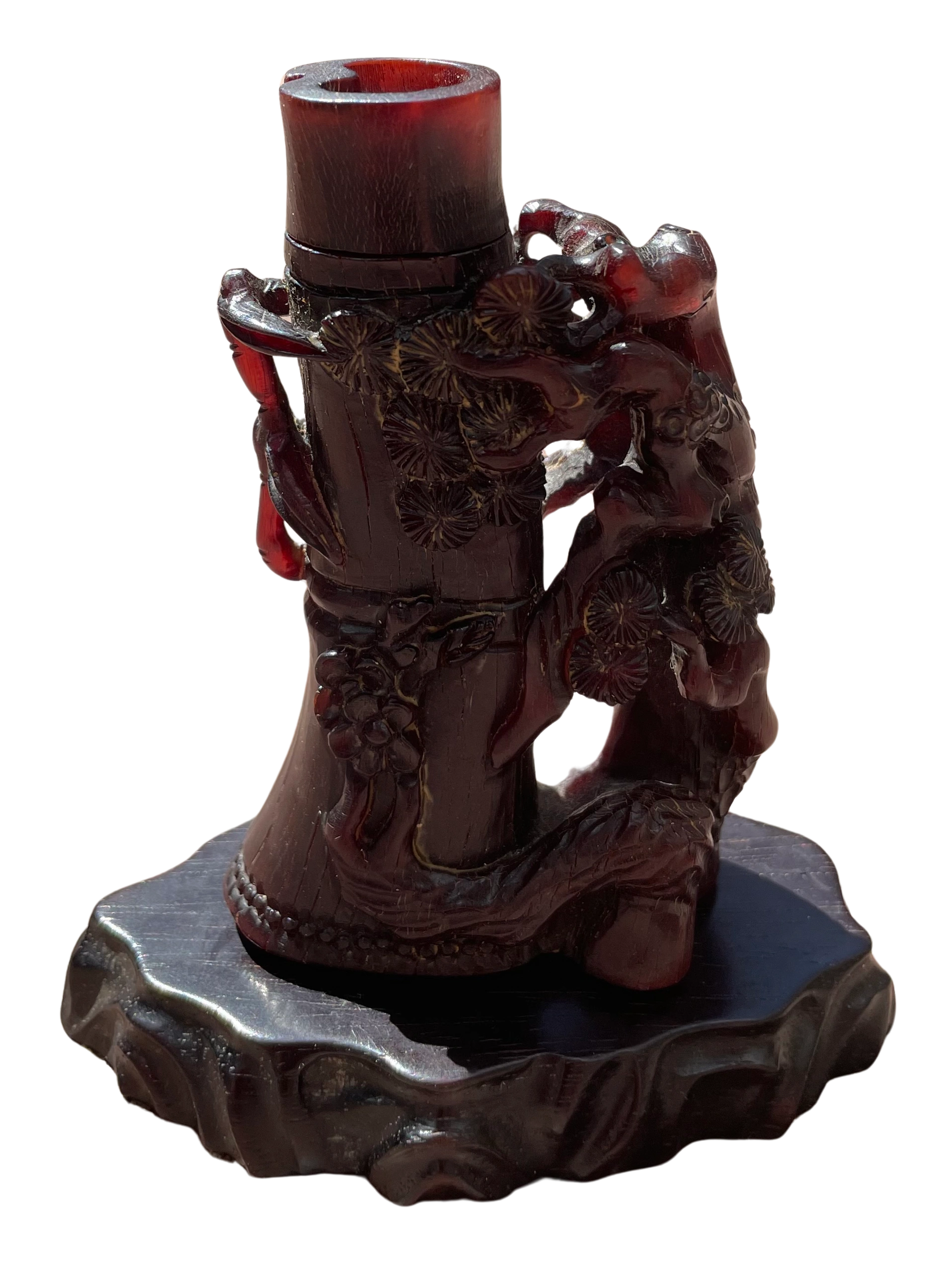
Rhinocerous horn snuff or medicine bottle modeled as a burled tree trunk with plum blossom clusters. Qing dynasty.
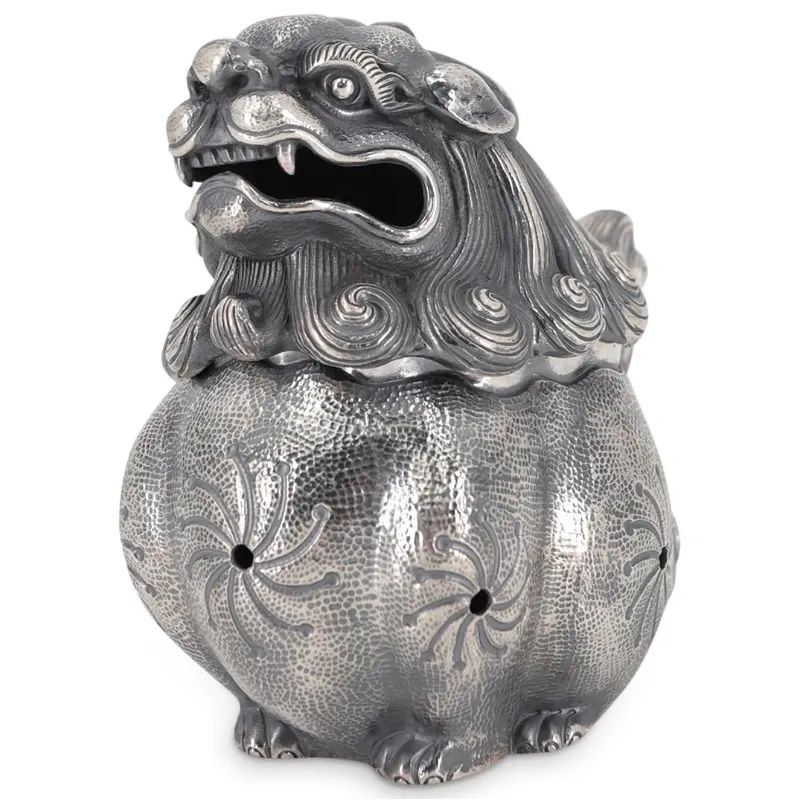
Pure silver incense burner in the form of a Shishi lion by the Master silversmith Wen Wei Ji, c.1885.
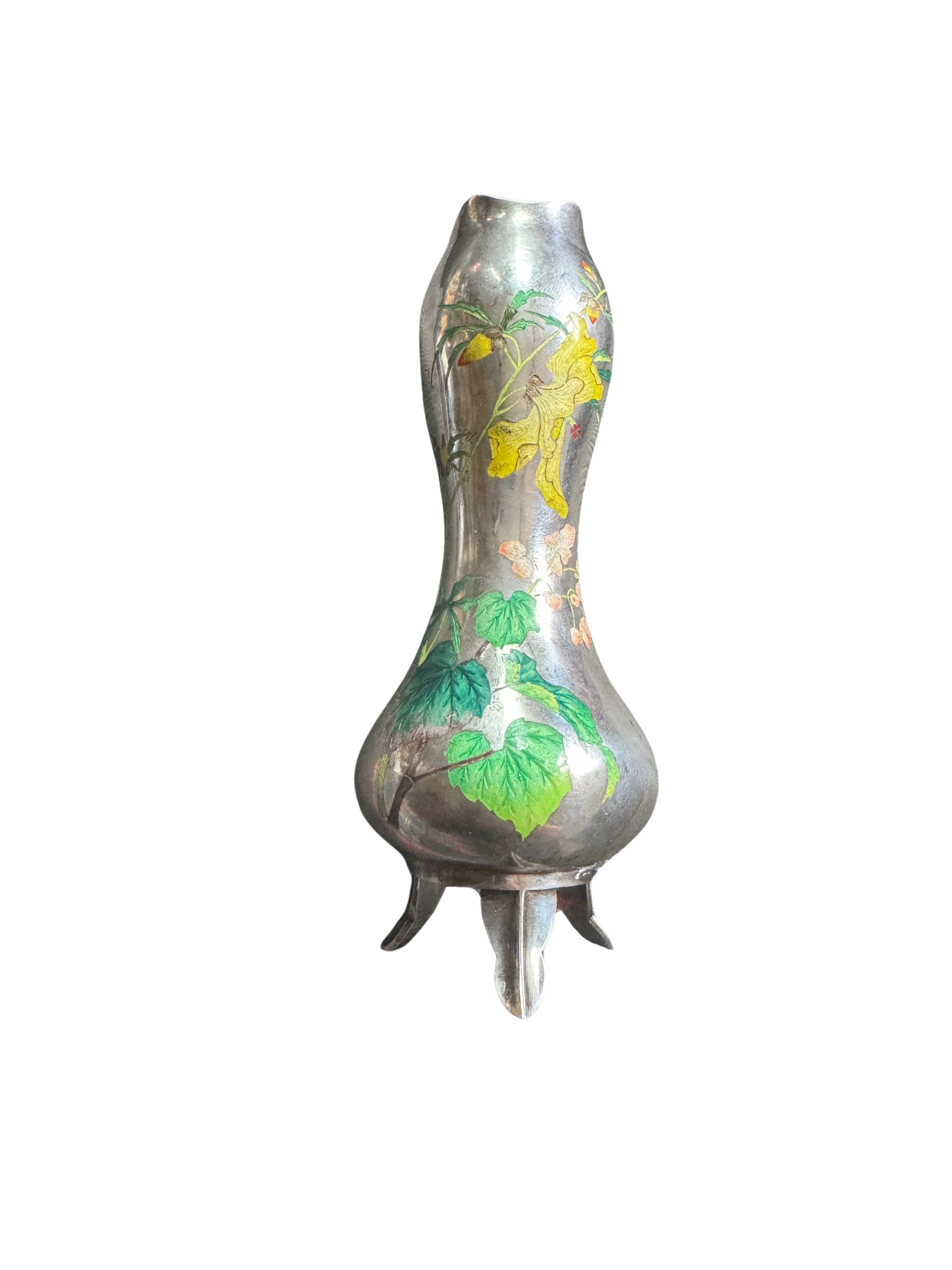
Silver gourd vase with floral champleve enamel. Bao Huang Lou, Beijing c.1905.

Russian agate Kovsch mounted in gold set with precious stones
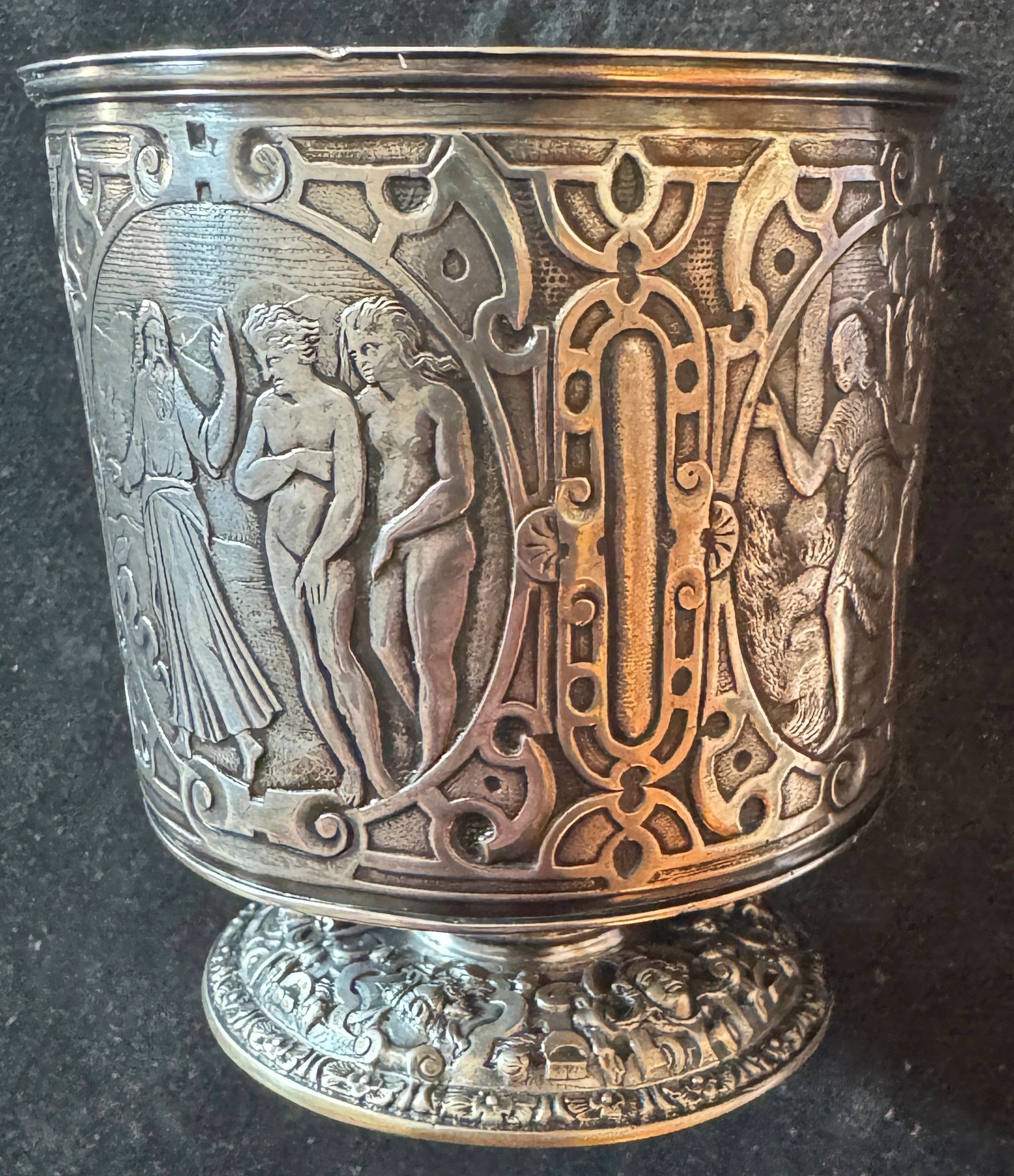
Plateresque style silver beaker (10 dineros purity with gold content) decorated with scenes from Genesis. Hispanic silverwork, c.1565.
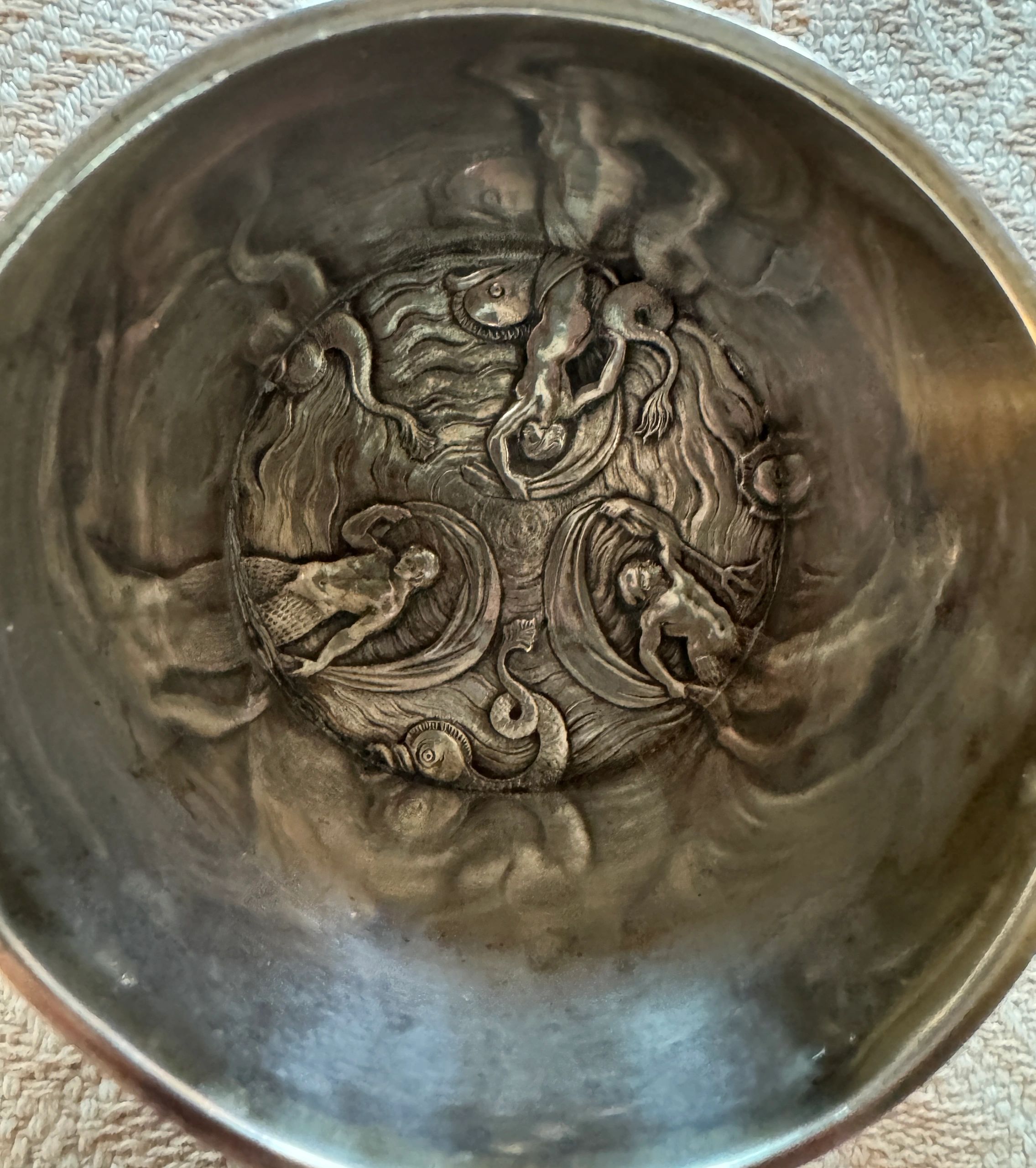
Interior of Hispanic silver beaker - The Primordial beginning…
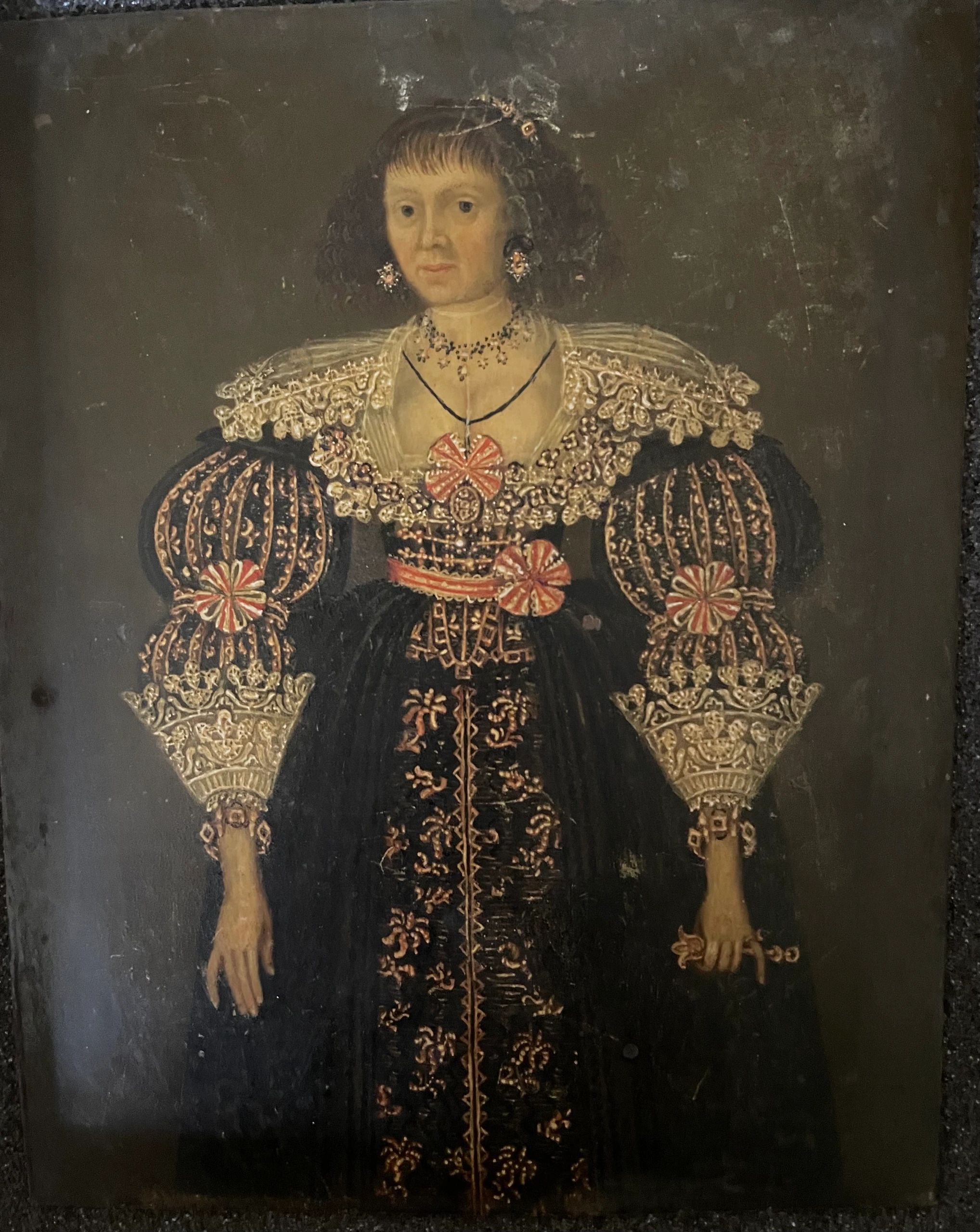
A high fashion lady of the Court wearing a baroque bodice with virago style sleeves. Oil on copper, Iberia c.1630. Recognize this lady? If so, kindly inform us.
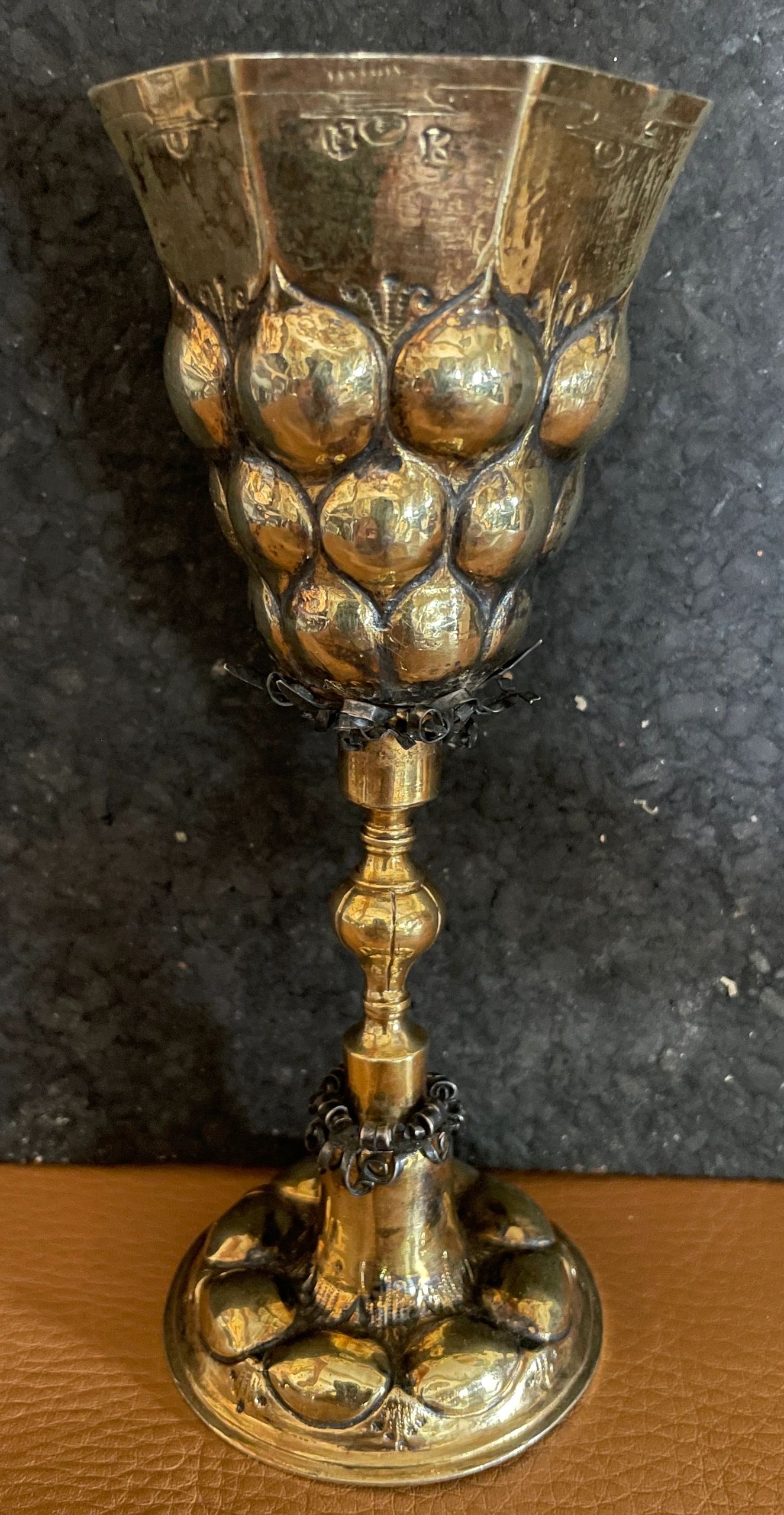
Silver parcel gilt traubenpokal (columbine grape cup) in buckelkopal form. Nuremberg Goldsmith’s Guild Meisterwerk. Master monogram KL, Nuremberg c.1690.
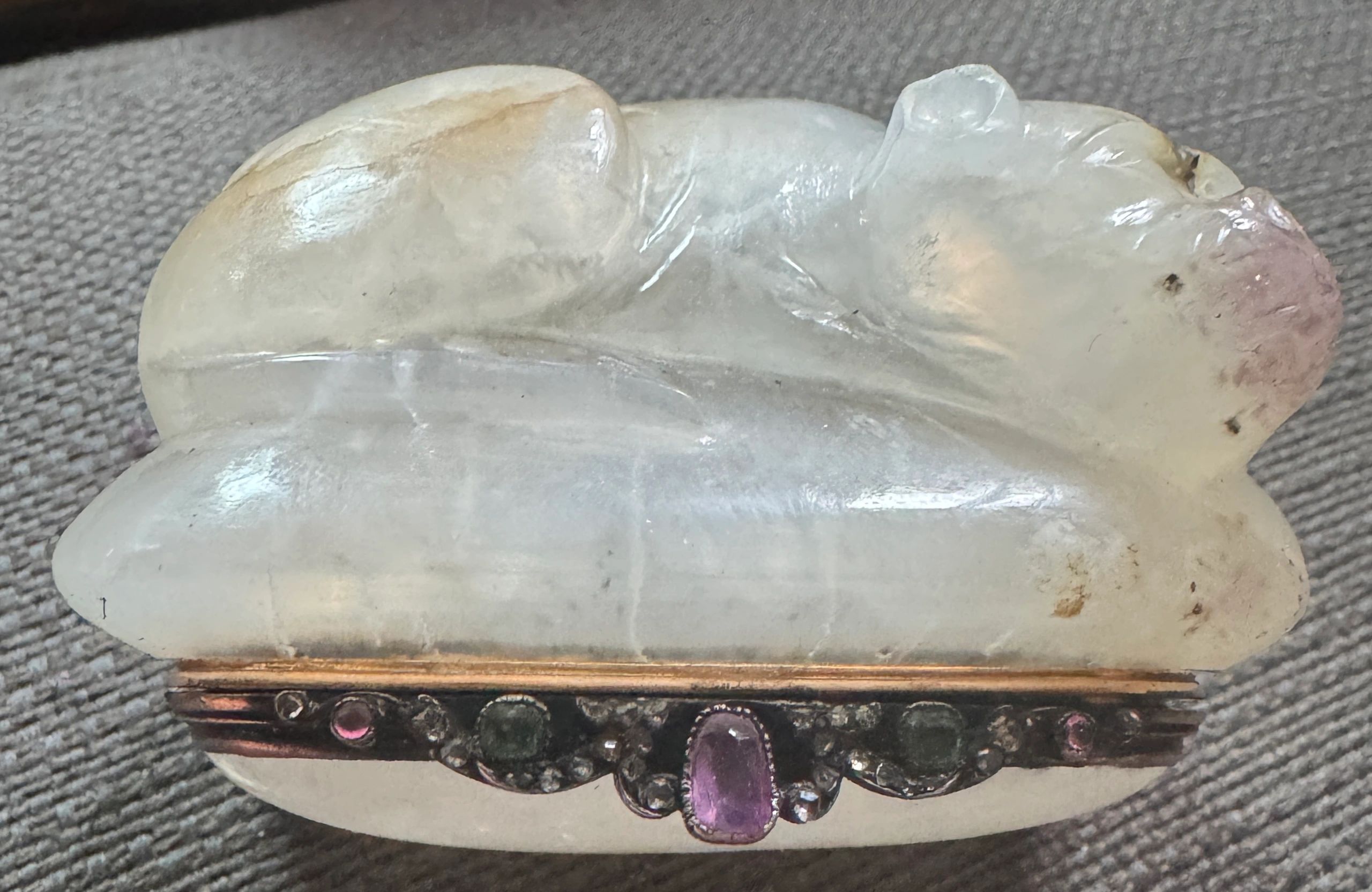
Amethystine quartz snuff box mounted in gold & set with various gems, modeled in Kandler Meissen style as a pug. Likely a Mopsordern (“Order of the Pug”) box. Dresden, c.1750.
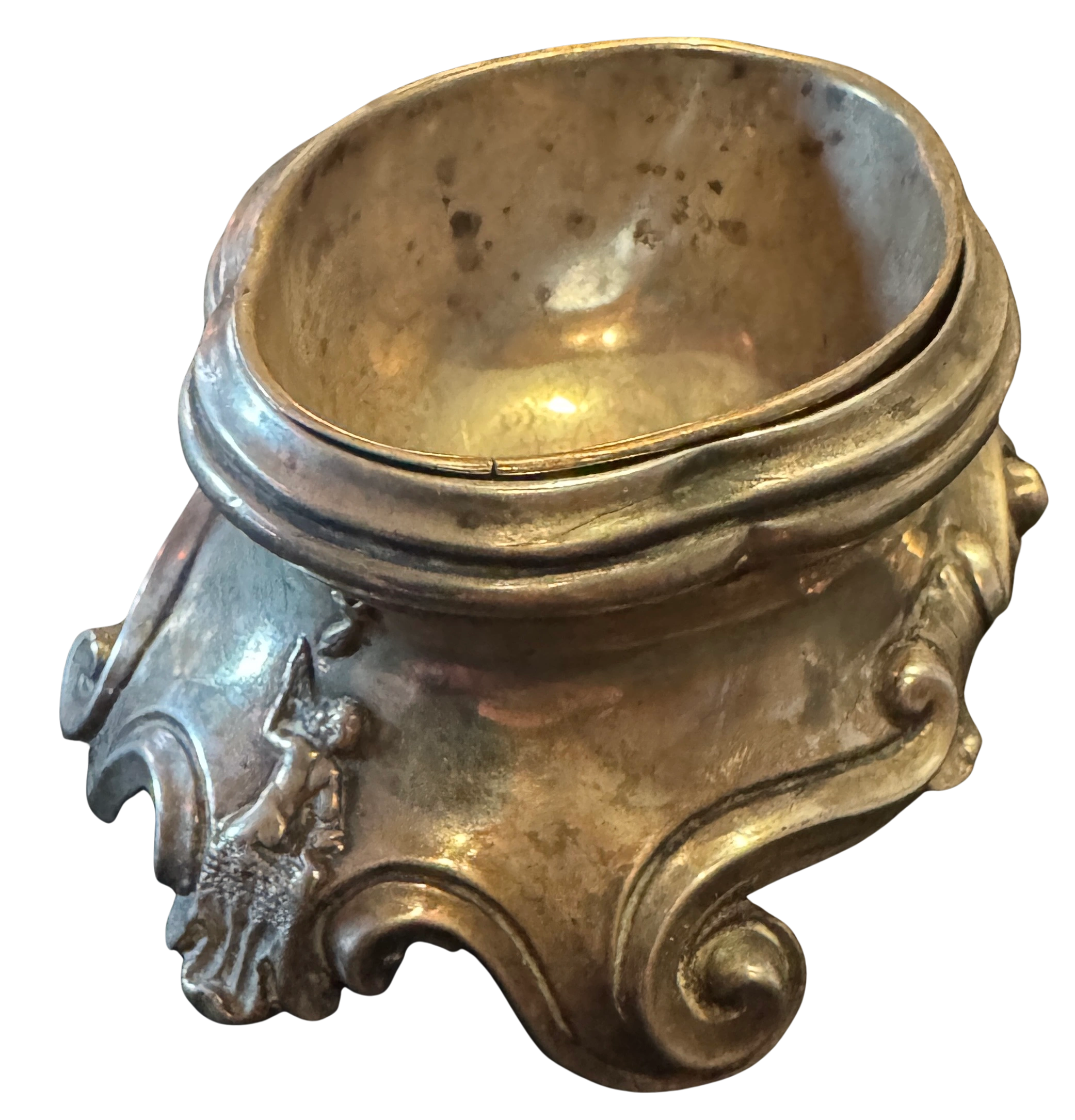
Papal States silver salt with depiction of Halley’s Comet. Rome, 1759.
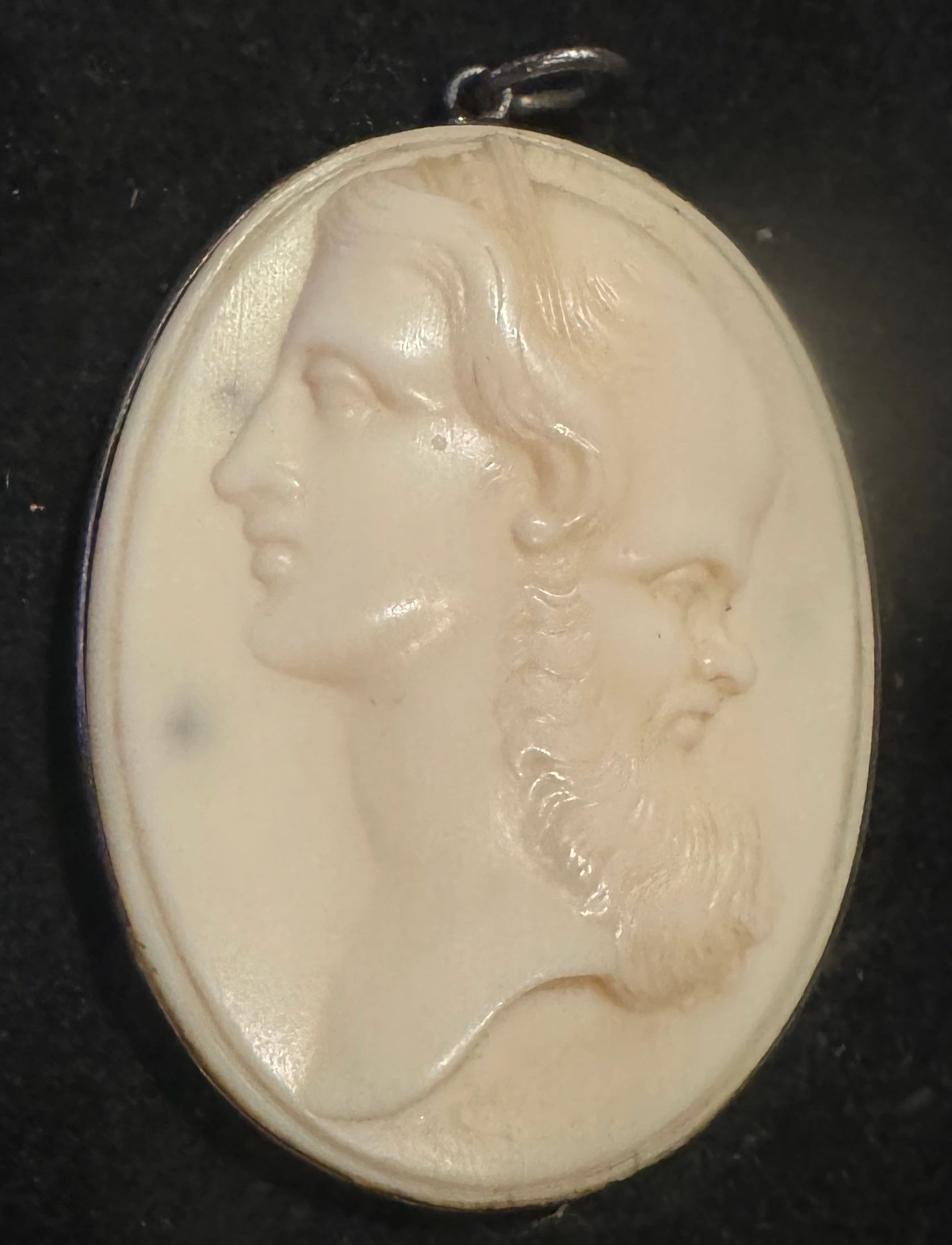
Ivory bas relief depicting Janus. Florence c.1760
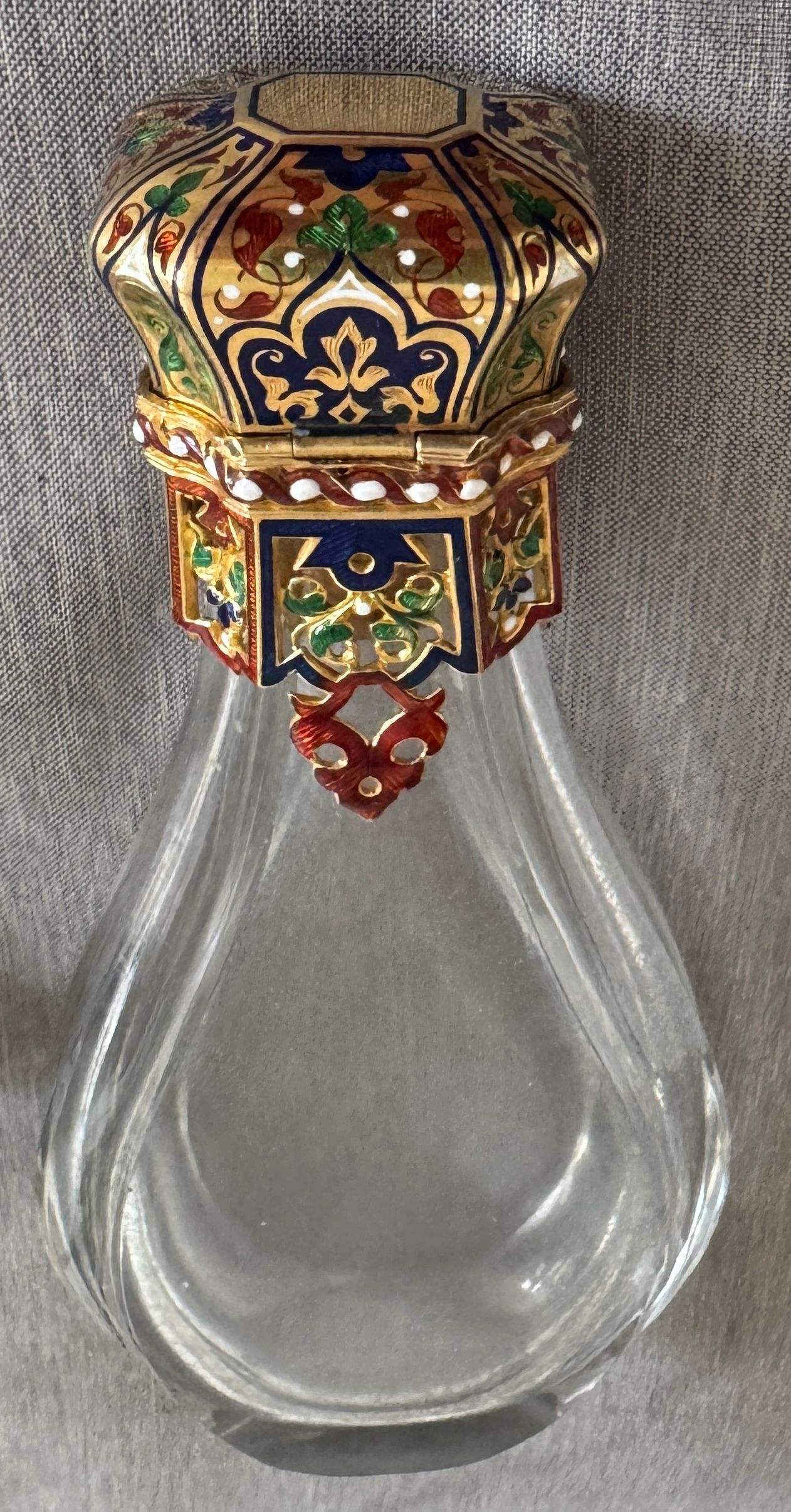
Crystal scent bottle with champleve enameled gold closure and taille d’epargne enameled stopper. Swiss c.1820
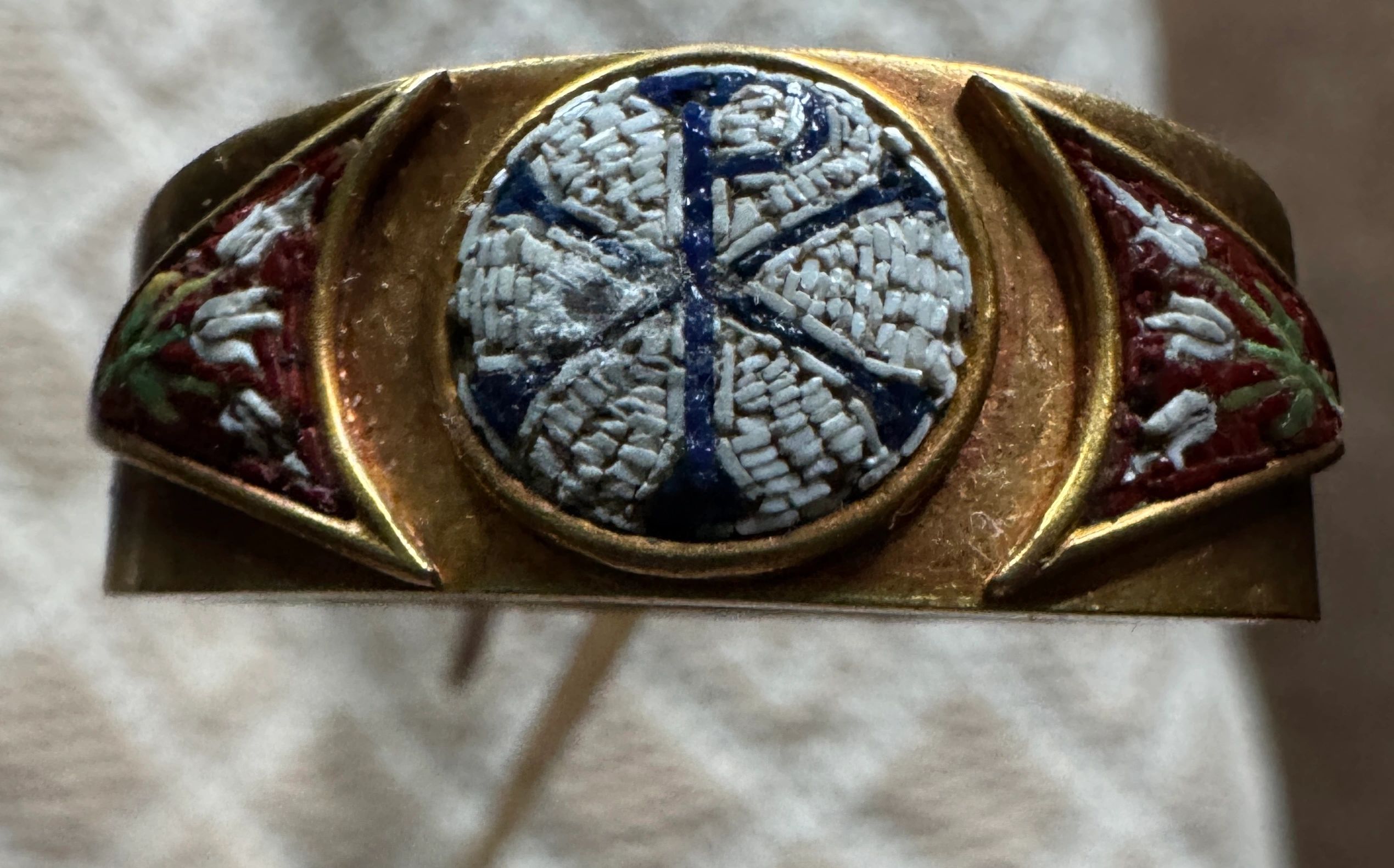
Gold hatpin depicting Chi Rho symbol. Rafaele Castellini’s Vatican Micro-mosaic workshop, Rome, c.1840
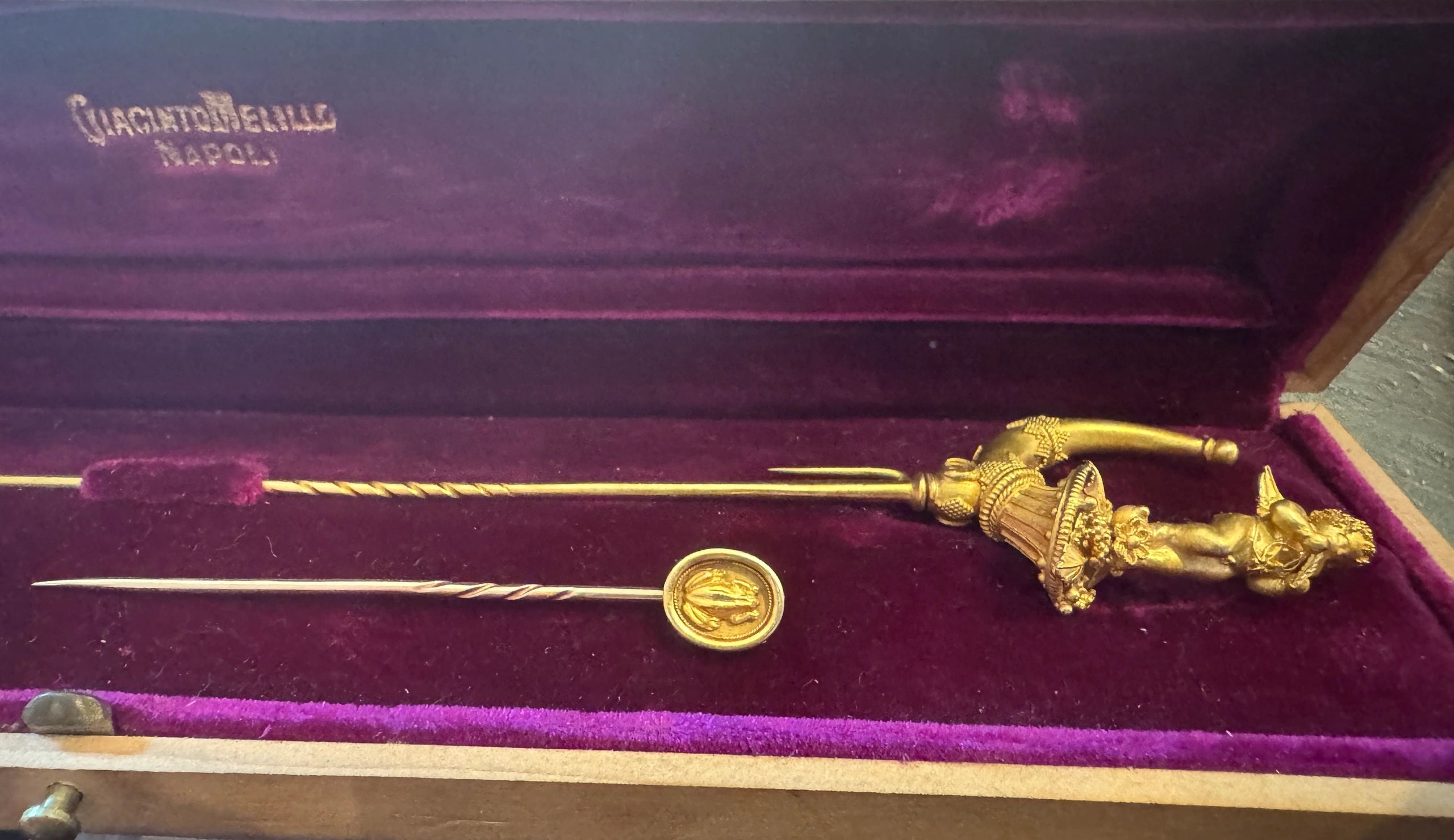
China
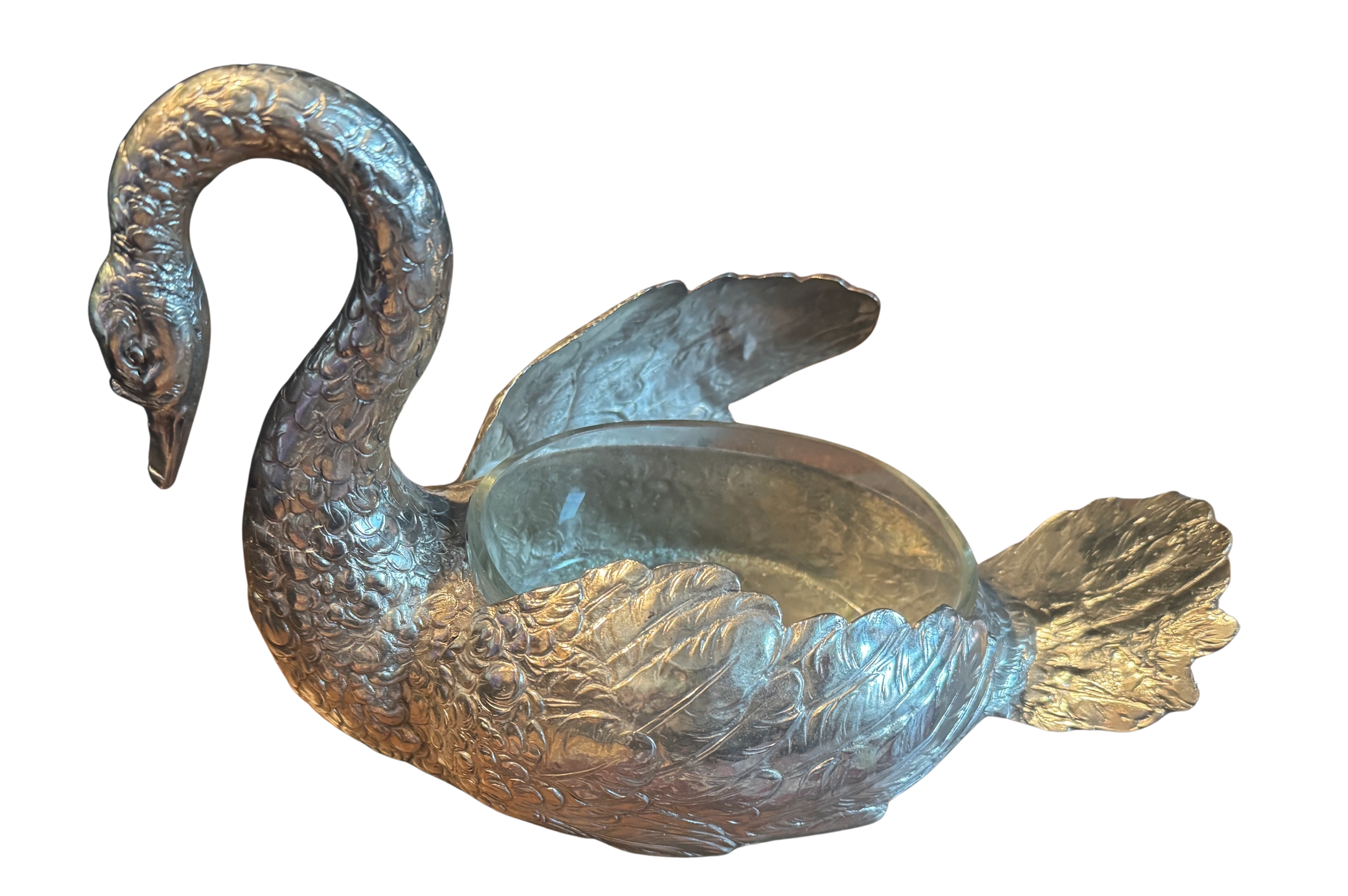
German silver swan bowl. Hanau, c.1900
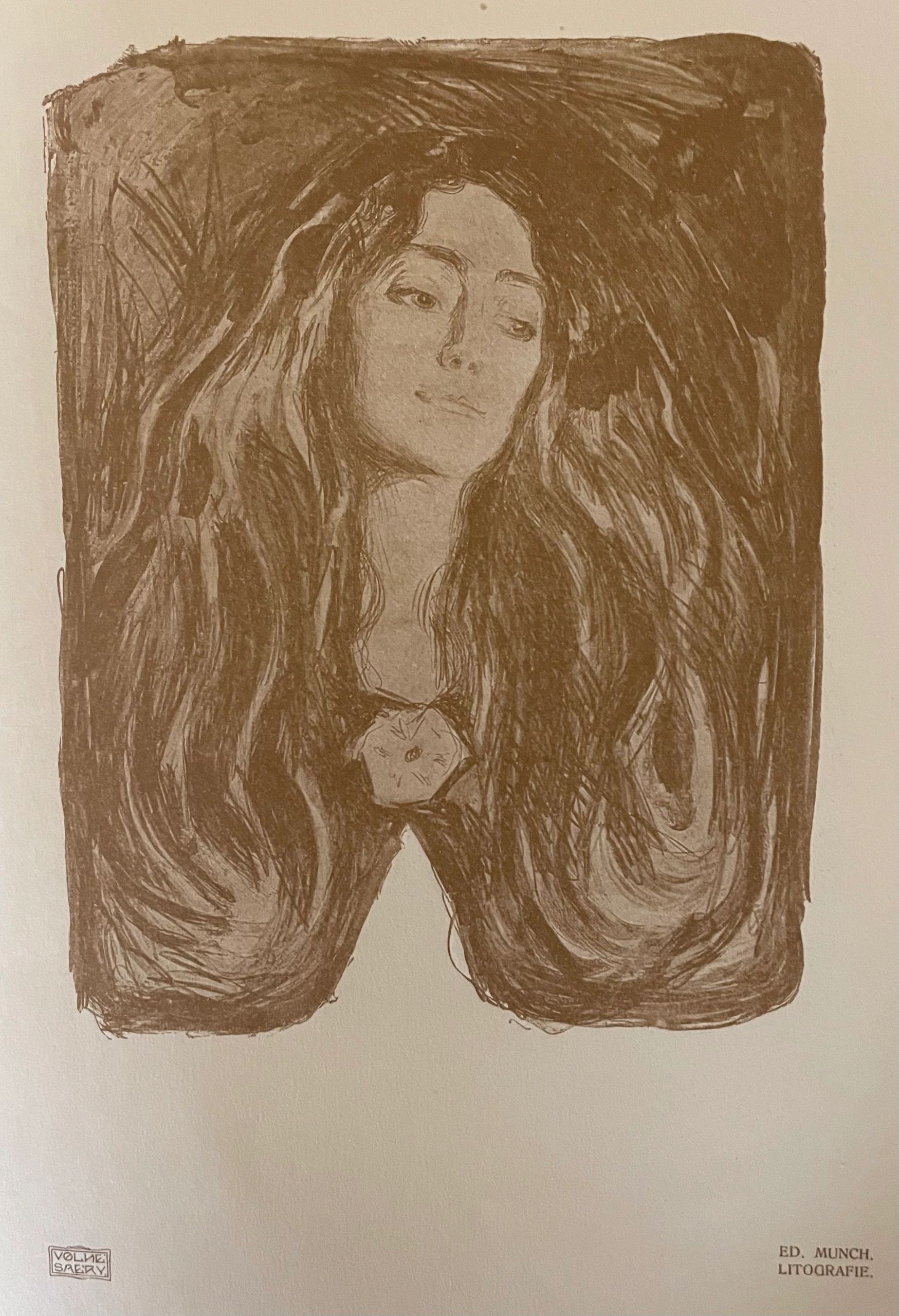
The Brooch: portrait of the English violinist Eva Mudocci. Lithograph by Edvard Munch, 1903.
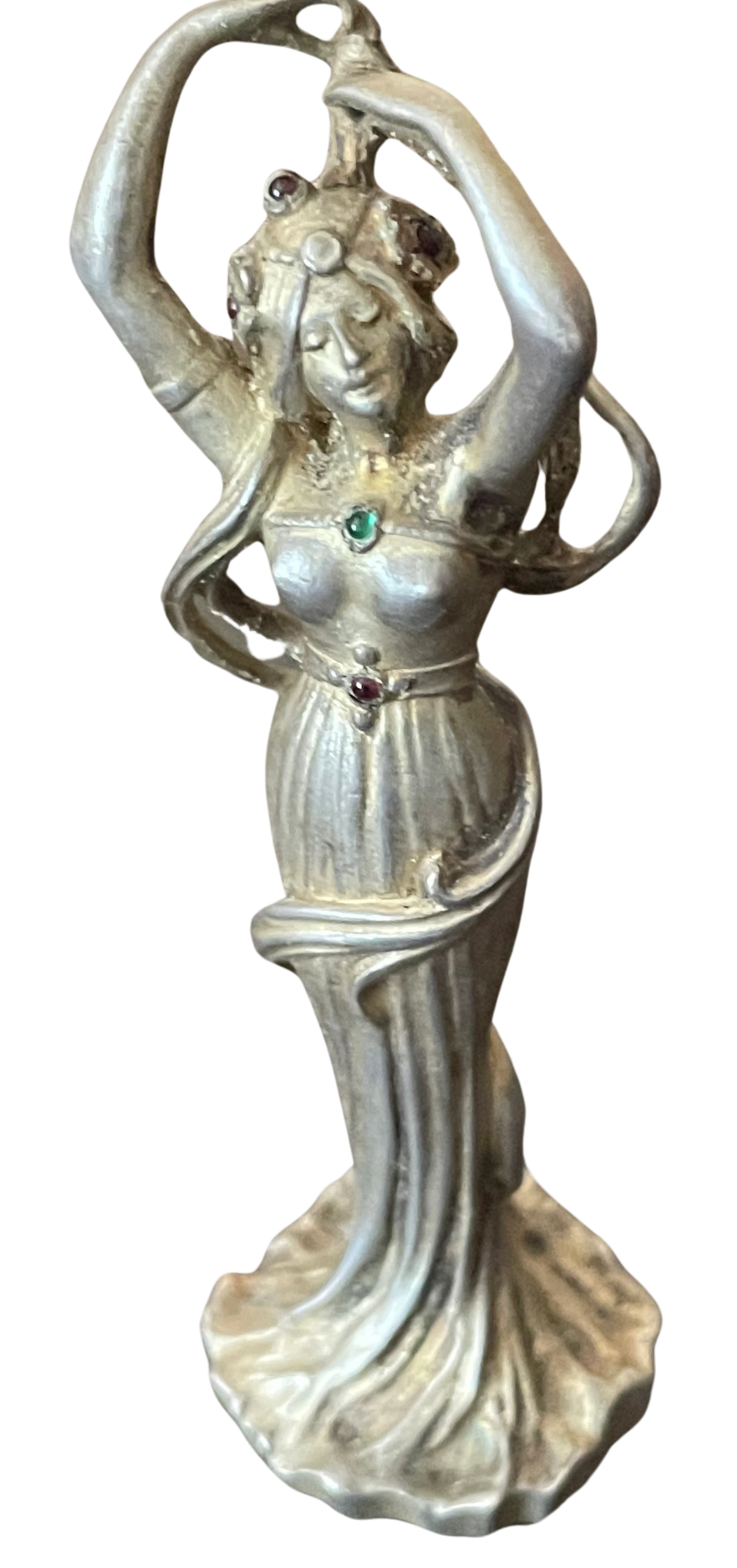
Silver desk seal commemorating Isadora Duncan’s 1902 European tour by Wenzel Brezina, Vienna.
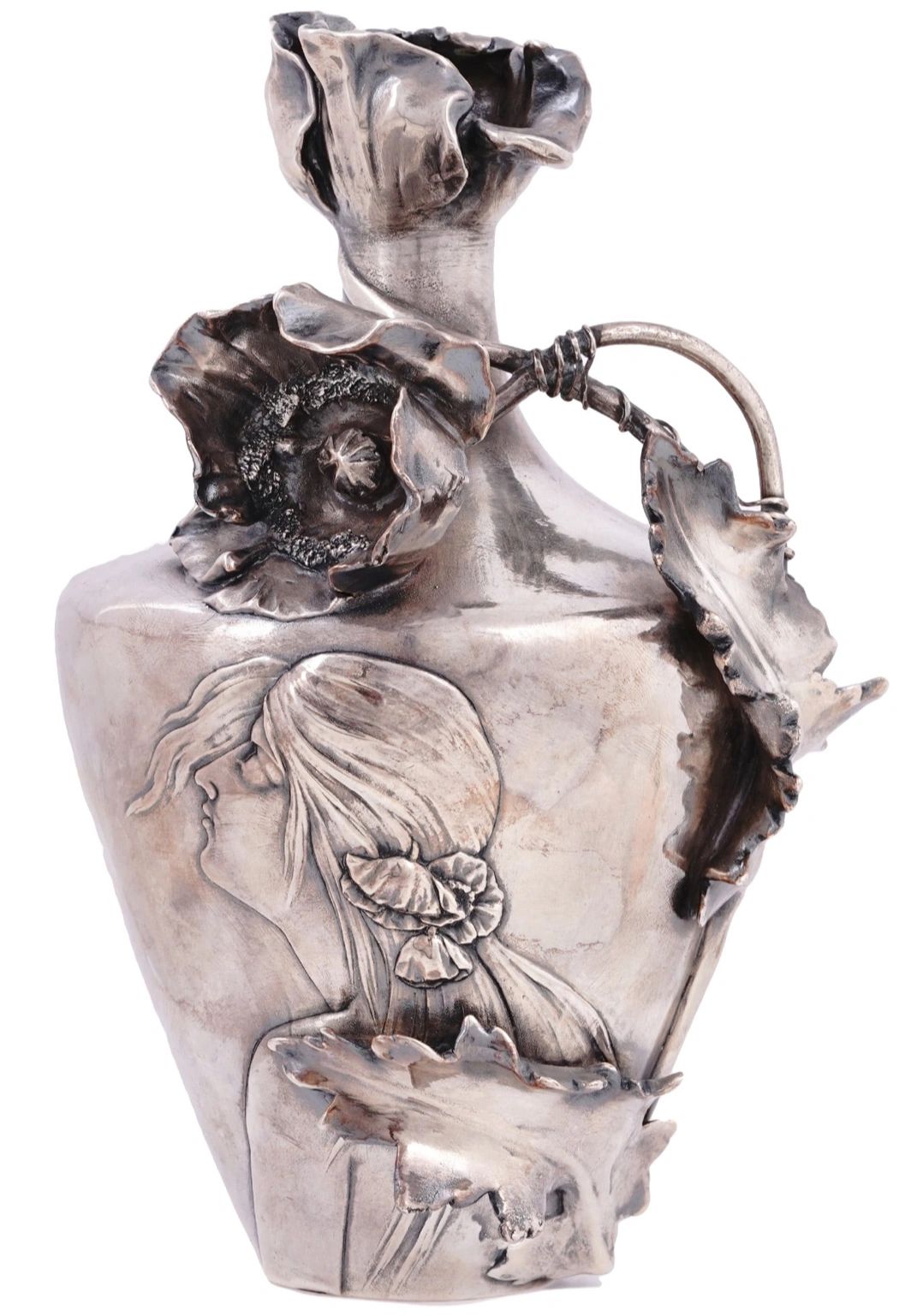
Art Nouveau pottery vase, clad in silver. Gorham c.1905
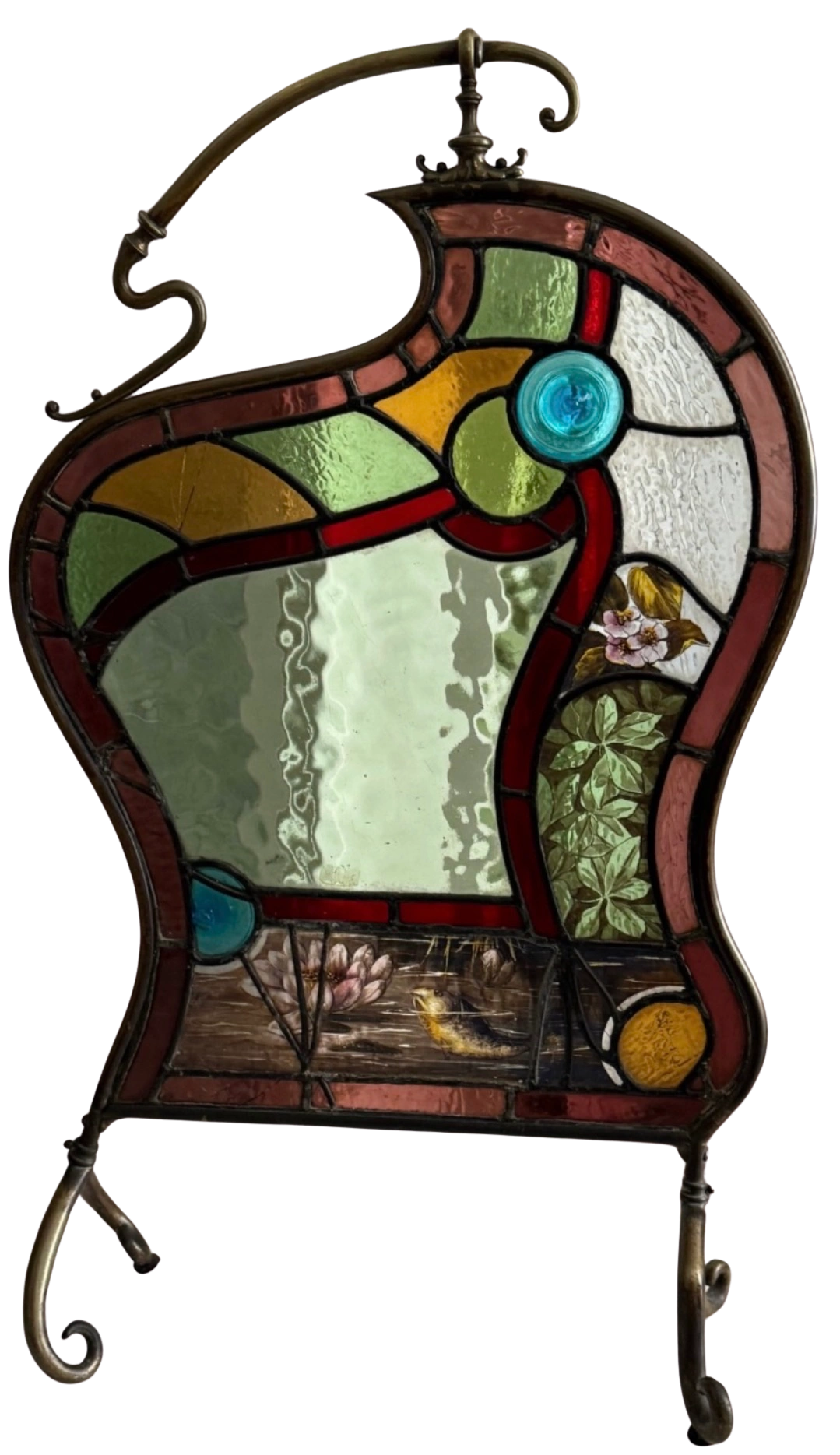
Art nouveau stained glass fire screen. Attrib. Tiffany Studios, New York c.1905.
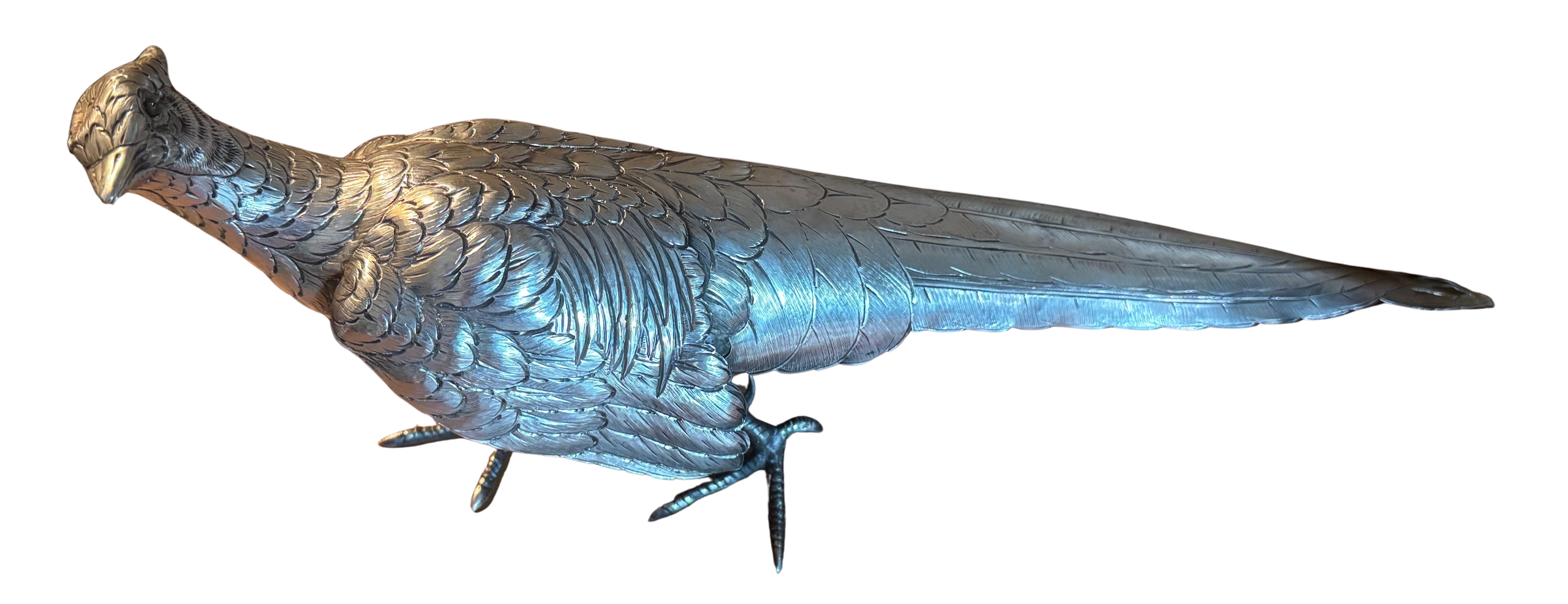
Silver pheasant. Tuttle Silver Company, c.1910
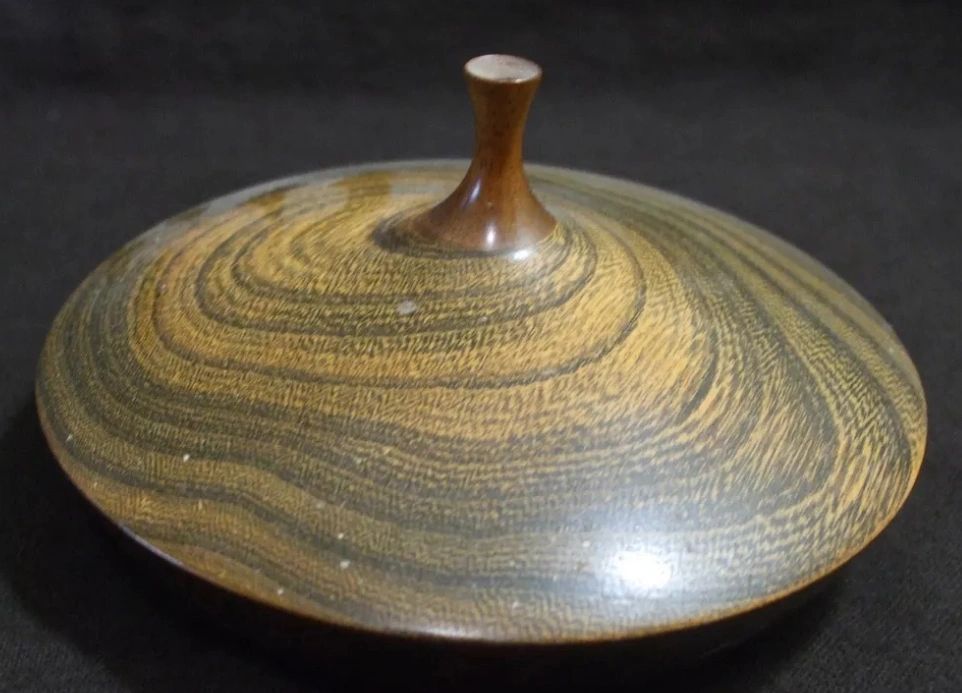
Turned wood vase by Josef Hoffman. Wiener Werkstatte, c.1920
Russian agate Kovsch mounted in gold set with precious stones
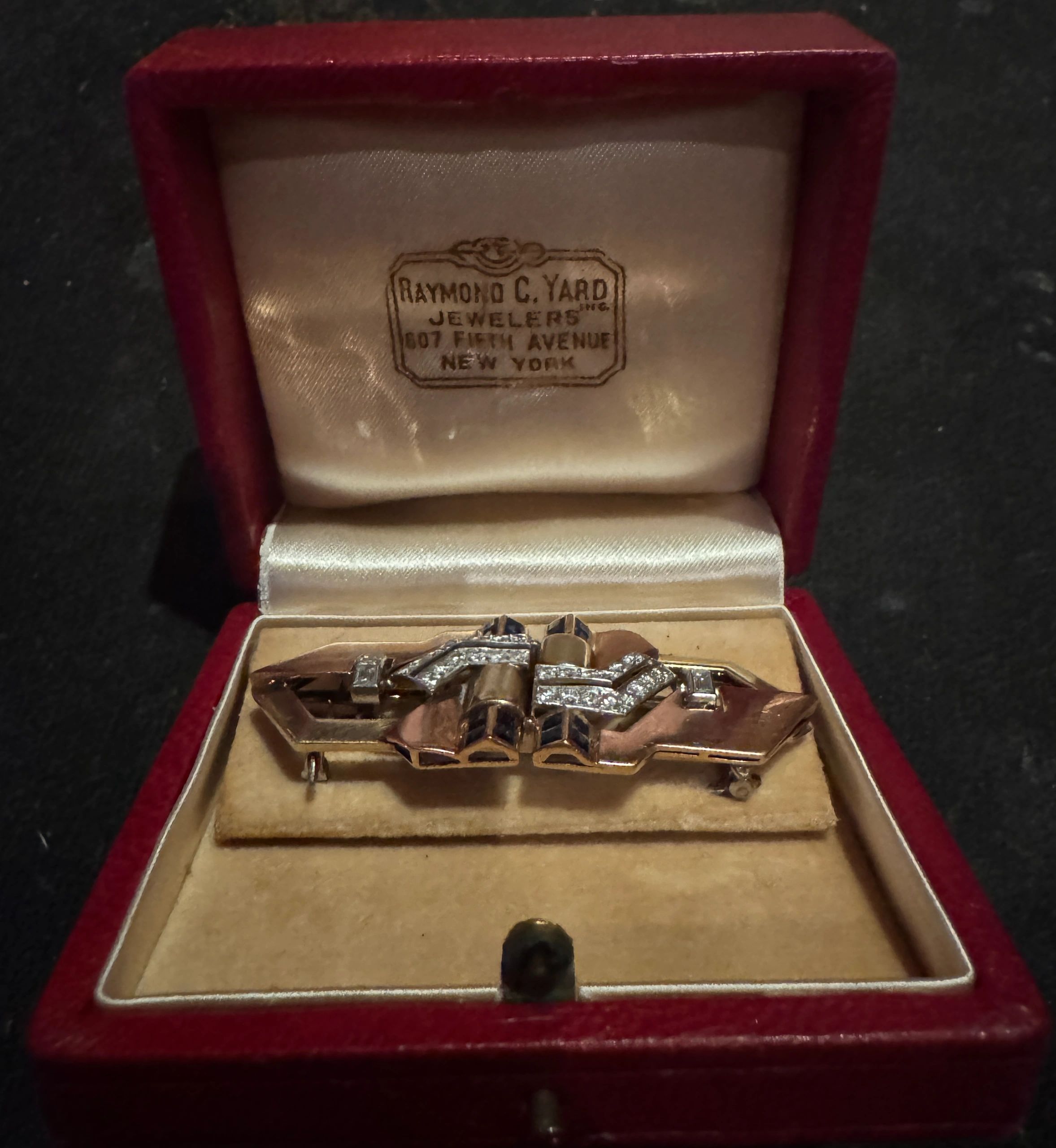
Double clip pins (Duette brooch). Raymond Yard, c.1930.
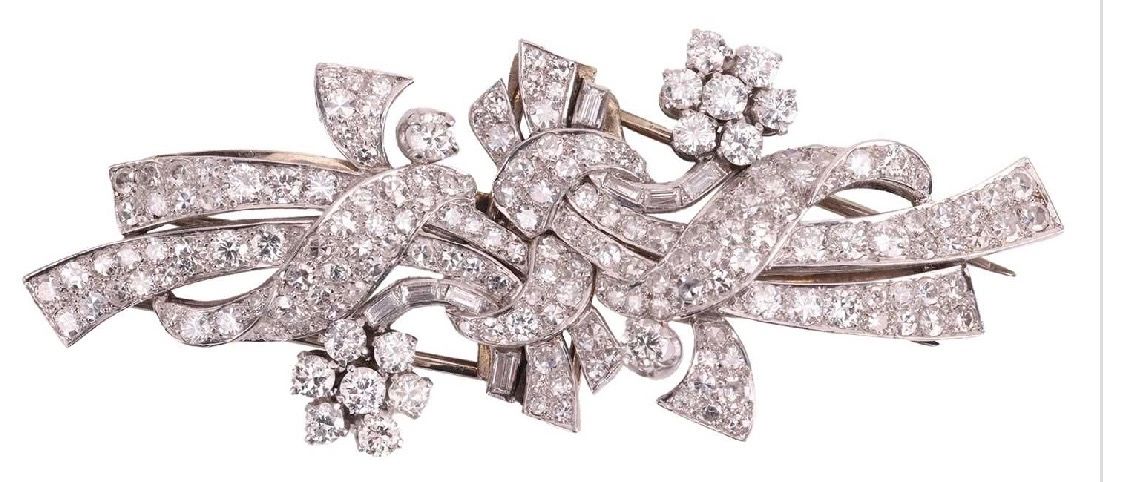
Platinum clip pins (duette brooch) set with diamonds. Raymond c.Yard, c.1945.
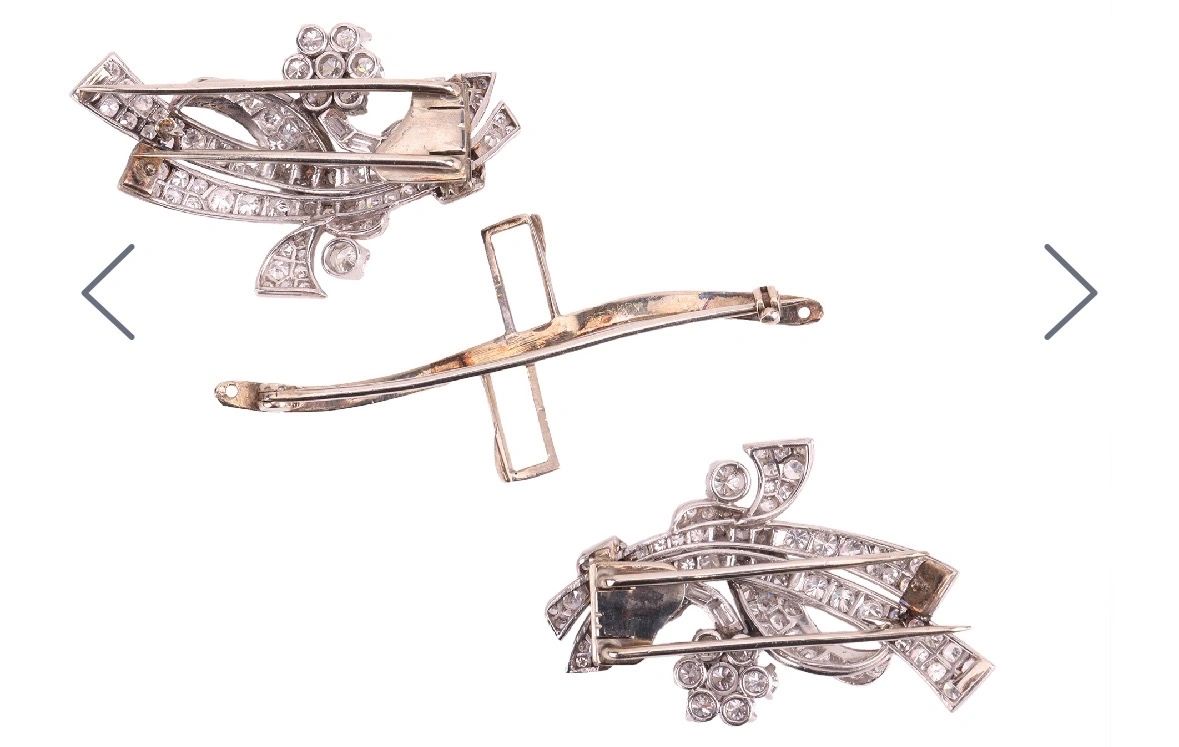
Duette brooch
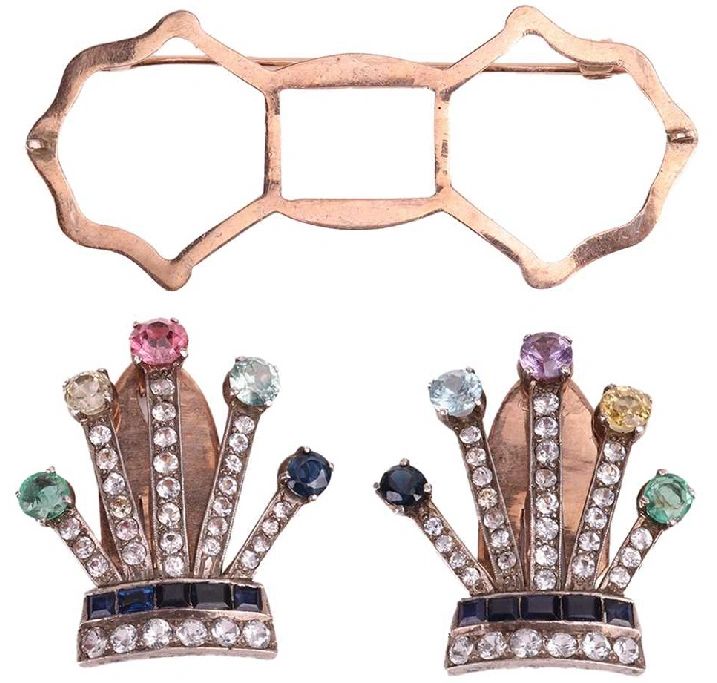
Pair of clip pins (duette brooch) in gold, set with diamonds & muti-colored sapphires. Raymond C. Yard. New York, c.1940

Fine antique object of vertu
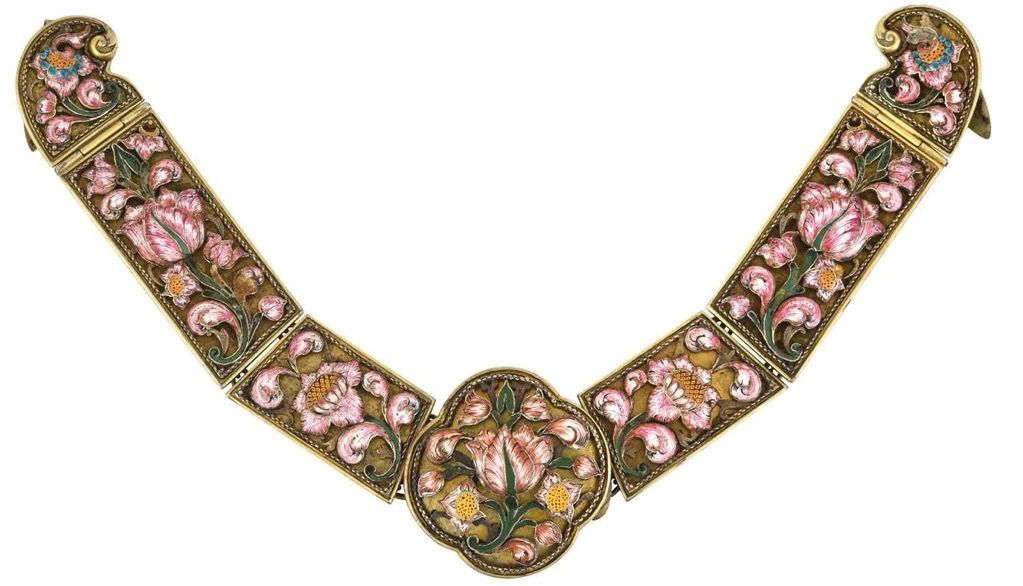
Usolsk polychrome painted enameled silver-gilt bridal belt with tulips & sunflowers on a white ground enclosed by filigree wire. Solvychegodsk, c.1680. Attributed to the Stroganoff family dowry.
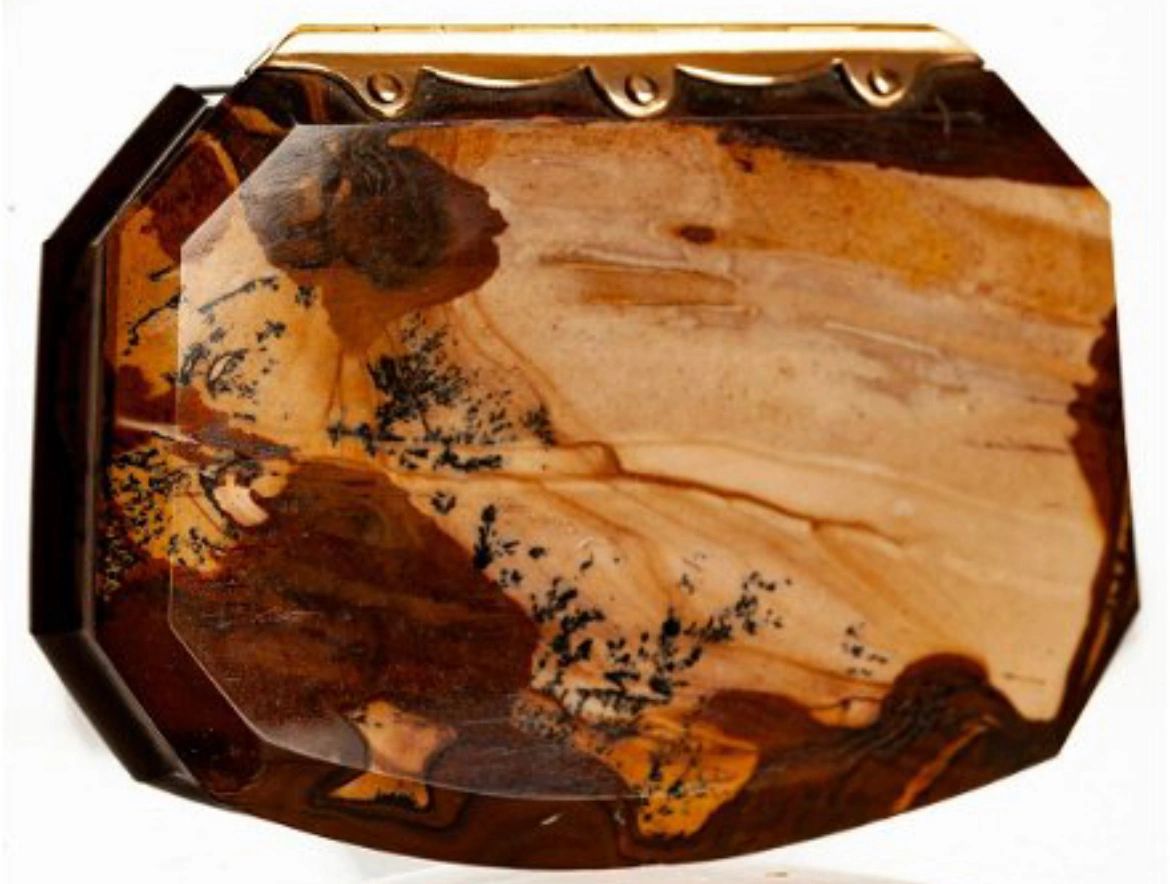
Gold mounted agate snuff box. Russia, c.1740
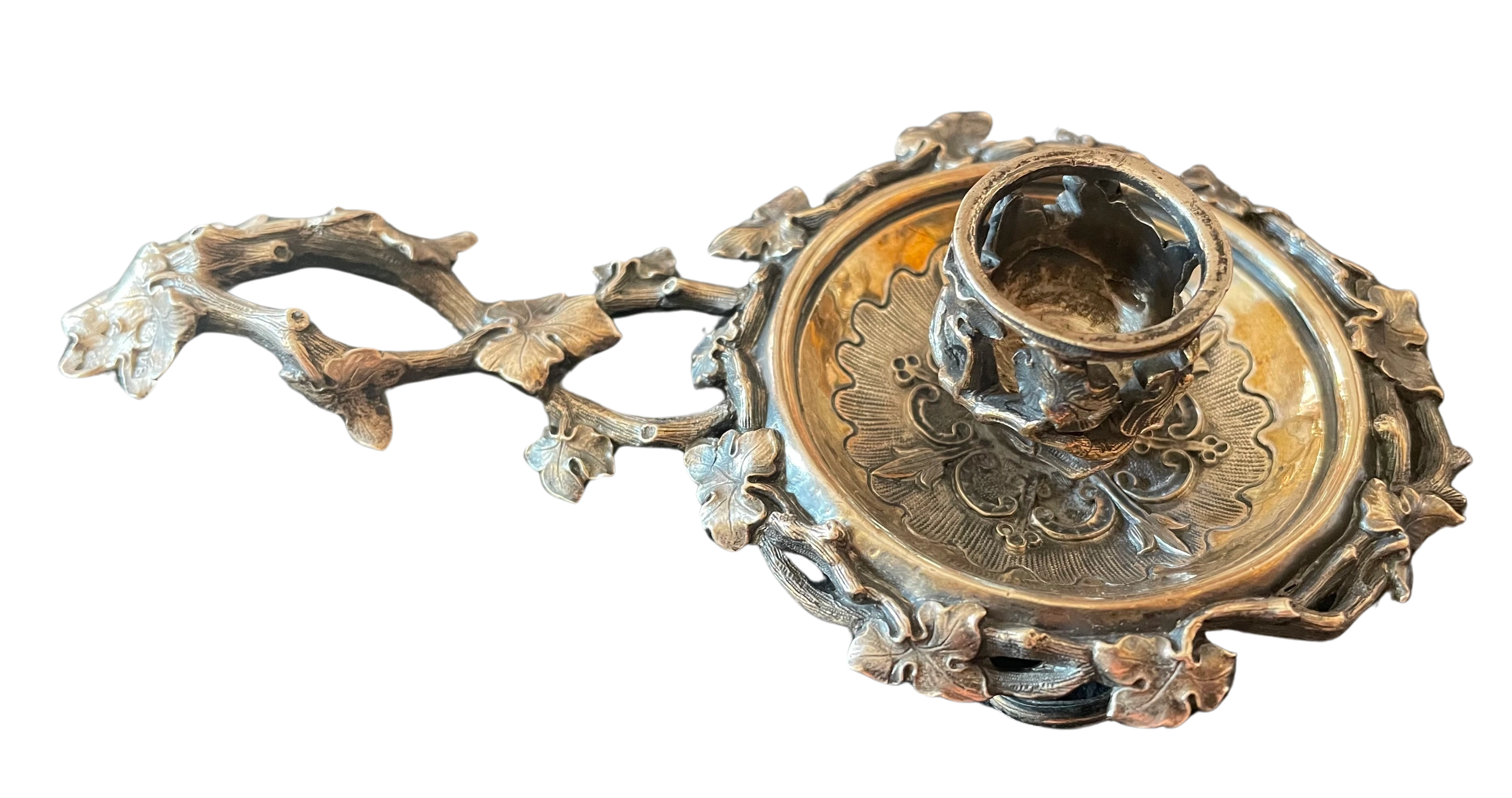
Silver chamber stick by Pavel Sazykov. Assay Master Dimitri Tverskoy, St.Petersburg, 1847
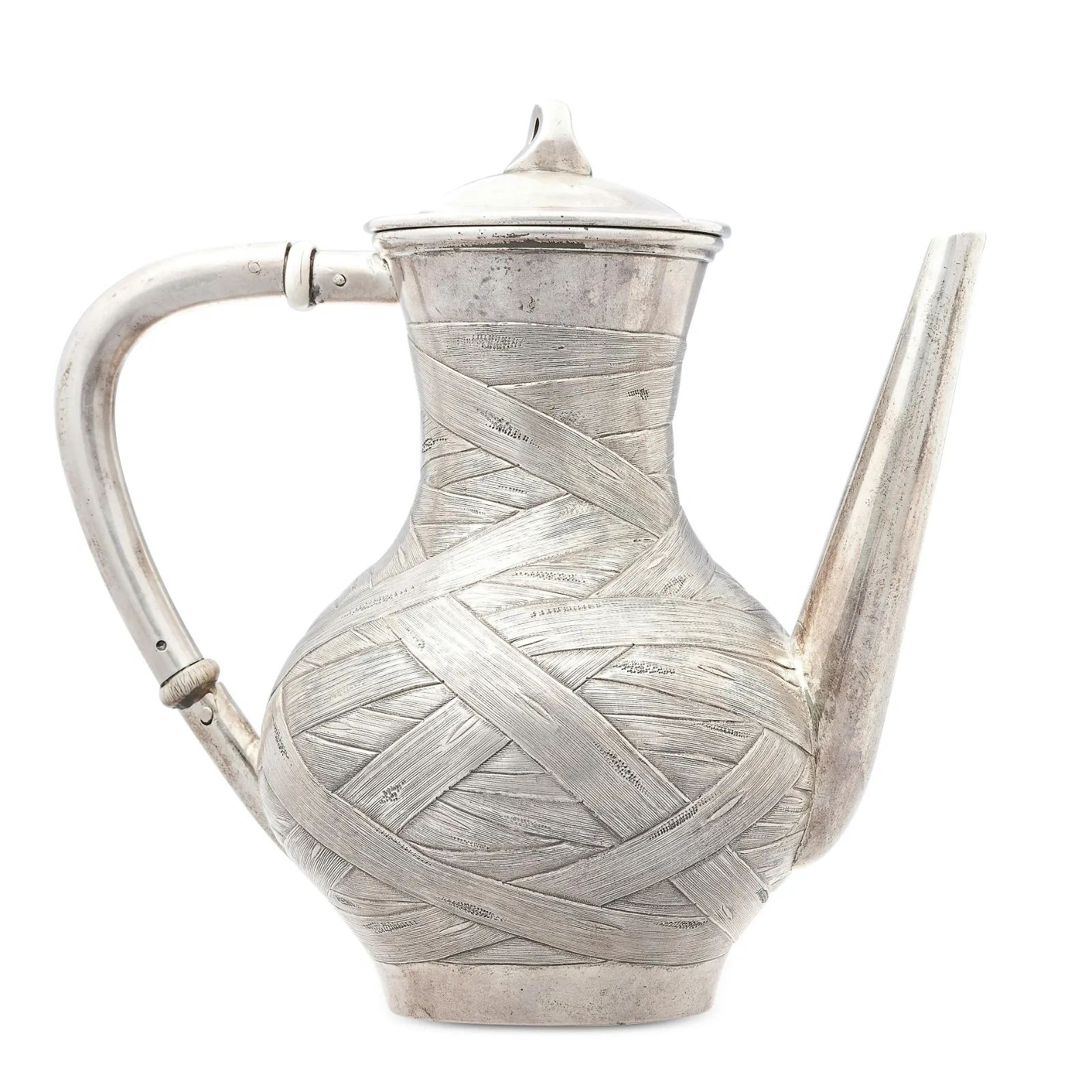
Woven birch design pot by Stefan Wakeva, Karl Faberge’s first work master. St. Petersburg 1887
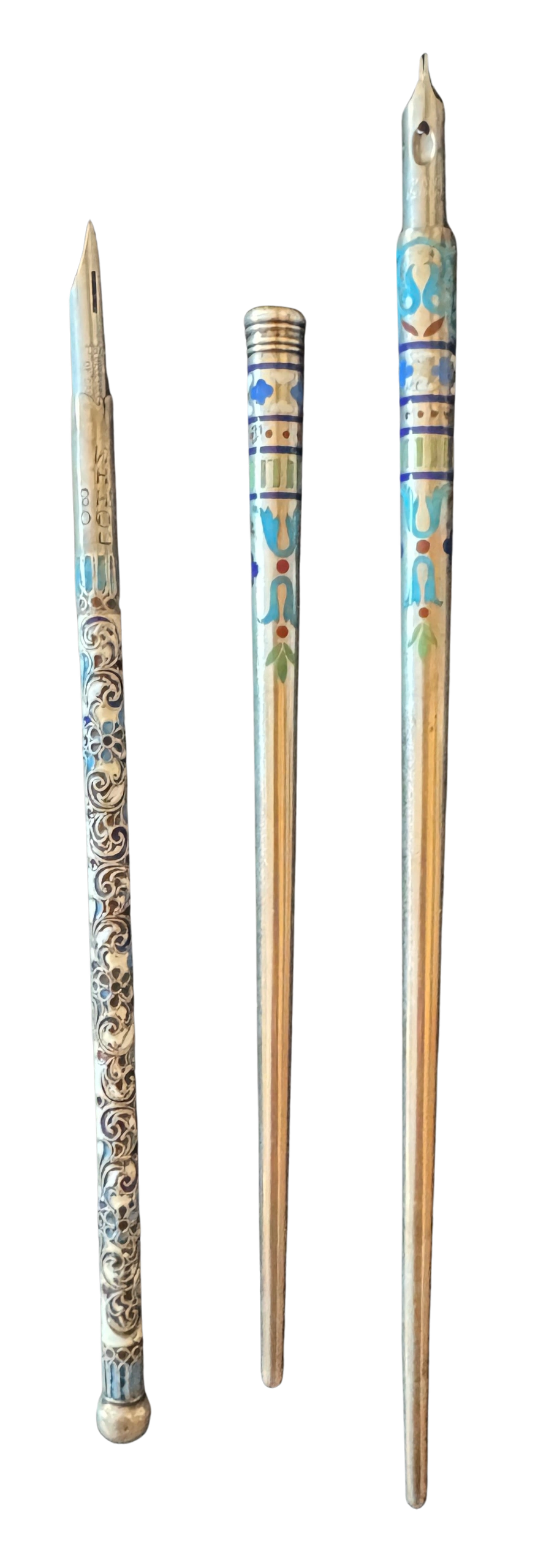
Silver champleve enamel pen & pencil set by the Gratchev Brothers, St. Petersburg, c.1890 and a provincial cloisonné enamel pen c.1900.
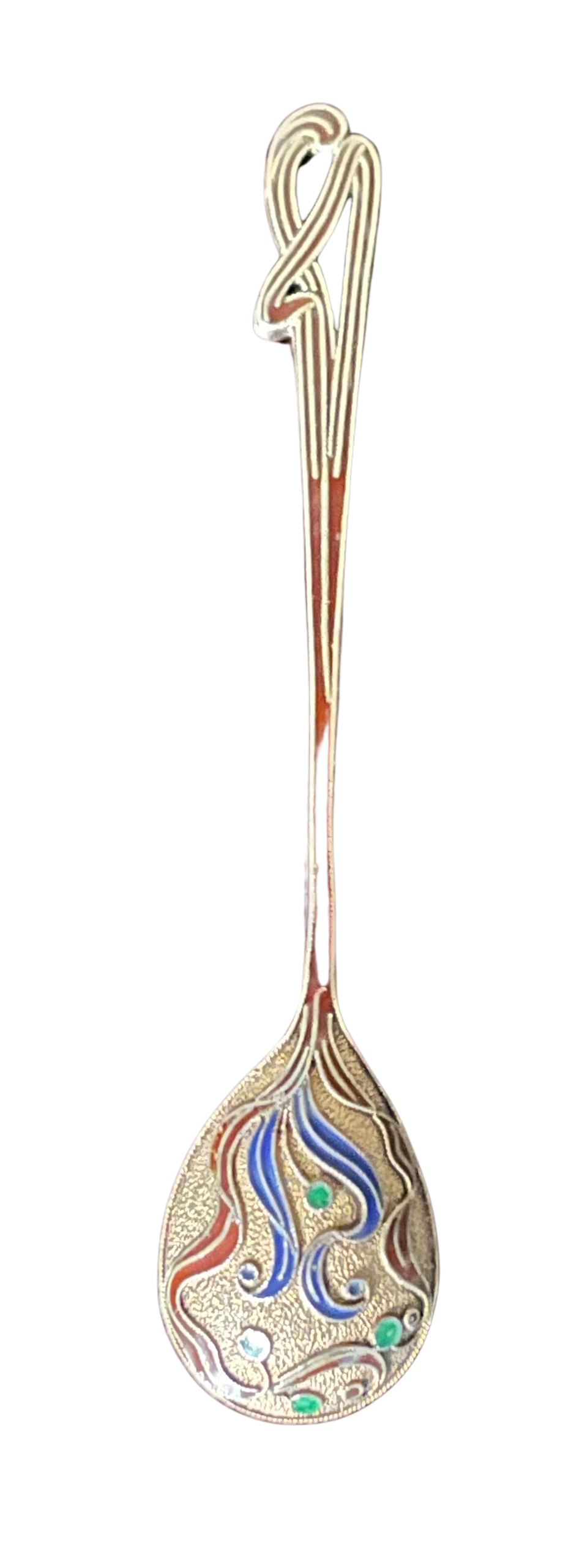
Pan Slavic revival meets Art Nouveau and Japonisme. Gratchev Brothers, St. Petersburg c.1900
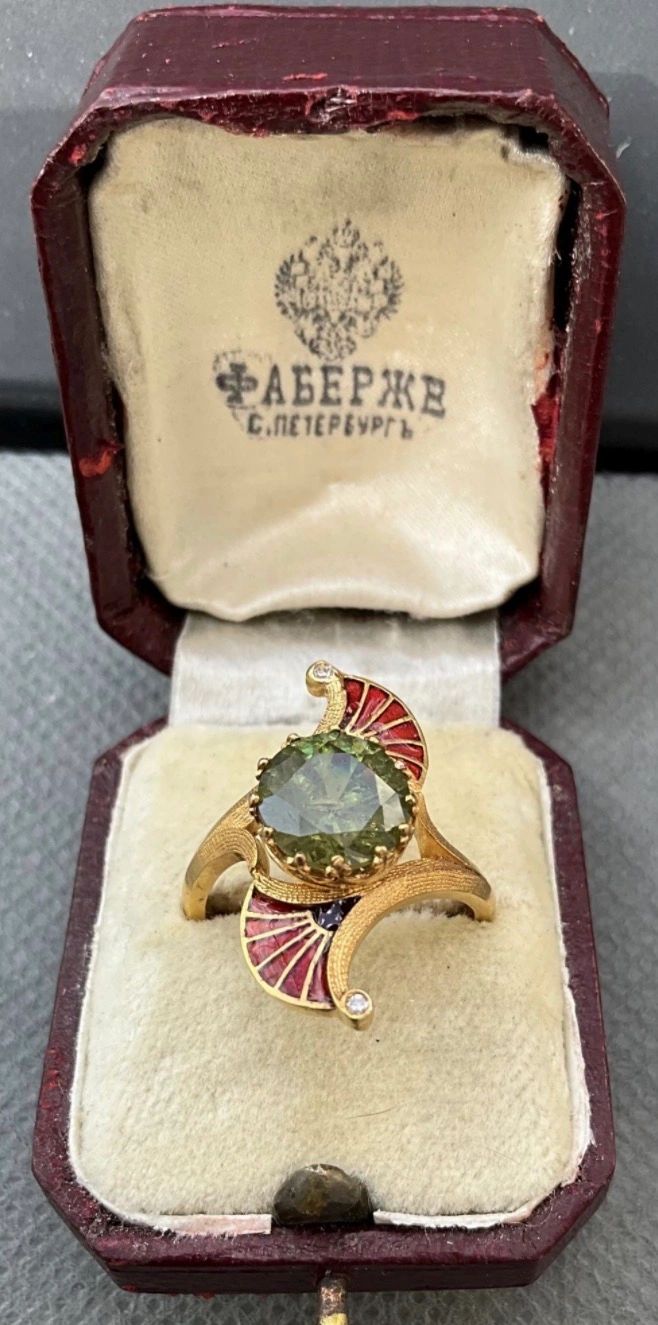
’Fauvist’ style ring set with a 3 carat demantoid garnet, 2 diamonds and enamel decoration. St. Petersburg gold mark for 1908-1917 and original Imperial Russian presentation box.

Russian agate Kovsch mounted in gold set with precious stones
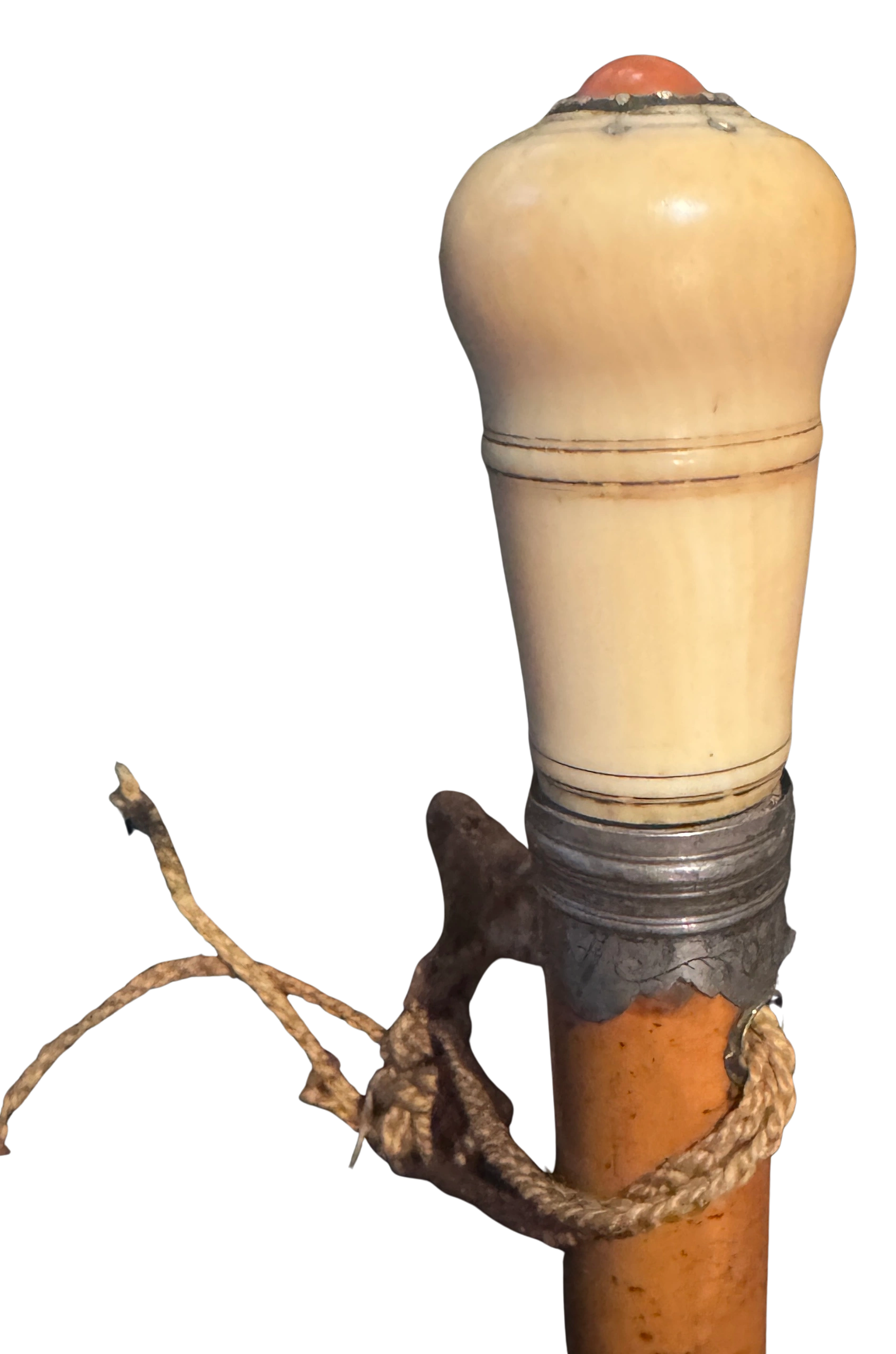
Physician’s malacca cane with detachable ivory screw top containing an antiseptic sponge. Silver mount engraved TR 1704. Likely owned by a Physician-in-Ordinary to the Court of Queen Anne.
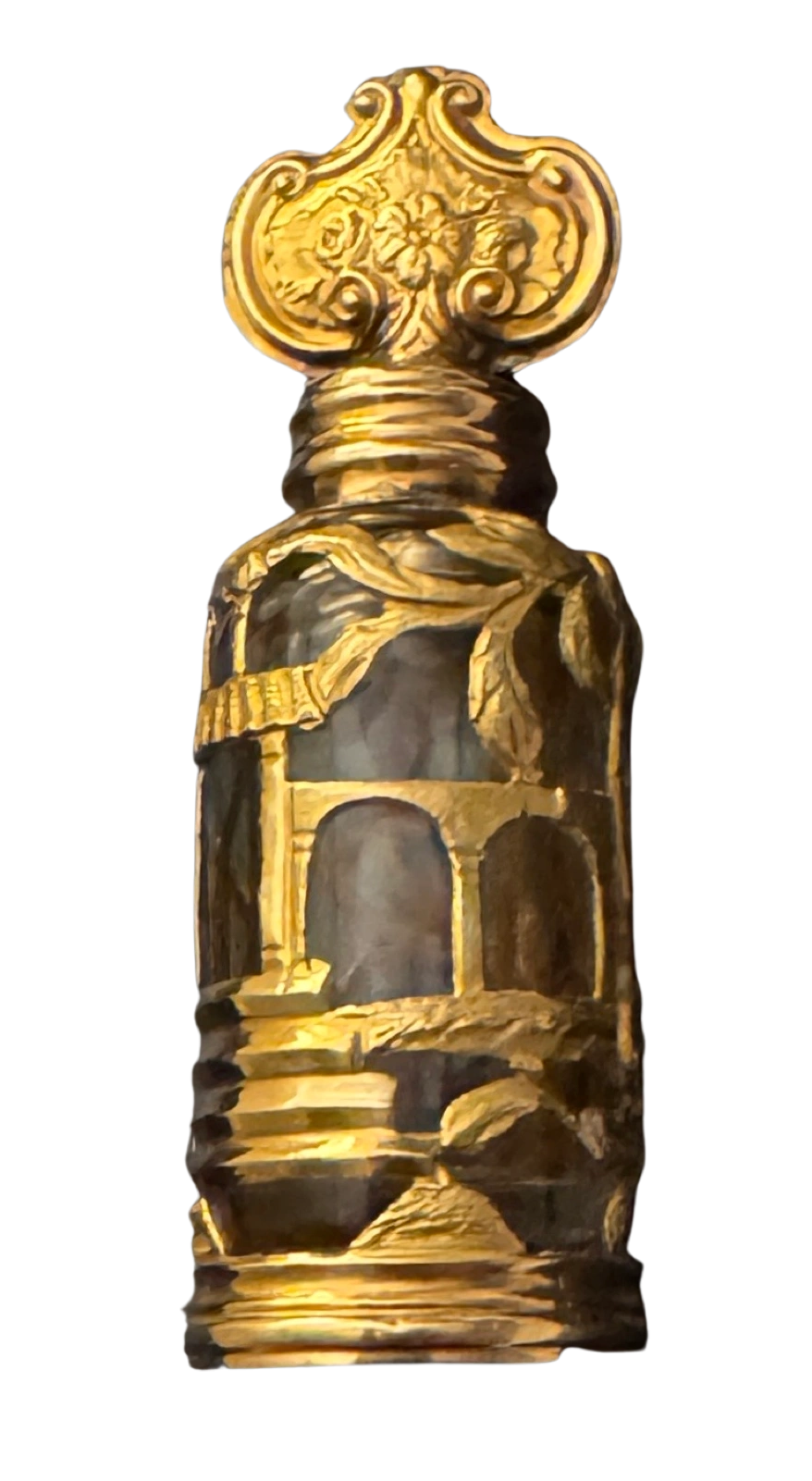
Rock crystal gold mounted en cage rococo flacon (perfume bottle) with scrolls & foliate floral swags and rocaille finial. English, c.1750
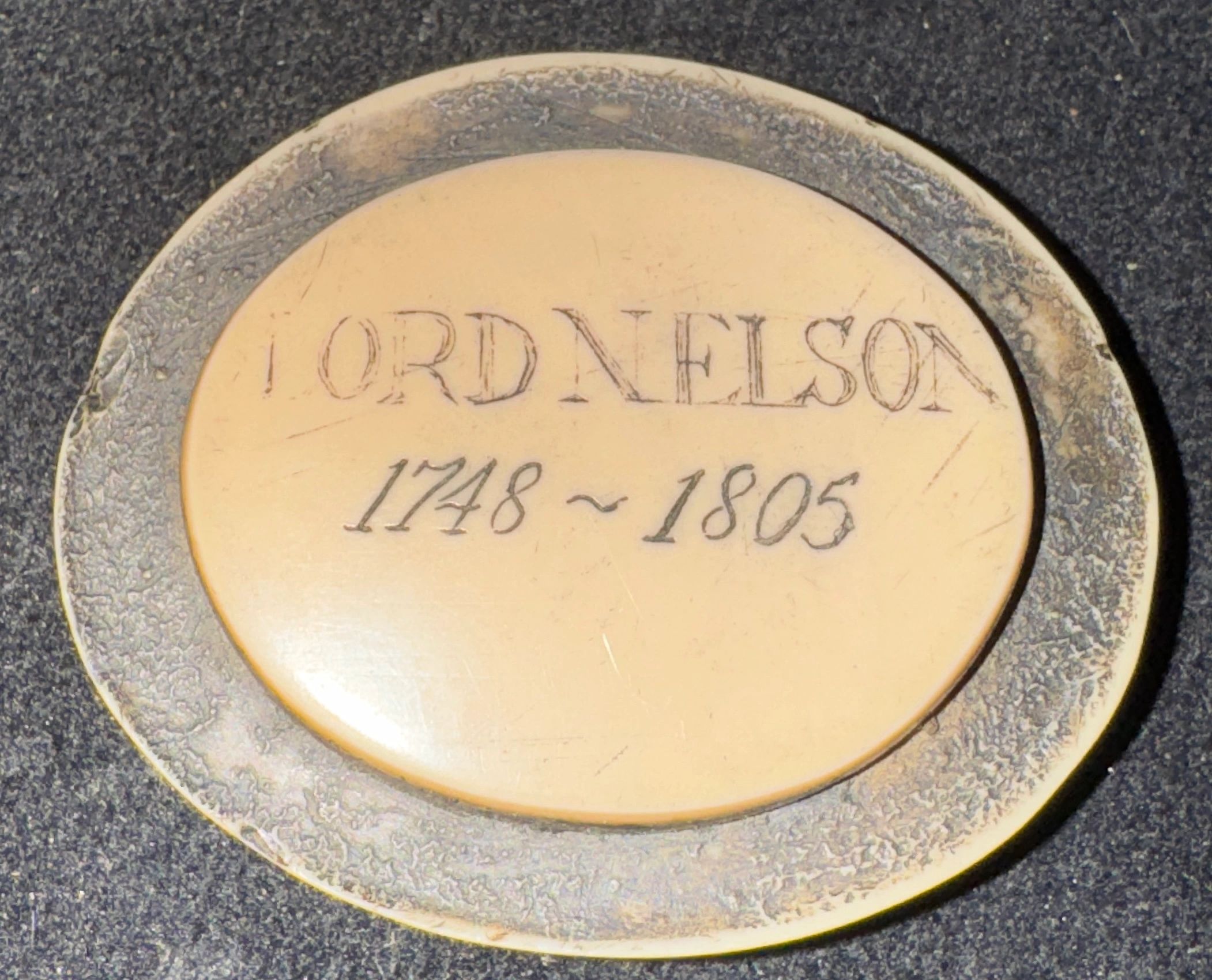
HMS Victory Trafalgar artifact: Scrimshaw medallion inscribed: LORD NELSON 1748 - 1805
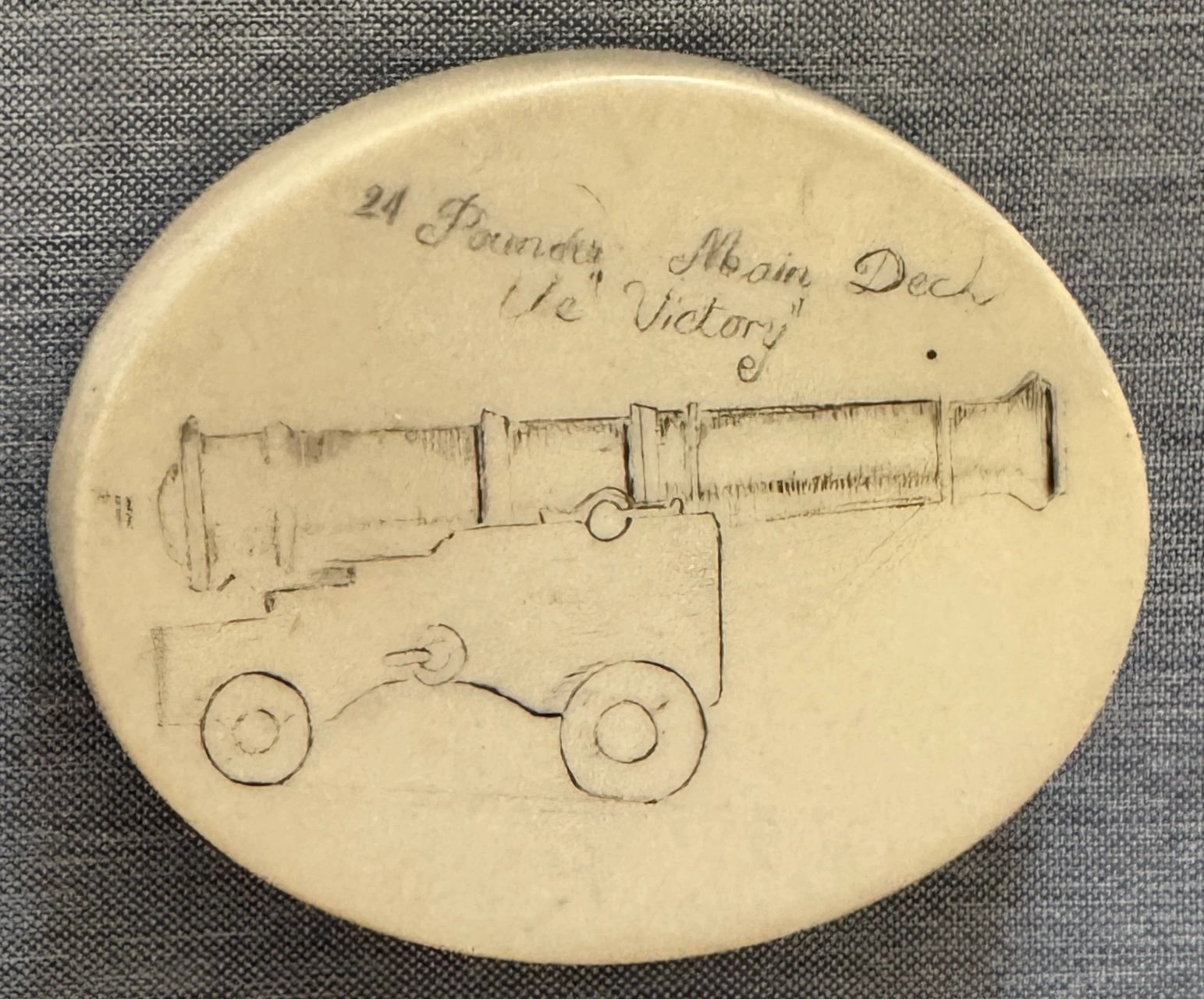
HMS Victory Trafalgar artifact - Scrimshaw medallion depicting a main deck canon and hand inscribed: 24 Pounder Main Deck the “Victory”
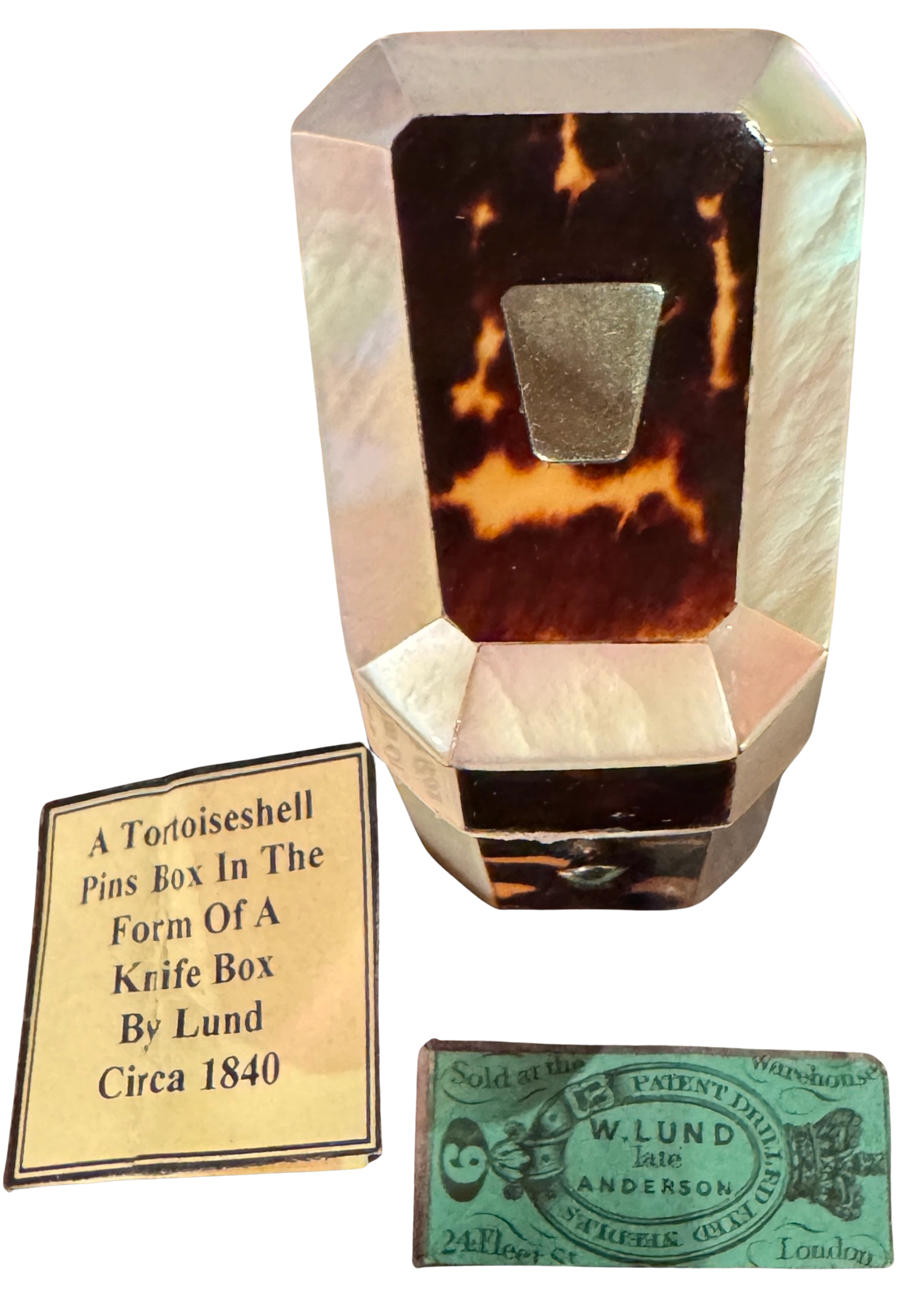
Silver mounted turtleshell and mother of pearl needle box in the form of a miniature knife box with original sewing needle set. Maker - William Lund. London, c.1840
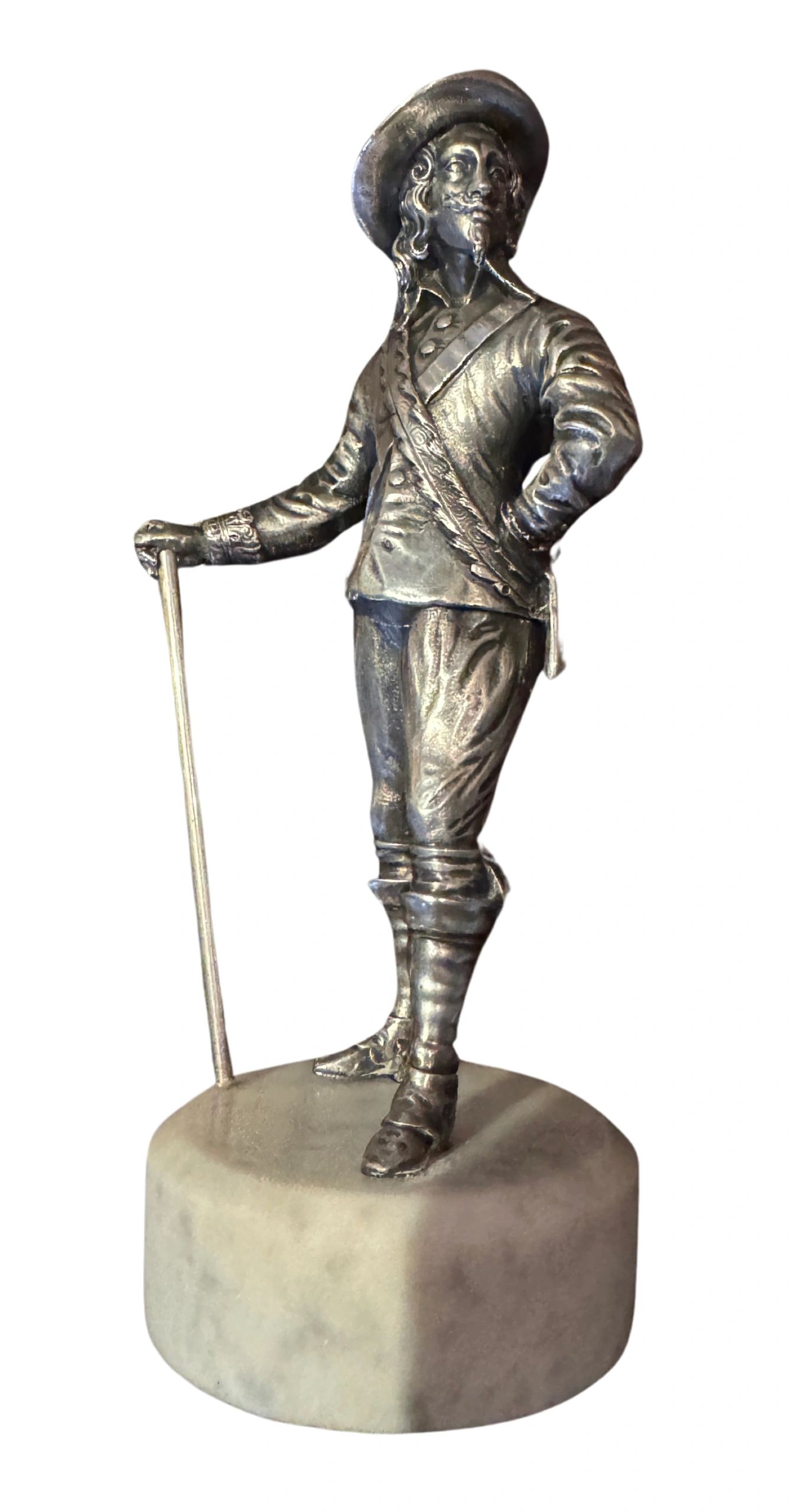
Silver statuette depicting Charles I, (1600-1649) from an English Royalty exhibit at the Great Exhibition, 1851. Maker SZ, London 1850. After the painting ‘Le Roi a la Chasse‘ by Anthony van Dyke, (Louvre Museum).
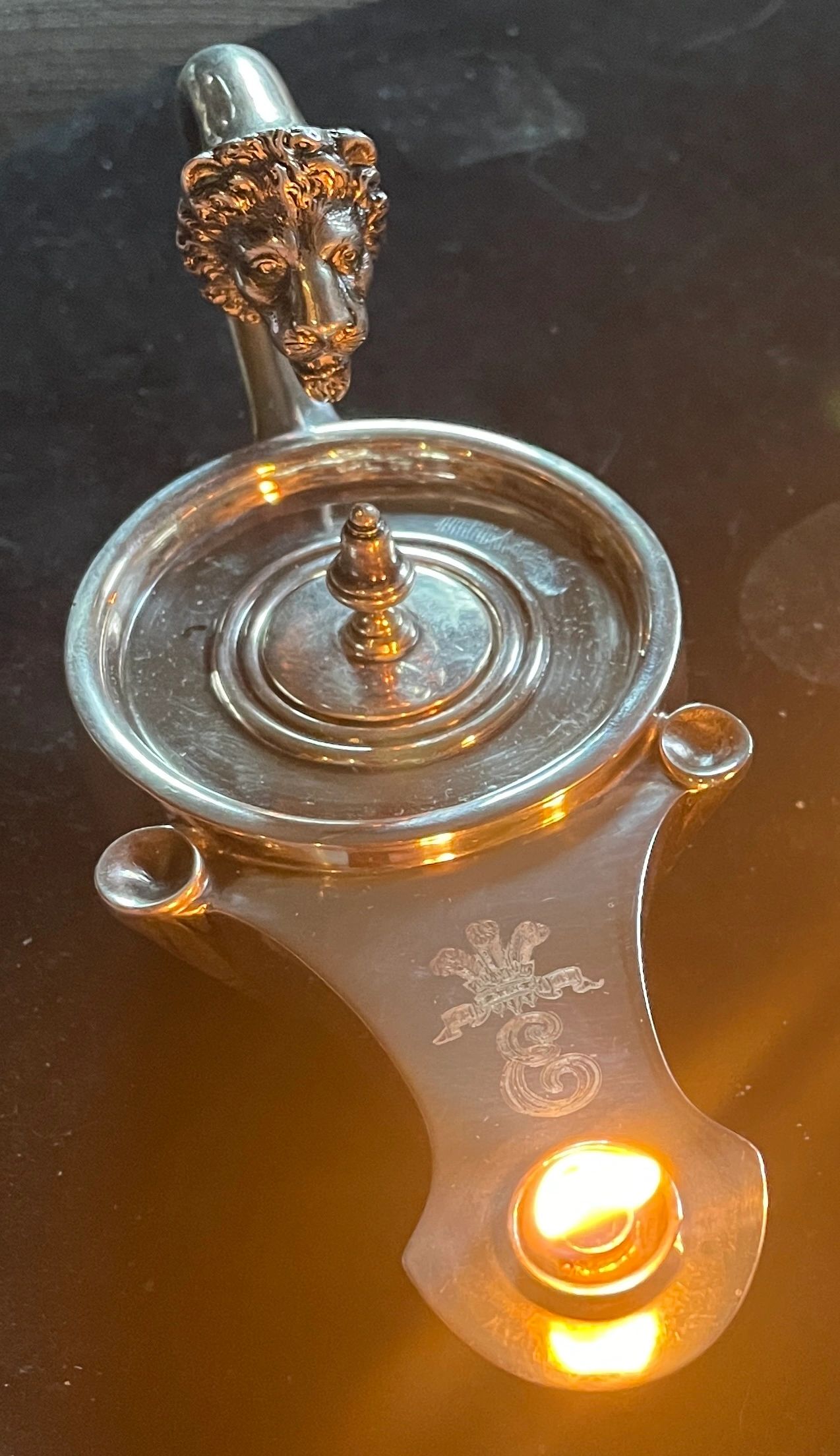
Silver lucerna, created as a cigar lighter. Engraved with HRH Edward, Prince of Wales, heraldic badge with ‘Ich Dien’ motto. Maker Alfred Clark, London 1876.
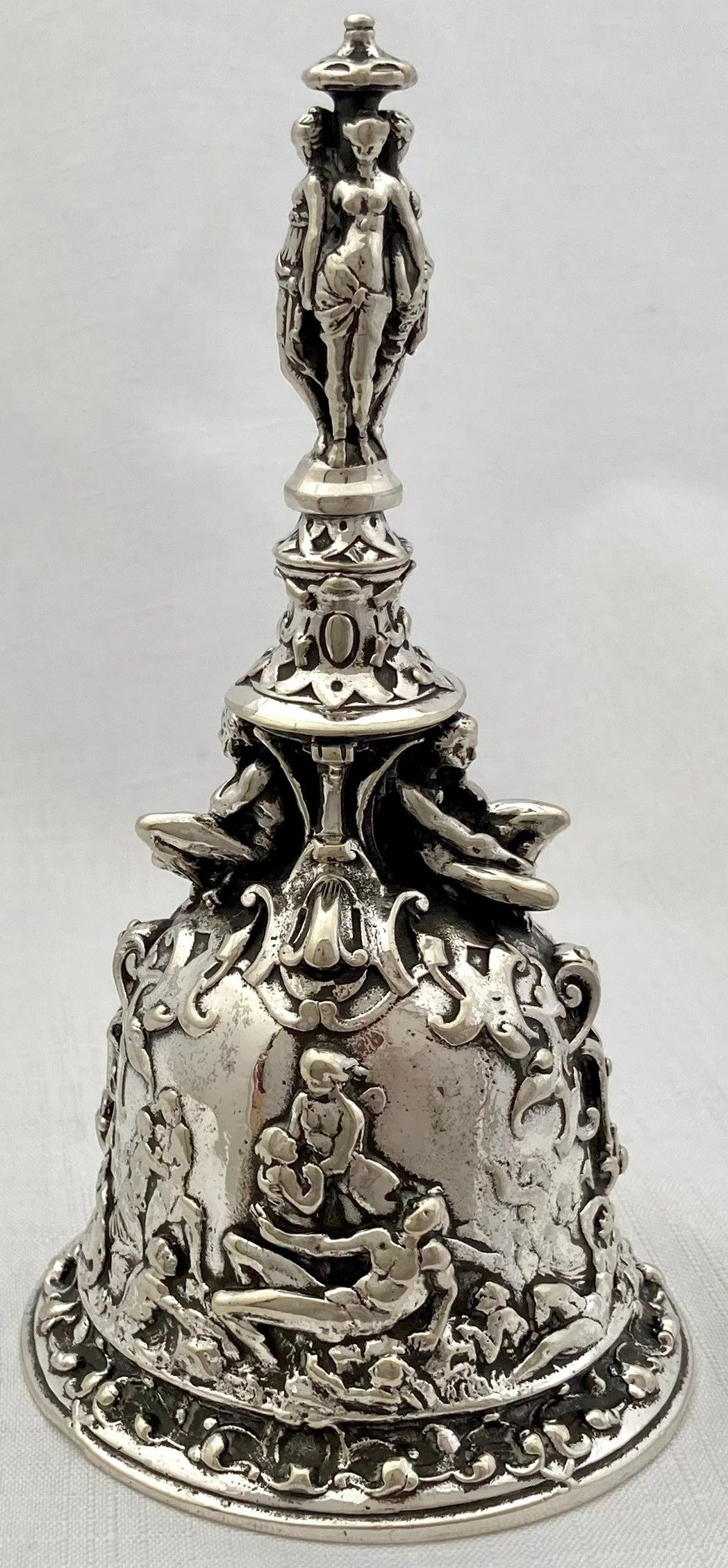
Table bell with allegorical scenes from Dante Alighieri’s The Inferno. Elkington, Birmingham 1883
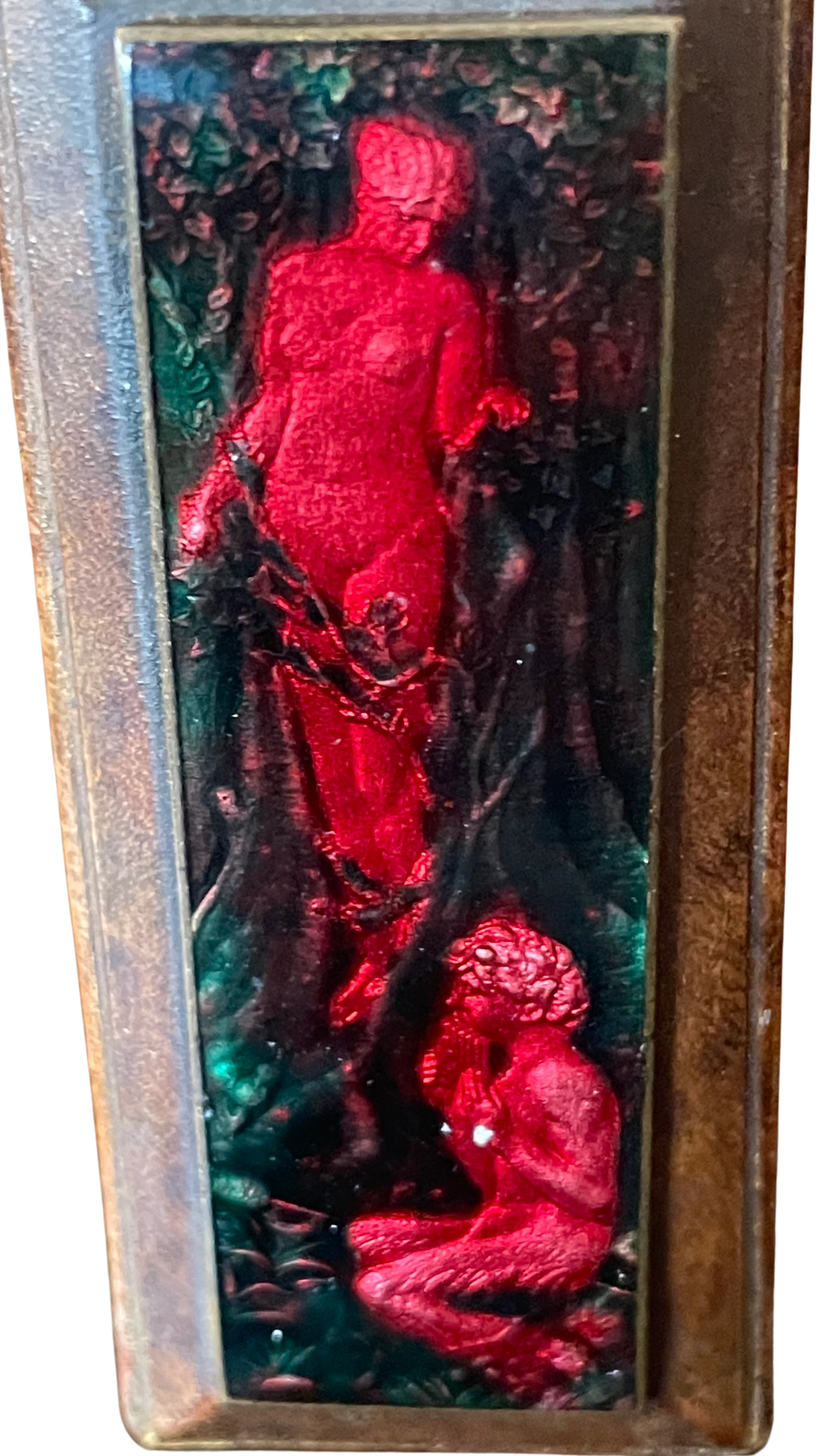
English Arts & Crafts movement enamel place/menu holder, c.1890

Russian agate Kovsch mounted in gold set with precious stones
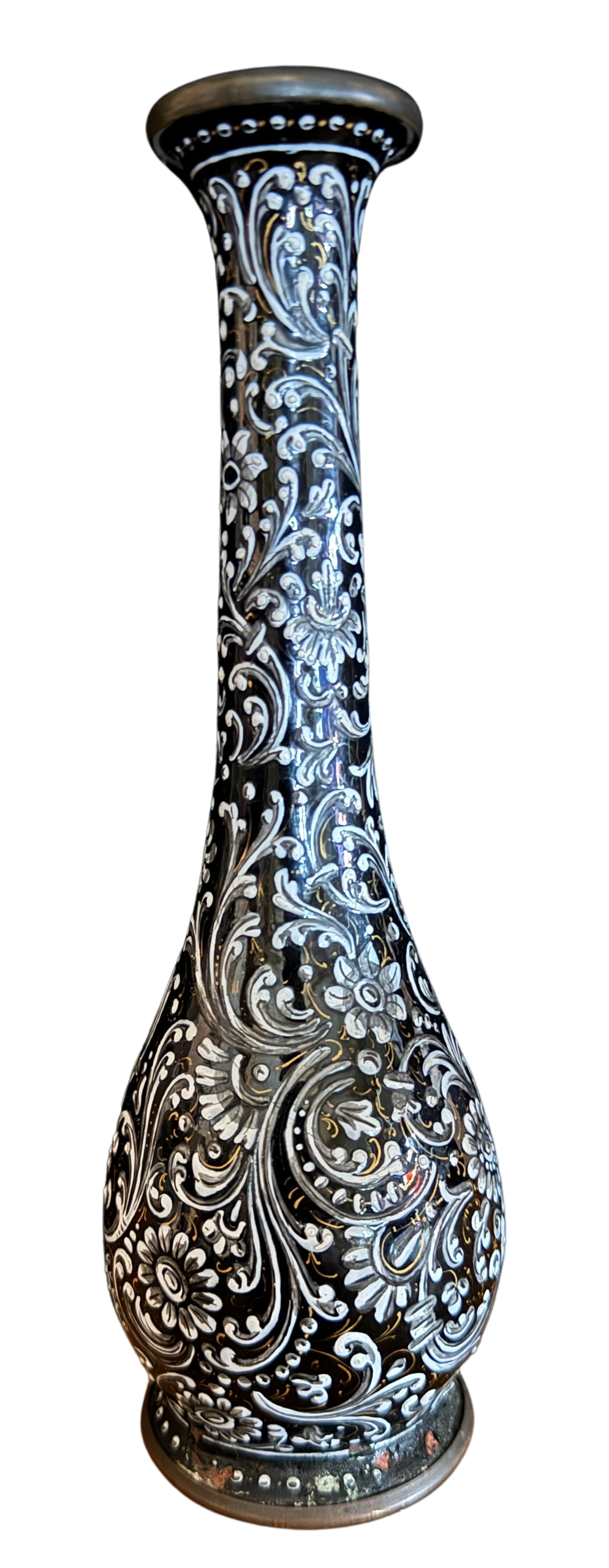
Grisaille enamel vase. Attrib. Pierre Reymond (1513-1584), Limoges c.1550
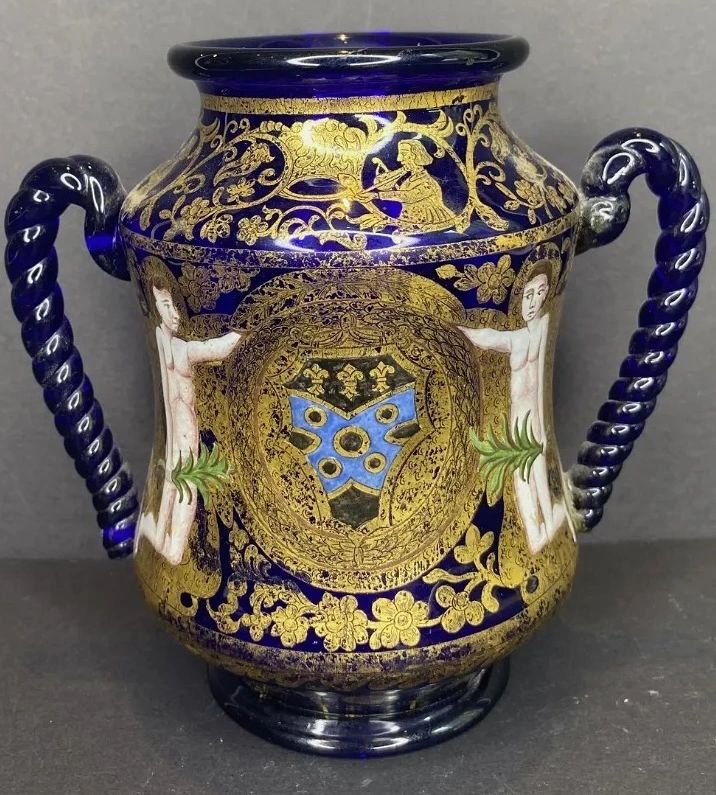
The Medici Cup. Enameled glass bearing the Arms of Medici and depictions of Adam & Eve, likely commemorating the coronation of Charles IX, son of Catherine de Medici, in 1561. Note the vignette of Andrea Amati (1505-1577) - luthier and progenitor of the four stringed violin. Note: the Medici armorial balls are black, not red, as per Catherine de Medici’s order that the Medici balls be black, in mourning for her husband, Henry II.
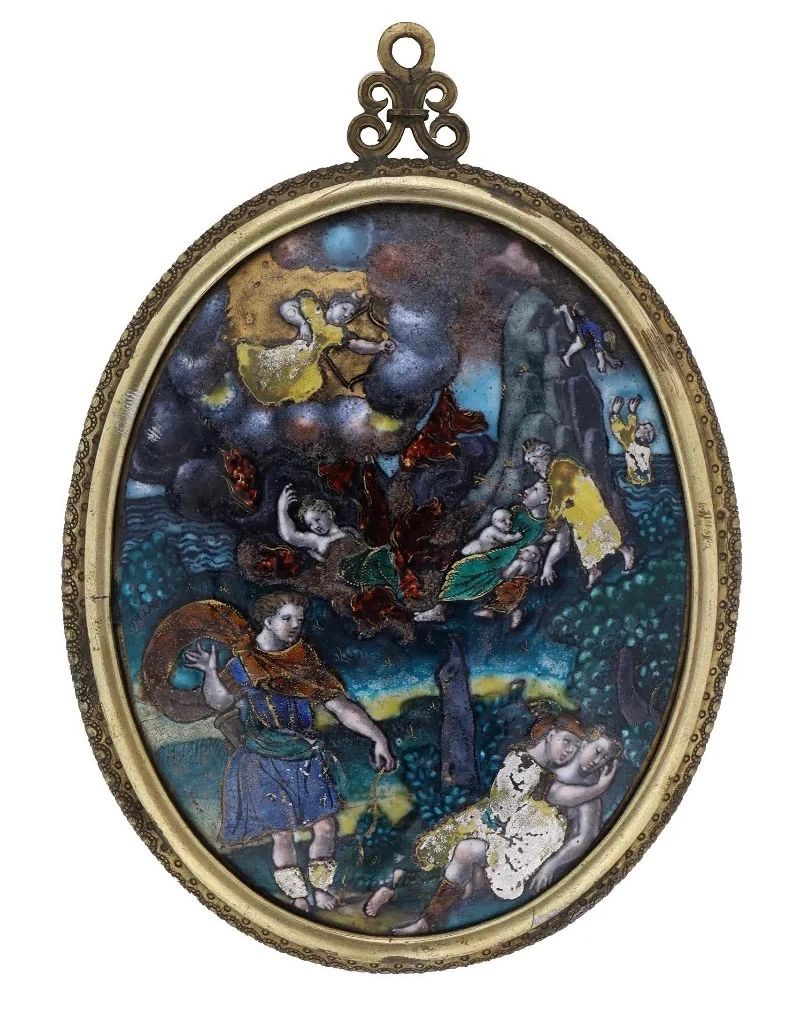
Apollo and Artemis slaying the Niobis in original frame with mirror back. Attrib. The Master I.G. (Jean Guibert), Limoges c.1610: Ref. Notin 2007, The British Museum & The Louvre.
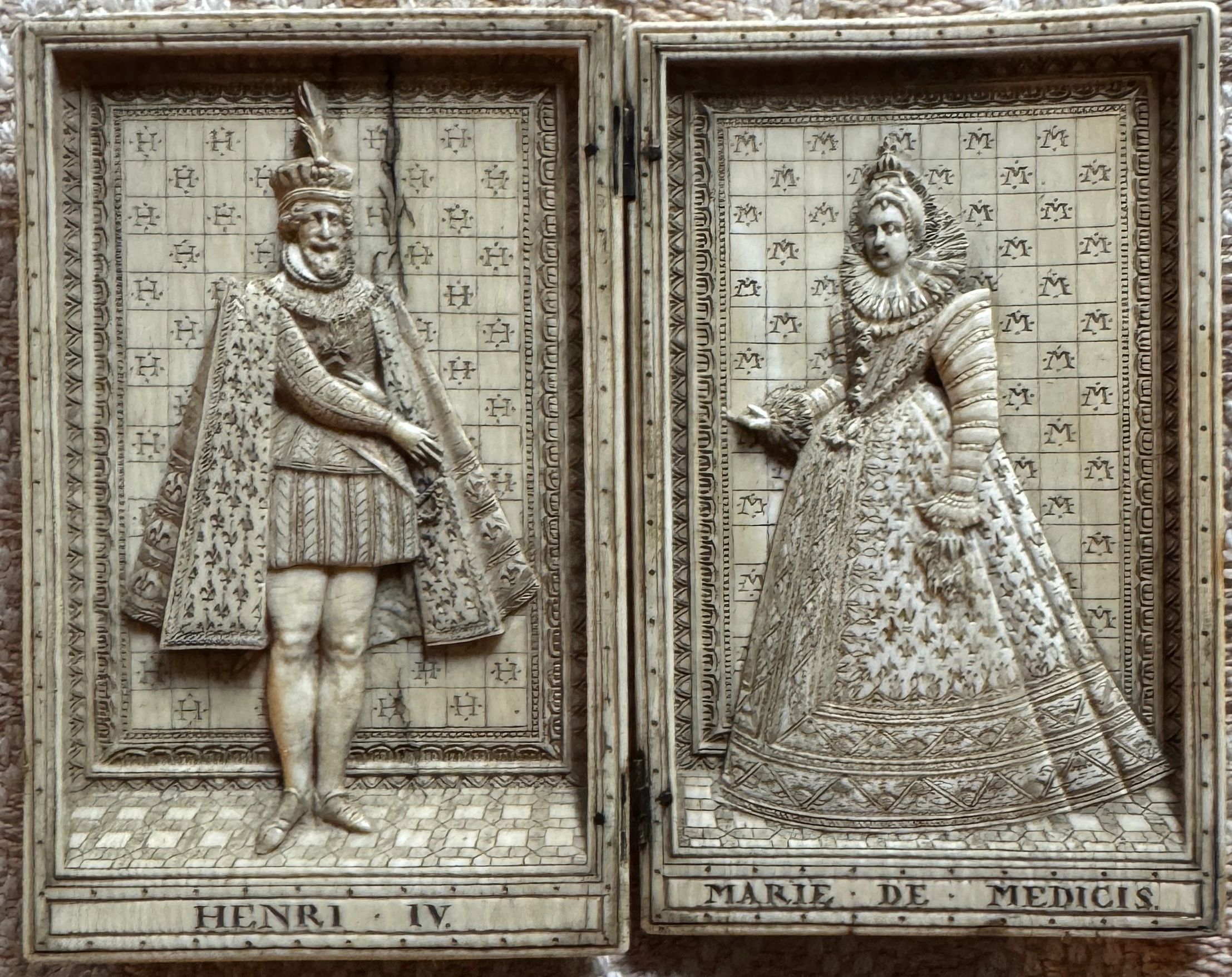
Mammoth ivory bas relief diptych with gold leaf trim commemorating Henri IV & Marie de Medicis’ coronation as queen on May 13, 1610. Dieppe, 17th century.
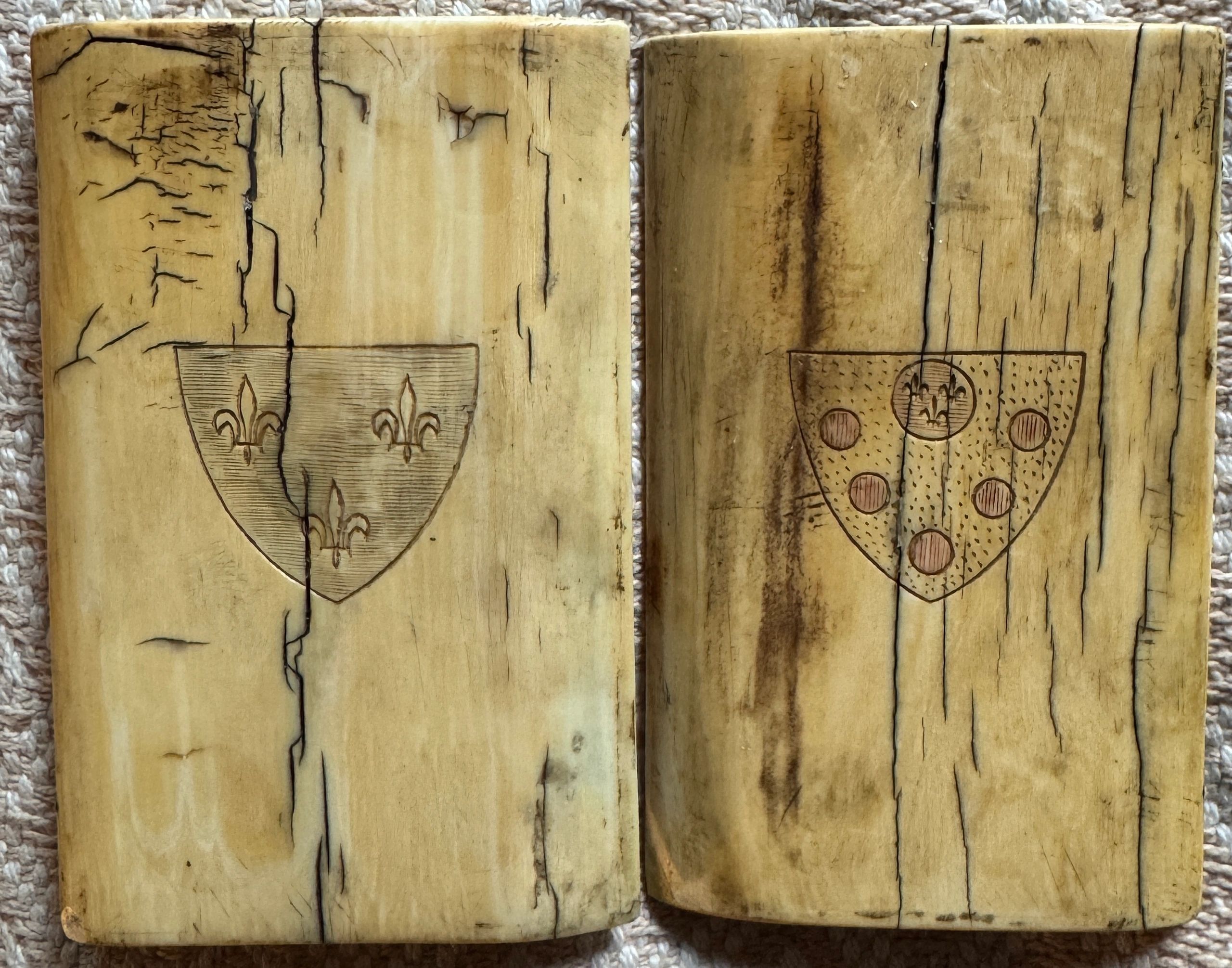
Front view of mammoth ivory diptych showing arms of Henri IV & Marie de Medicis.
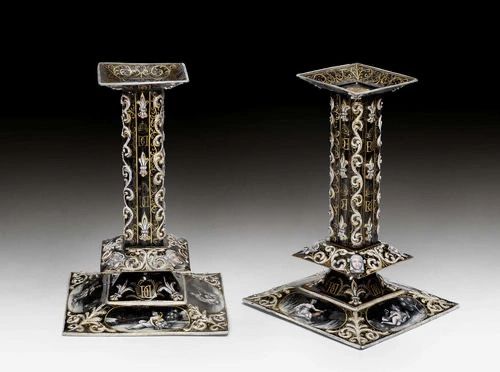
Candleholders depicting images from Jean de la Fontaine’s Fables created by Jaques Laudin I (1627-1695) as a tribute to his compatriot, Fontaine,(1621-1695). Limoges, c.1680
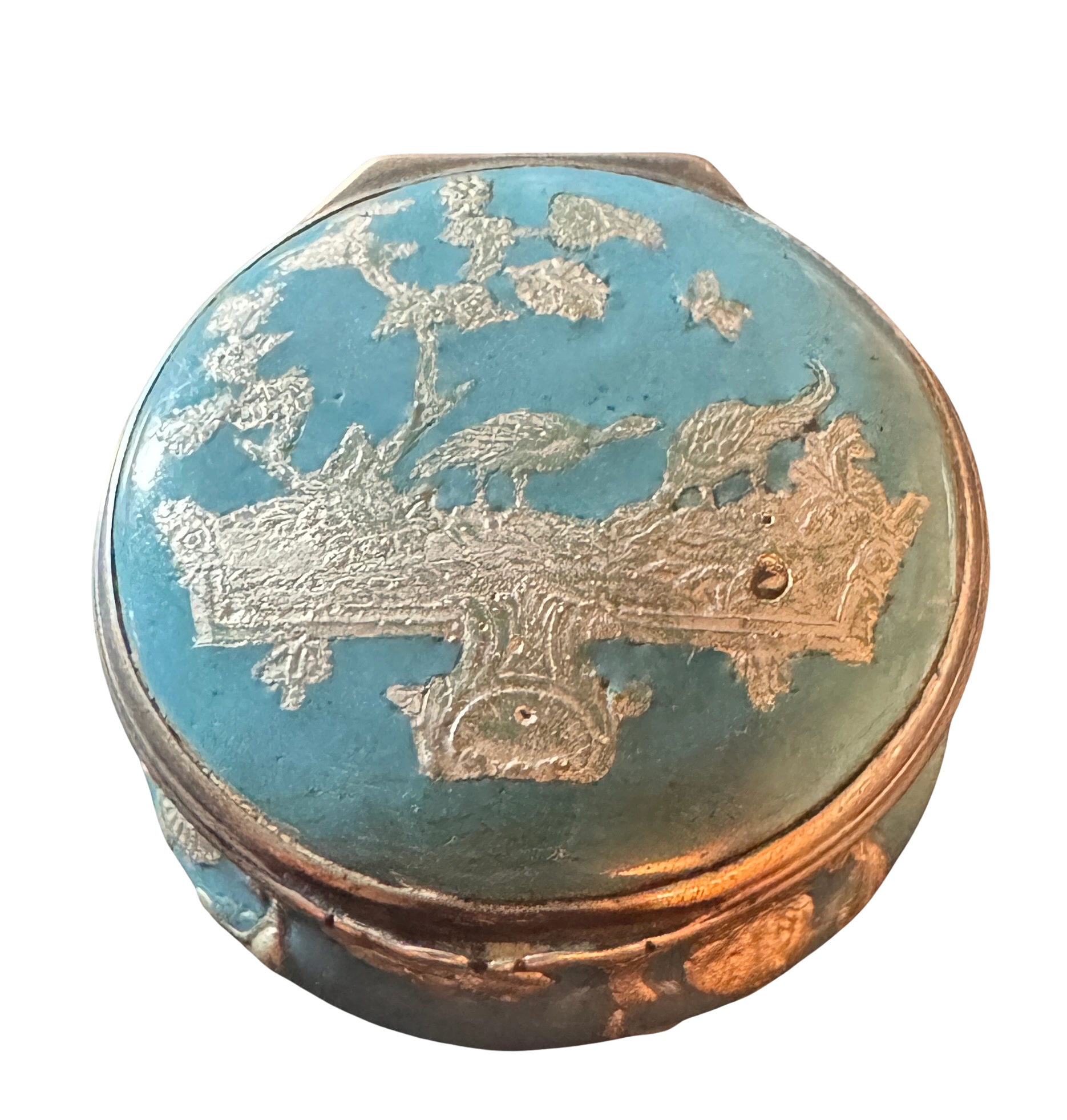
Silver patch box with Limoges style enamel inlaid with silver motifs. Maker Denis de Rosnel, Paris Master, entered 1692.
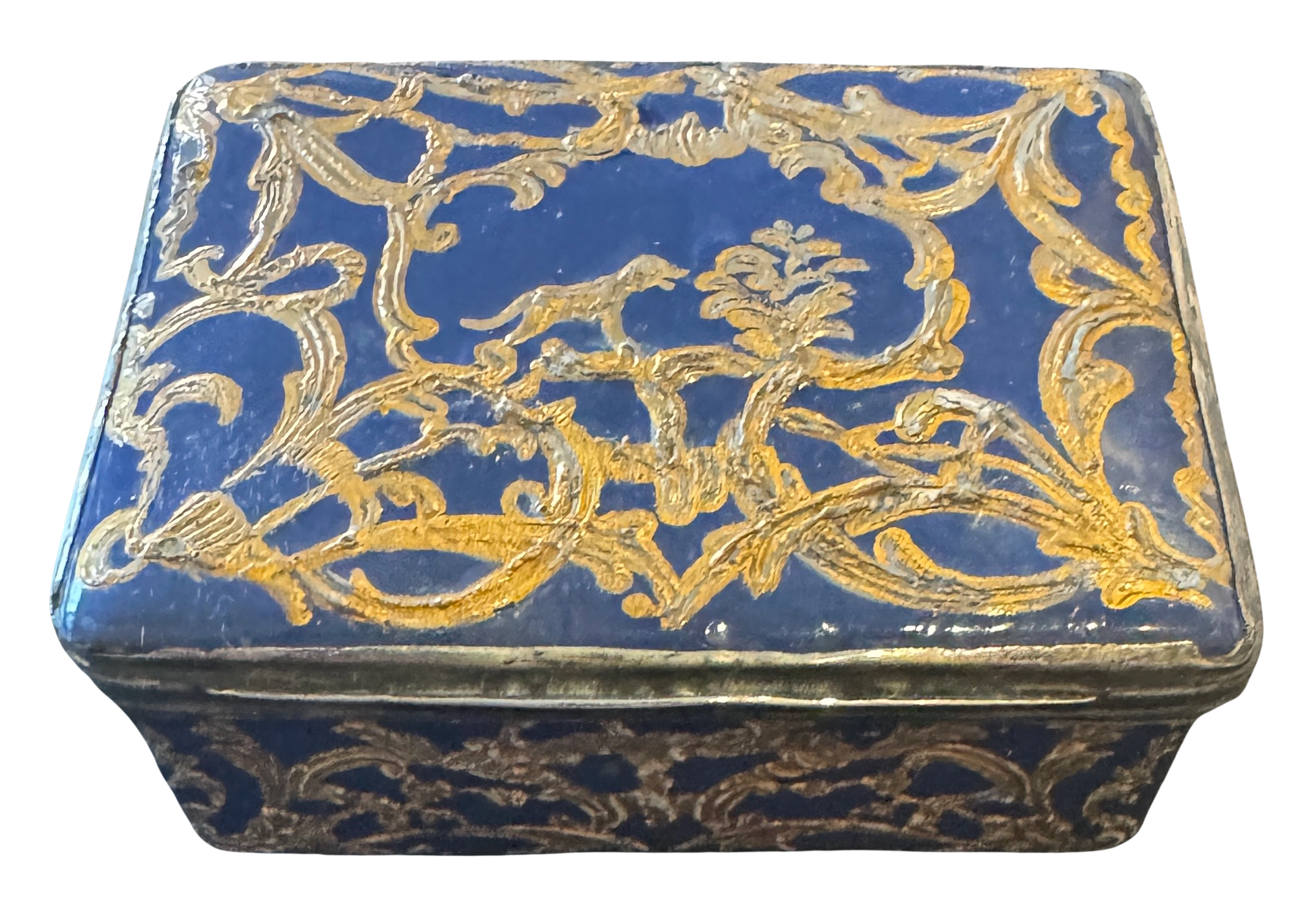
Silver mounted snuff box decorated with champleve enamel. Etienne-Jacques Marcq, Paris (M. 1732)
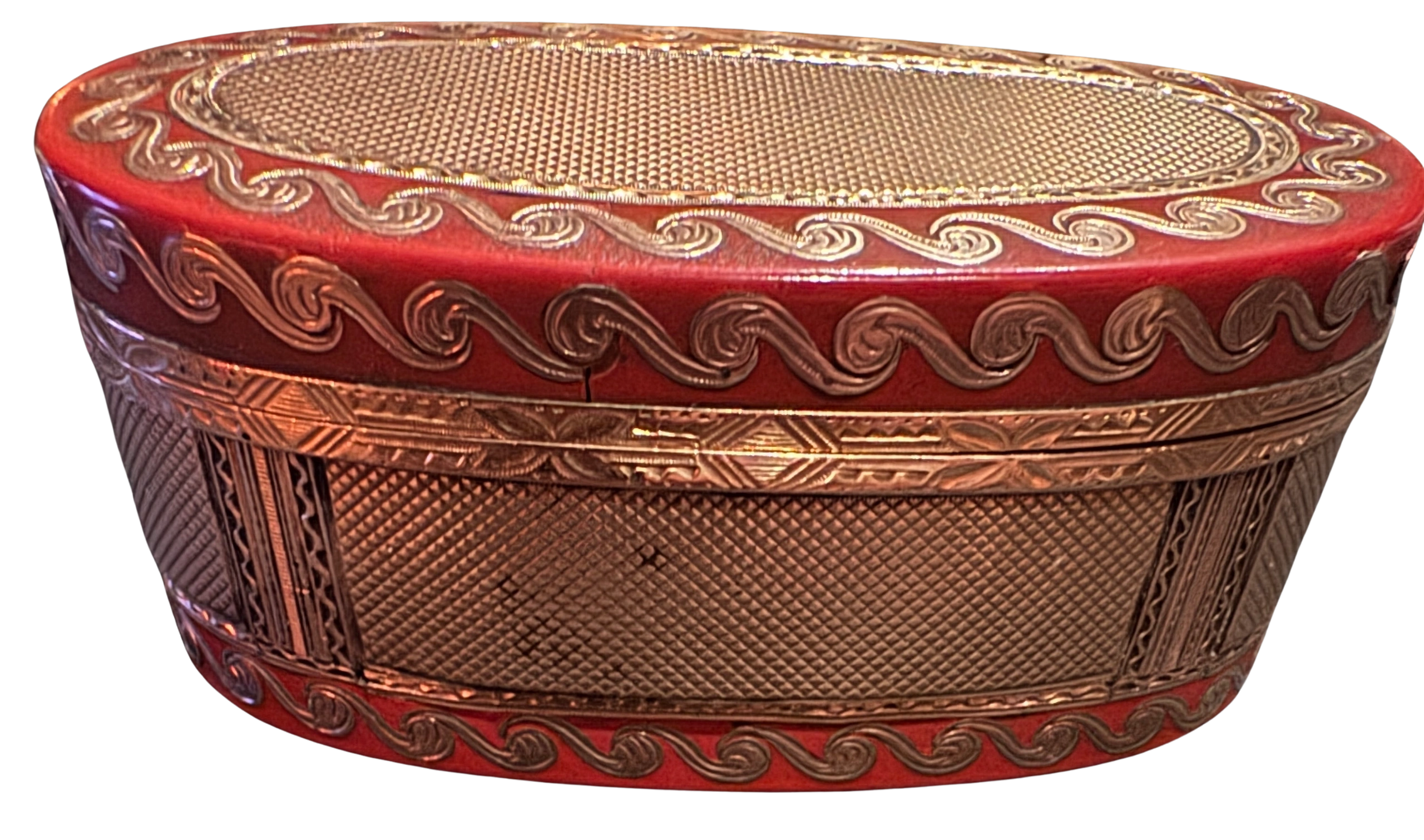
Gold & coral mounted snuff box. The tortoishell interior set with a miniature depicting a gentleman wearing the insignia of the Royal and Military Order of Saint Louis. Paris contremarque for 1738-1744.
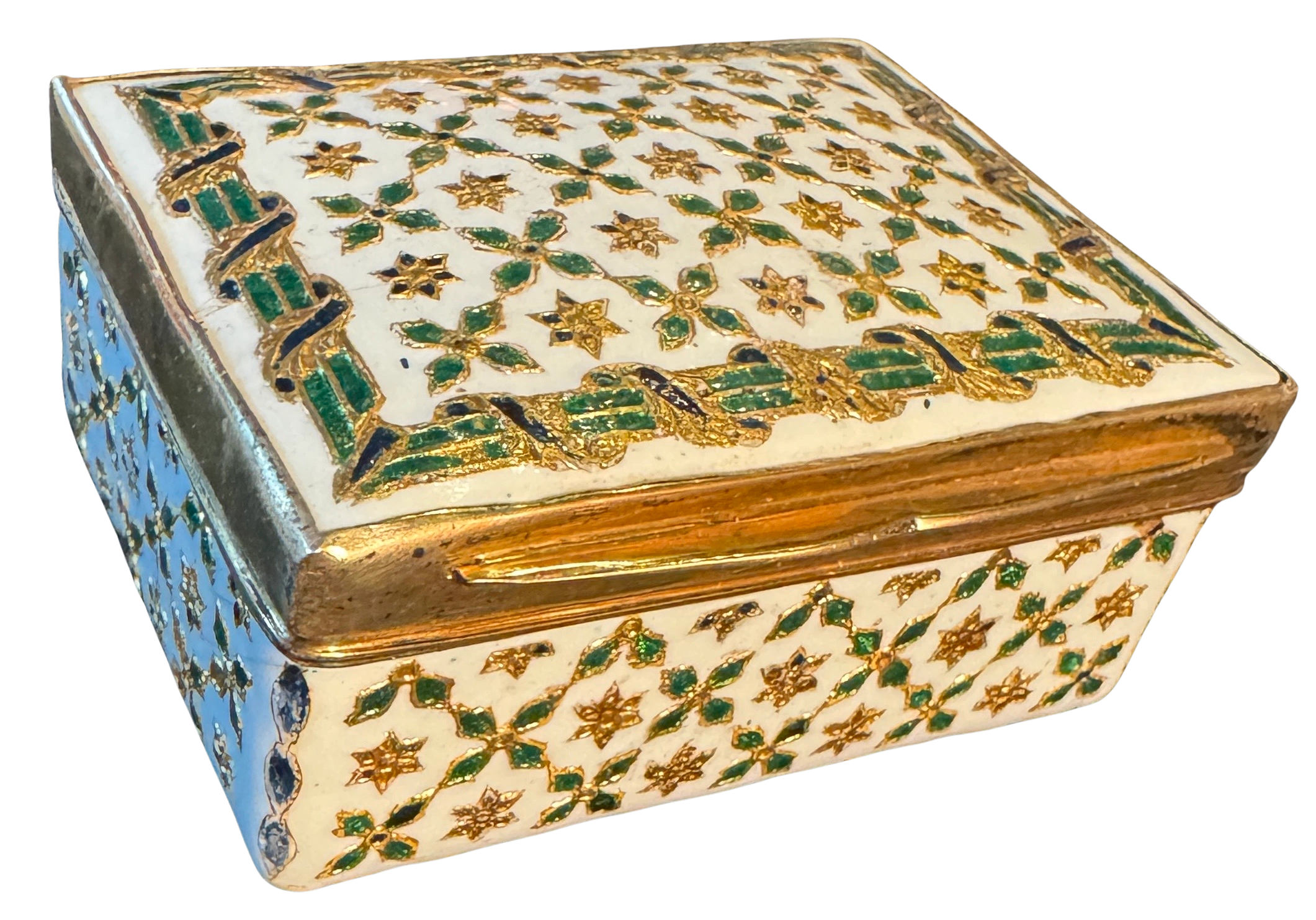
Enameled decorated snuff box with vermeil mounts. Paris, Louis XVI, c.1770.
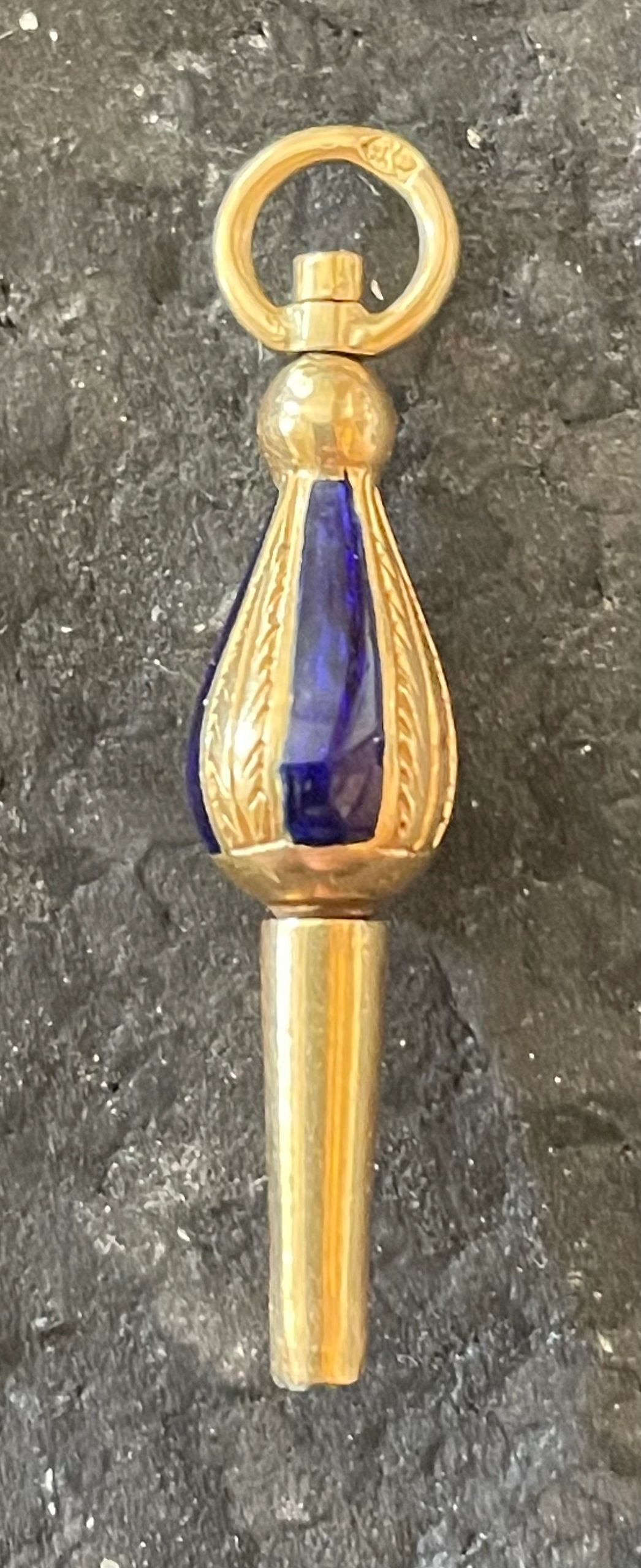
Enameled gold watch key. Breguet, Paris c.1785
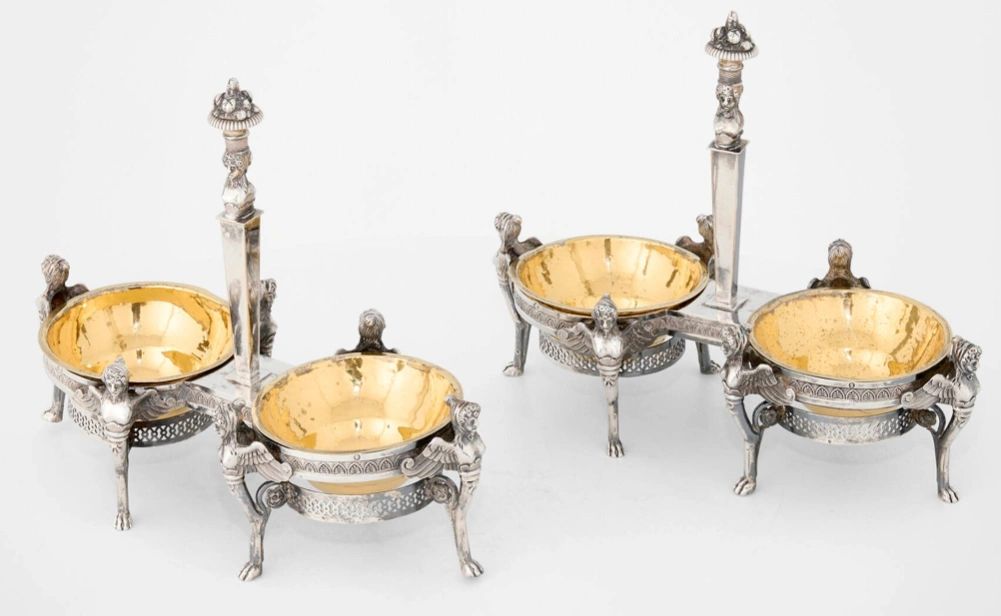
Silver table salt cellars by Alexandre-Andre-Camille Lesot de la Panneterie. From the Palais de Luxembourg Directoire service. Paris, c.1798.
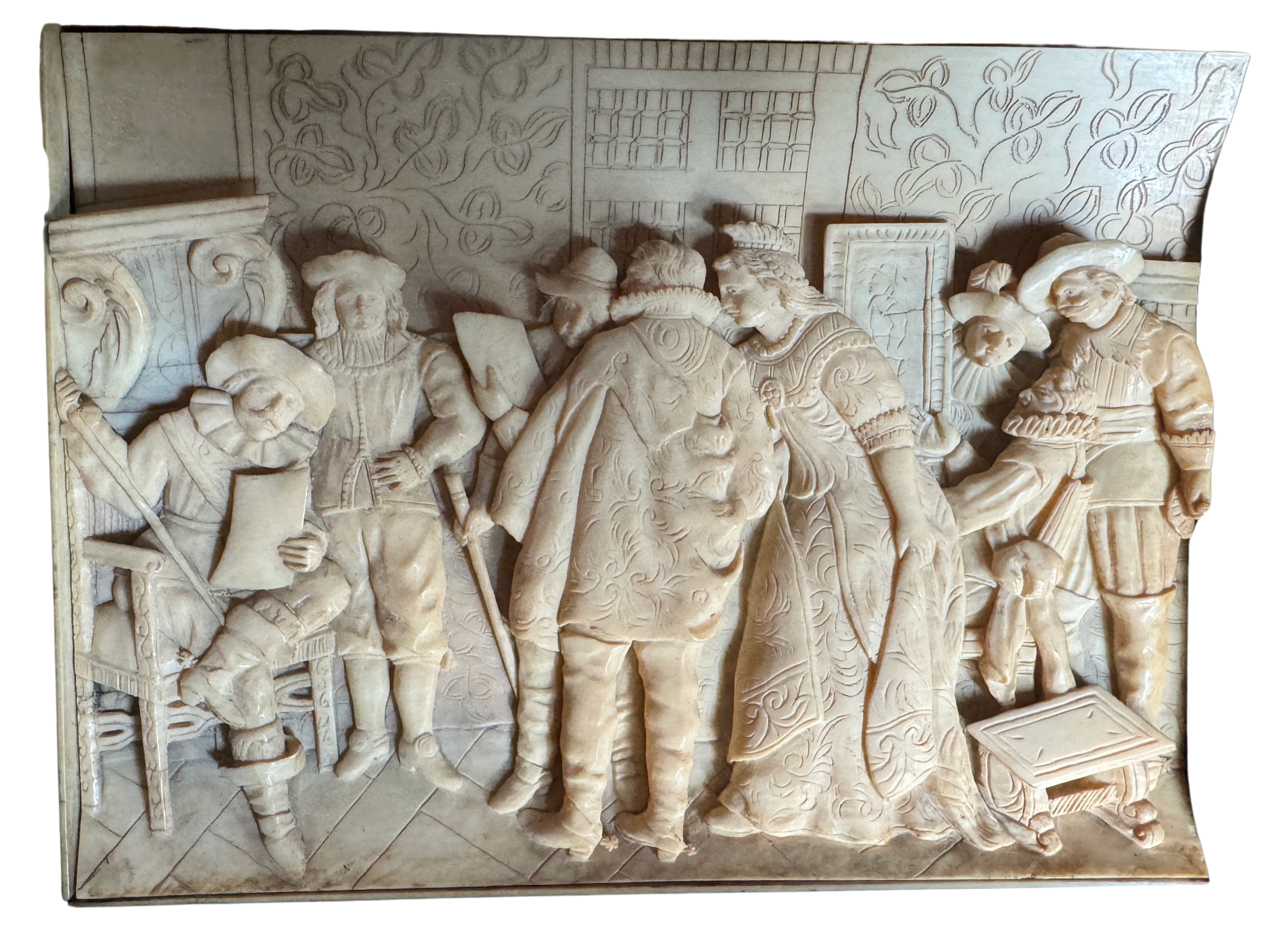
Ivory bas relief Artist’s impression of the Desolate Boedelskamer auction of Rembrandt van Rijn‘s possessions in the ante-room of his Breestraat house in July 1656. Frans Bruijningh (1610-1684), Secretary of the Boedelskamer, is seated flanked by Rembrandt himself to his left. Dieppe, c.1840.
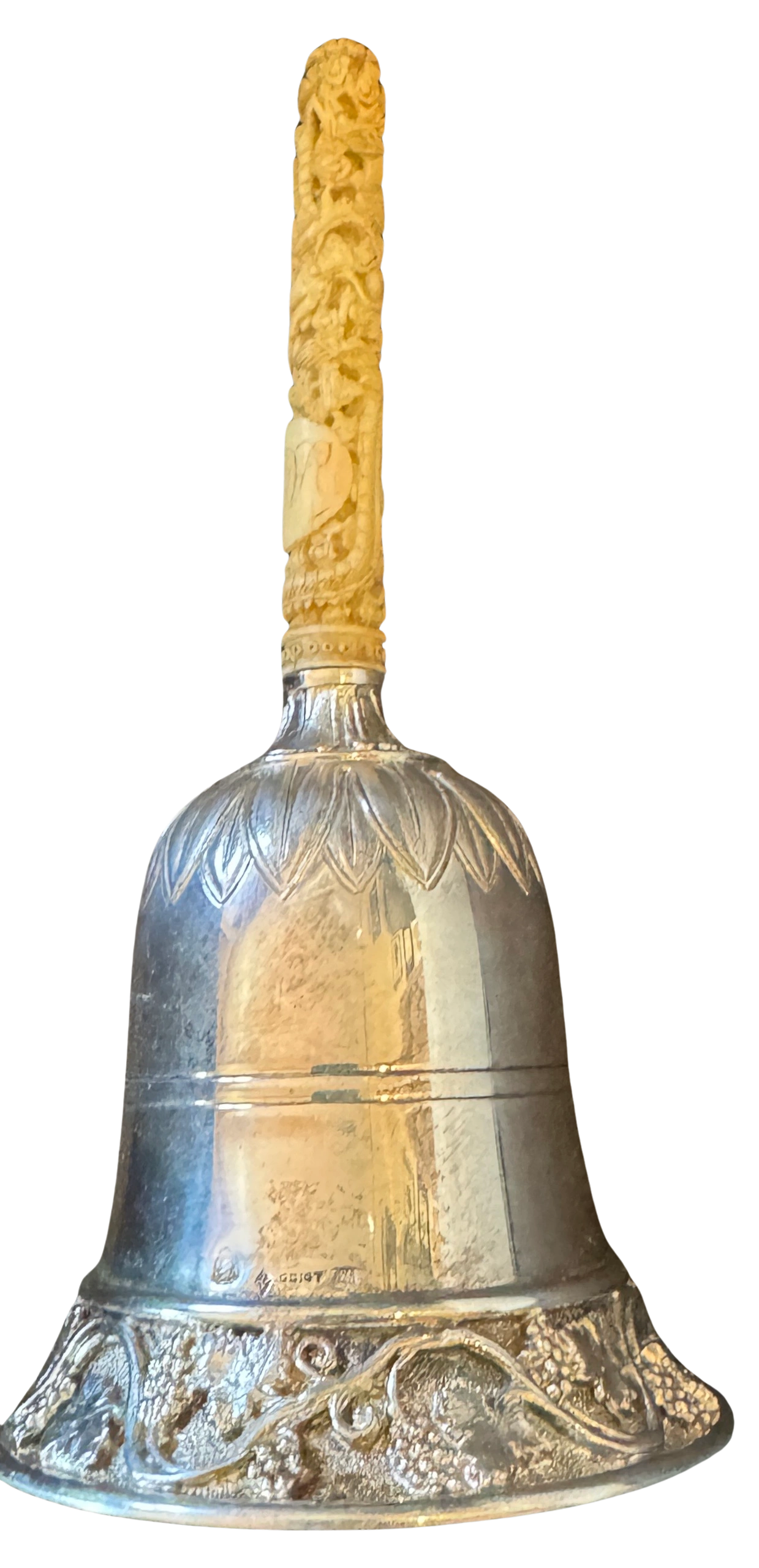
Grapevine pattern silver bell with l’indochine carved ivory dragon handle. Odiot, Paris c.1870
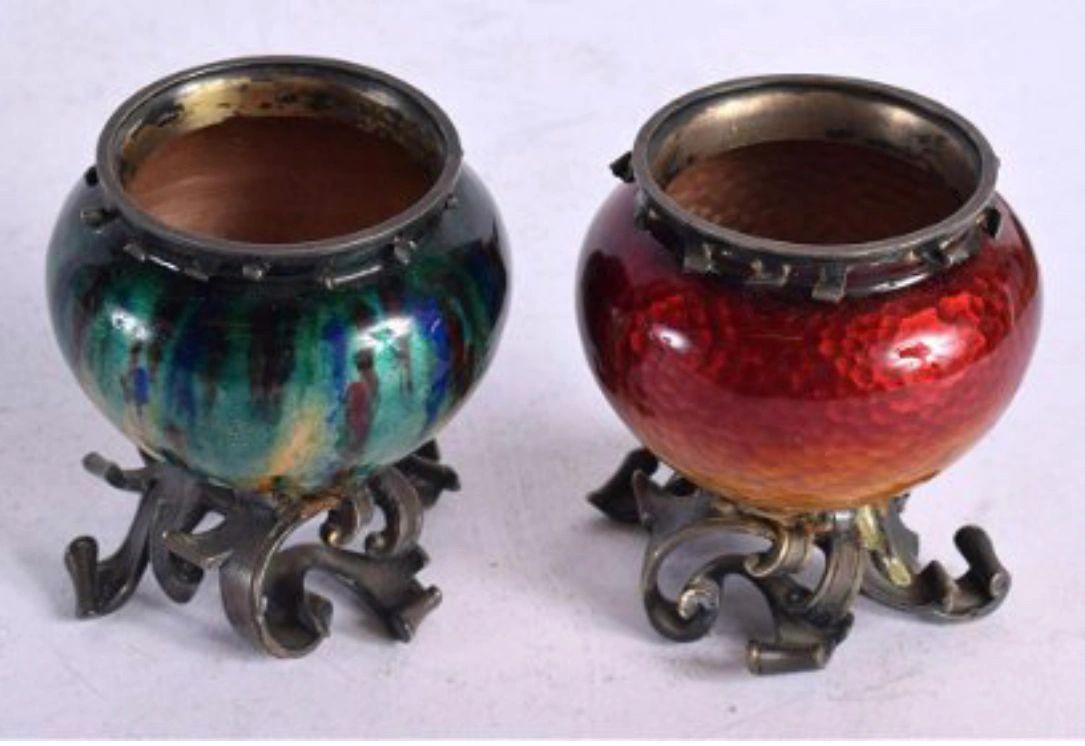
Enamelled silver bowls from the 1889 Paris International Exposition exhibit of Julien Duval & George Leturcq.
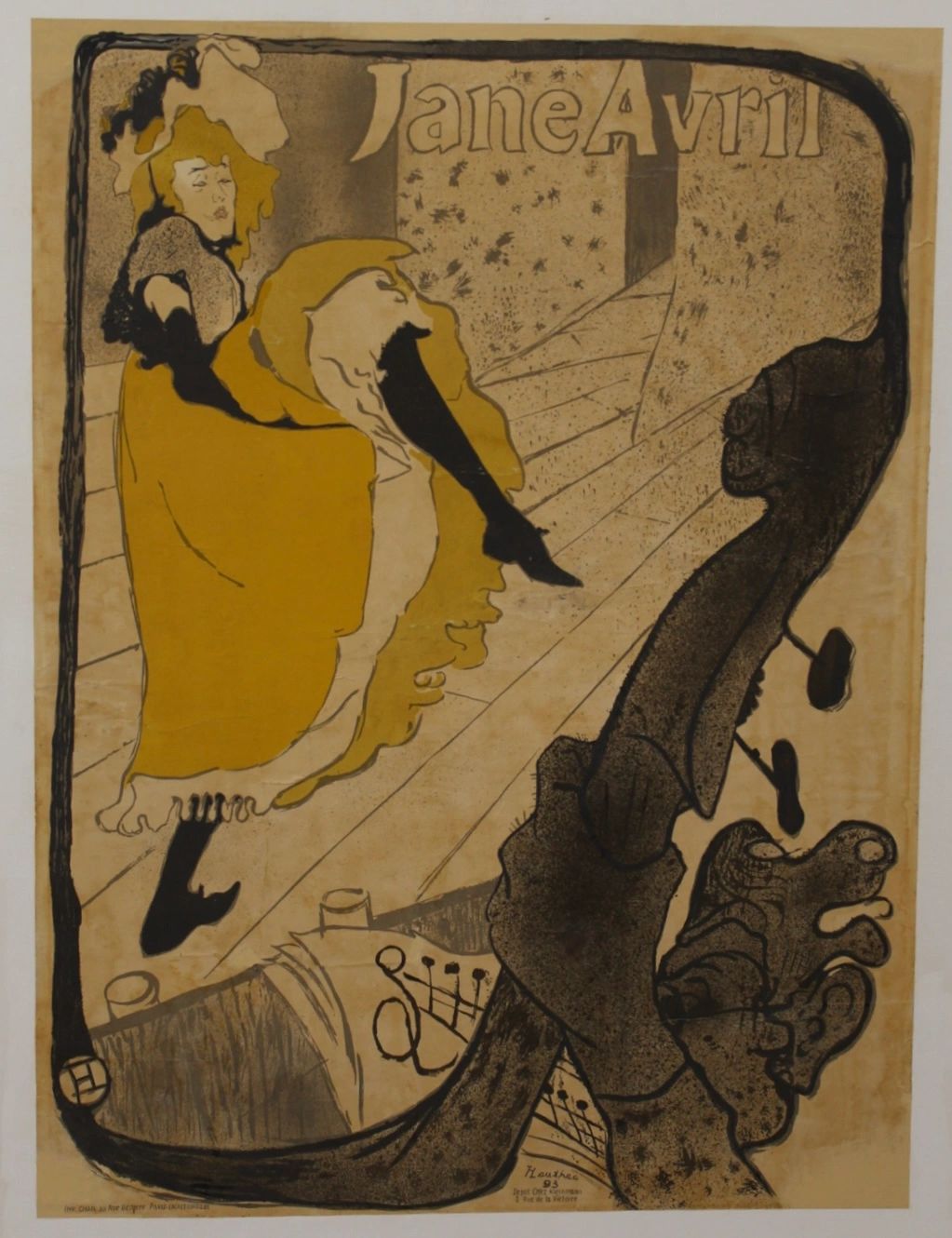
Jane Avril poster by Tuulouse Lautrec. Paris 1893
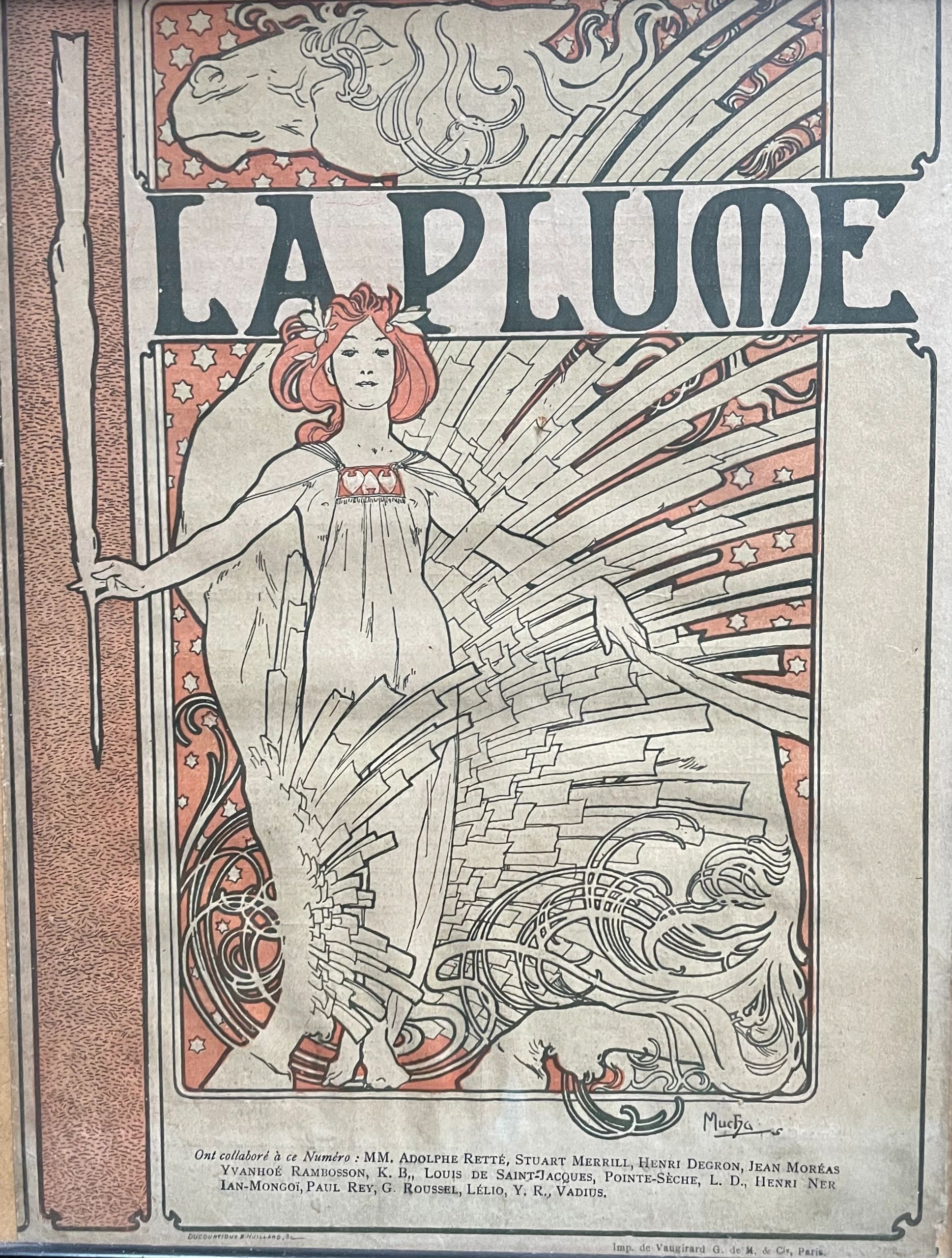
La Plume, bi-monthly periodical devoted to Art & Artists. Cover by Alphonse Mucha, Paris 1898
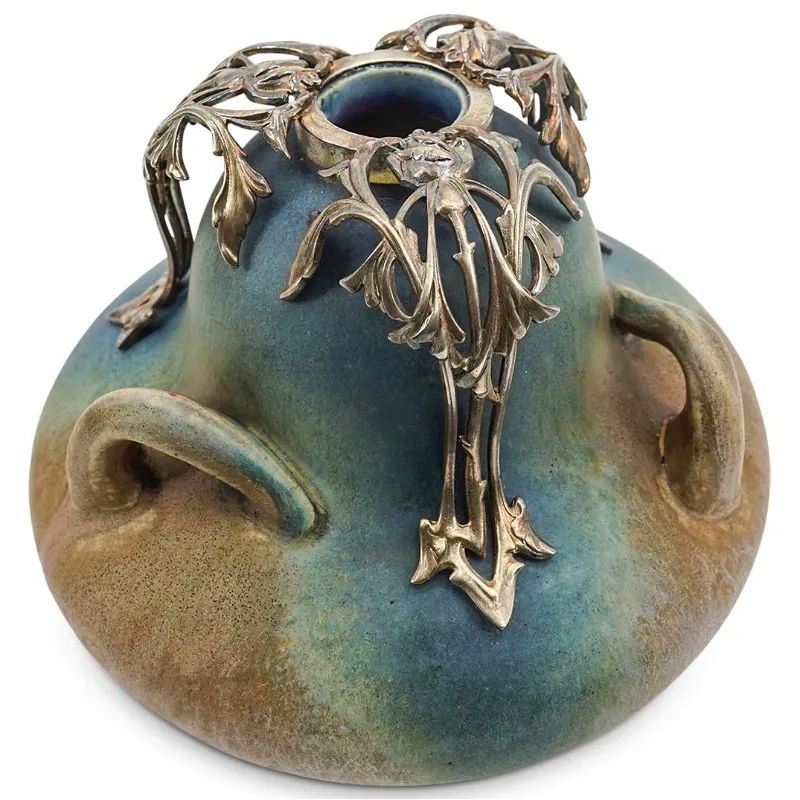
Art Nouveau stoneware pottery vase by Auguste Blanche with ormolu mounts by Lucien Marcel Bing. Paris, c.1905

Letter opener in jade, mounted enameled silver gilt handle set with diamonds. Cartier, Paris c.1900
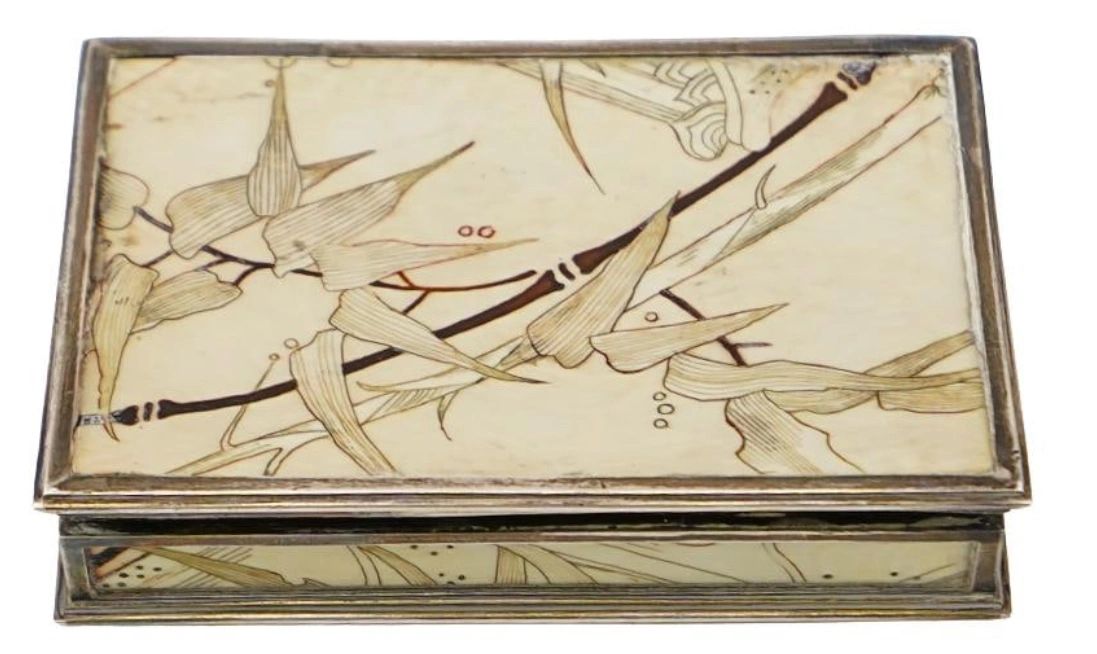
Silver mounted ivory box with bamboo foliage design in Japonisme style. French silver marks for Paris, c.1900
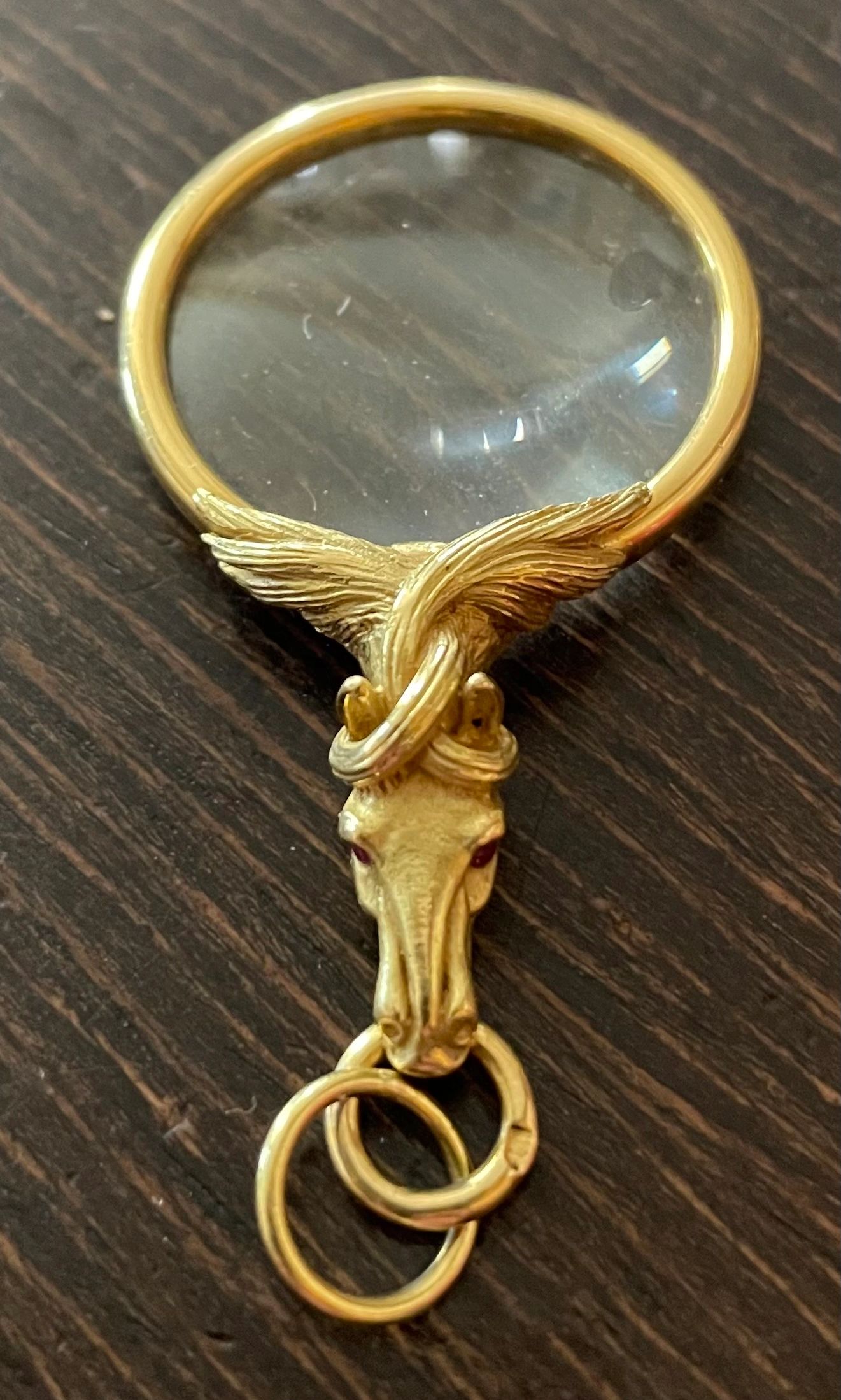
Gold loup modeled after Minoru, the 1909 Derby winner owned by King Edward VII. Boucheron, Paris.
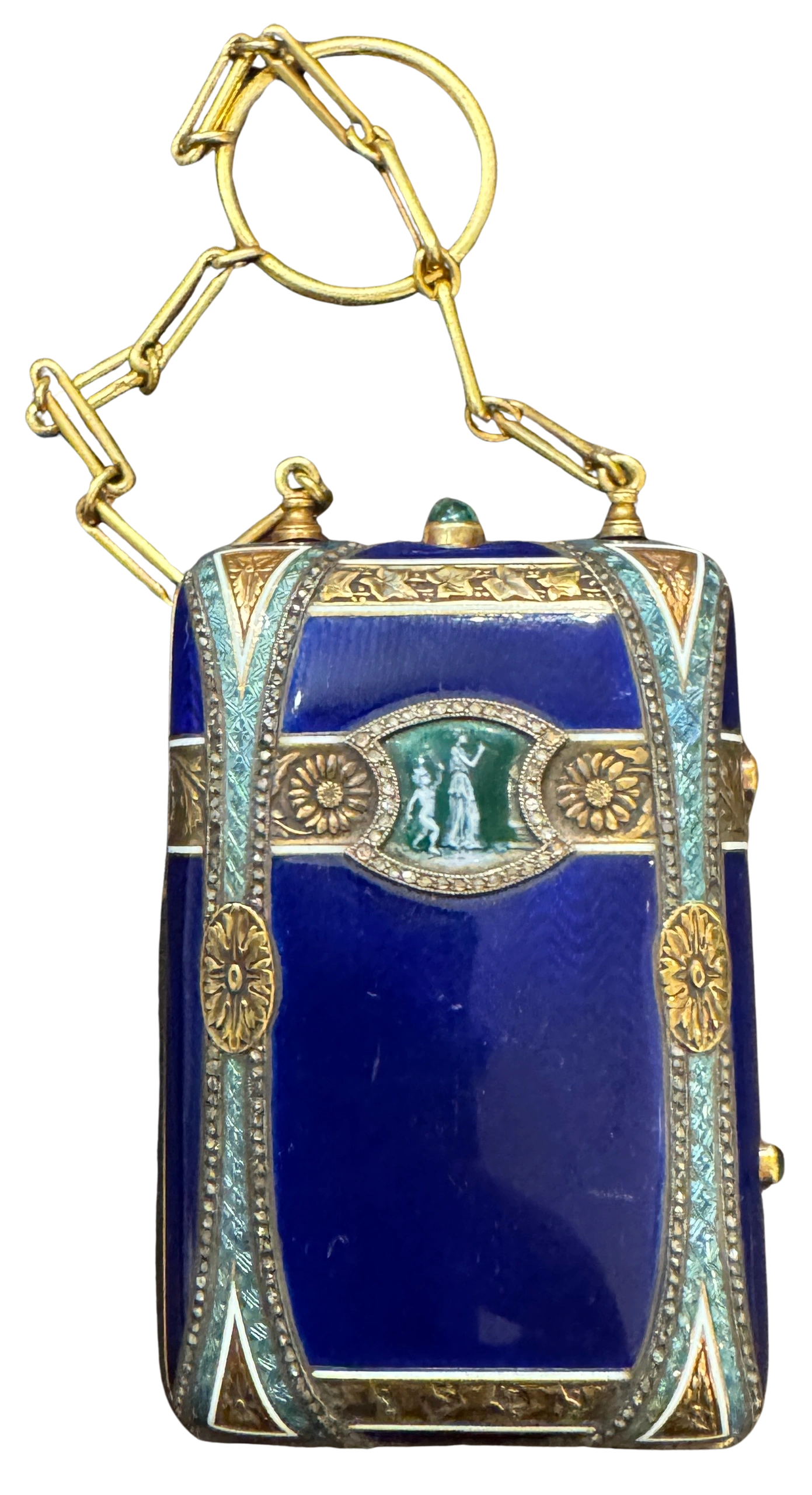
Gold necessaire, inset with an enameled plaque depicting a scene from the Thargelia Festival, set with 260 mine cut diamonds & emerald push clasps. La Belle Époque is defined here in this creation by Edouard Husson (active 1905-1925) for Lacloche Freres. Paris, c.1908.
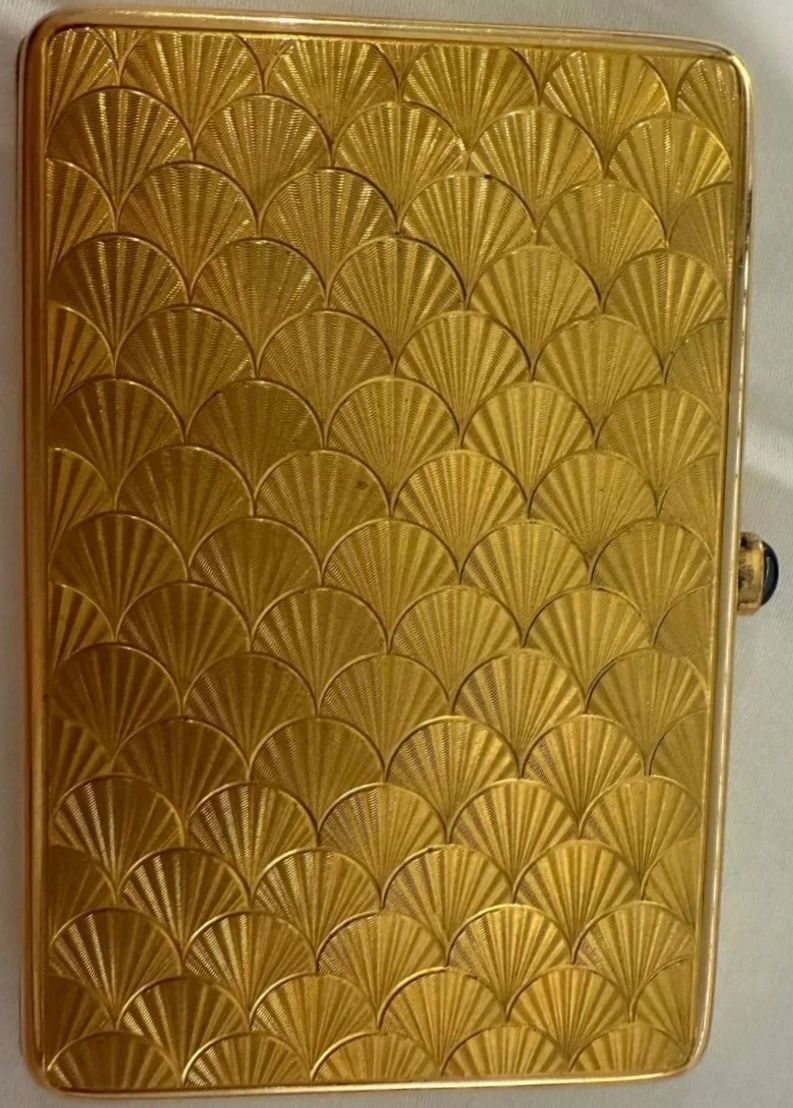
Gold Japonisme card case set with royal blue cabochon sapphire push. Paul Frey for Lacloche Freres. Paris c.1910
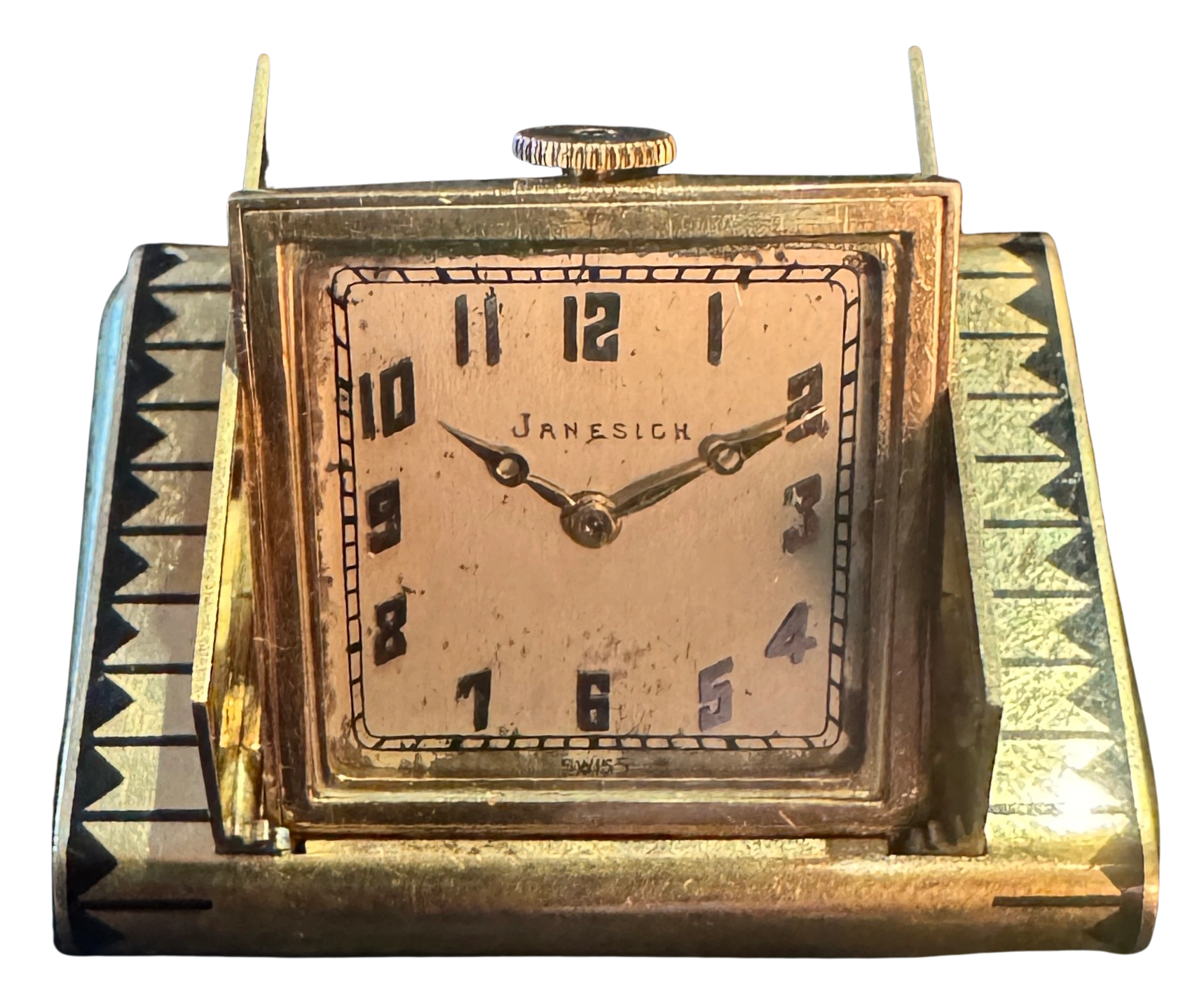
Gold Montre de Sac (purse watch) by Verger Freres, movement by Vacheron Constantin. Retailed by Janesich, Paris or Monte Carlo, c.1925
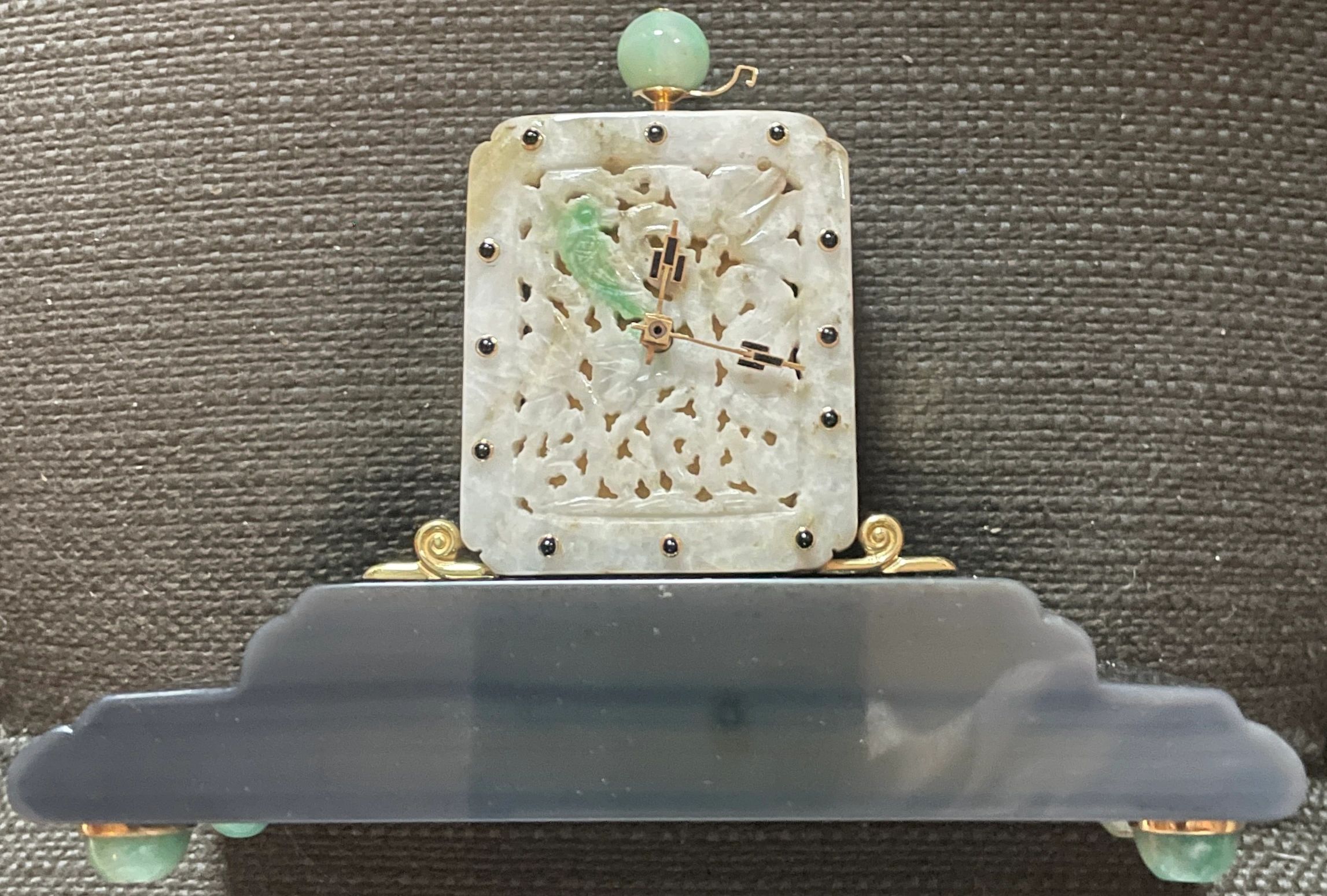
Clock set in antique Chinese jadeite plaque with green parrot accent, on a gold and onyx base, gold mounted jade feet & onyx hour indicators with enameled gold hands. 9 day going lever movement (12 ligne - 6.7) signed LUTZ FRANCE (Jean Lutz, active 1917-1937). Lacloche Freres, Paris c.1920
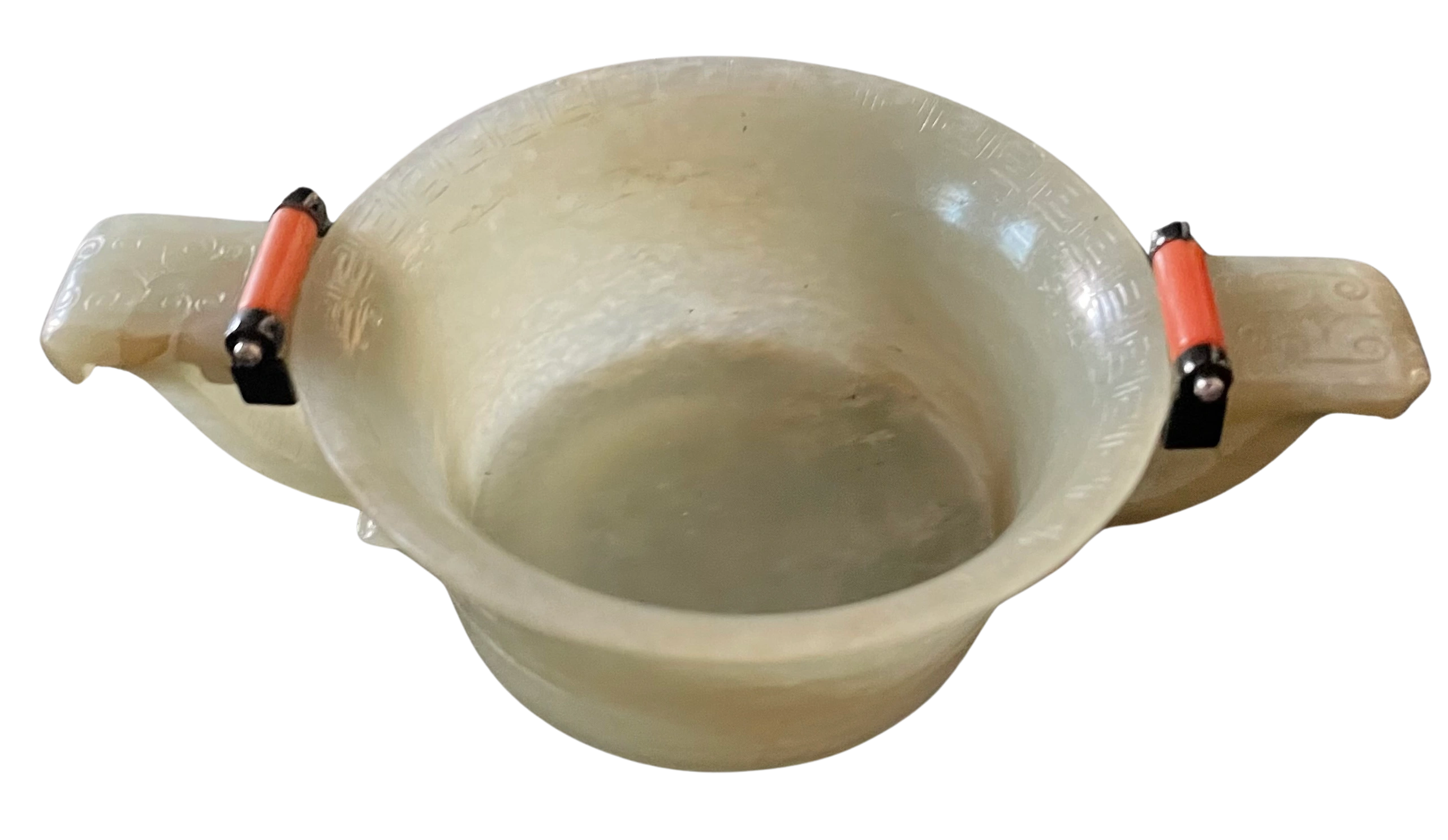
Archaistic China meets French Art Deco - Ming dynasty gui form celadon jade libation cup set with enameled & jeweled decoration by Anna Rimbaud for Cartier, Paris c.1920. (Rimbaud entered her mark in 1911, the Comet symbol used as a tribute to Veuve Cliquot)
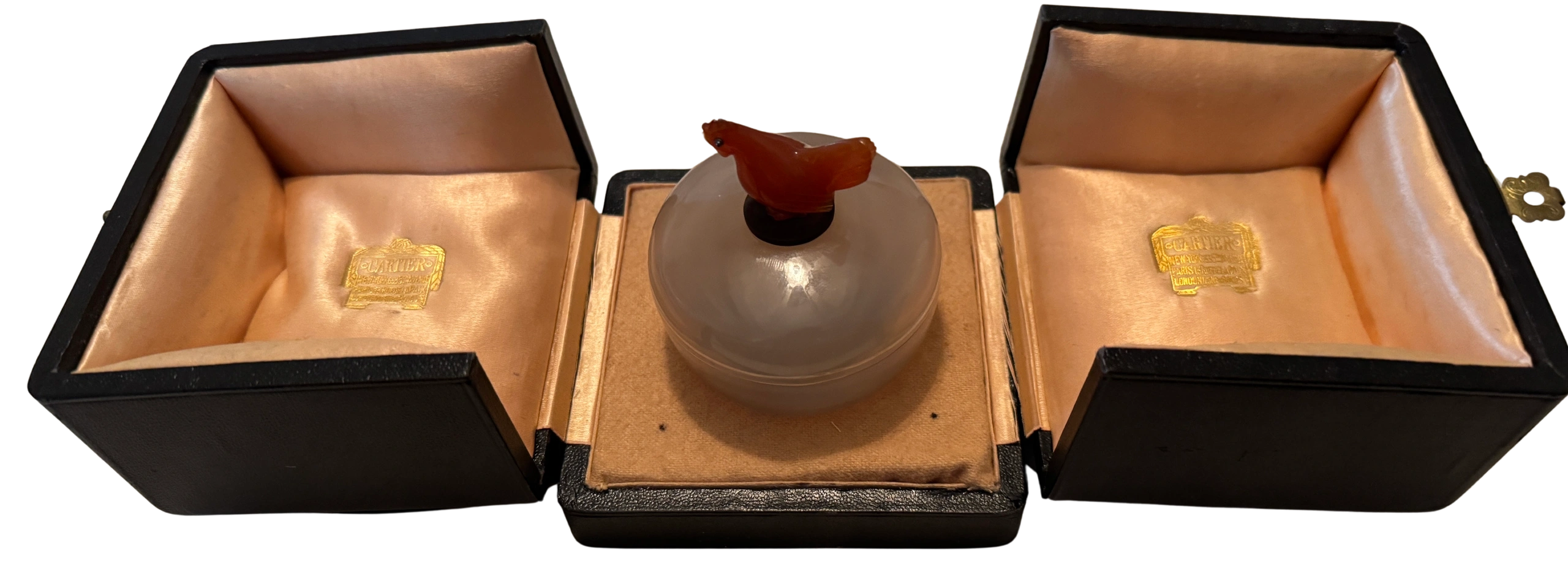
Antique Chinese chalcedony seal paste box set on an enameled gold & silver base, the lid topped by a carnelian red rooster with cabochon sapphire eyes. Work master Paul Pillard for Cartier, c.1930.
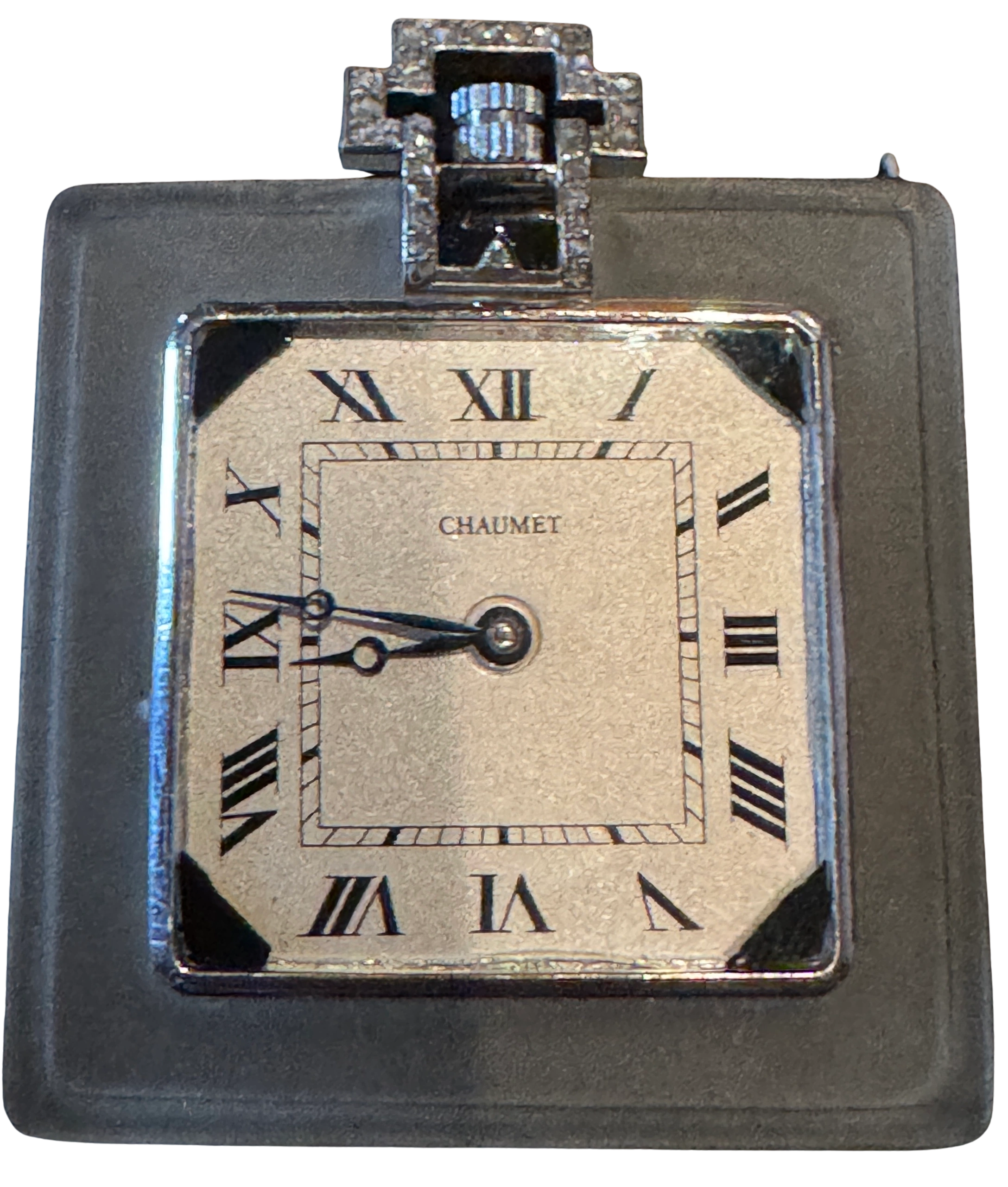
Art Deco is defined in this enameled platinum & rock crystal pendant watch set with diamonds. Chaumet, Paris c.1925
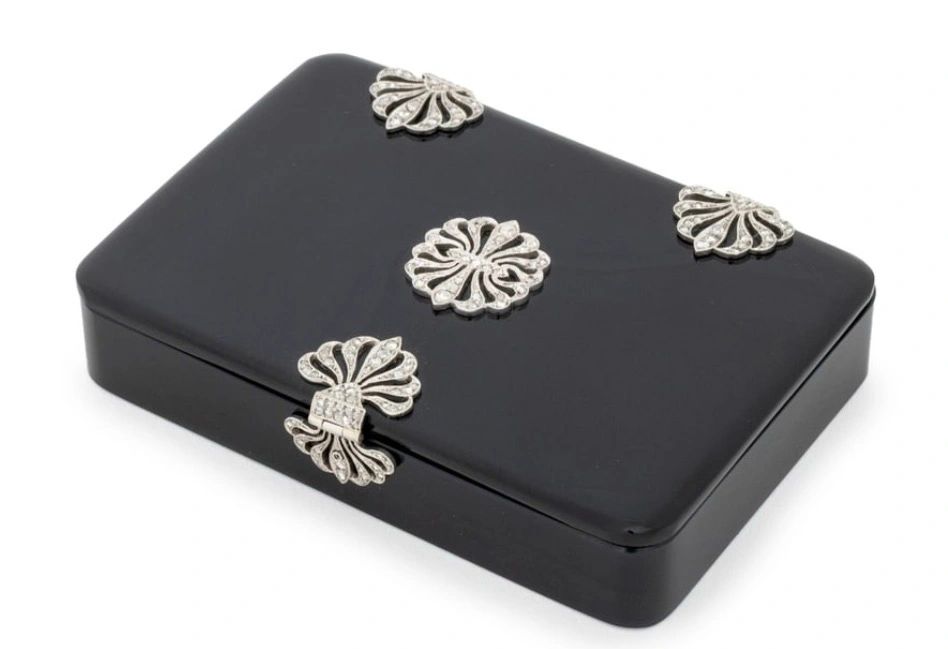
Onyx box mounted with white gold hard set with diamonds. Chaumet, Paris c. 1925
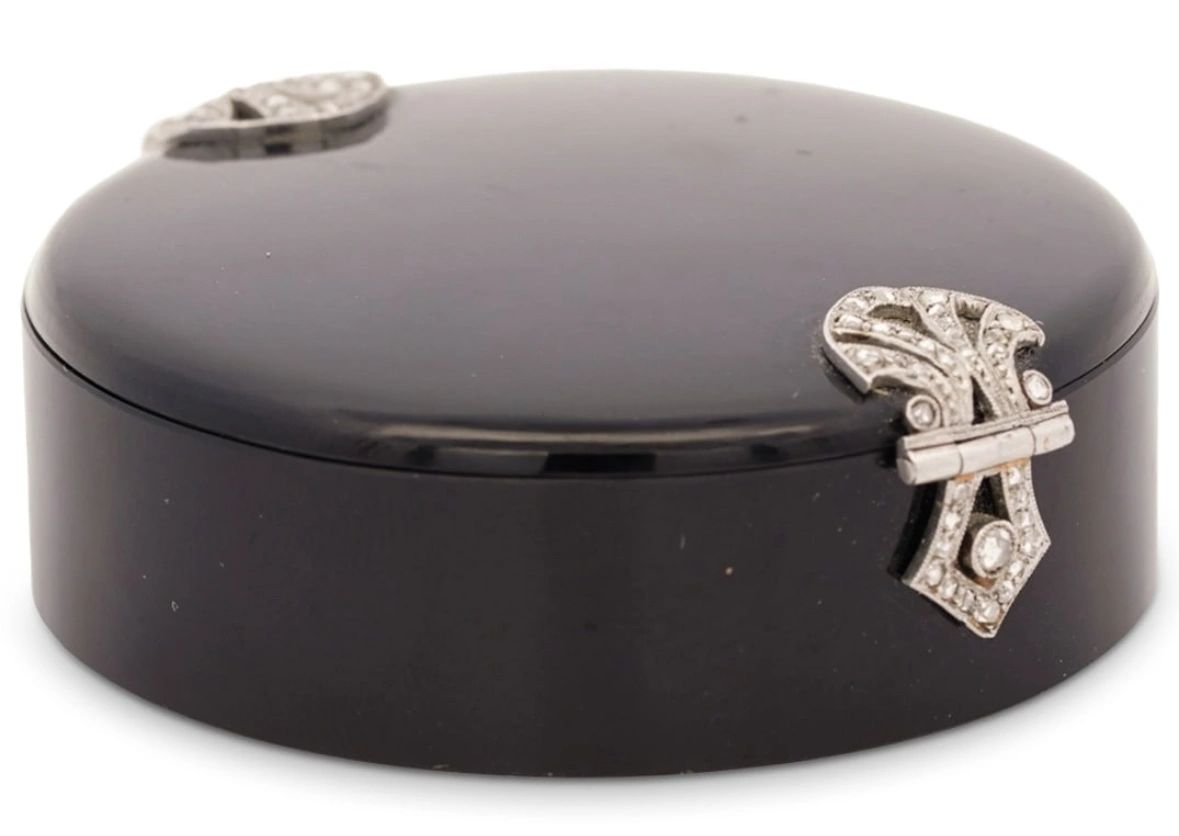
Platinum, diamond & gold mounted onyx poudrier. Chaumet, Paris c.1925.
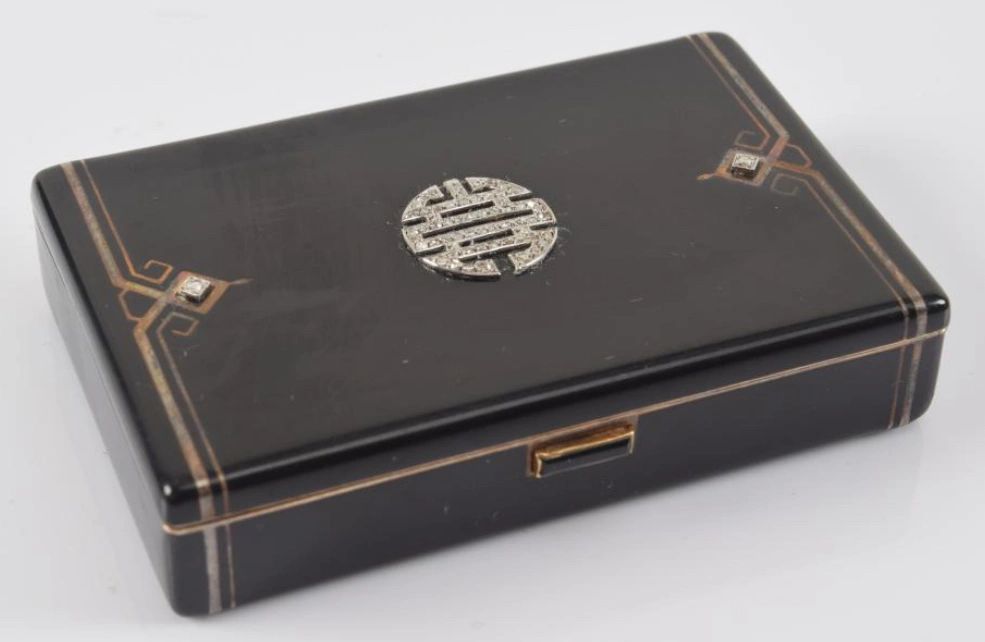
Enamel silver compact with gold accents. Set with diamonds and gold mounted onyx clasp. Cartier France with London 1930 J. Cartier import marks.
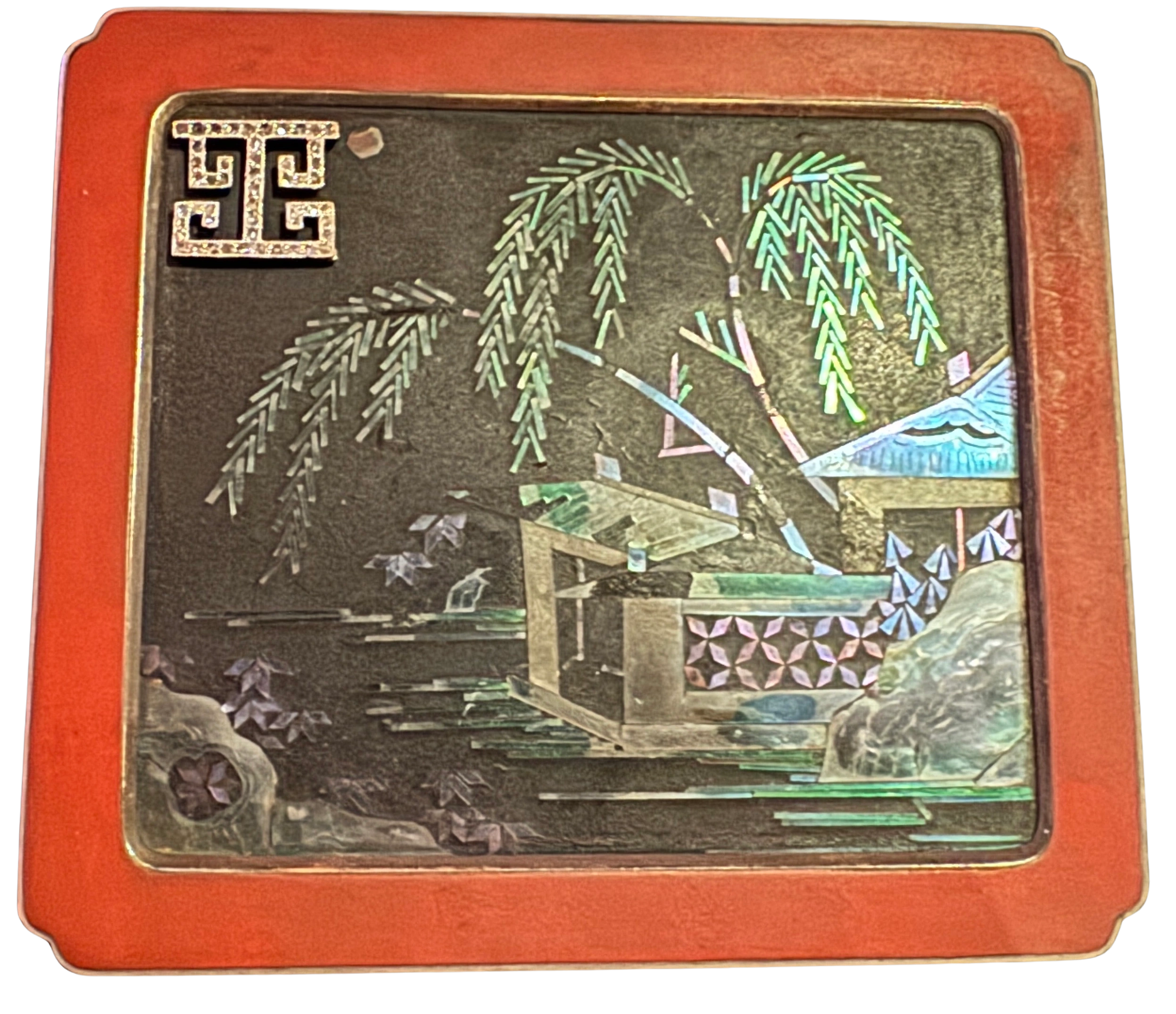
Chinoiserie Boite de necessaire in gold, silver, enamel & diamonds. Strauss Allard Meyer for Lacloche Freres. Paris c.1925. London 1927 import mark for George Stockwell.
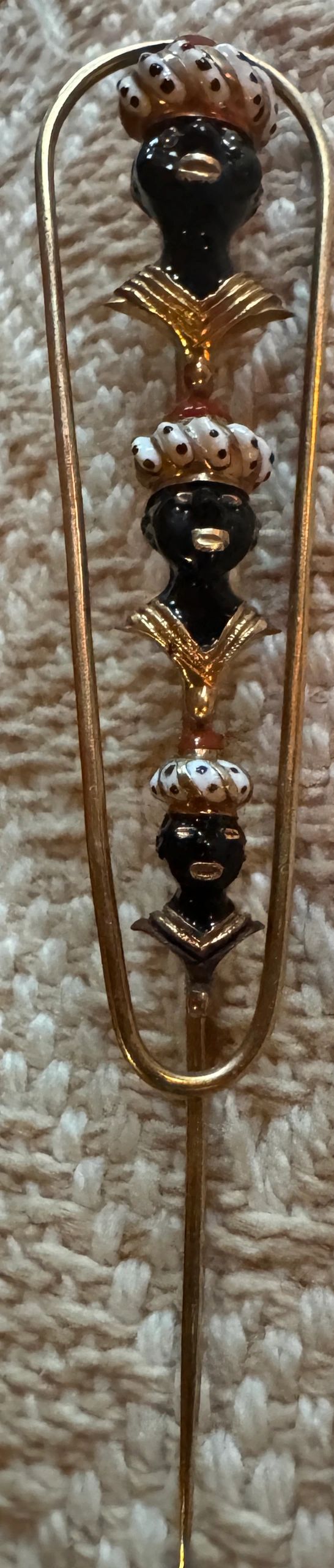
Blackamoor pin, enameled on gold, set with diamonds & coral. Cartier, Paris, c.1930
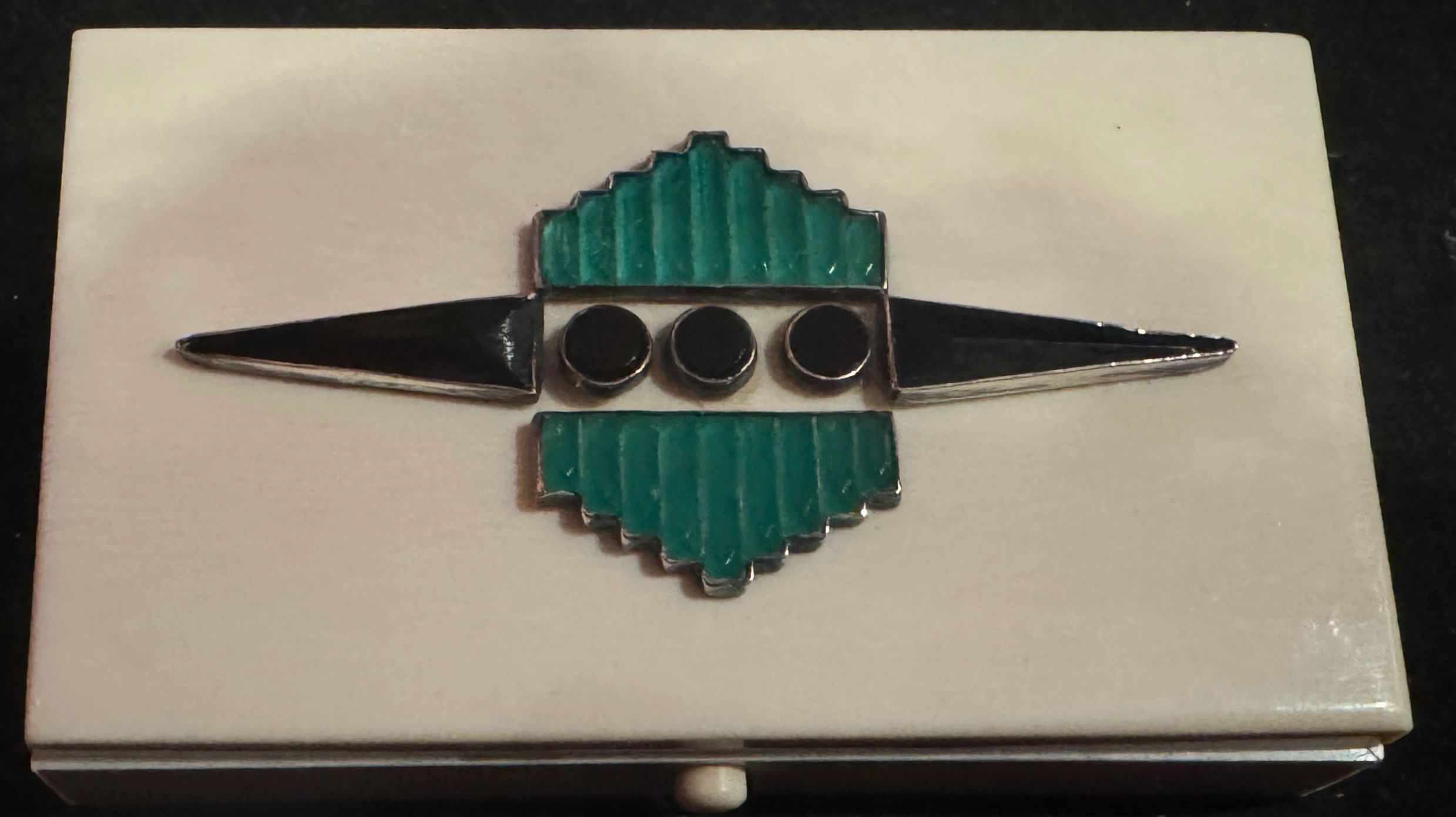
Art Deco ivory box mounted with silver decoration set with onyx & chrysoprase motifs. Attrib. Gerard Sandoz. Paris c.1930
Russian agate Kovsch mounted in gold set with precious stones
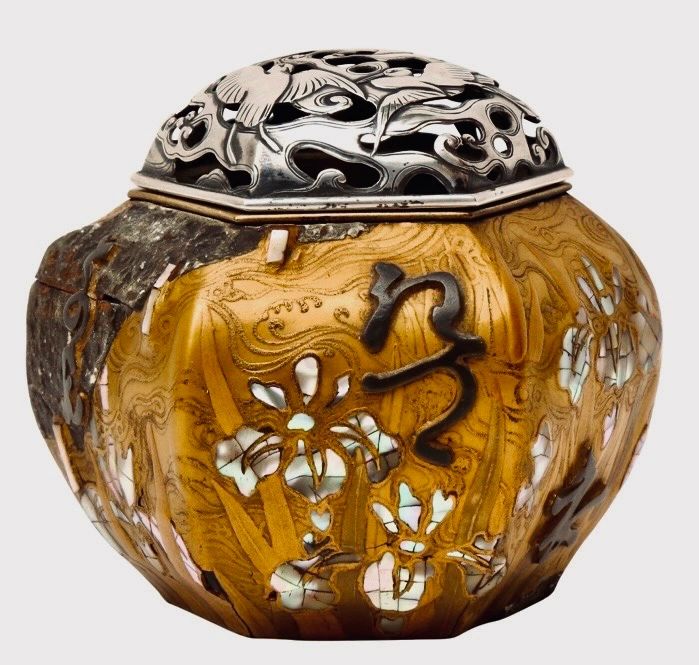
Lacquer, pewter & silver mounted Koro depicting a story from Ise Monogatari (The Tales of Ise, 980 AD): Irises at Yatsuhashi, where Waka poet Ariwarano Narihara (825-880), writes a hokku poem using the Kakitsubata (iris) petals as a hiragana word puzzle: KaRagoromo/KitSutsu Narenishi/TsuMa Shi Areba/HaRubaru Kinuru/TaBi O Shi Zo Omou: I have a beloved wife/Familiar as the skirt/Of a well worn robe/And so the distant journeying/Fills my heart with grief. Signed Ogata Korin (1658-1716), Rinpa sch
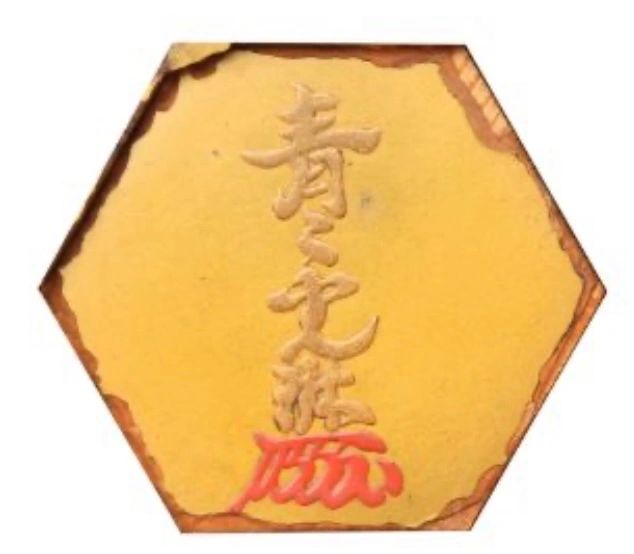
Signed Seisei Korin (Ogata Korin 1658-1716) with red kao (cursive monogram), Edo era.

Wall or Pillar hanging in Choshitsu (high relief) lacquer, depicting Shoki (the demon queller) menacing a hiding Oni, 150cm x 18cm. Ogawa Haritsu (Ritsuo) School. Edo era
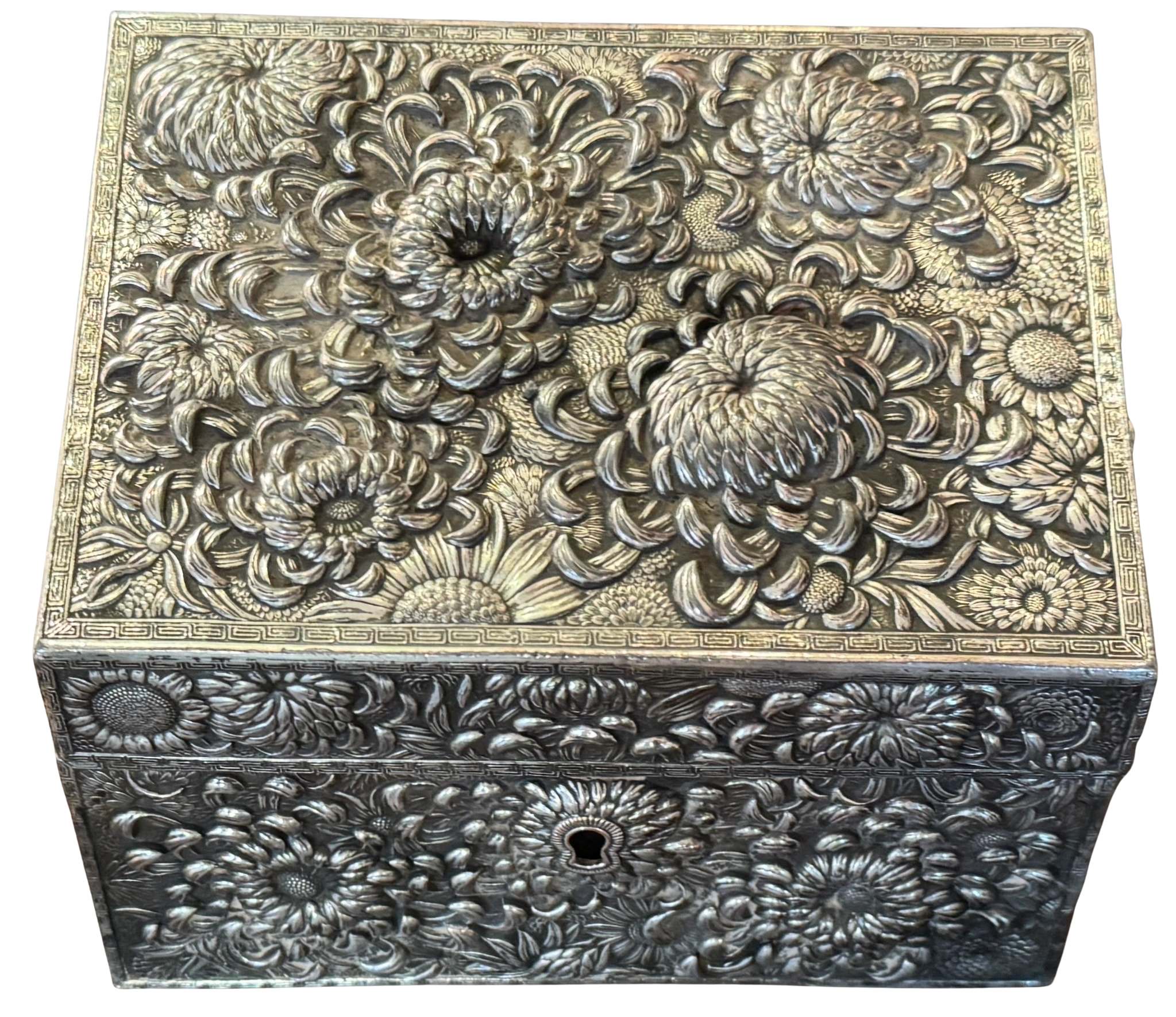
Tea chest, composition - Pb - 55%; Ag - 19%; Cu - 18%; Ga - 4.5%; Pt - 2.3%. Edo era, c.1650
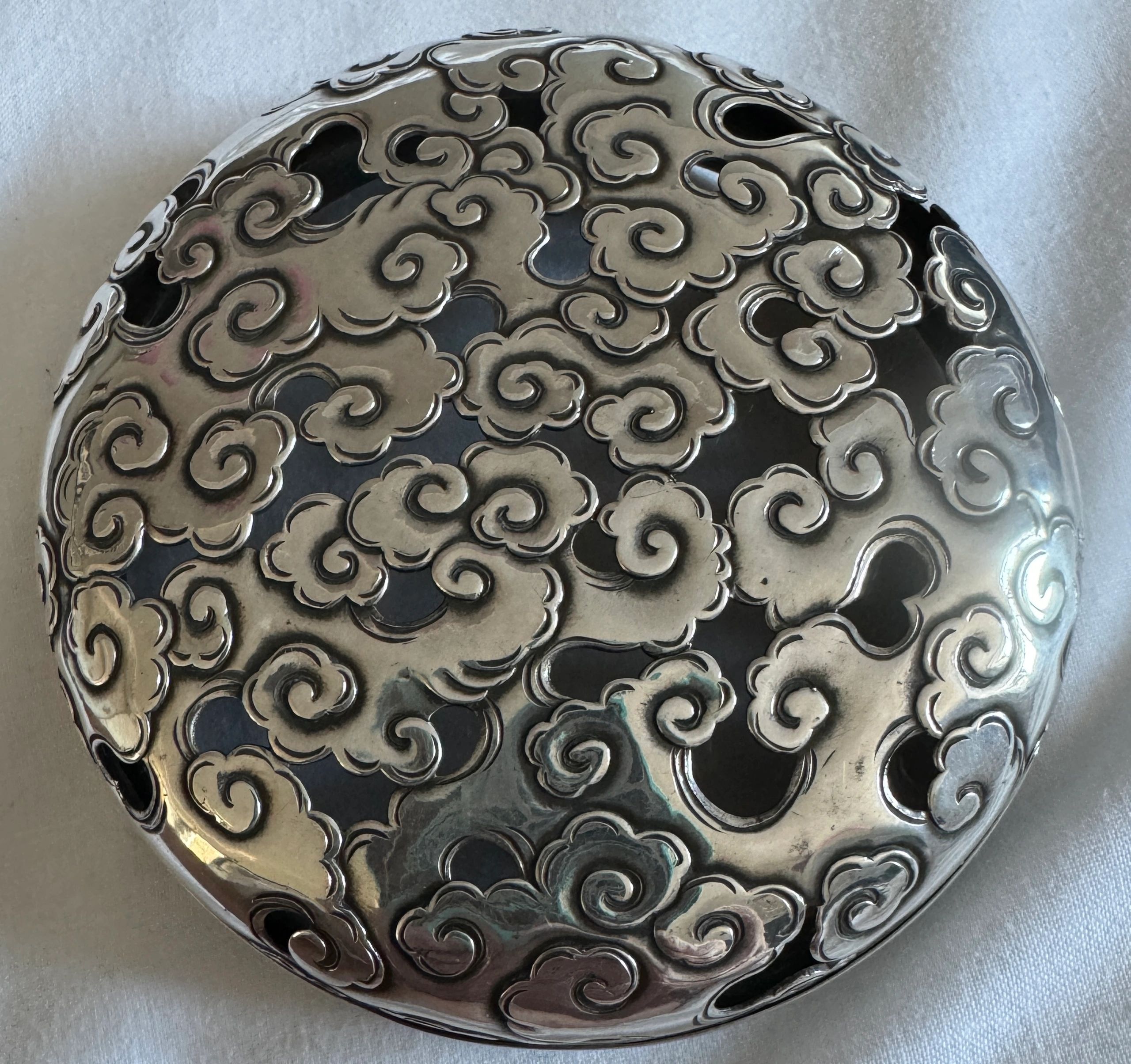
Silver Koro cover pierced with scrolling clouds. Chiseled signature of Gisuke Yoshisuke zo (probably 8th or 9th generation), Edo era.
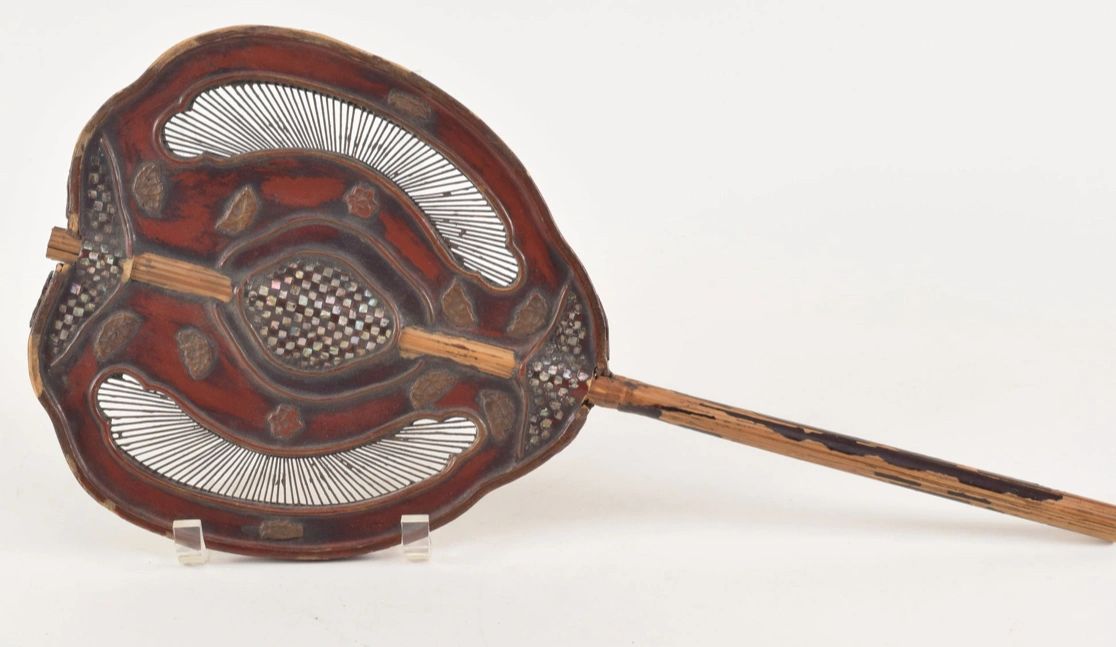
Gunbai (War Fan). Sengoku Jidai (Warring States period, 1493-1568).
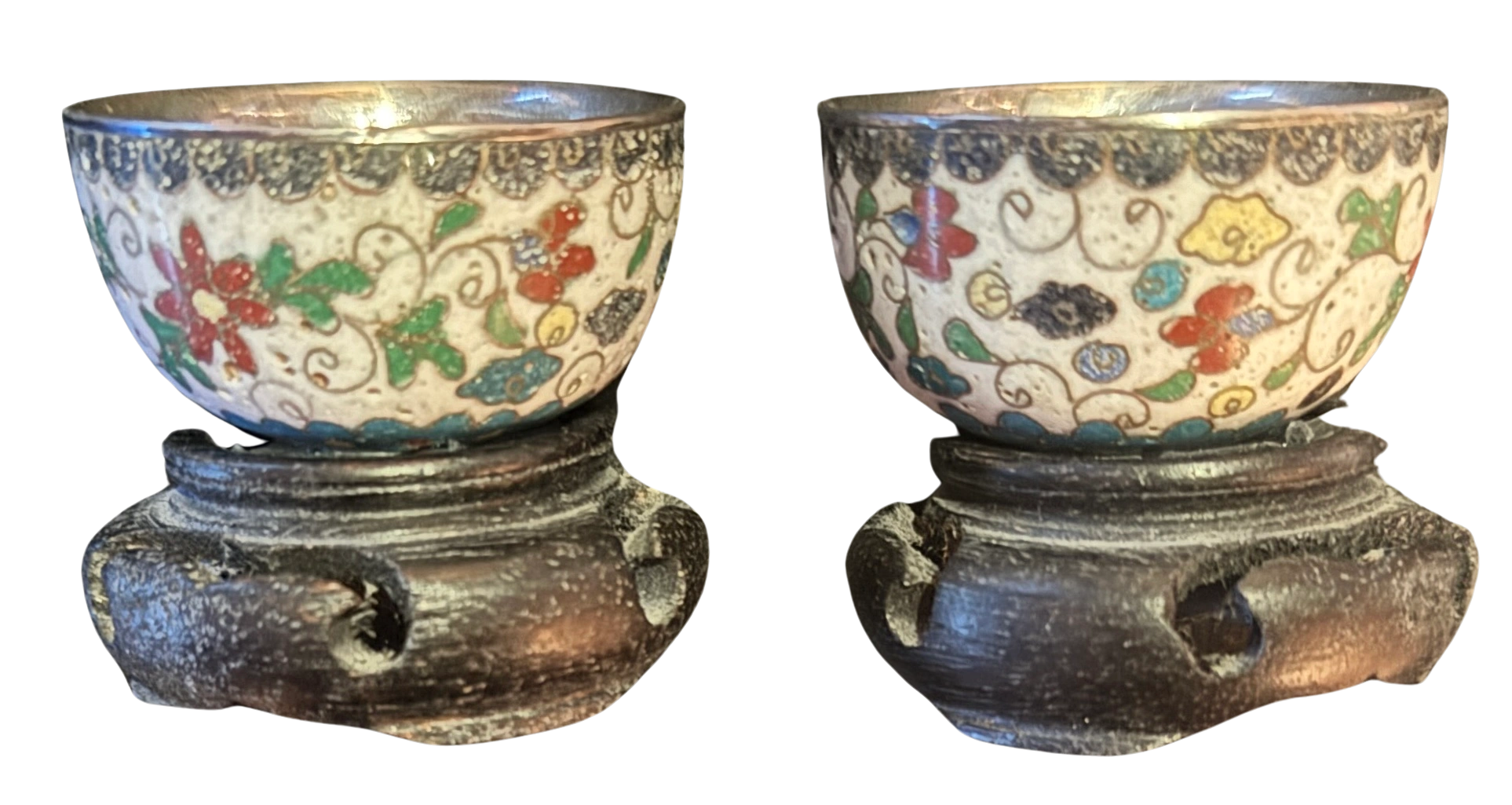
Pair silver mounted cloisonné bowls, ‘Japanese Early period’ v. Sir Harry Garner, Chinese & Japanese Cloisonné Enamels plate 89A for a matching vase in the V&A Museum. Edo era (18th century).
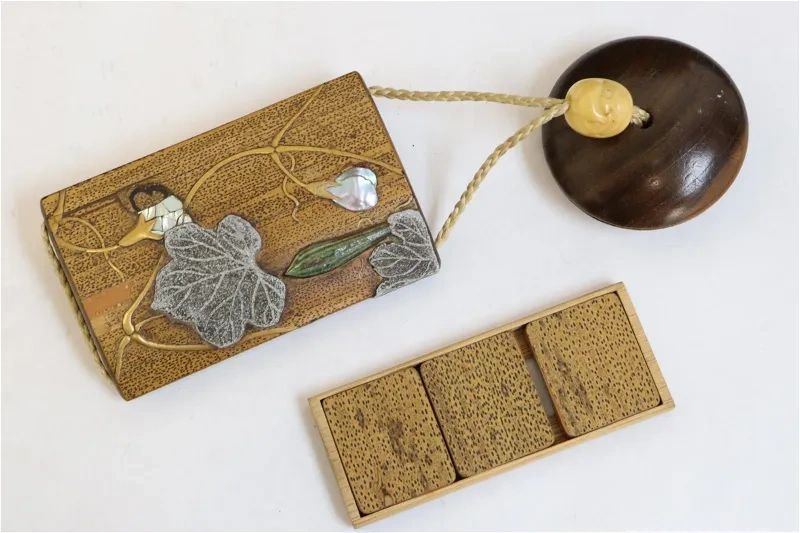
Bamboo Inro with lacquer, raden & pewter inlays, containing three lidded boxes. With Paulownia wood Manju netsuke and ivory Ojime depicting Daruma (Bodhi Dharma), the patriarch of Zen. Ogata Korin, Rinpa School. Edo era.
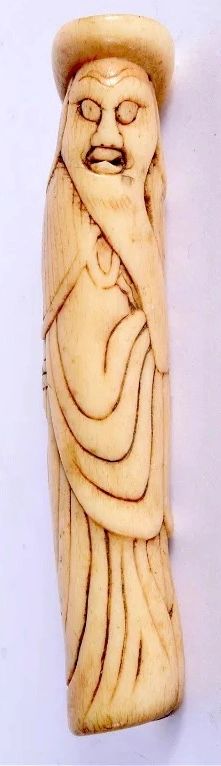
Stage horn sashi netsuke carved as caricature of a Dutchman. Edo era.
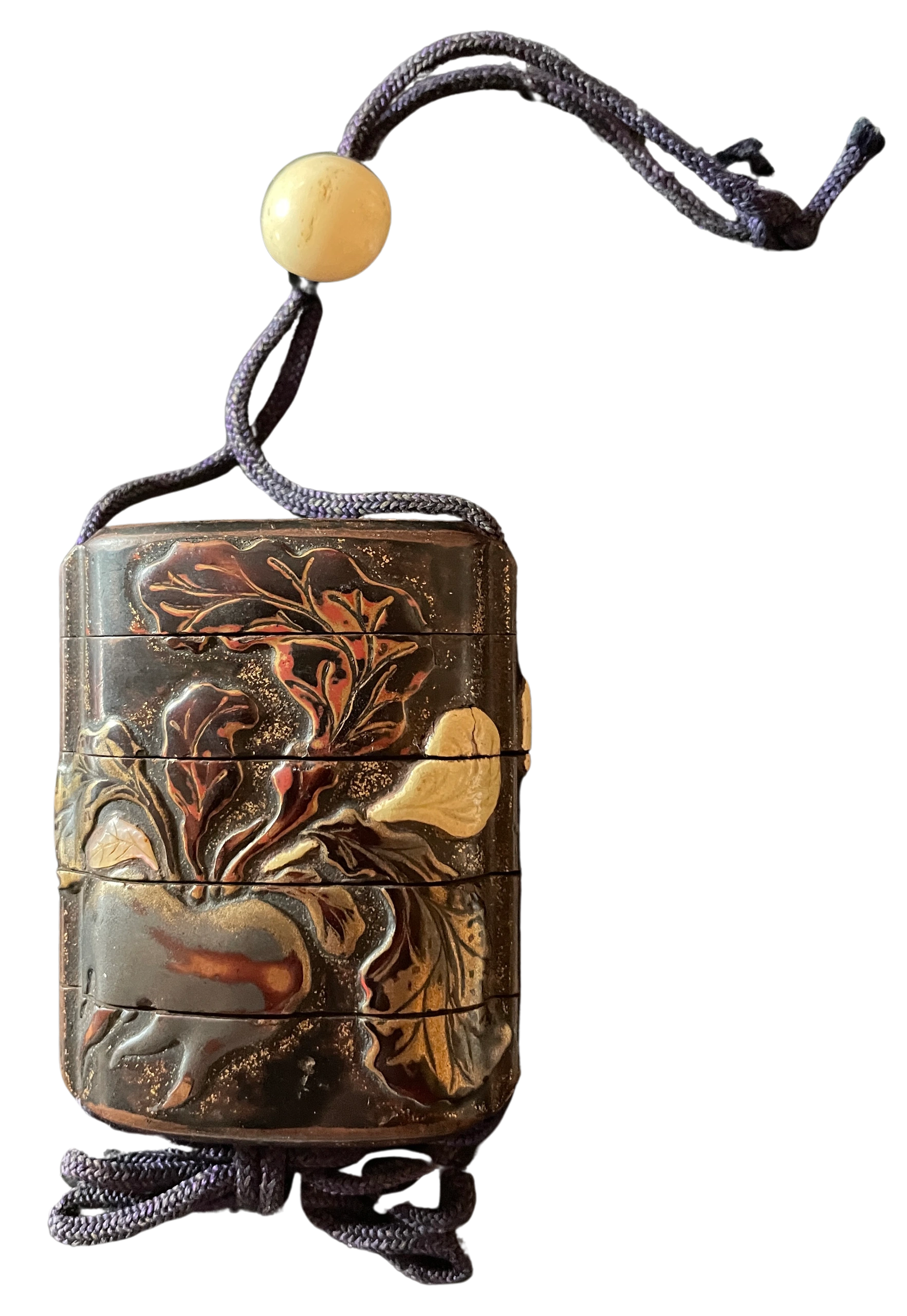
Five-case Inro with takamaki-e, iro-e hiramaki-e & kiragane lacquers and inlays of raden and ivory. Rinpa style, after Ogata Korin. Edo era.
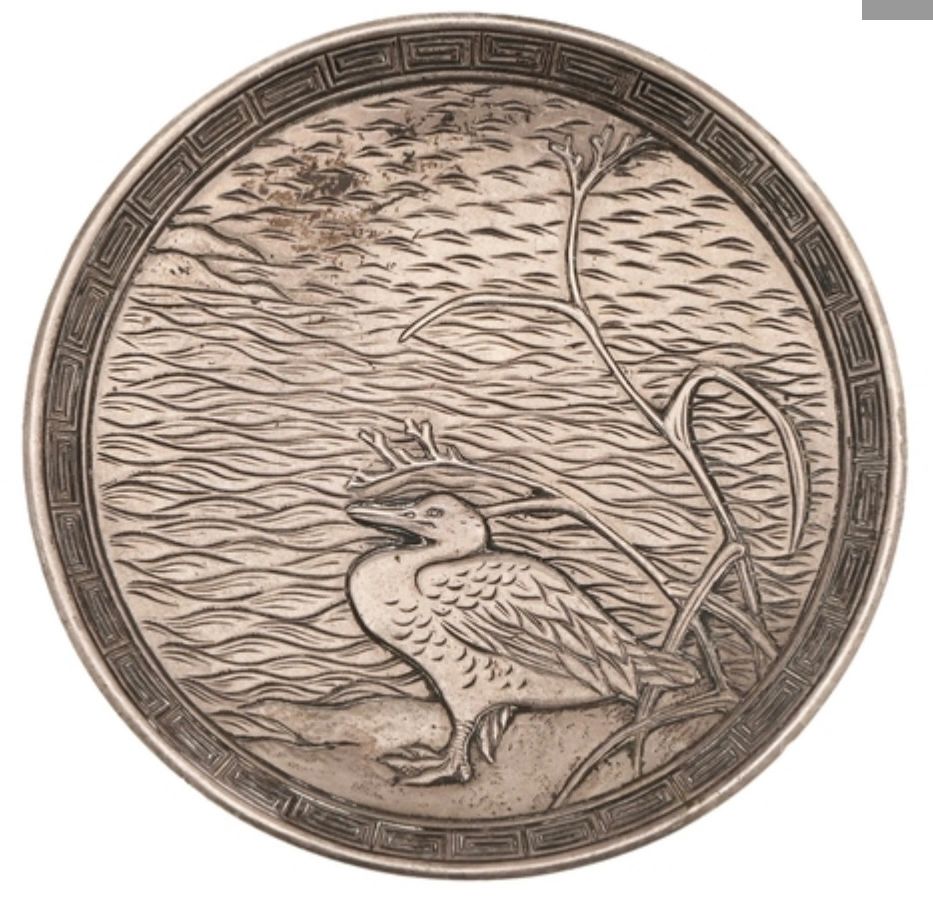
Silver dish signed Eijo Masamitsu (1577-1617), 6th generation Goto Master.
![Gold Kogo decorated with a solitary shakudo, silver & copper gull on an ebbing tide sand bar. Has inrobuta (flush fitting) lid and shifuku (bag). Signed on base with a Kao, the original tomoboko inscribed ‘kin muku nami ni kamone koku onkogo, Goto Mitsutoshi saku’ (gold incense container with gull on a sandbar, made by Goto Mitsutoshi [1790-1862]). Edo era. The only known surviving Goto line gold Kogo from this era.](https://img1.wsimg.com/isteam/ip/aabb20b5-50d1-45ab-bf73-bdd30f2b31a0/IMG_5241.png)
Gold Kogo decorated with a solitary shakudo, silver & copper gull on an ebbing tide sand bar. Has inrobuta (flush fitting) lid and shifuku (bag). Signed on base with a Kao, the original tomoboko inscribed ‘kin muku nami ni kamone koku onkogo, Goto Mitsutoshi saku’ (gold incense container with gull on a sandbar, made by Goto Mitsutoshi [1790-1862]). Edo era. The only known surviving Goto line gold Kogo from this era.
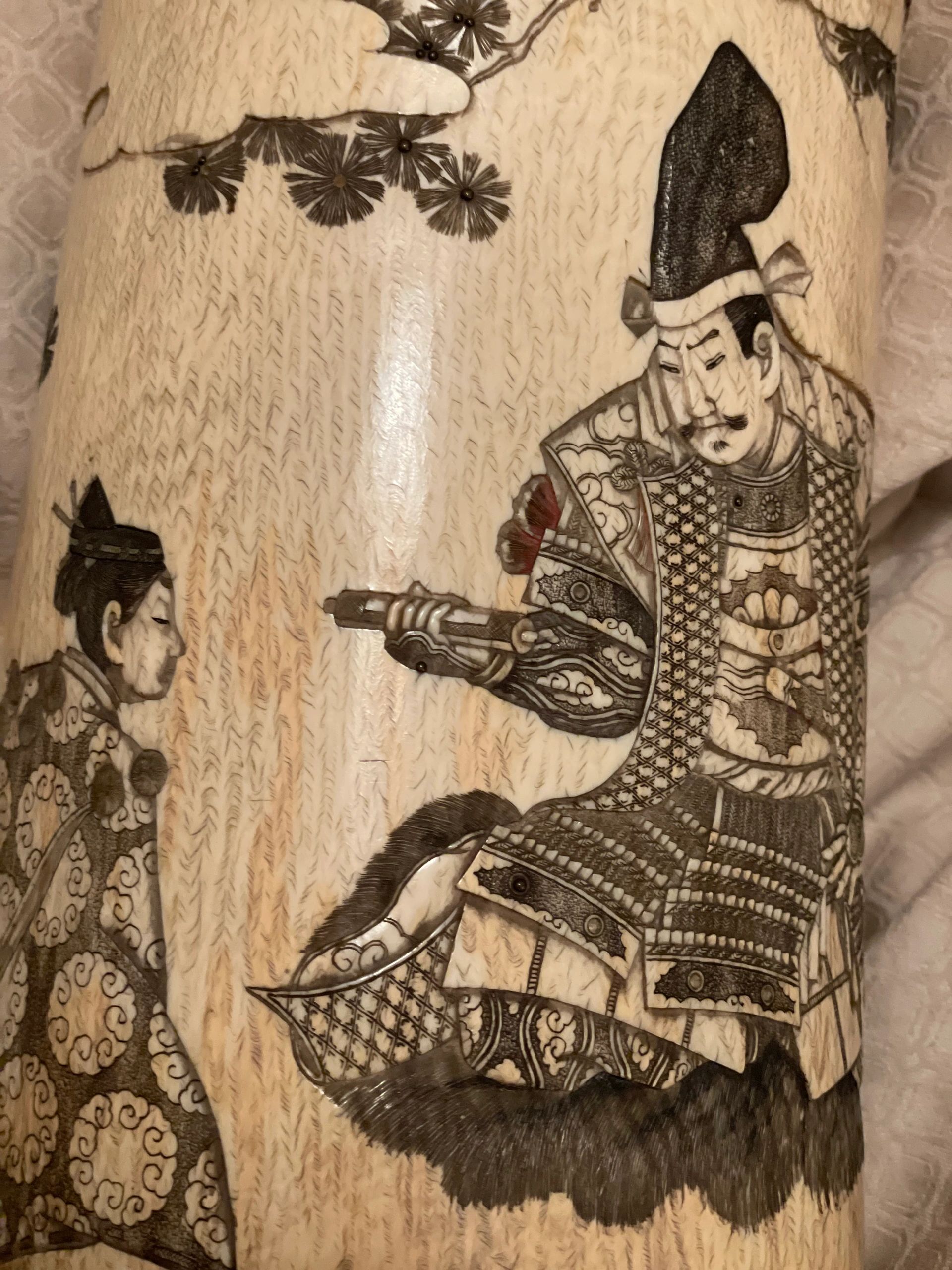
Minamoto no Yoritomo receiving the Hydro-Mai (rice tax warrant) from an emissary of the Emperor Go-Shirakawa (1127-1192), effectively creating the Bakufu and founding the Kamakura Shogunate. Edo era.
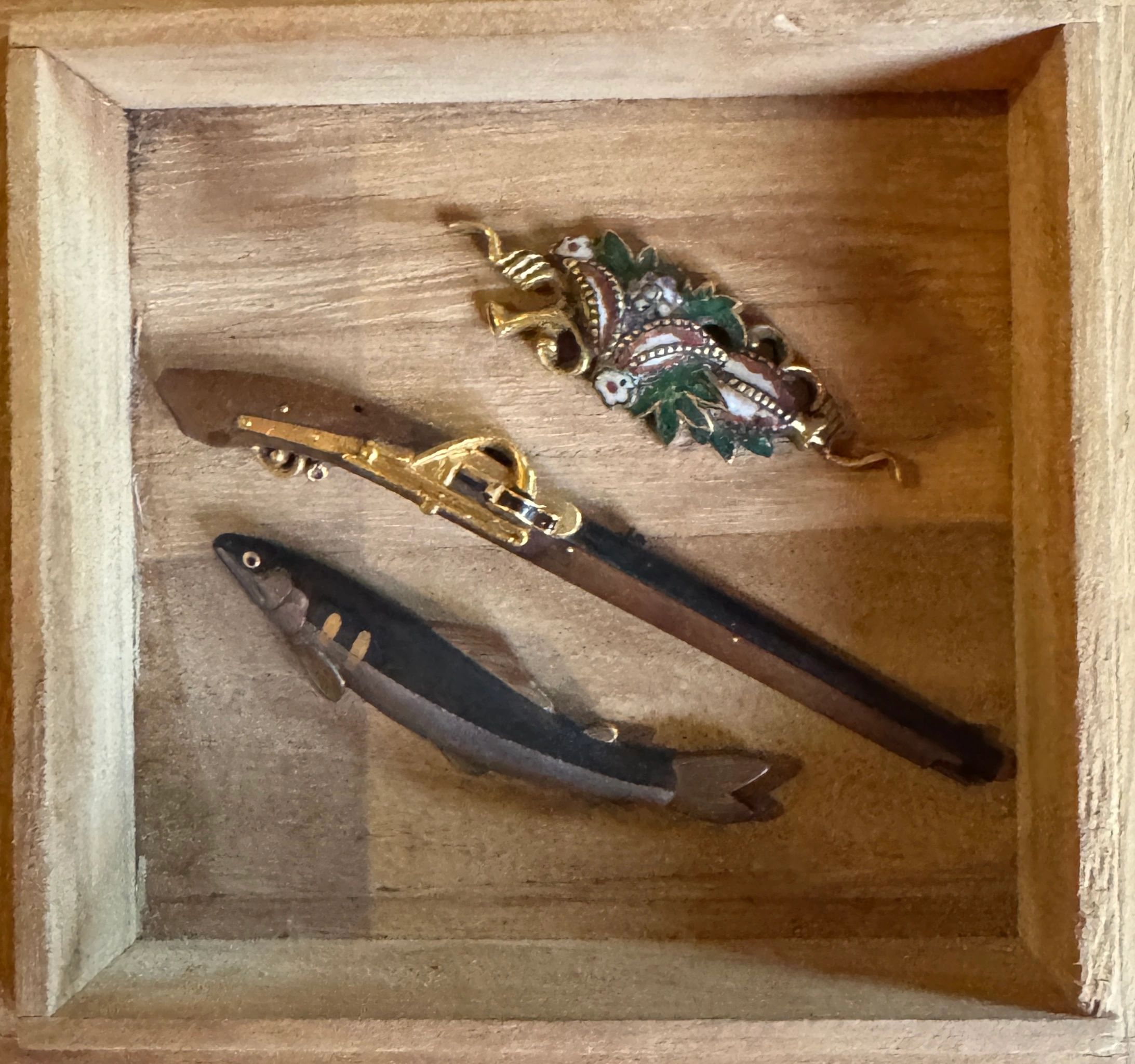
Menuki - sword handle fittings using iron, brass, copper, gold, silver and Shakudo. A Haruoki school Namazu fish, a Tanegashima (matchlock rifle) and a Hirata school enameled example. Edo era
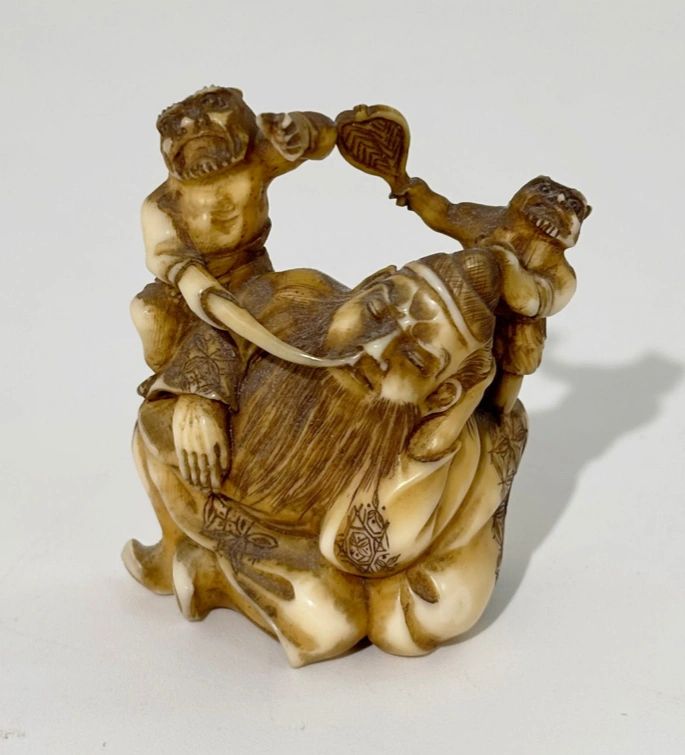
Walrus ivory Okimono depicting two onis taunting Jurojin. Signed Gyokuichi, Edo era.
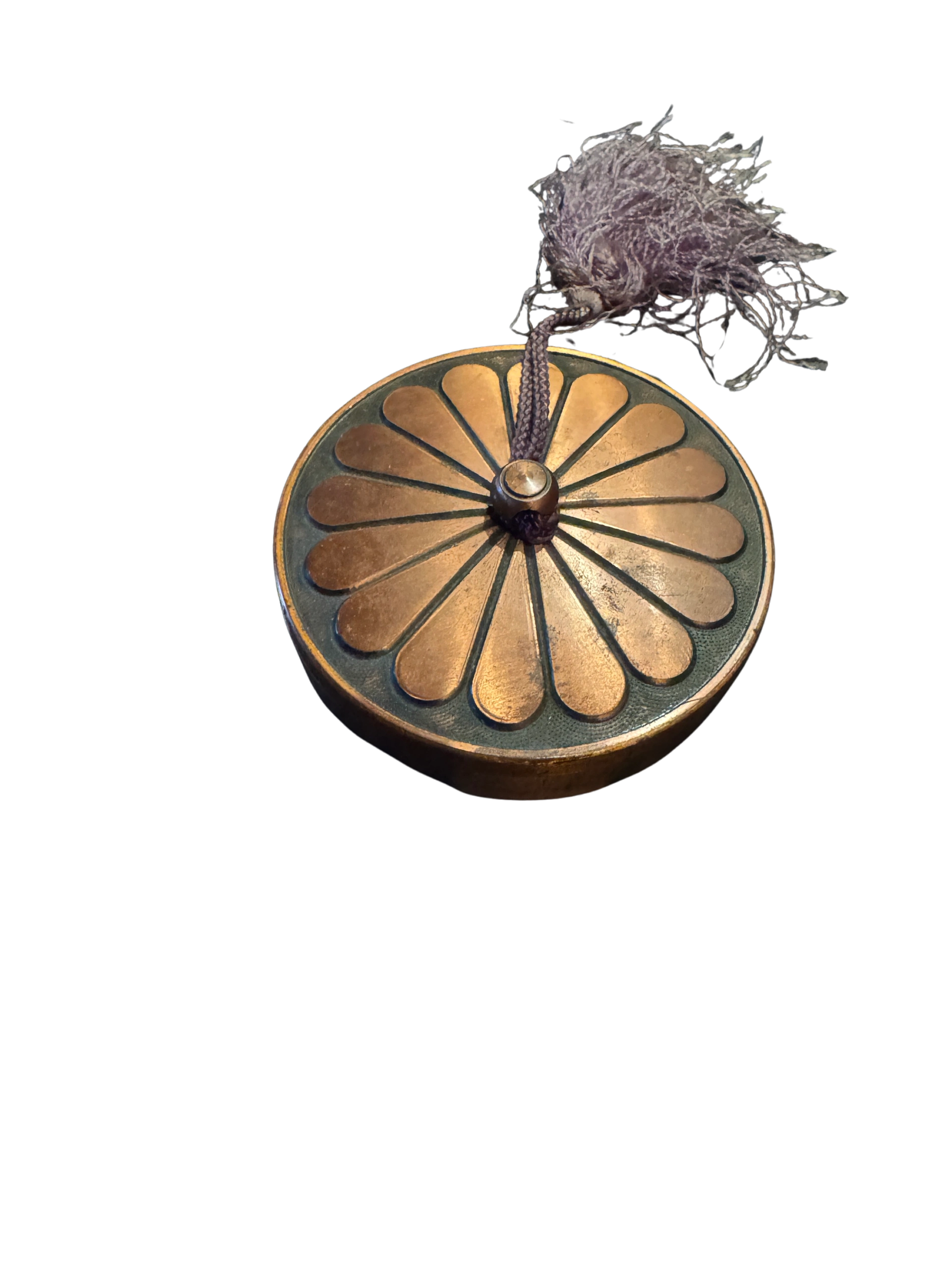
Imperial in-shu bako (seal paste box). Edo era.
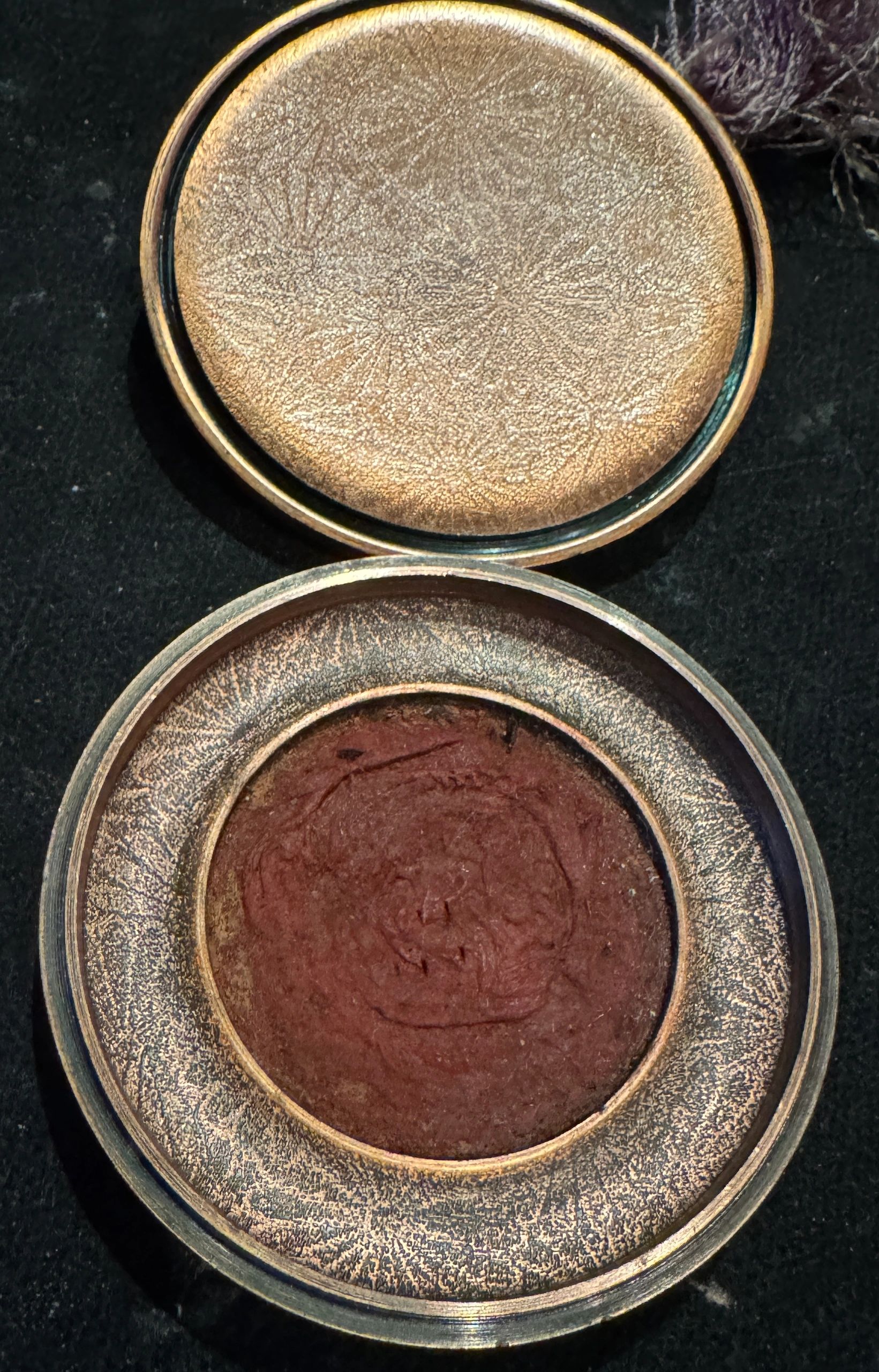
Seal paste box interior.
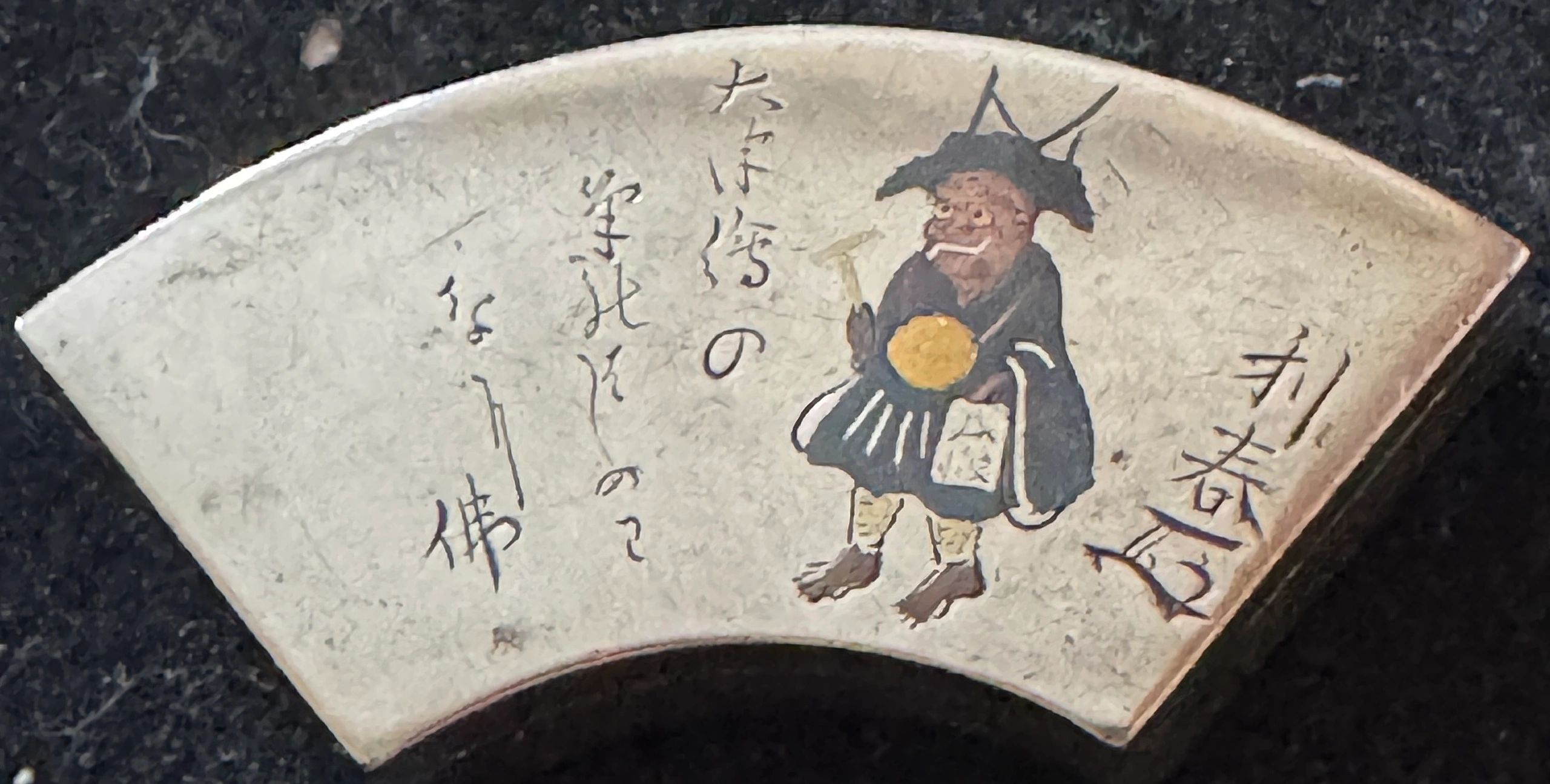
Silver kogo depicting Oni no Kannebutsu (Oni in Winter training) in Takabori & Iroe gold, silver, copper & shibuichi. The inrobuta (flush fitting) lid is incised with a Haiku (poem) by Matsuo Basho (1644-94): “For an otsu-e (folk painting) the first stroke of the brush should draw which Buddha?” Signed Siufu ju Ichiyoken Toshiharu (Toshiharu, resident of Mito) with personal kao. Edo era.
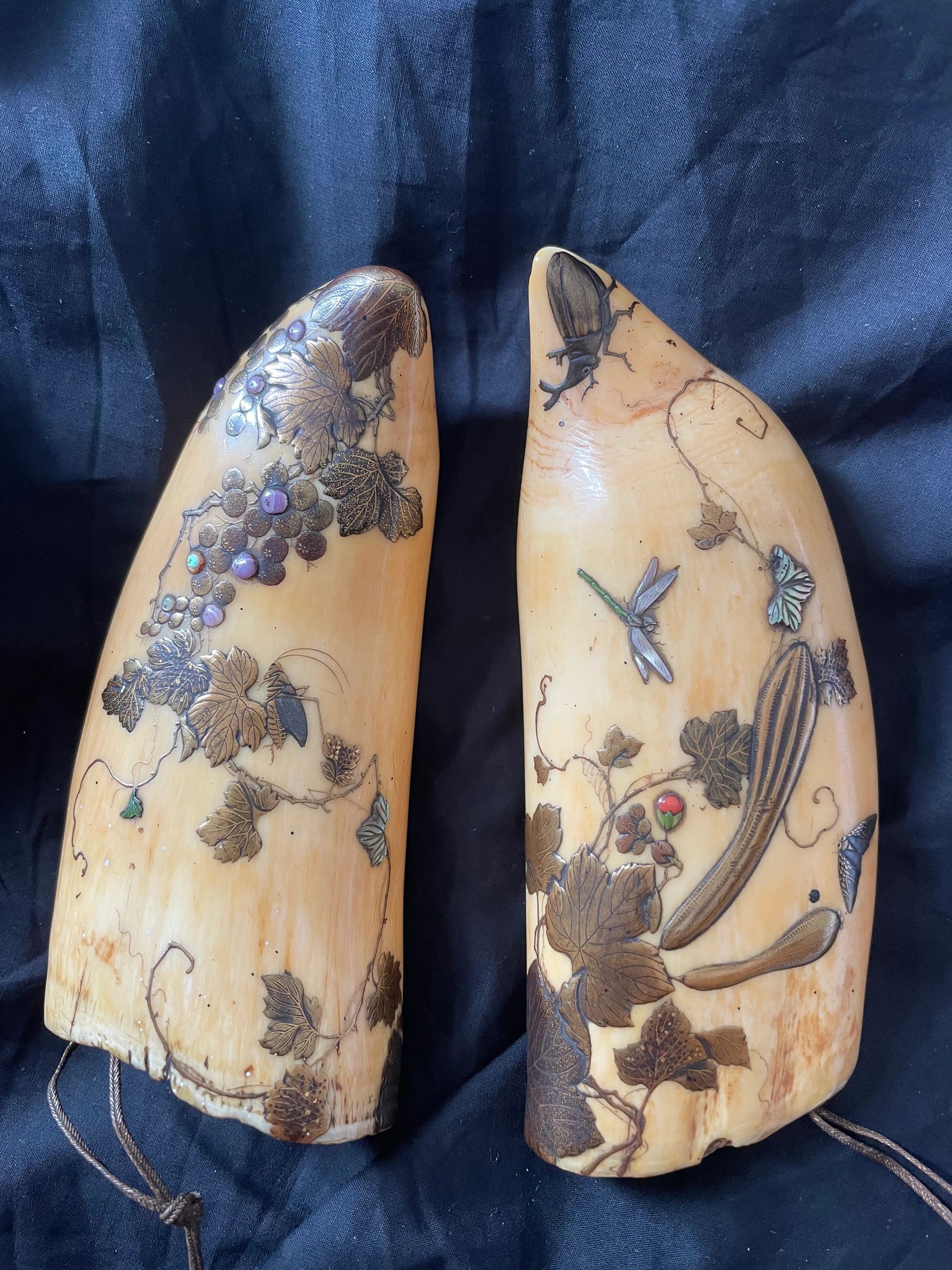
Sperm whale’s teeth Okinomo depicting flora & foreshortened insects in a combination of Shibayama, Choshitsu & maki-e lacquer. Edo era
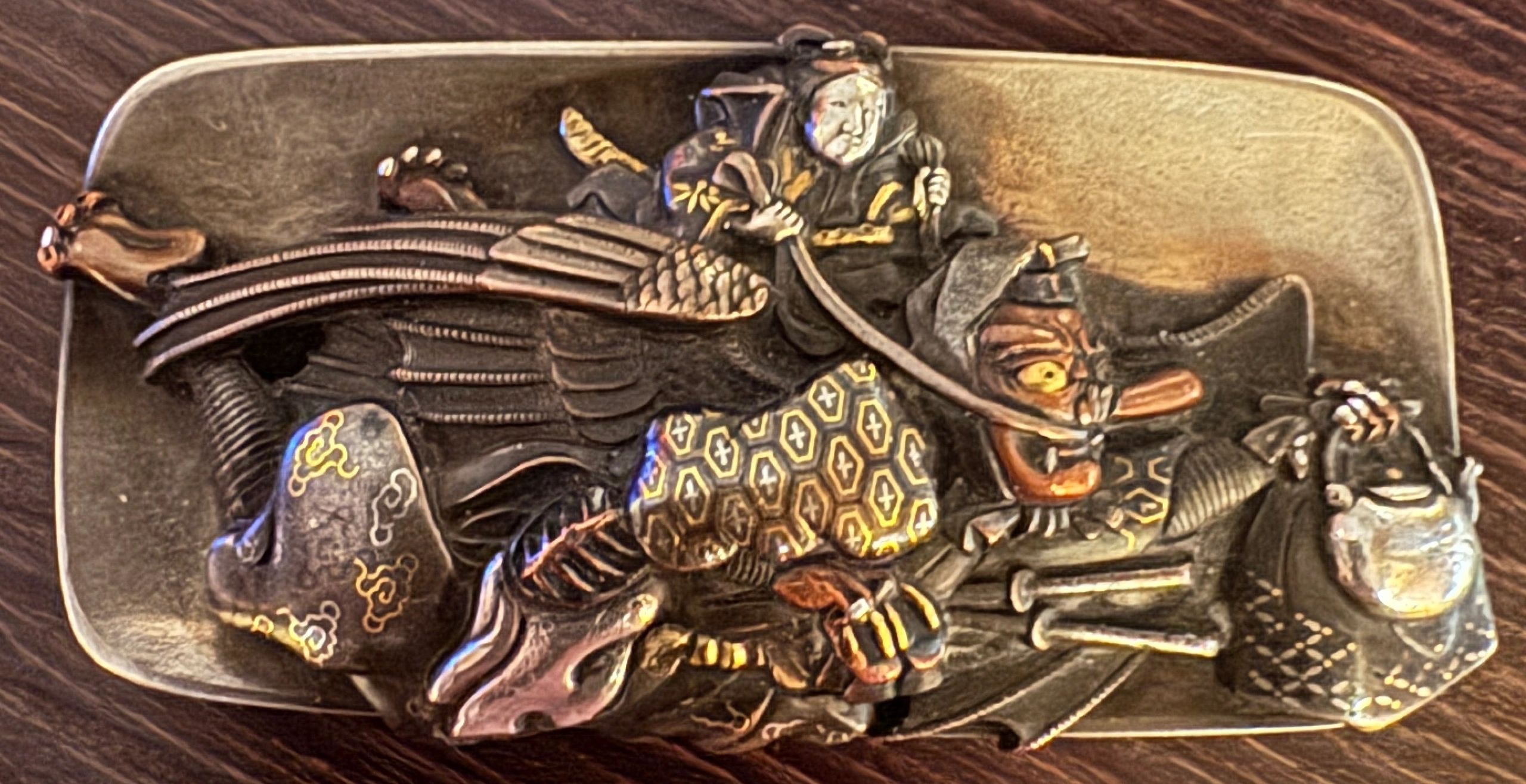
Silver & mixed metal Mae Kanagu kanamono (clasp) for a tabako ire (tobacco pouch), depicting a Tengu in flight, with elements of shibuichi, shakudo & nunome-zogan. Edo era.
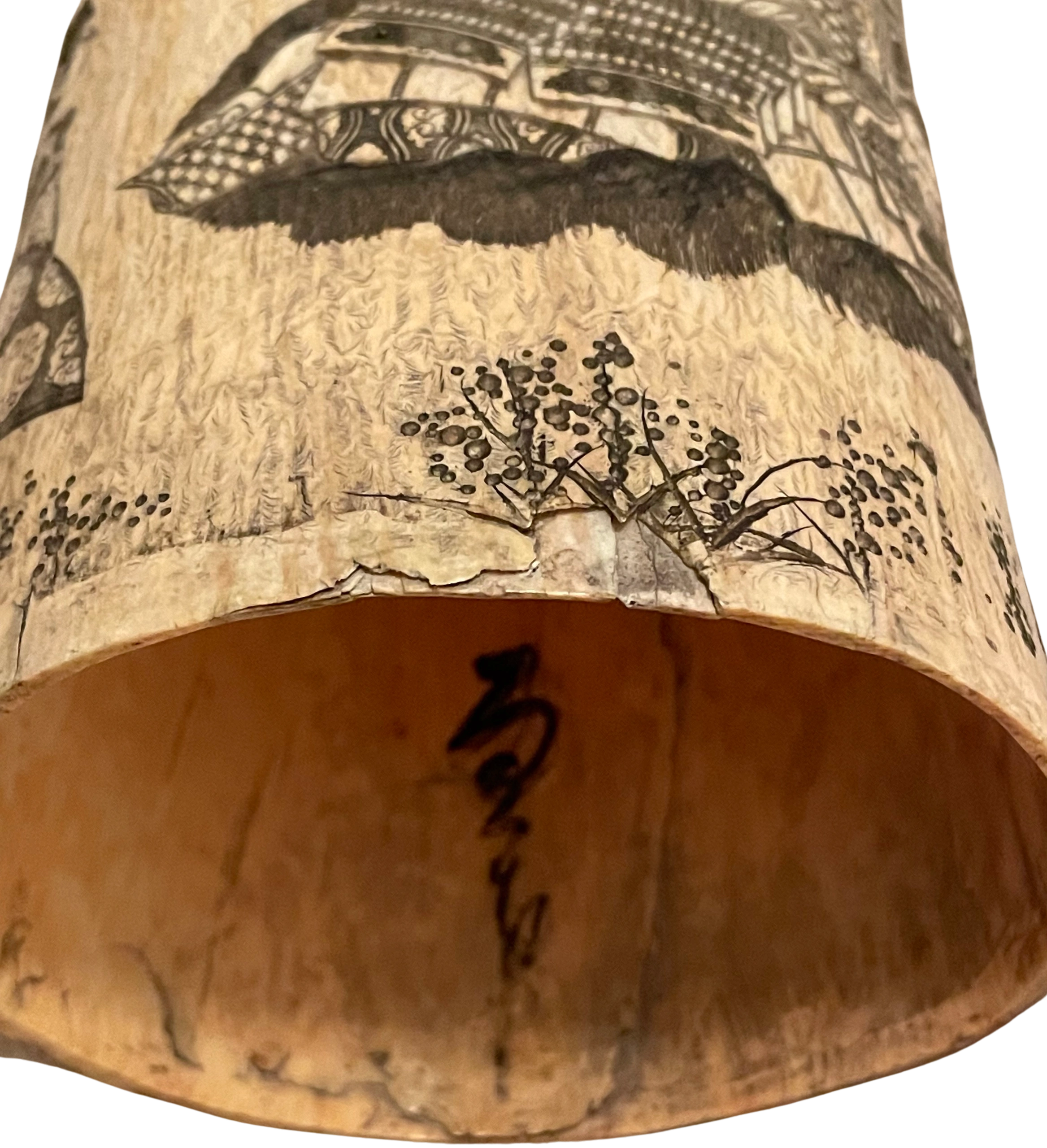
Mei (signature) in sosho kanji script. Any one know what this reads?
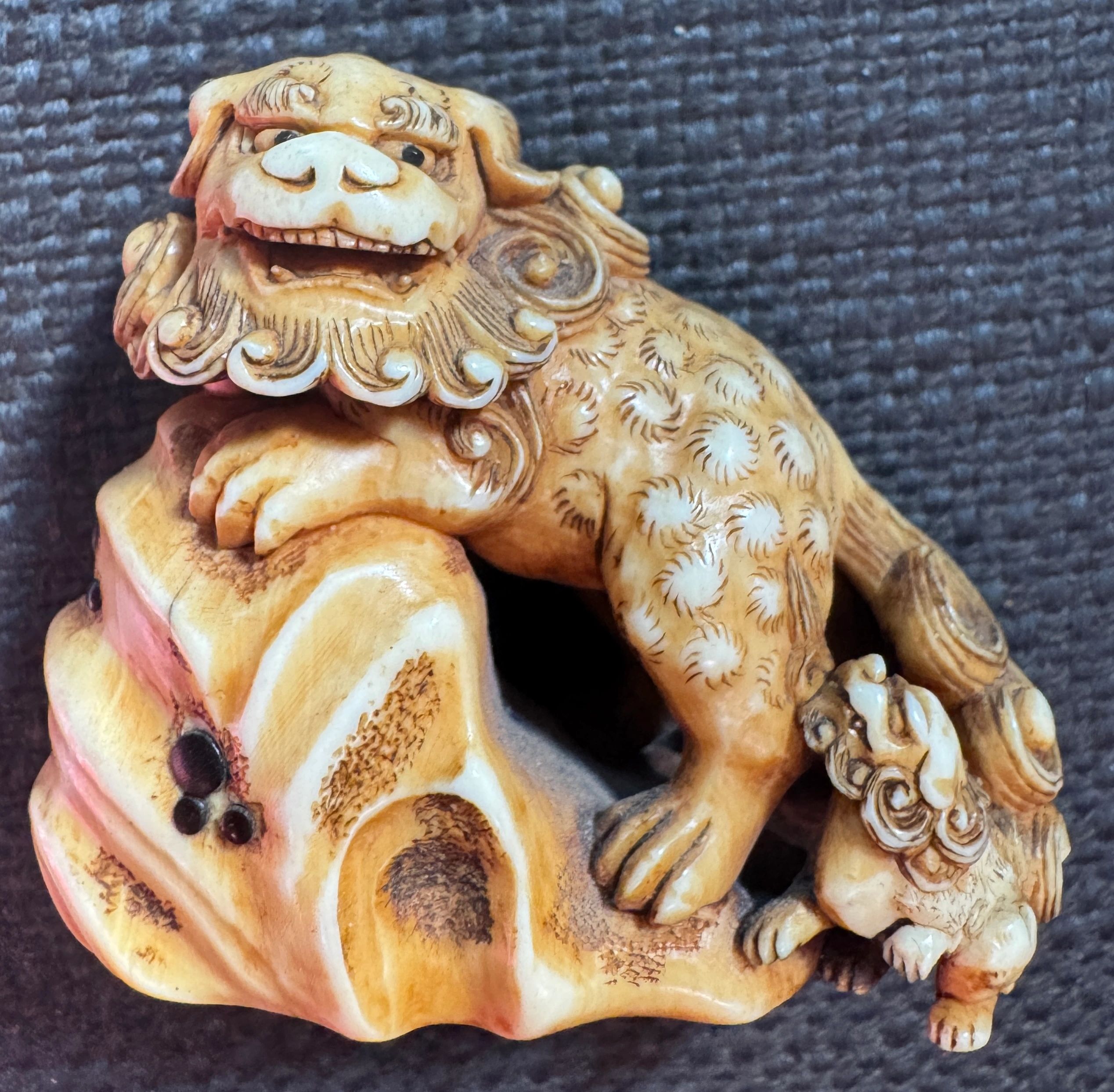
Ivory netsuke depicting a shishi with a shishi pup, signed Masamine. Late Edo era.
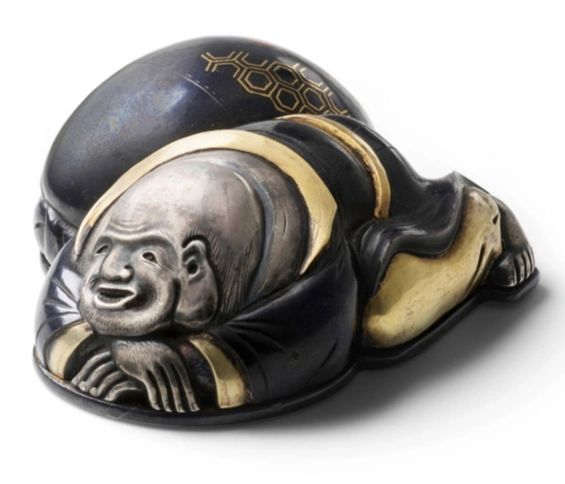
Kogo with shakudo, silver and gold decoration depicting Hotei with his treasure sack. Attrib. Input Nagamitsu, Edo/Meiji era
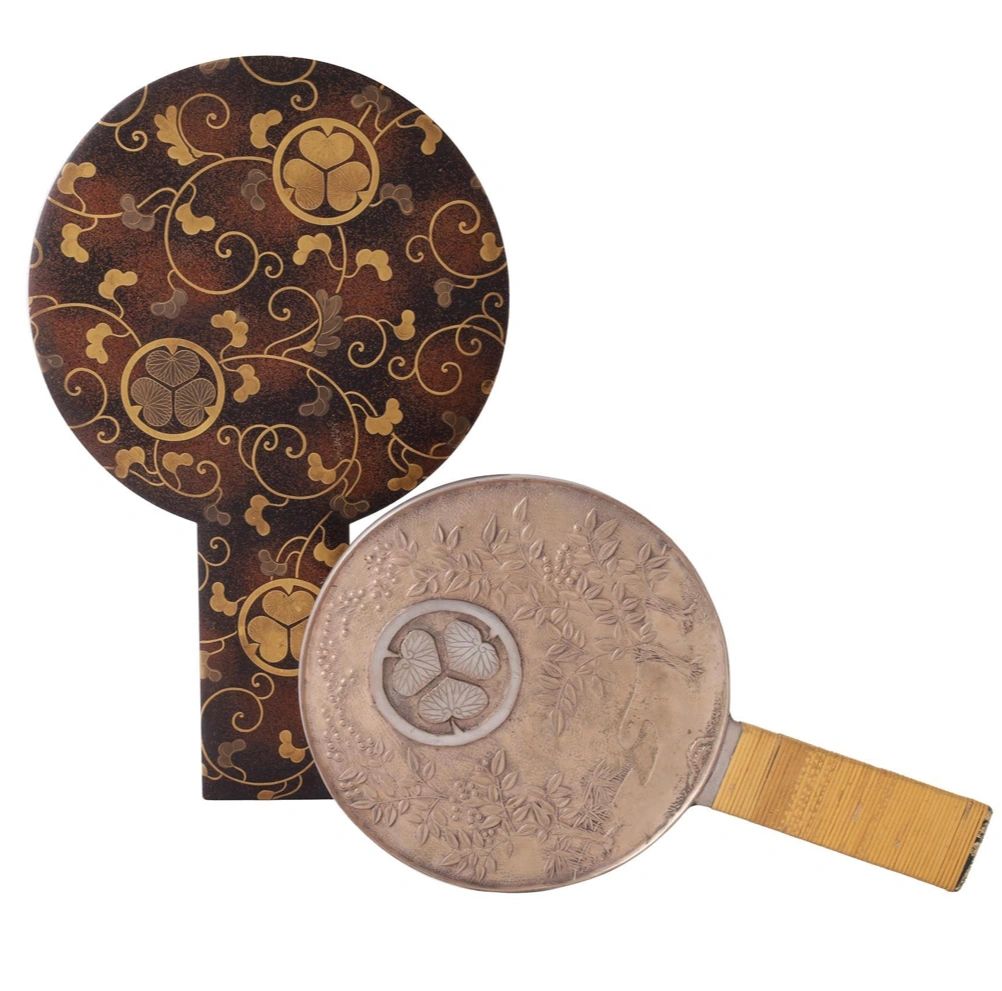
Bronze mirror (e-kagami) with Maki-e lacquer case from a Shogunal wedding set, with Tokugawa mon (crest). Edo era.
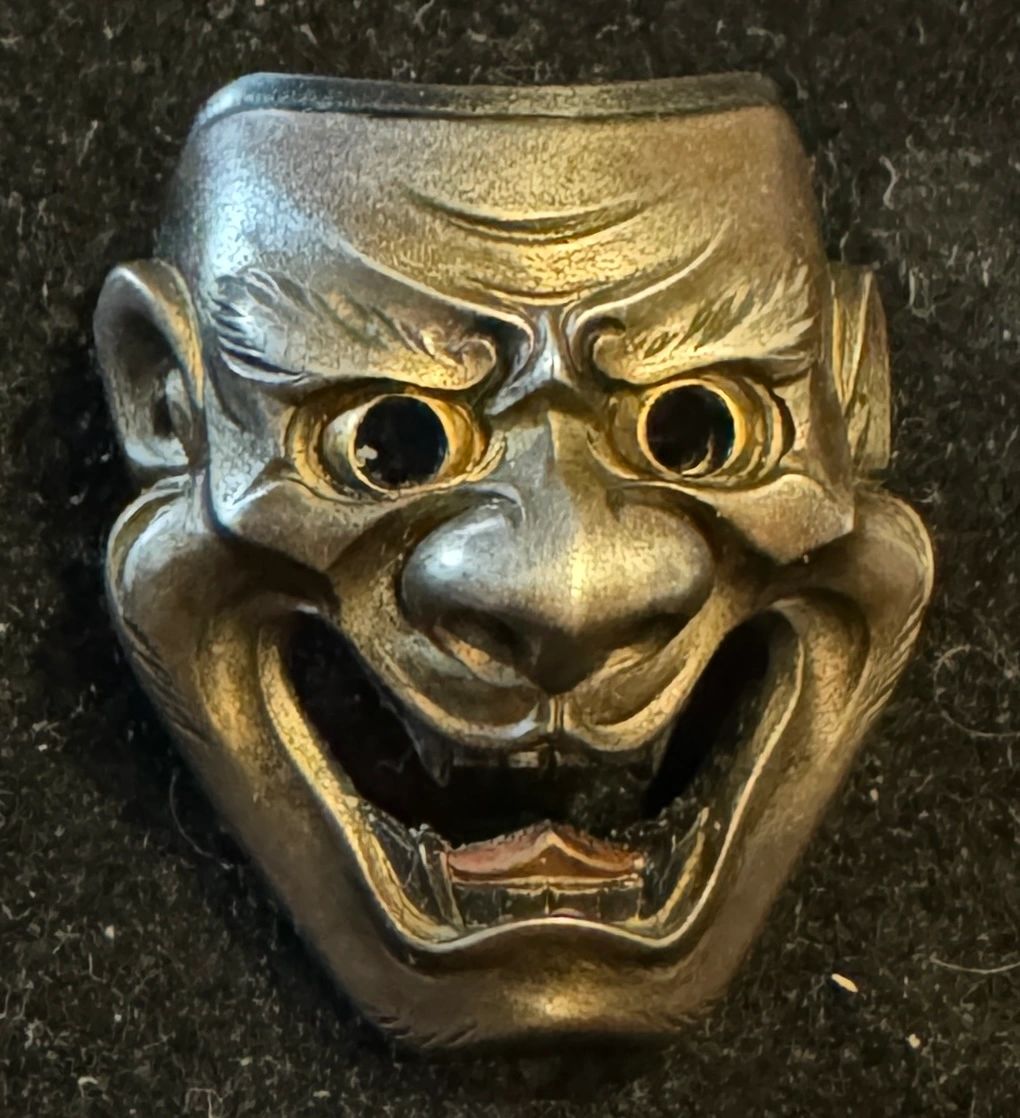
Netsuke in the form of a hornless Hannya mask with gold eyes, copper tongue and shakudo hair. After Hamano Shozui (Masayuki). Meiji era
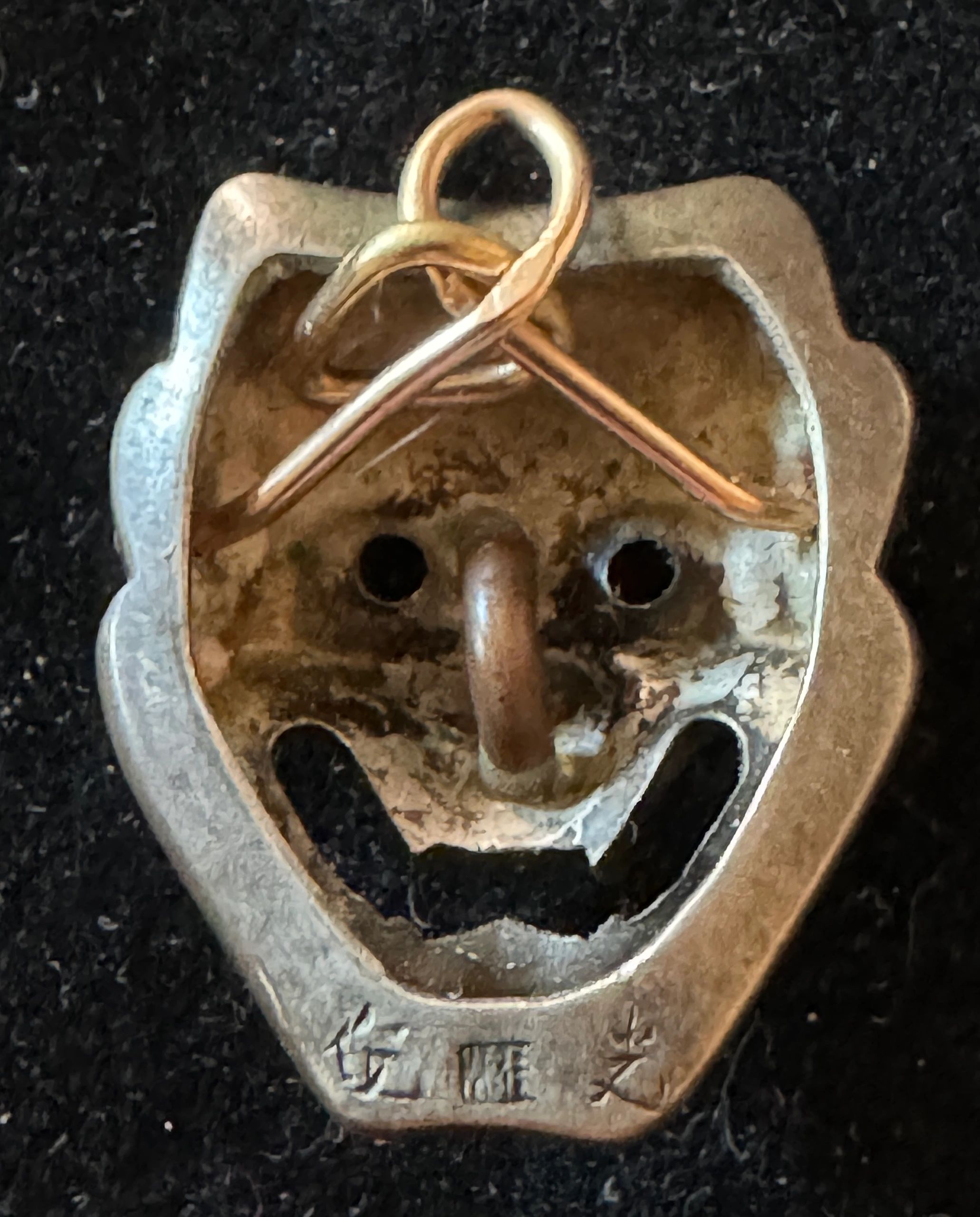
Reverse of Hamnya mask netsuke.
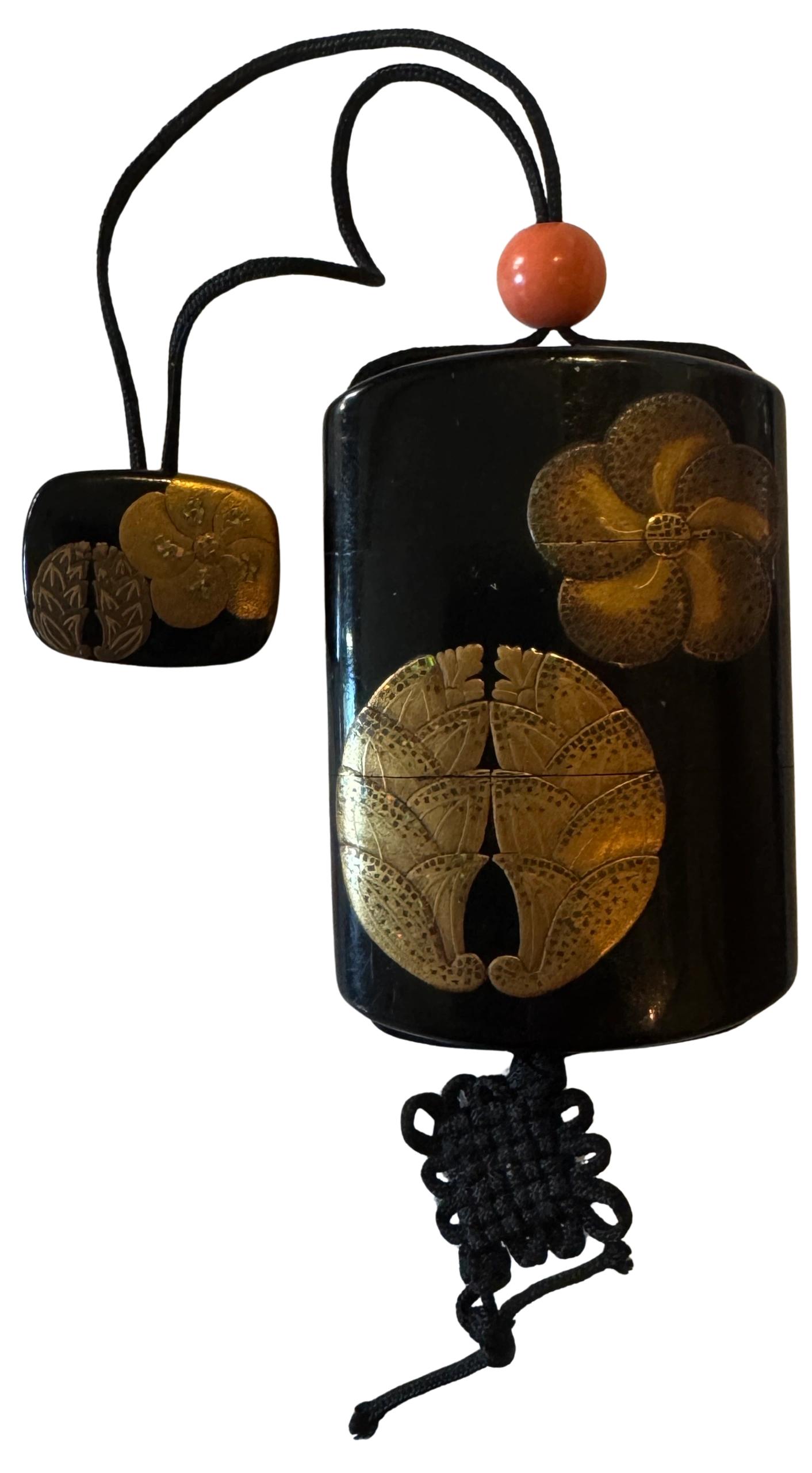
Inro decorated with gold & silver maki-e, mother of pearl hirameji & okibirame on a roiro-nuri ground, depicting flying mons. Matching netsuke & a coral ojime. Signed by Gyokuko on base and Kiyofu on side. Meiji era.
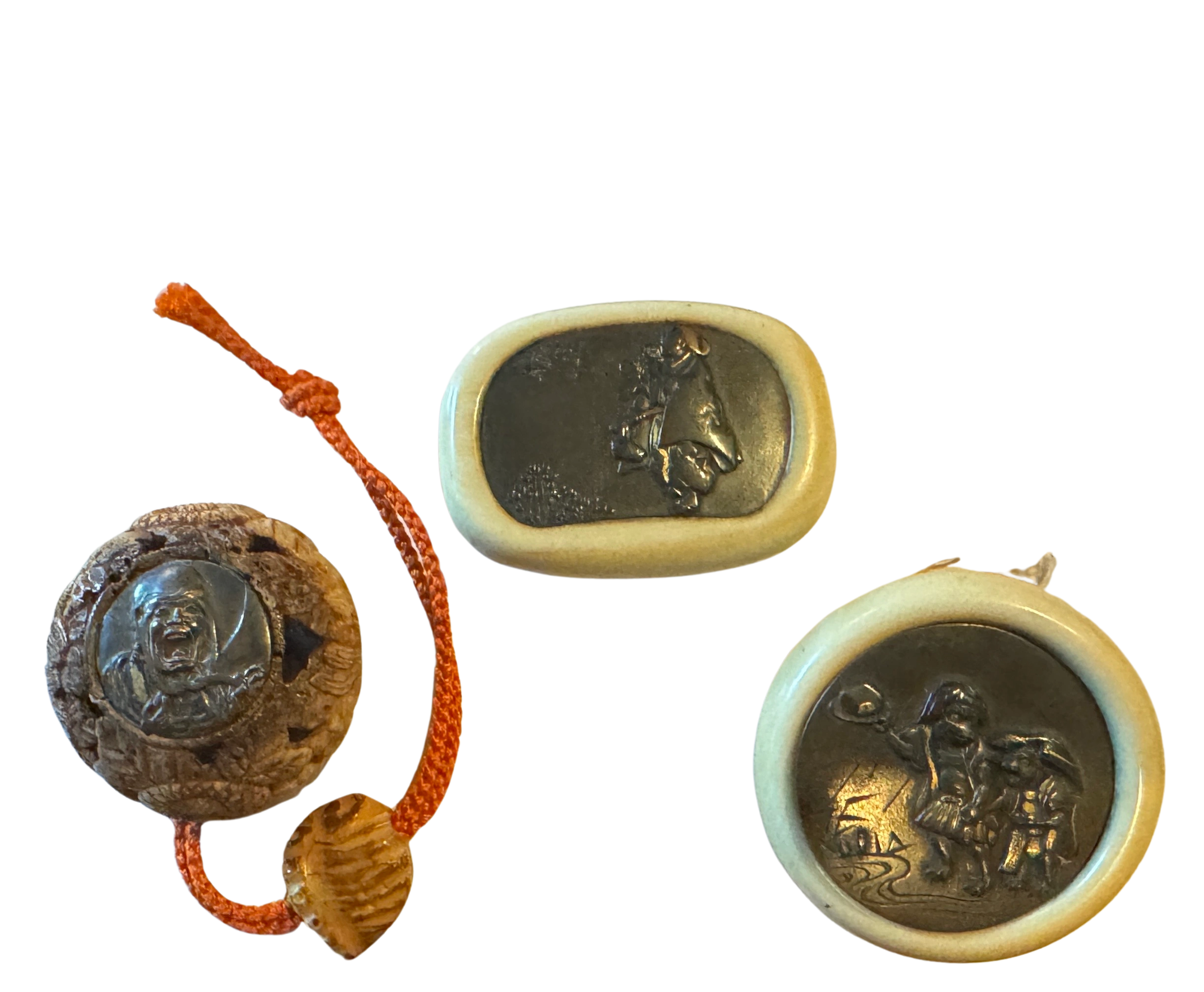
Kagamibuta (‘mirror lid’) netsukes, two in ivory and one in deer horn set with shakudo, copper, gold & silver motifs depicting Raken Inkada Sonja, the Buddha disciple with long eyebrows. Edo era.
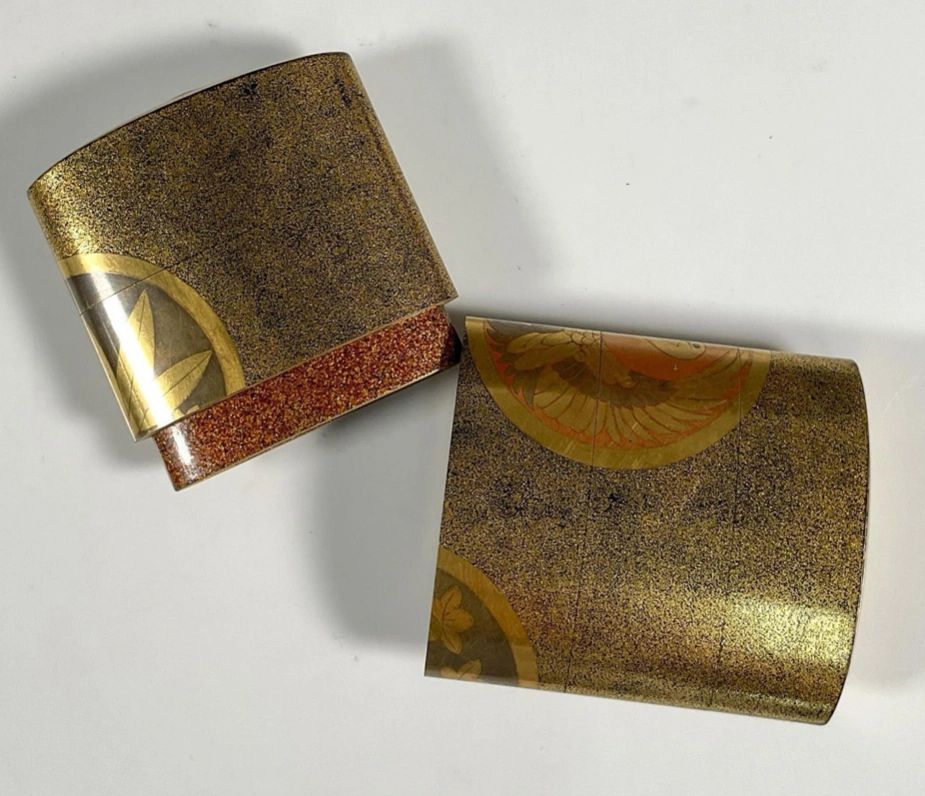
Five section saya inro with combined Ishikawa and Moro Mon, likely a marriage gift. Signed Mitsu Kazu in a mother of pearl reserve. Edo era.
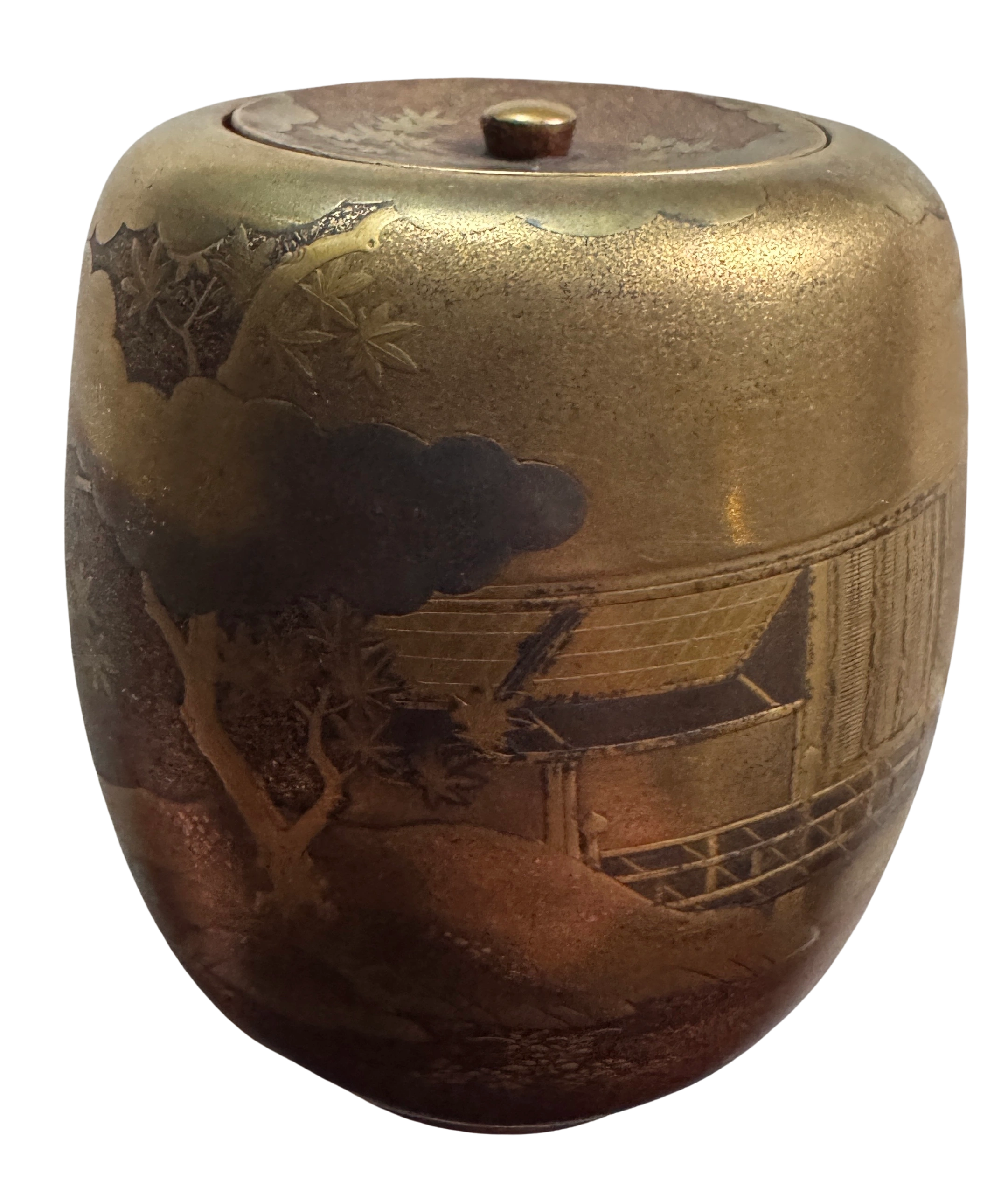
Natsume (ceremonial tea caddy) with gold urushi maki-e on a nashiji ground. Meiji era.
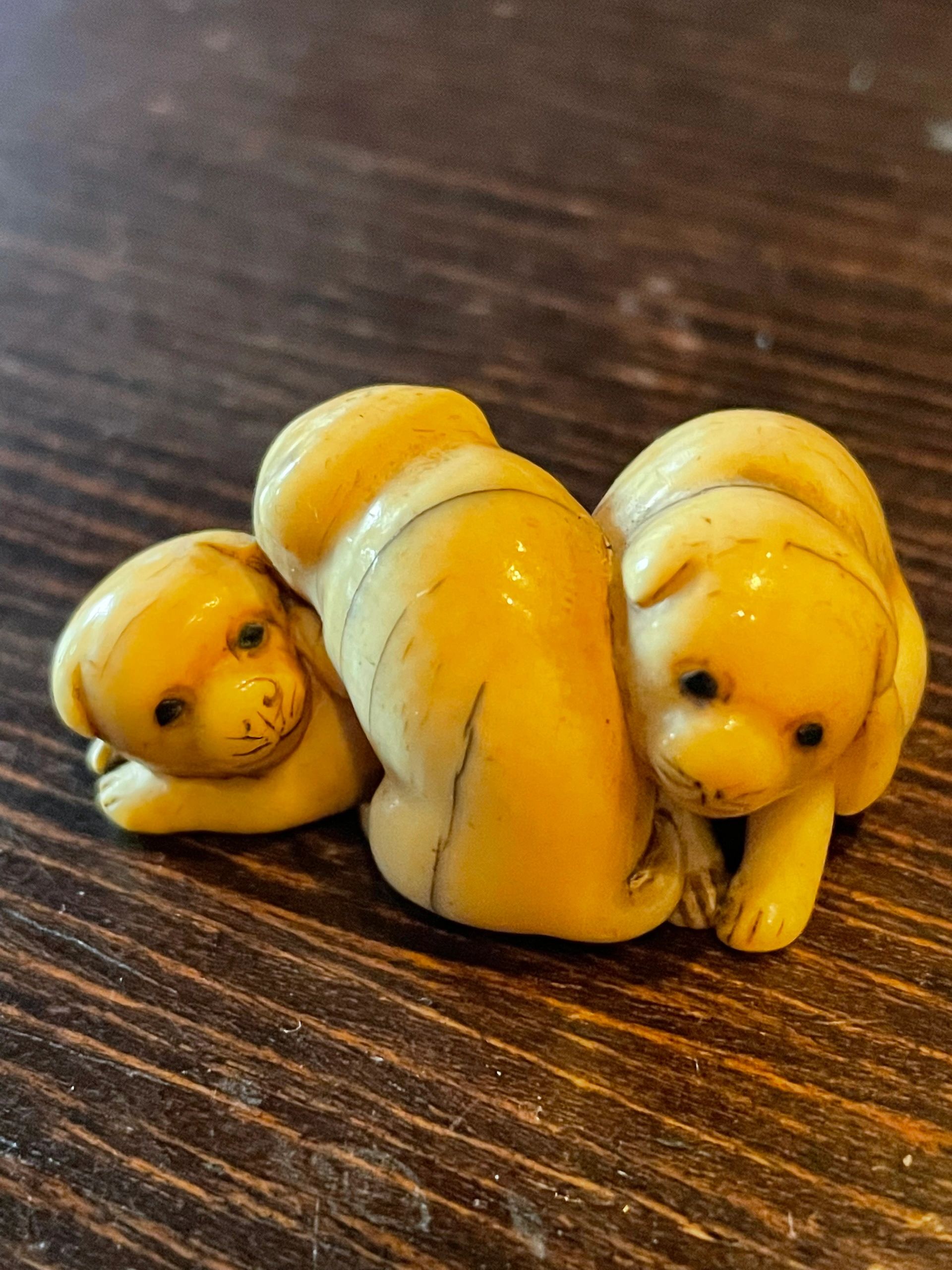
Netsuke depicting Shar Pei puppies. Signed Tomochika, Edo era
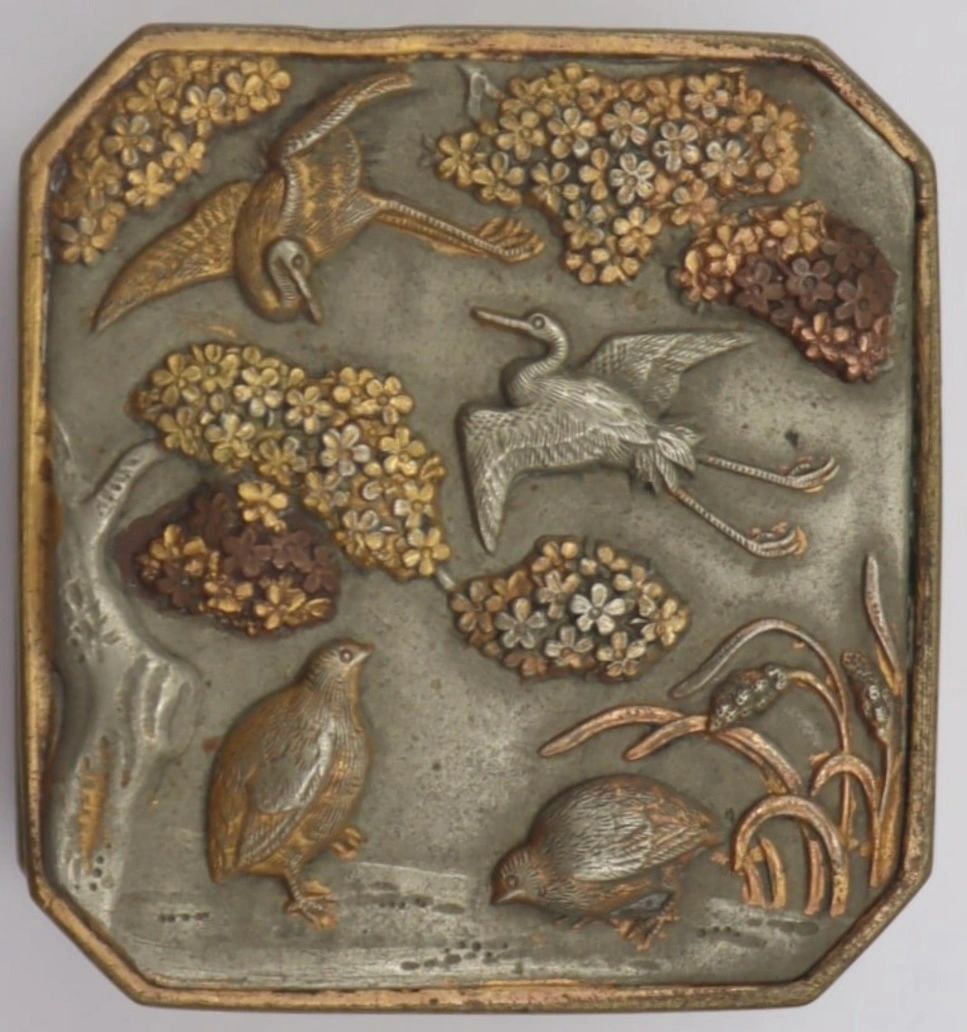
Shakudo pill box. Meiji era.
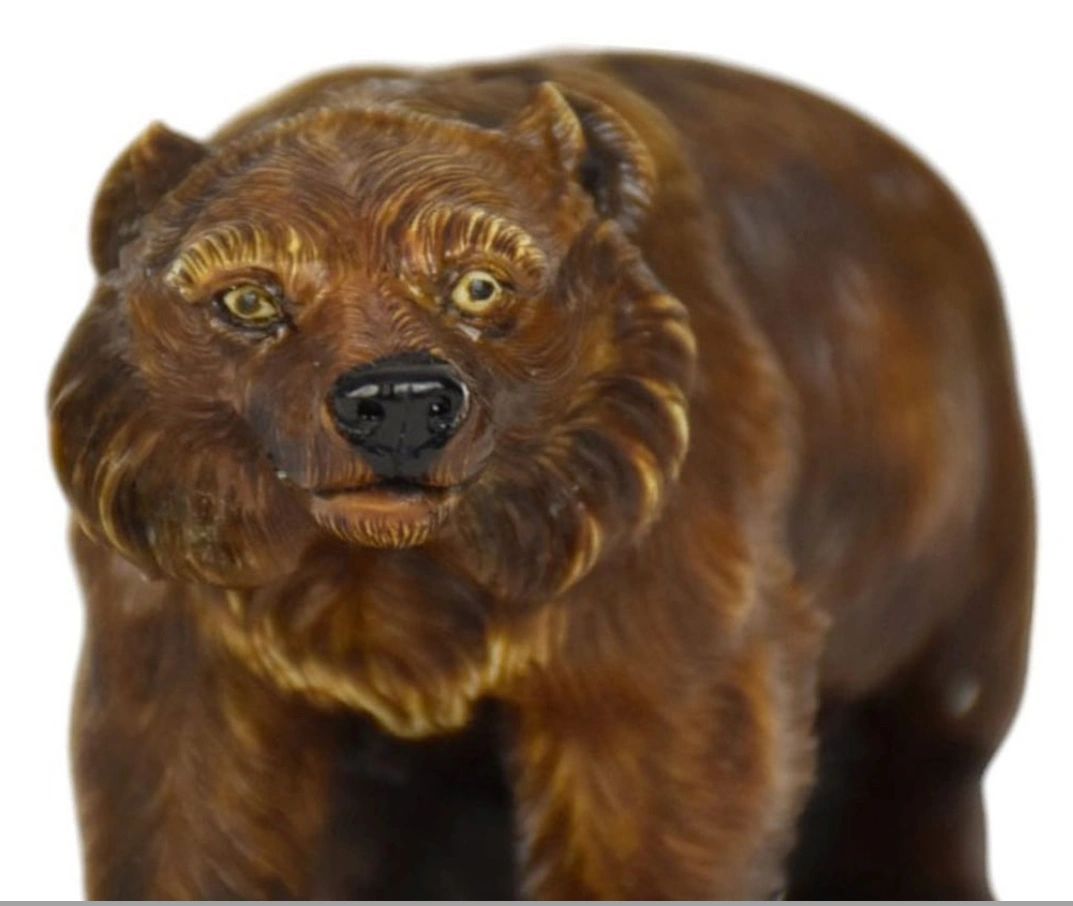
Ivory Okinomo by Koichi. Meiji era
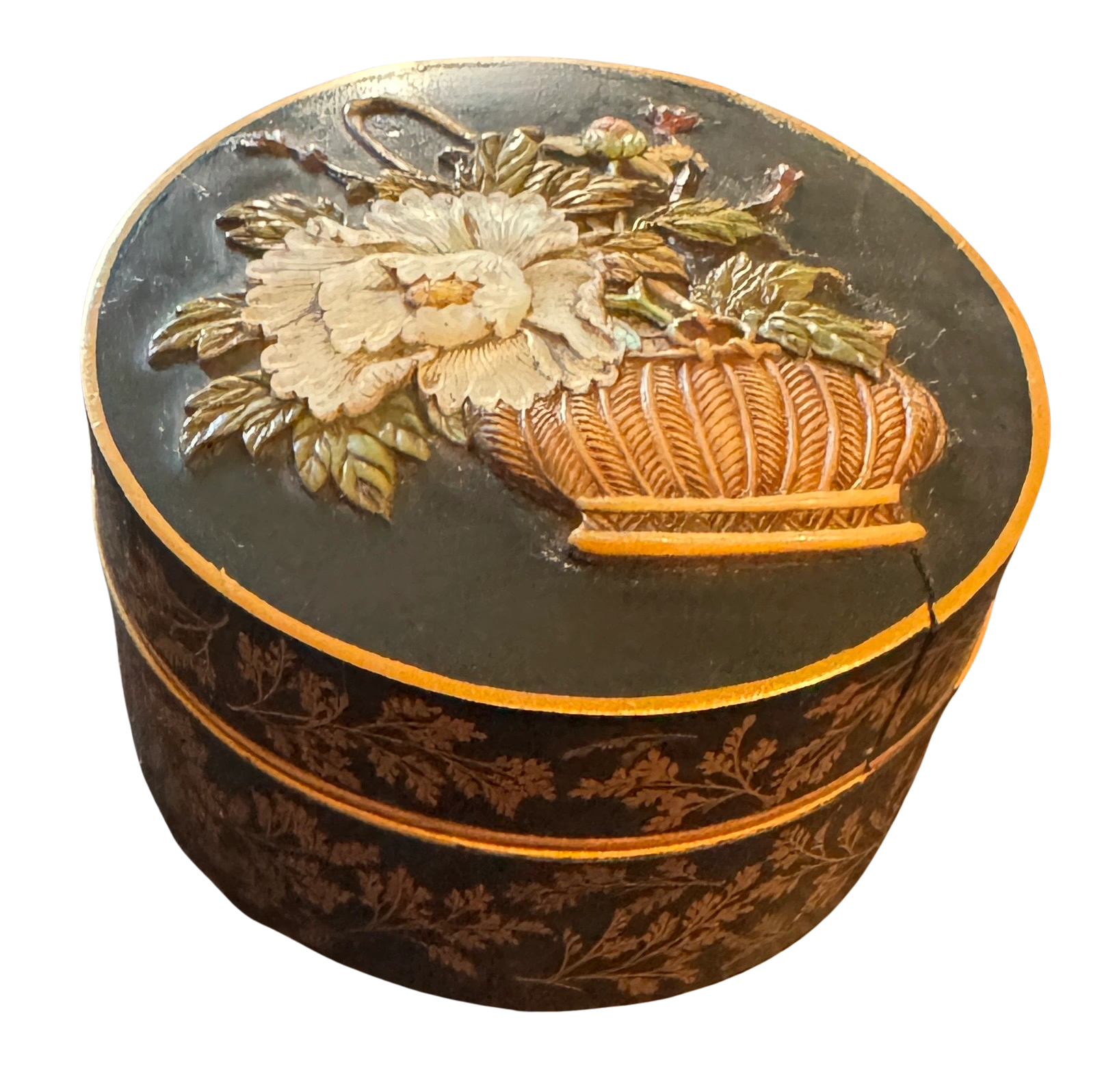
Gold mounted kogo (incense box) decorated with shibayama, urushi & zogan inlays. Edo era
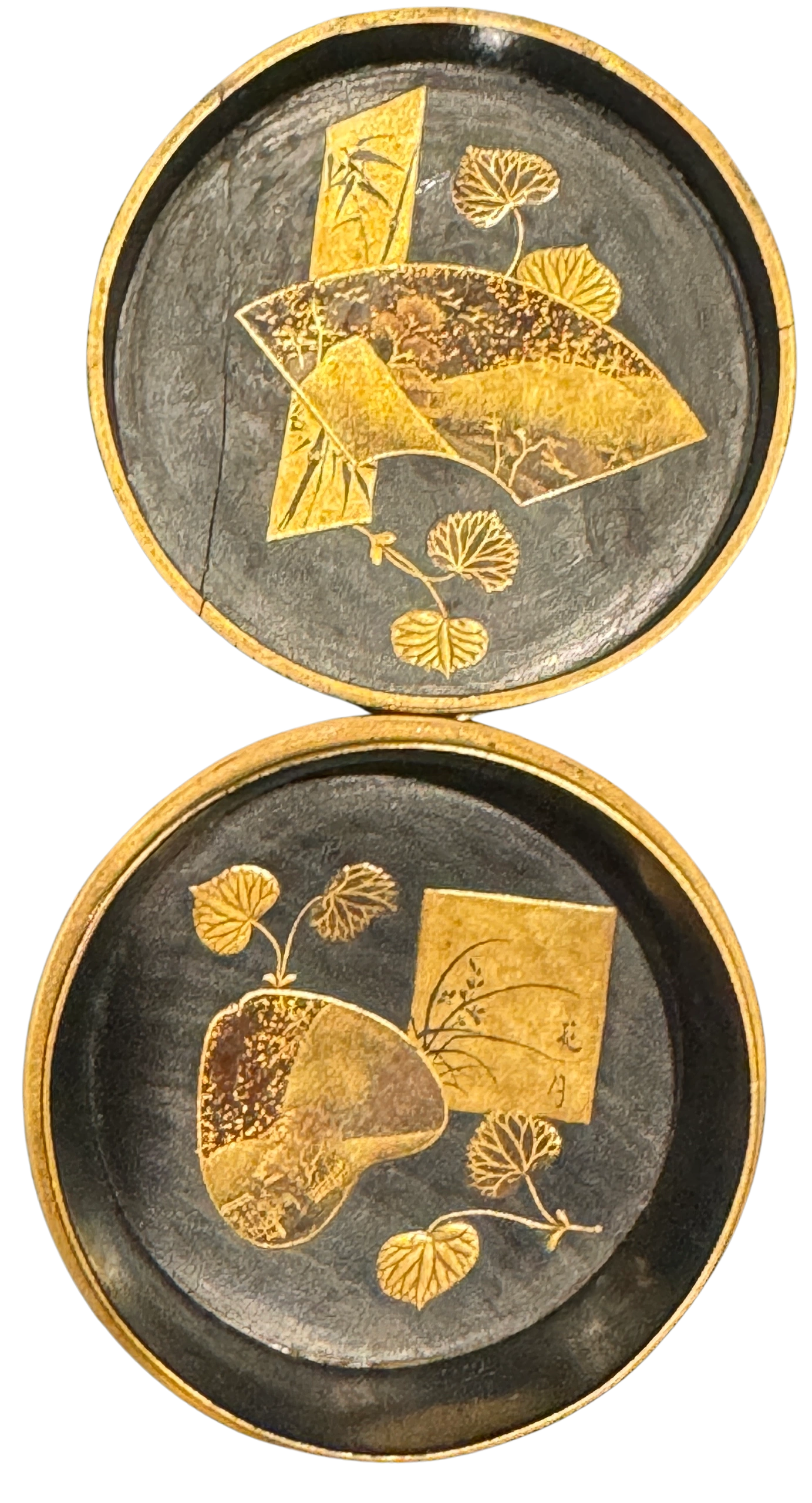
Gold mounted kogo - interior lacquer Artwork.
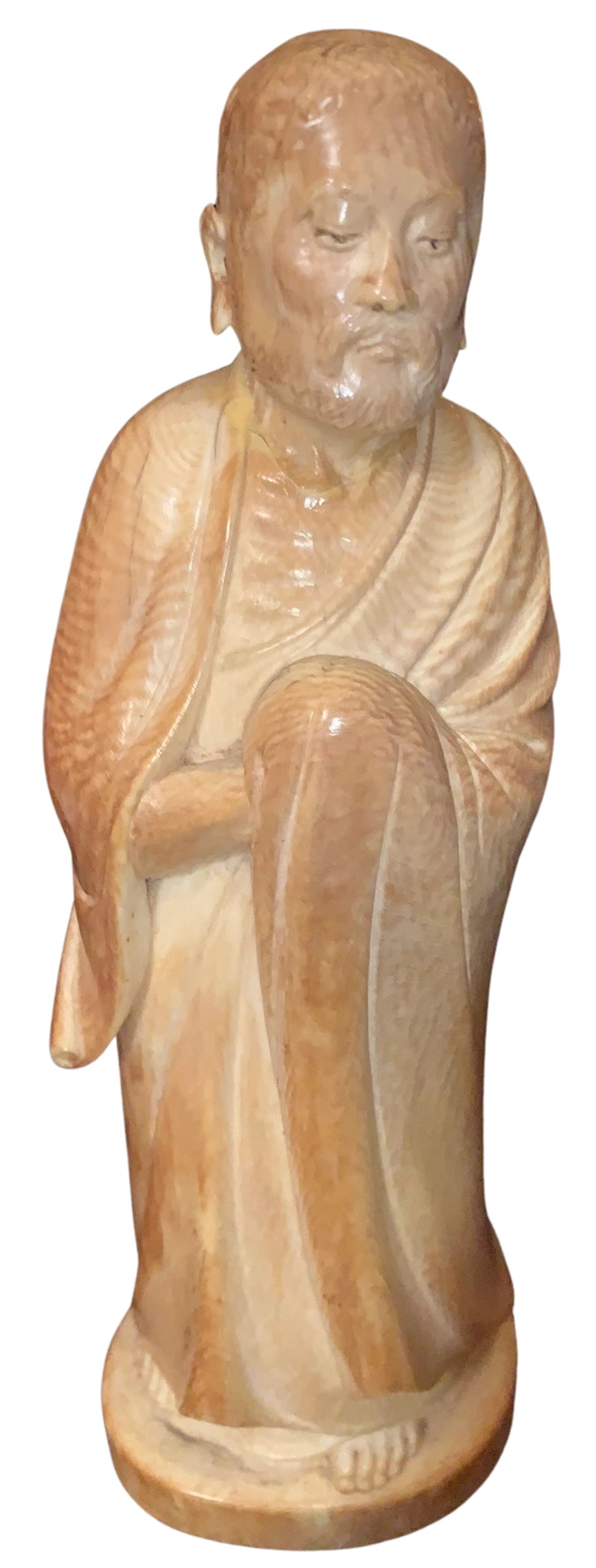
Daruma (Bodhi Dharma) patron saint of Zen. Meiji era.
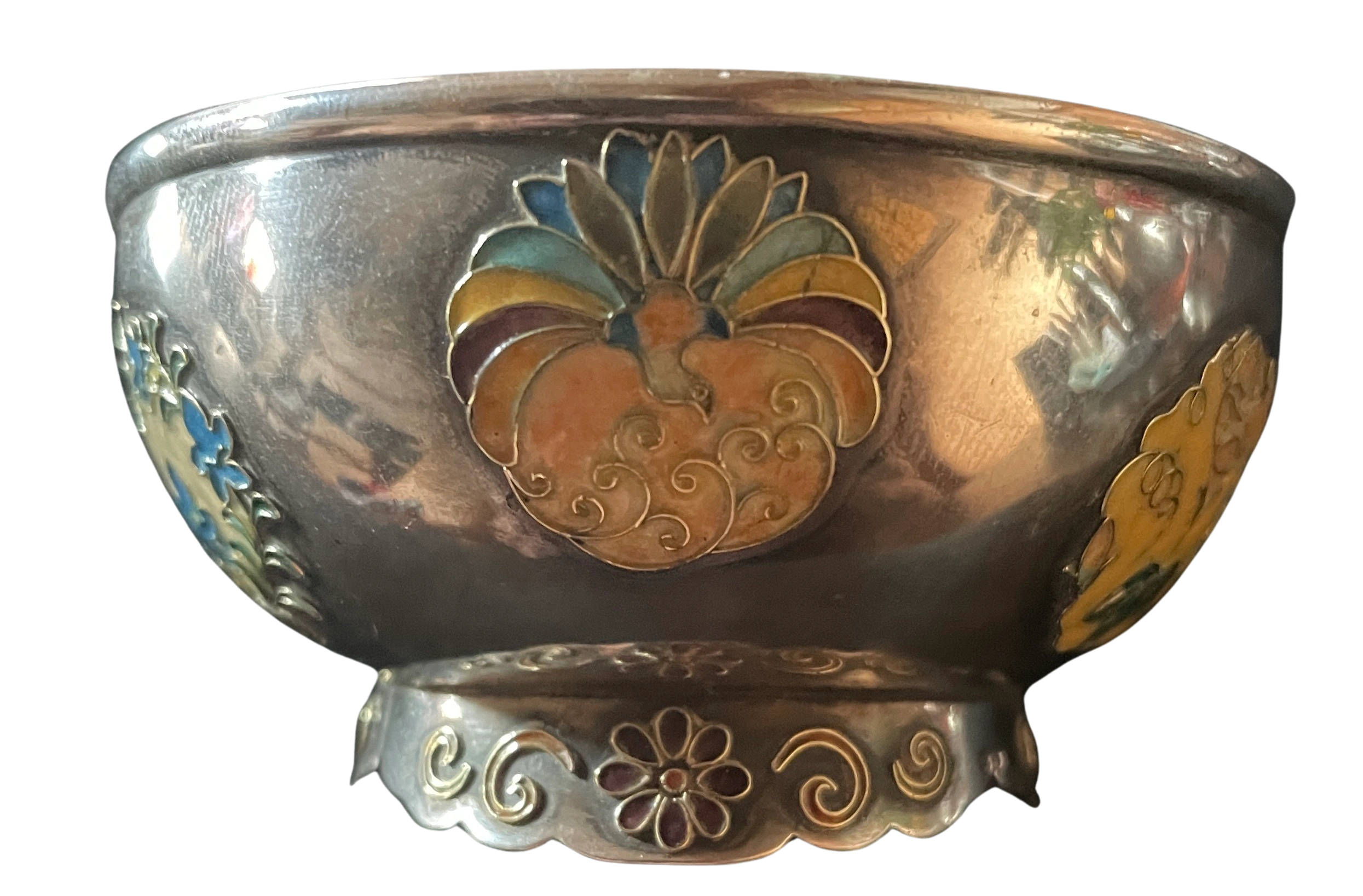
Silver bowl decorated with floral medallions in Tetsudai shippo (enamel appliqués) with gold cloisonné wire. Hirata Family, Meiji era
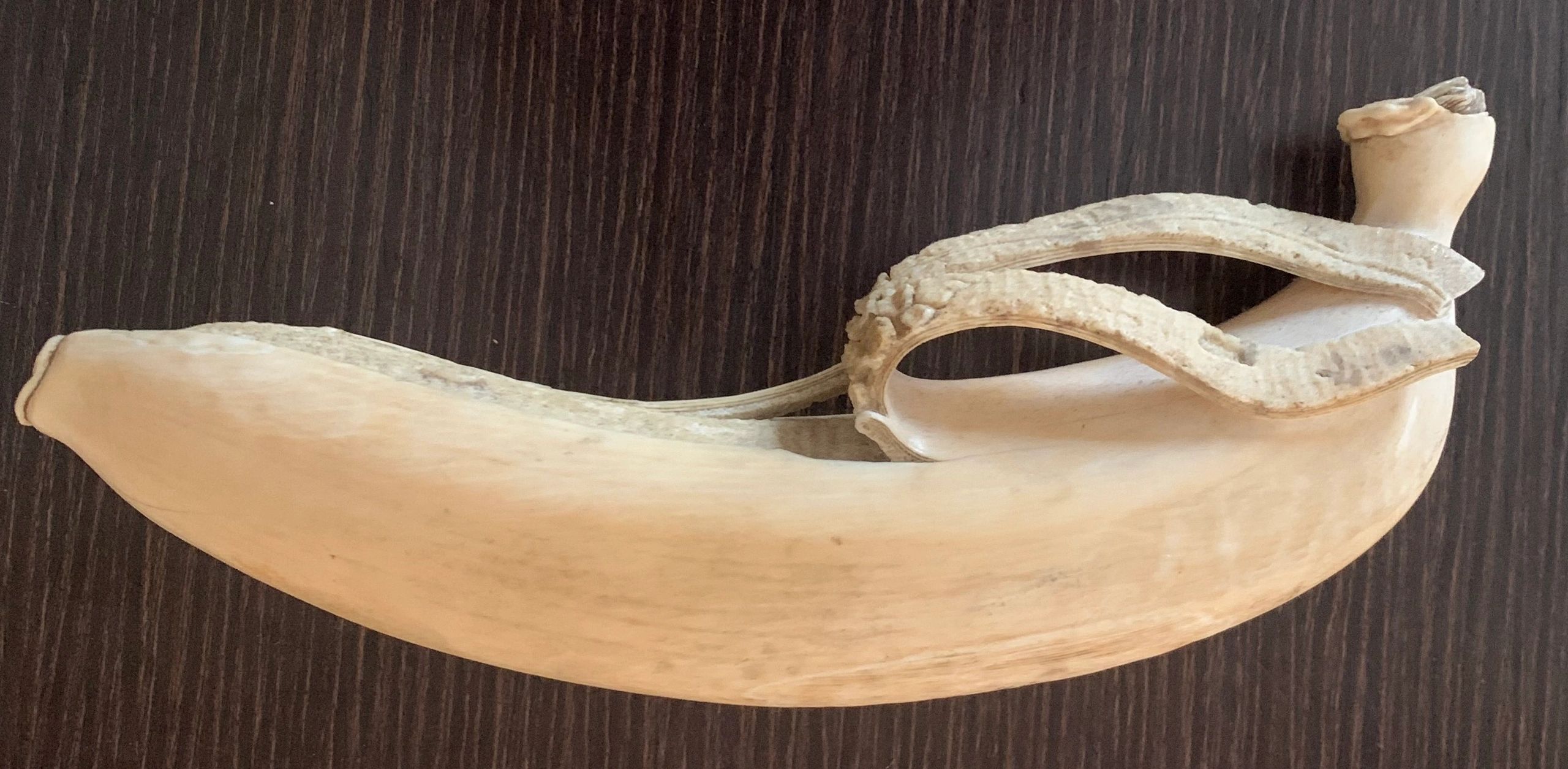
Ivory banana. Signed and dated Tokyo, Meiji 3 (1870).
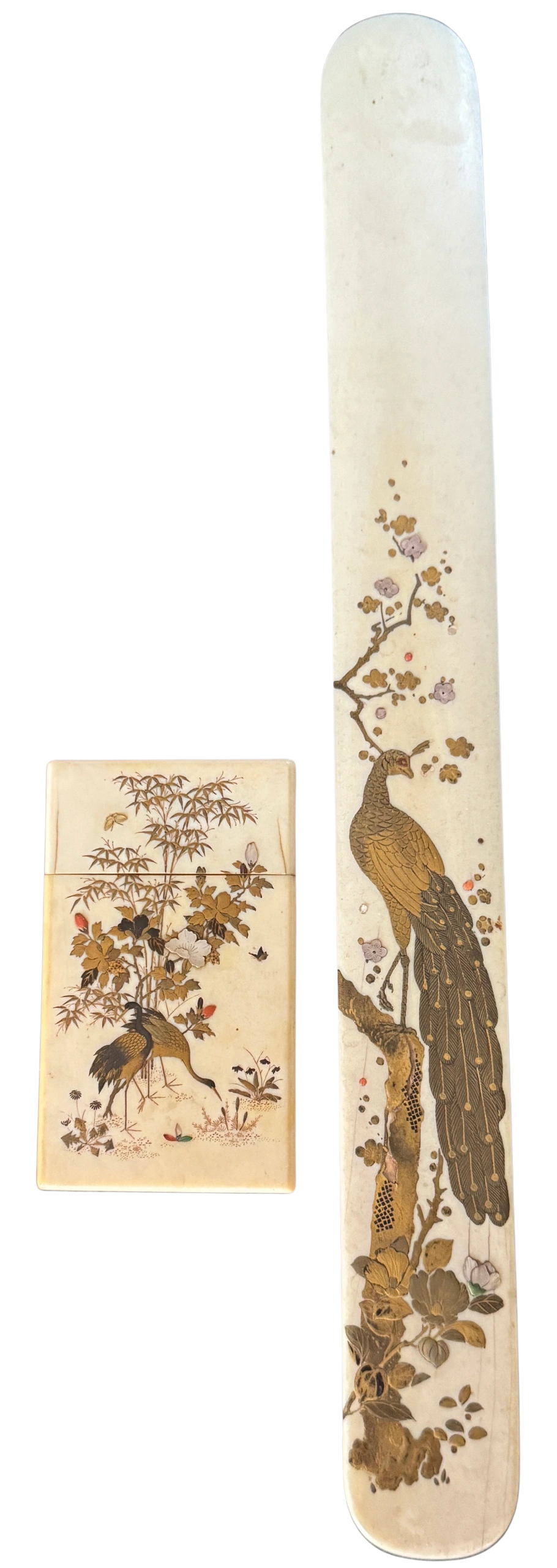
Shibayama letter opener & card case. Meiji era.
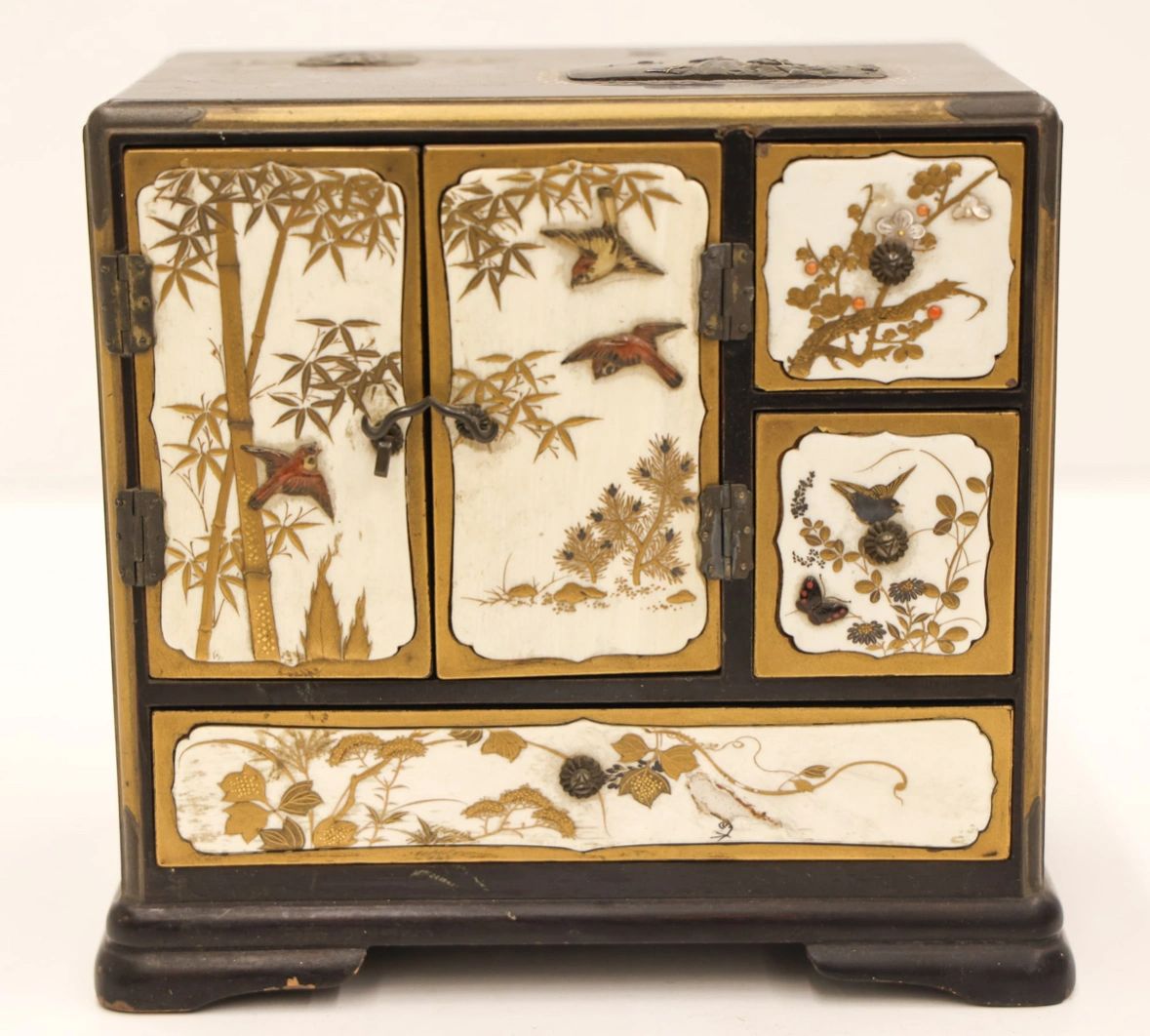
Shibayama Kodansu set with mixed metal Shakudo motifs. Edo/Meiji era.
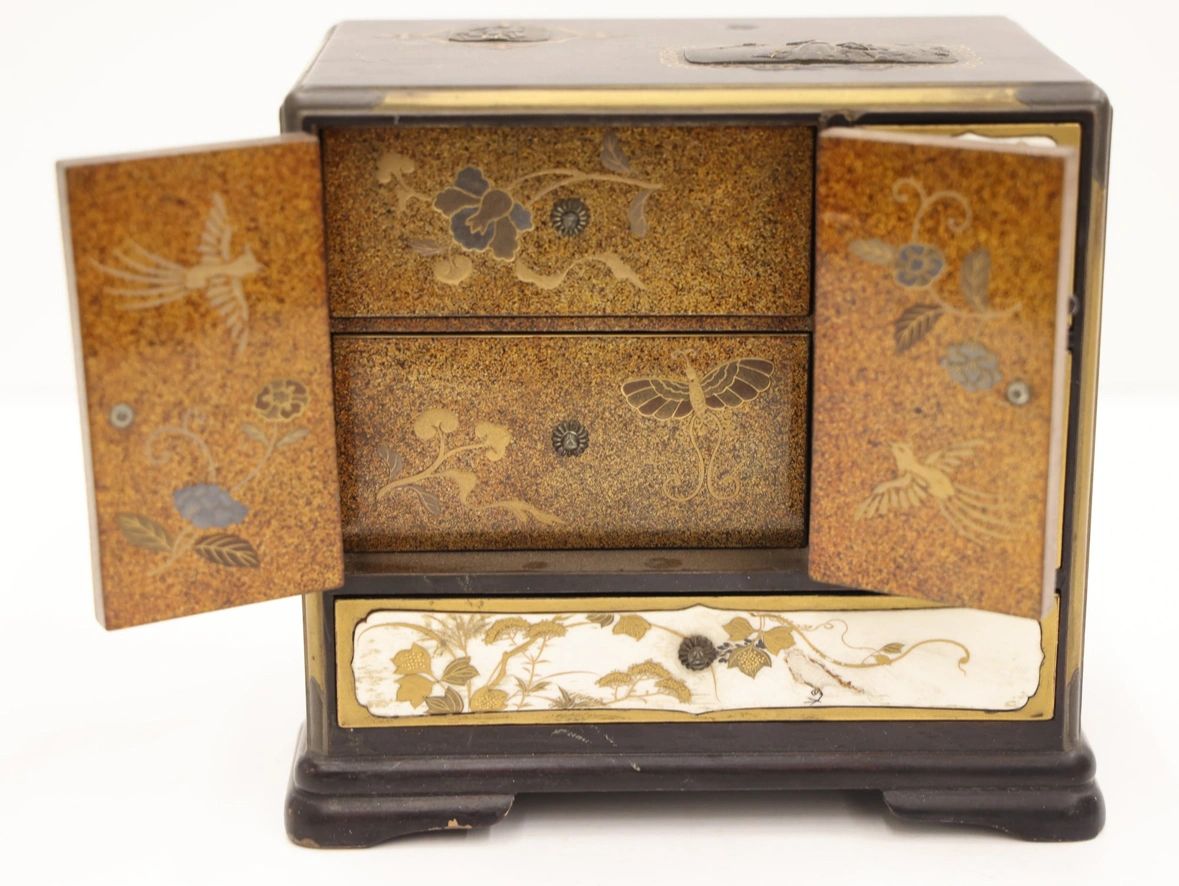
Shibayama Kodansu set with mixed metal Shakudo motifs. Edo/Meiji era.
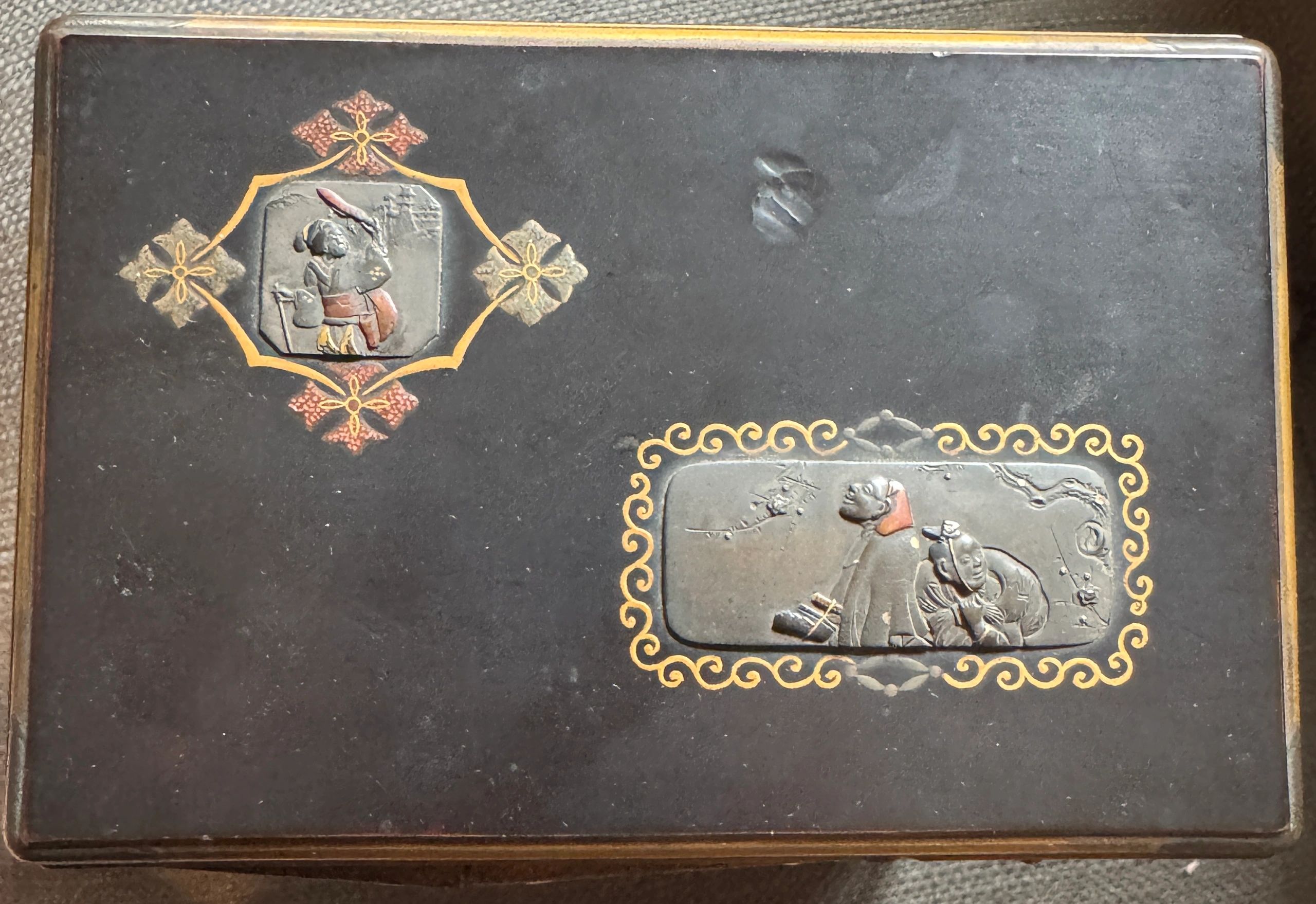
Shibayama Kodansu set with mixed metal Shakudo motifs. Edo/Meiji era.
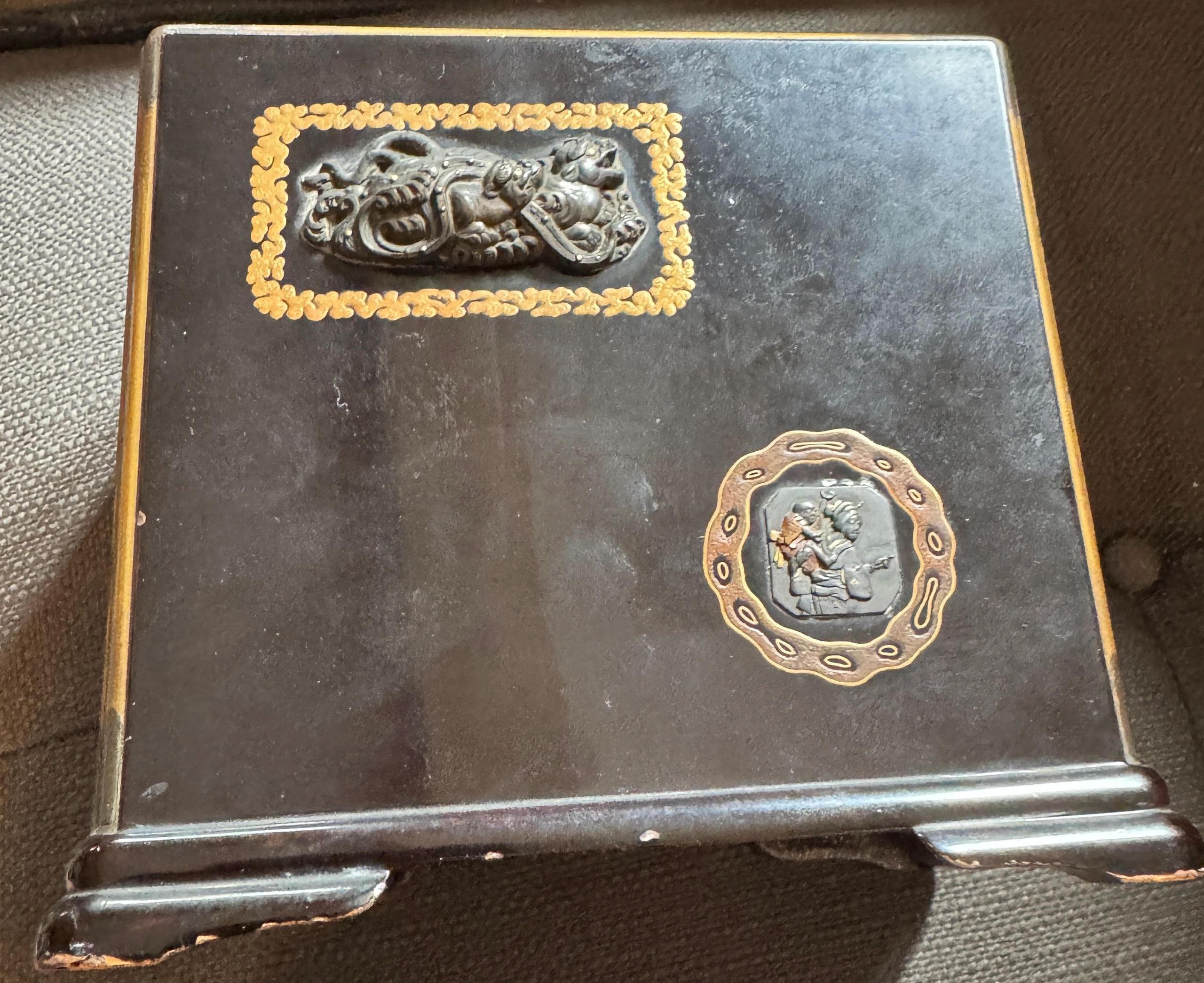
Shibayama Kodansu set with mixed metal Shakudo motifs. Edo/Meiji era.
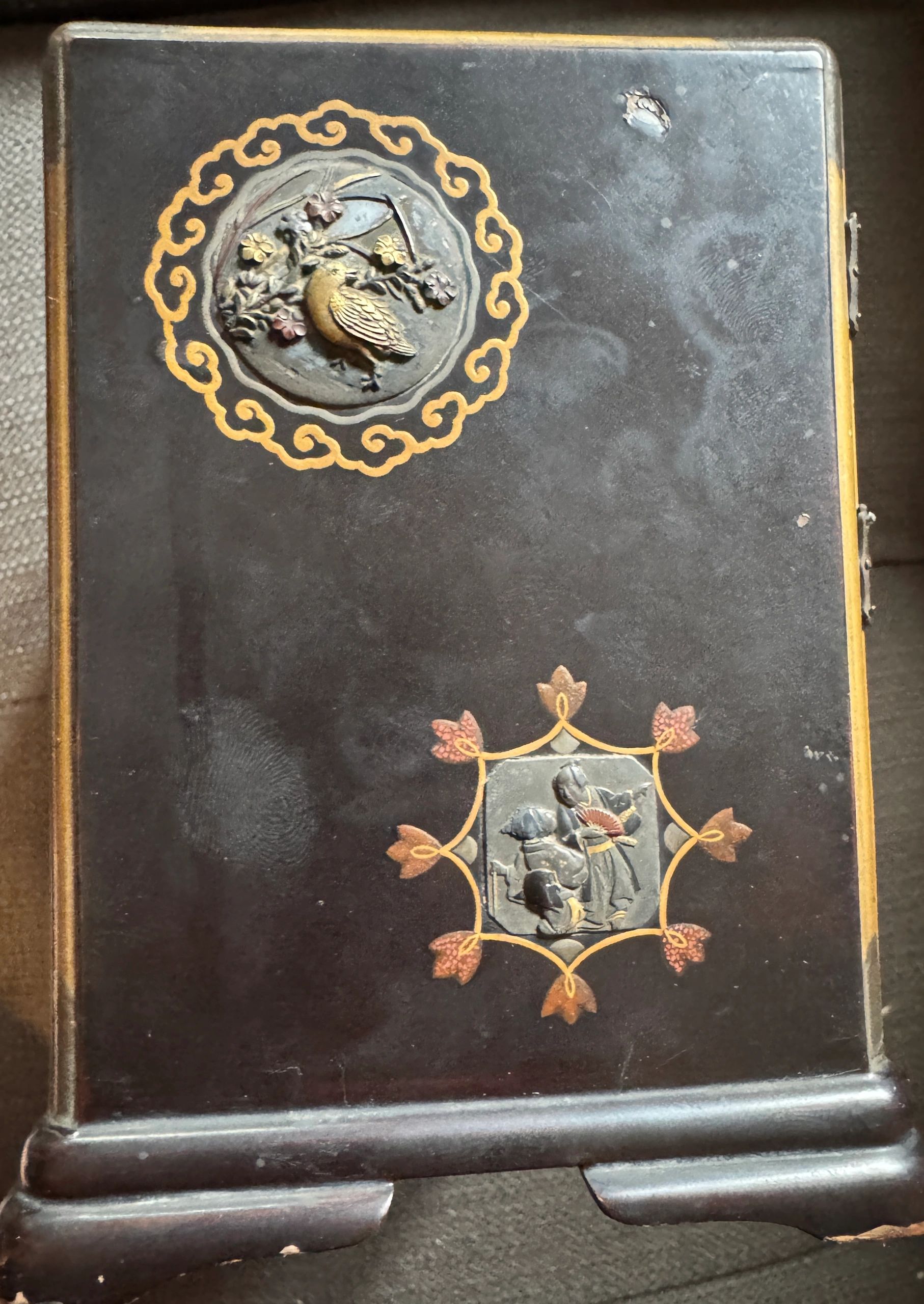
Shibayama Kodansu set with mixed metal Shakudo motifs. Edo/Meiji era.
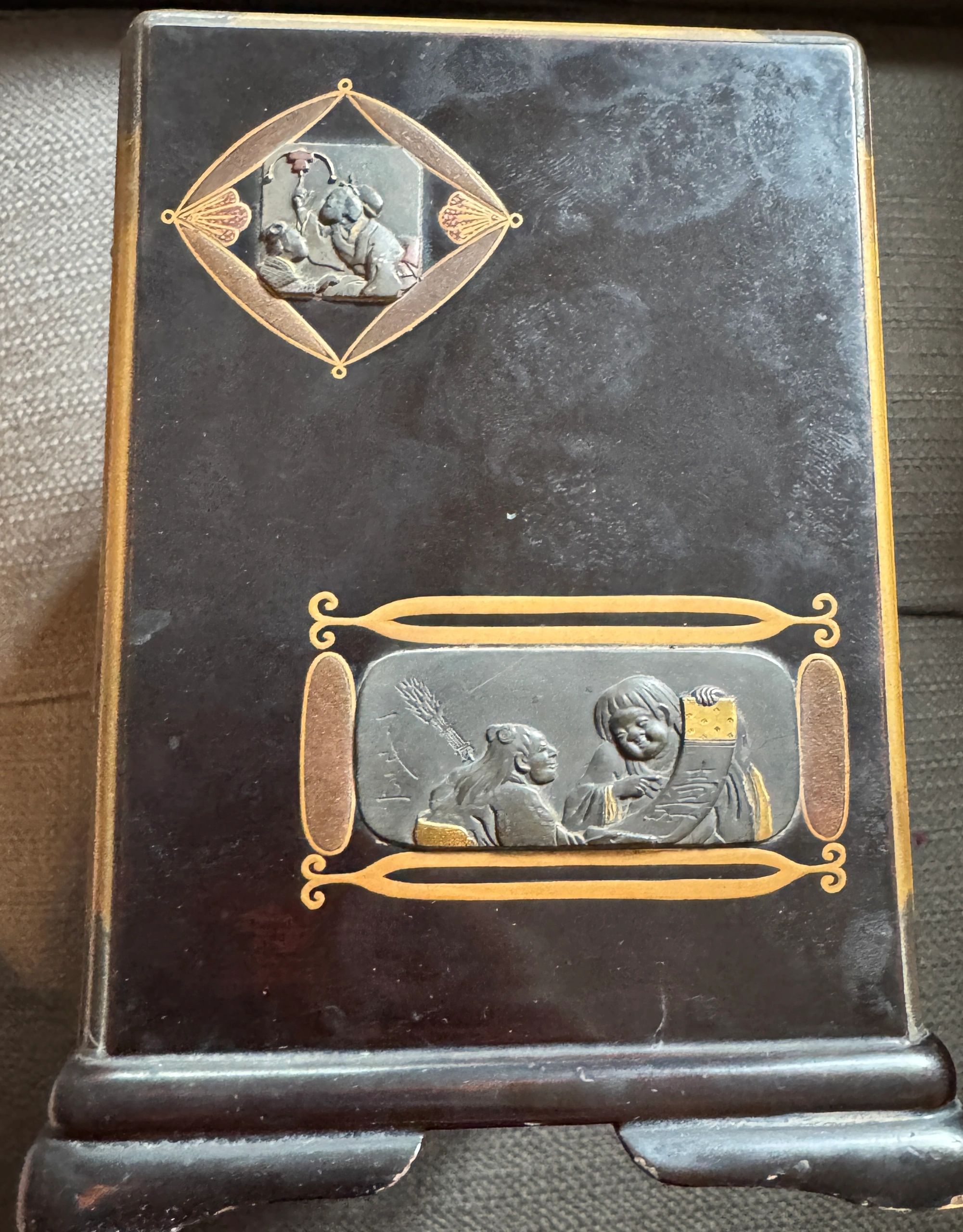
Shibayama Kodansu set with mixed metal Shakudo motifs. Edo/Meiji era.
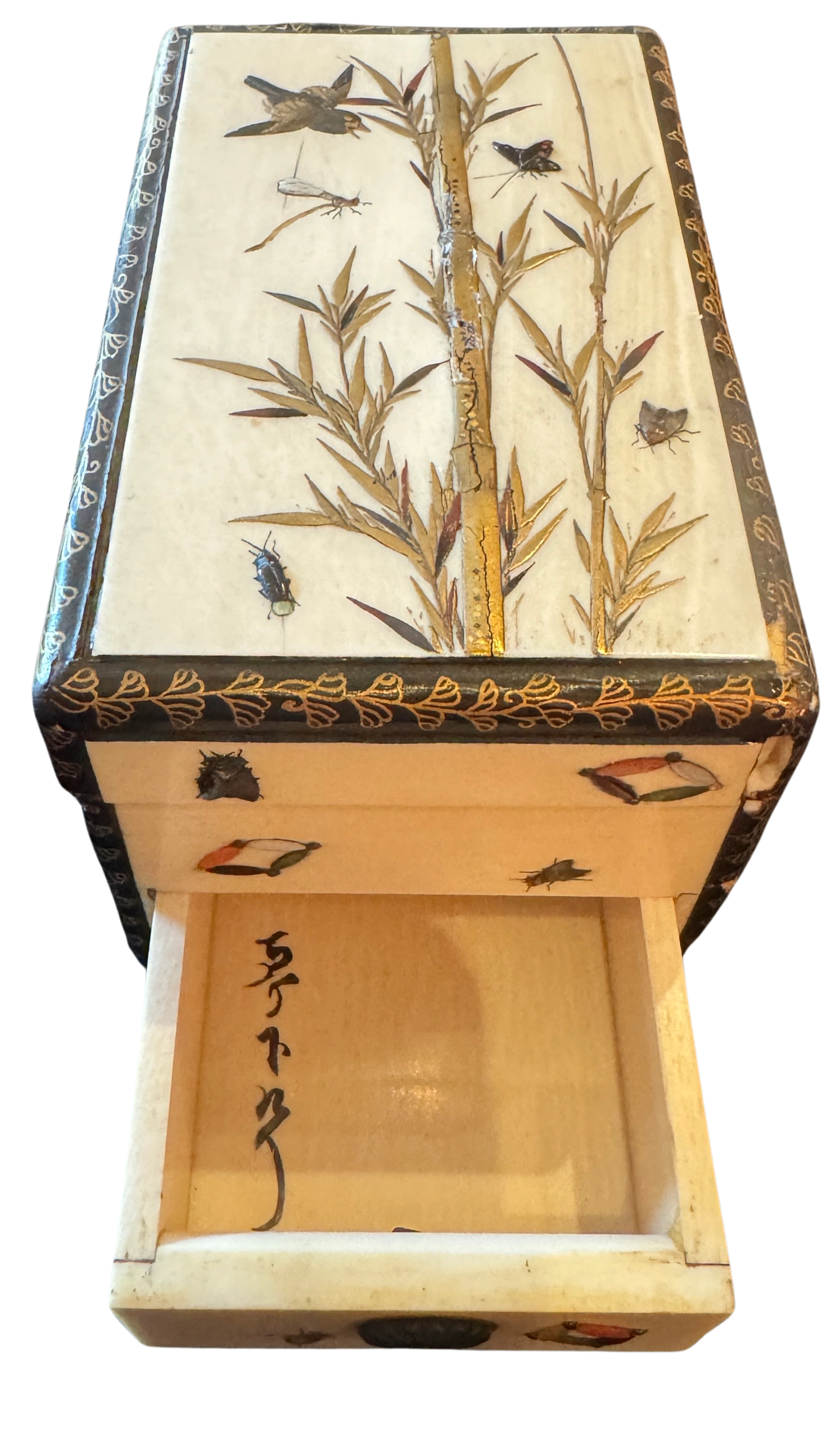
Miniature shibayama kodansu decorated with lacquer and mixed metal motifs. Edo/Meiji era
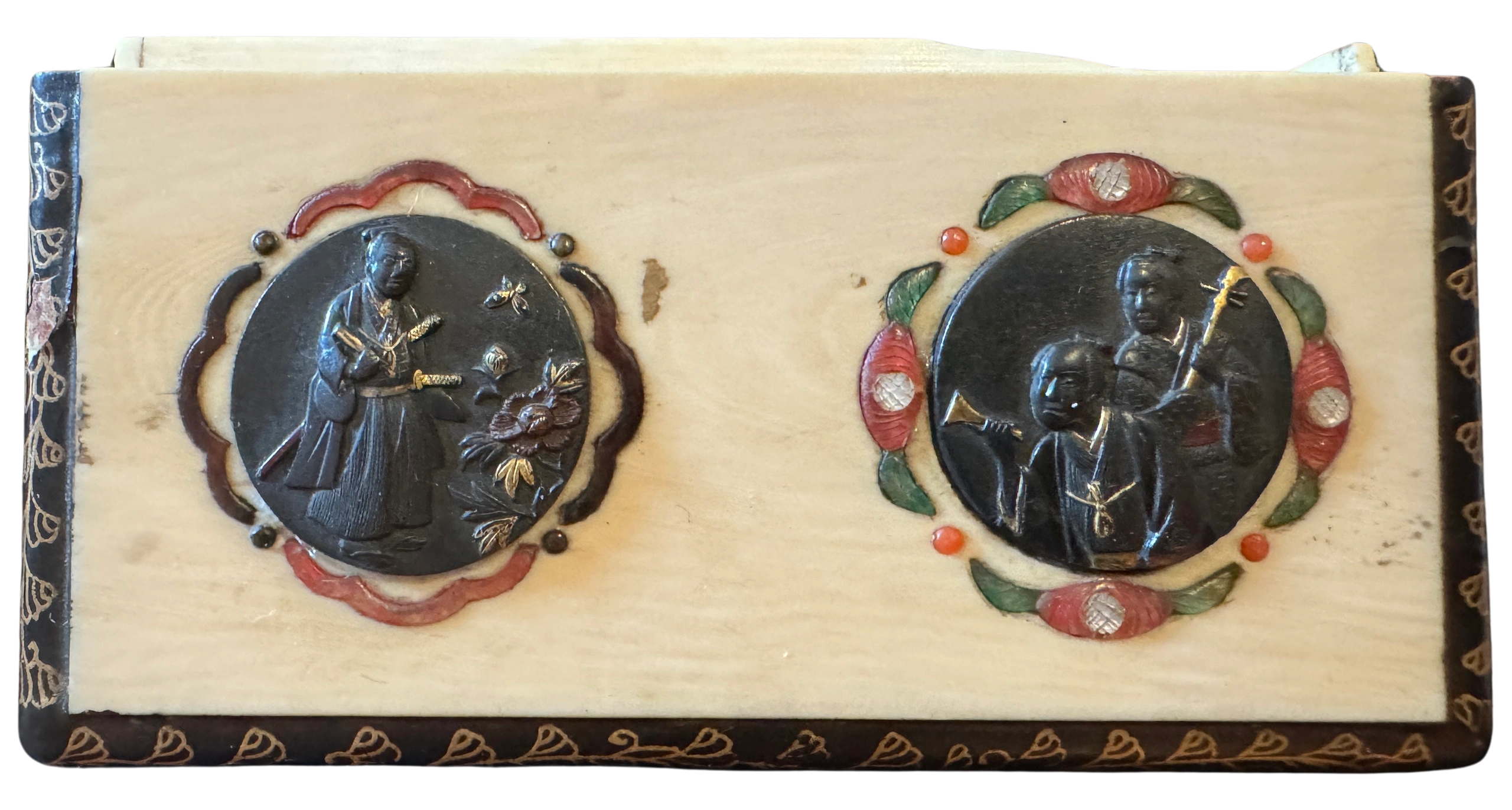
Marriage ceremony
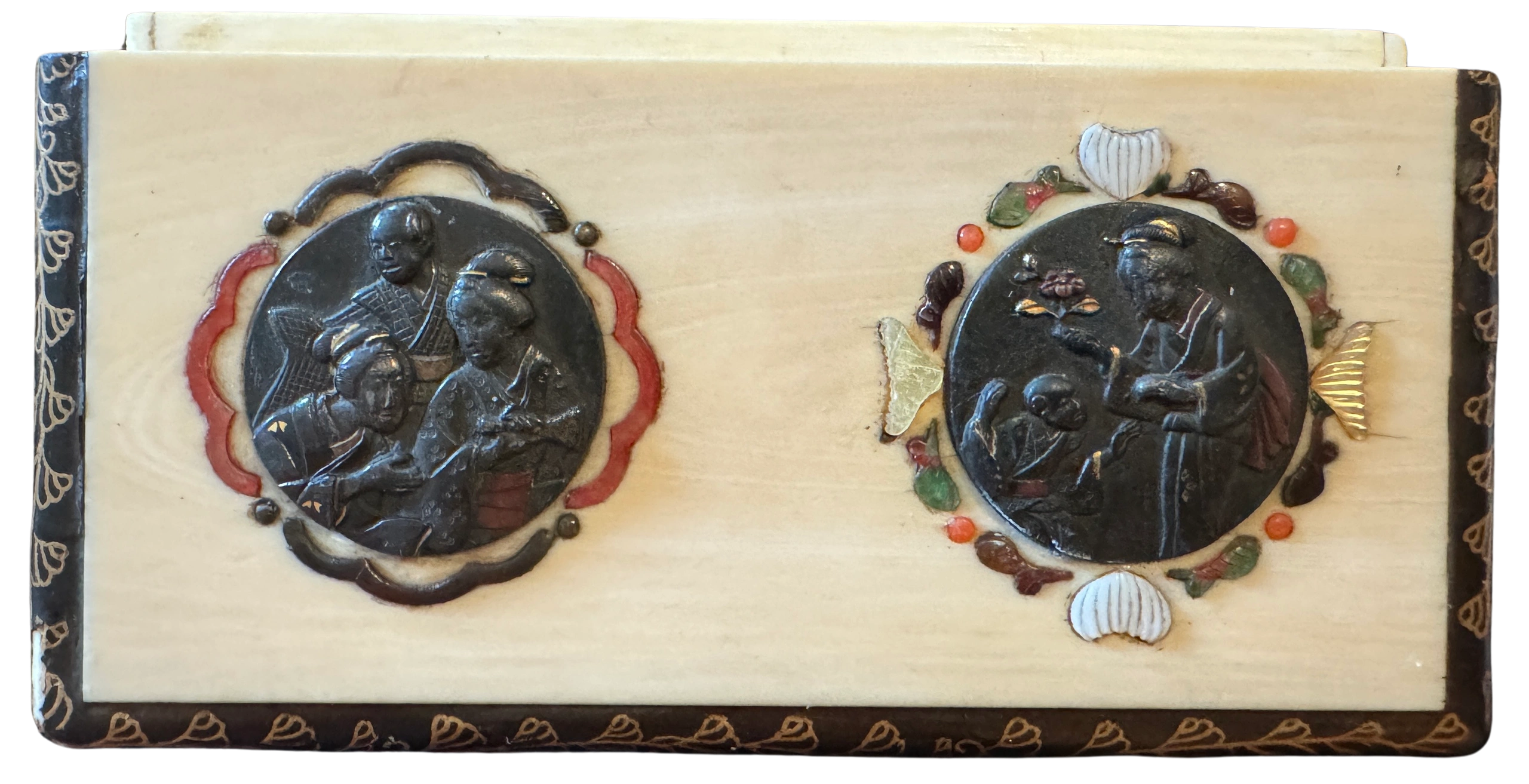
Marriage ceremony
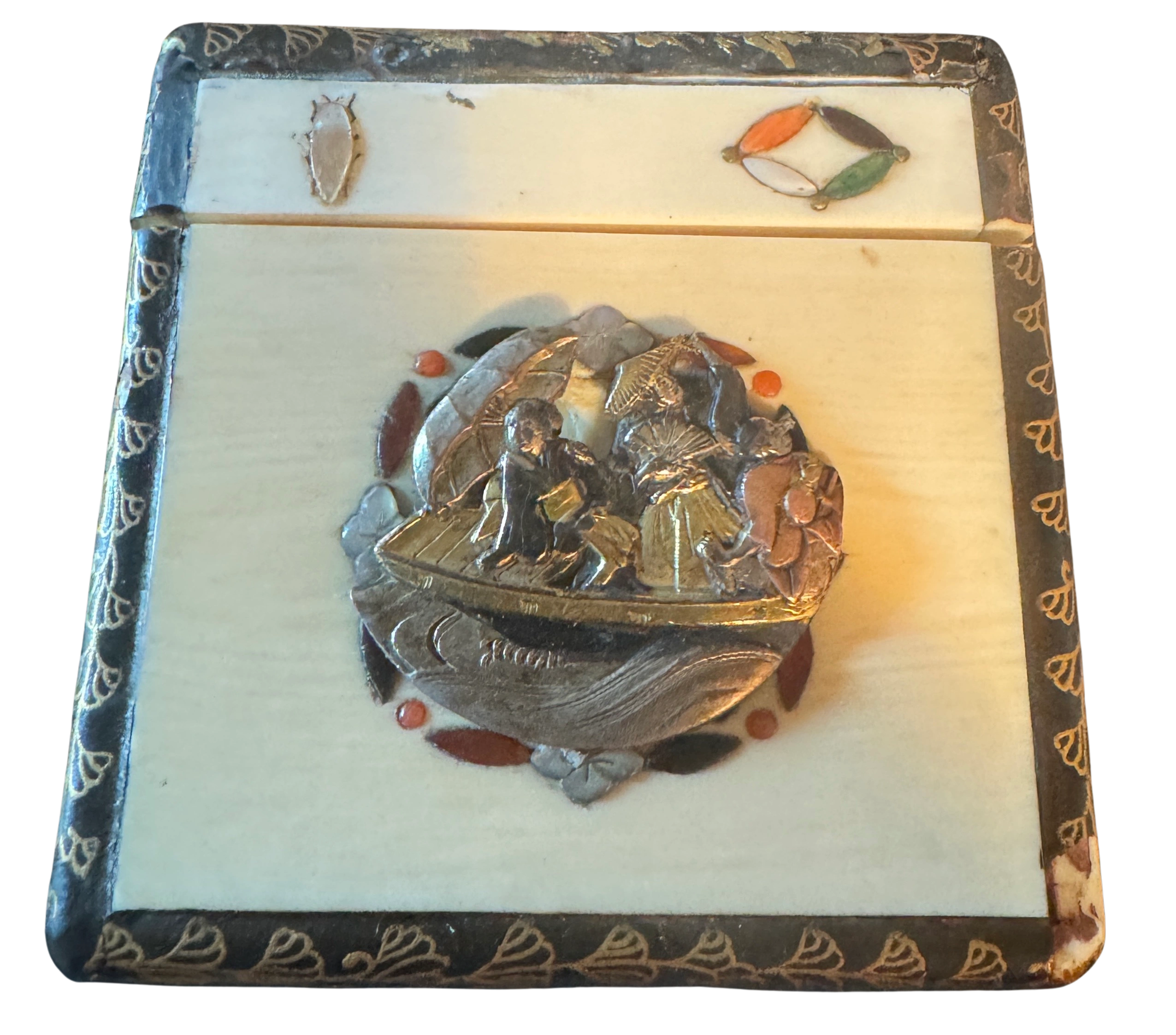
Wedding boat
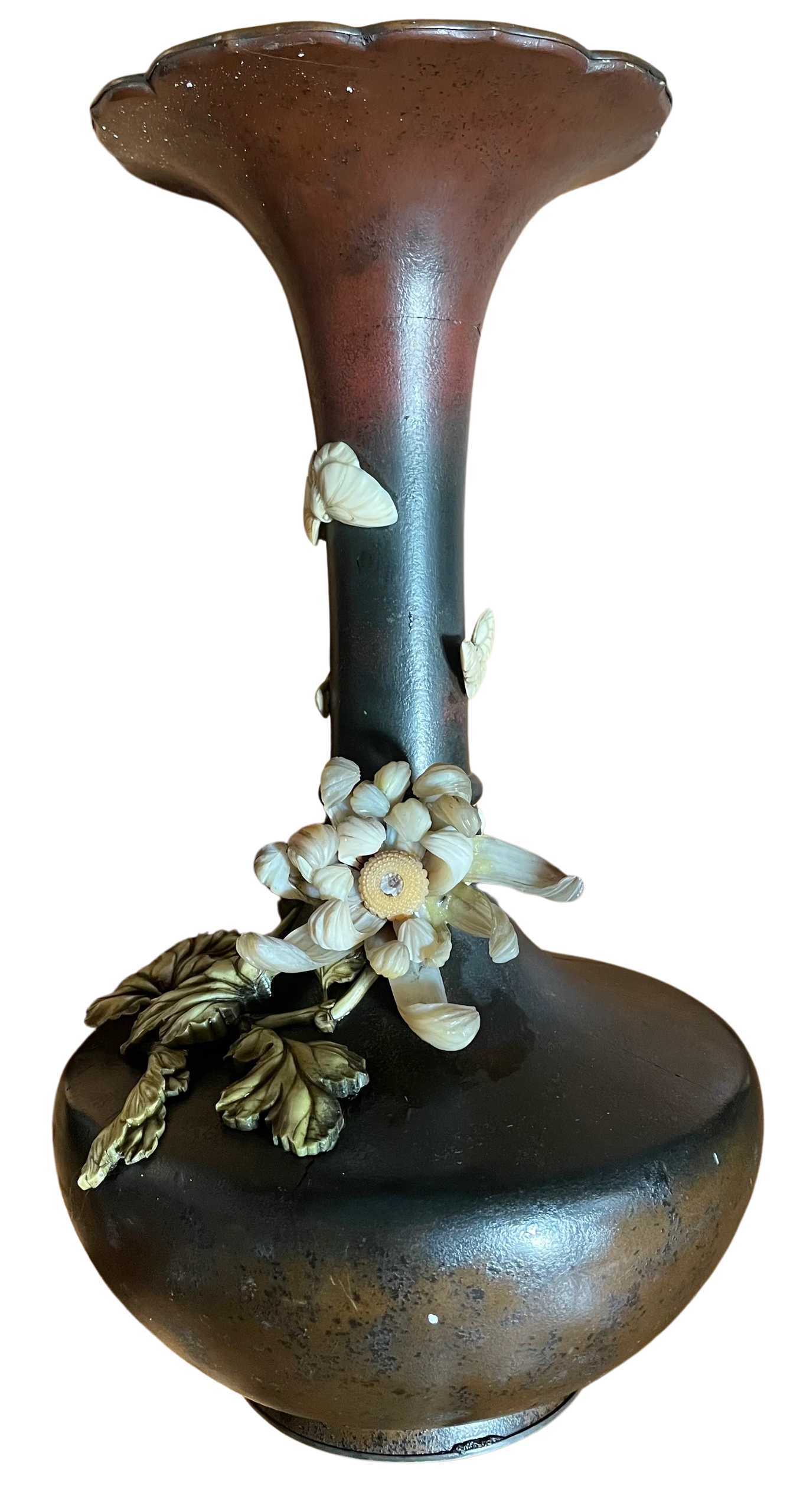
Bronze ‘Hu’ form trumpet neck vase mounted in copper decorated with lacquer and sculpted ivory kiku (chrysanthemum). Signed Kiku, Meiji era.
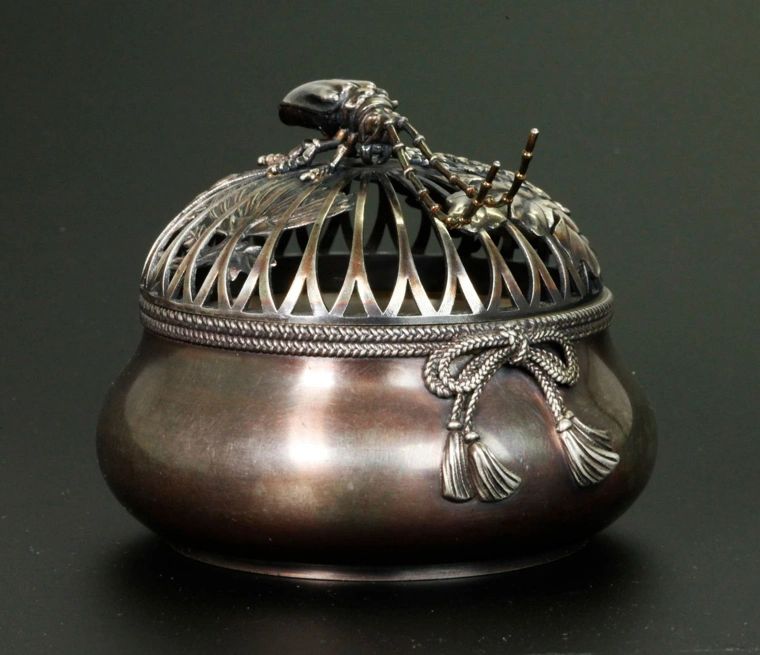
Silver koro formed as a sack with tassels surmounted by a long horn beetle finial. Artr. Jomi Eisuke, Meiji era.
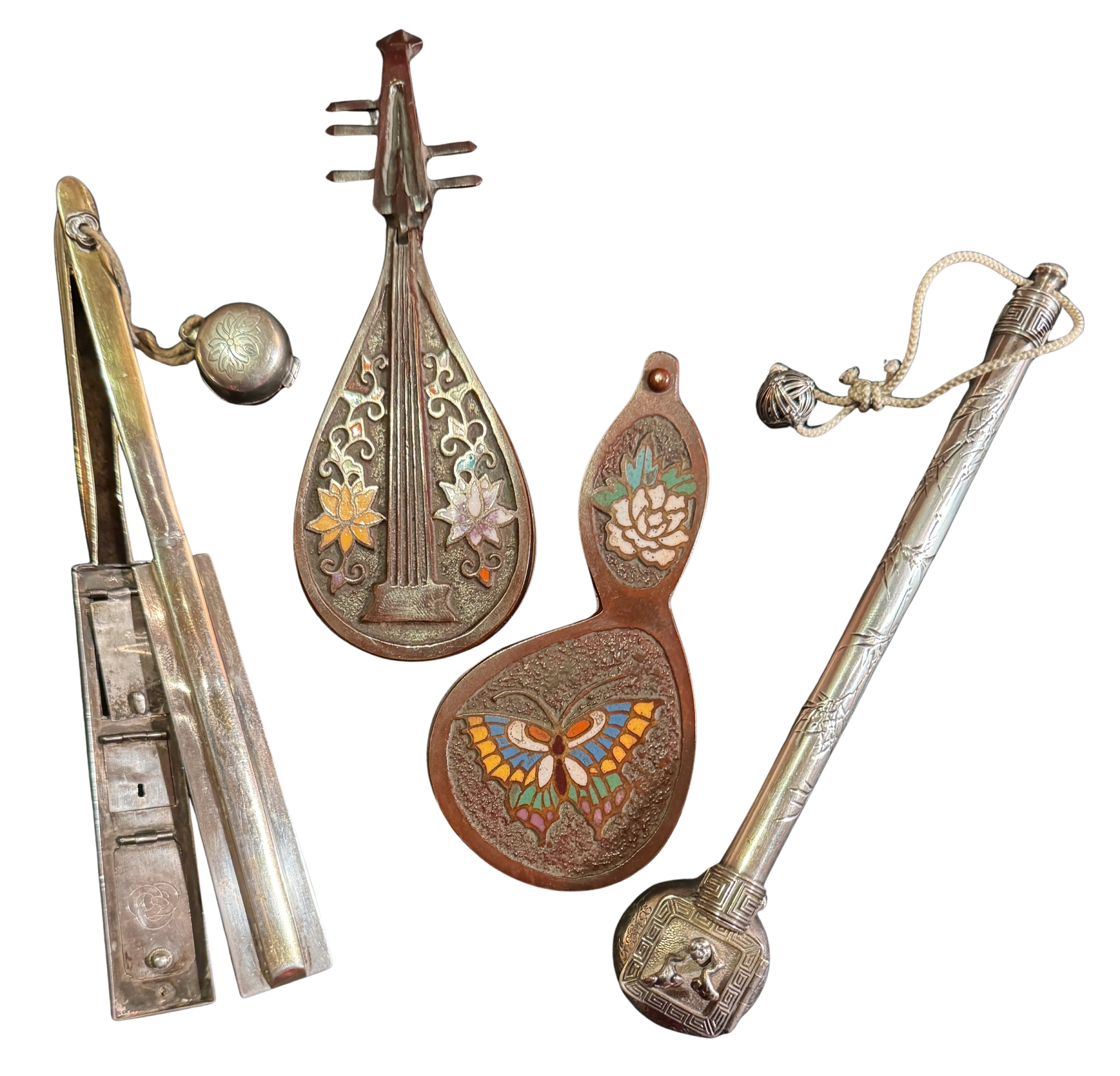
Yatate (pen & ink holder) group. Two in Zogan Shippo cloisonné enamel, one a biwa (short necked lute), the other a Hyotan (gourd), Hirata school, Edo era. Also two silver yatate, a sensu (fan) with ink dropper Ojime and another signed by Masakazu Toshizo with a Meiji seal. Meiji era.
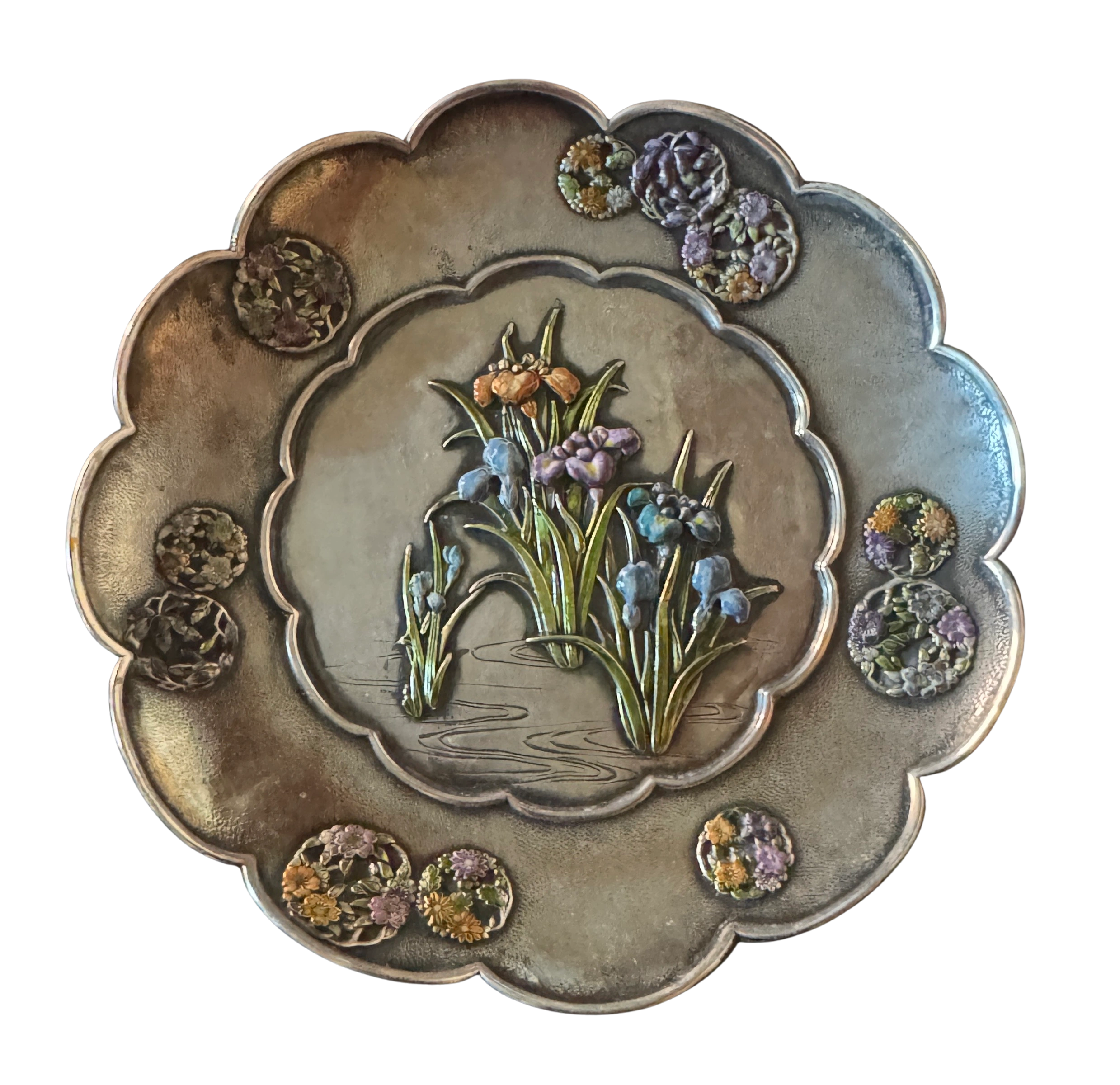
Enameled silver dish with Hirata style medallions. Meiji era.
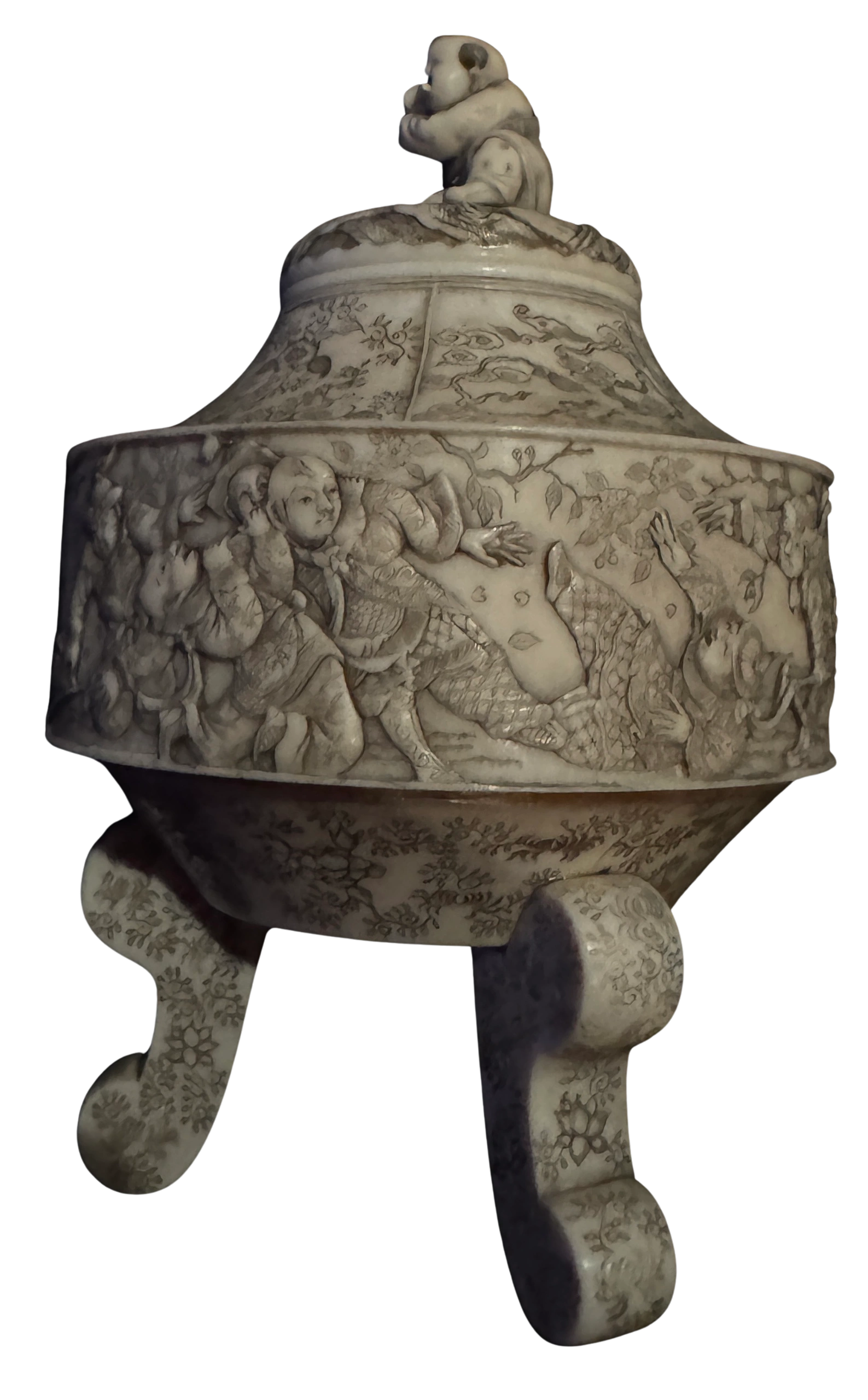
Ivory jar depicting a group of Karako playing Daruma-san ga koronda (the “red light, green light“ game) topped with a Karako playing the flute. Meiji era.
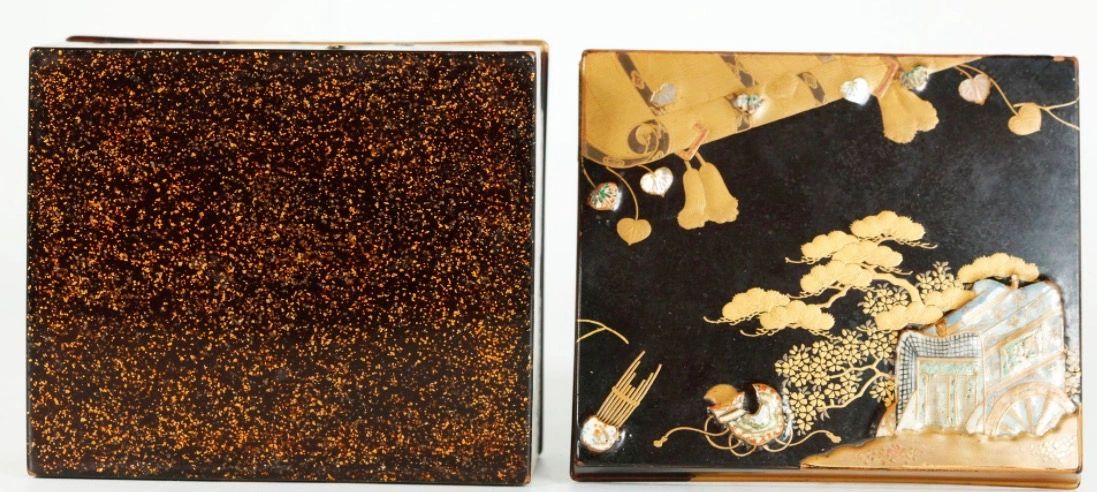
Lacquer kogo decorated in gold maki-e, raden, mother-of-pearl & porcelain accents depicting a Daimyo palanquin, a sho and other detailed designs. Meiji era.
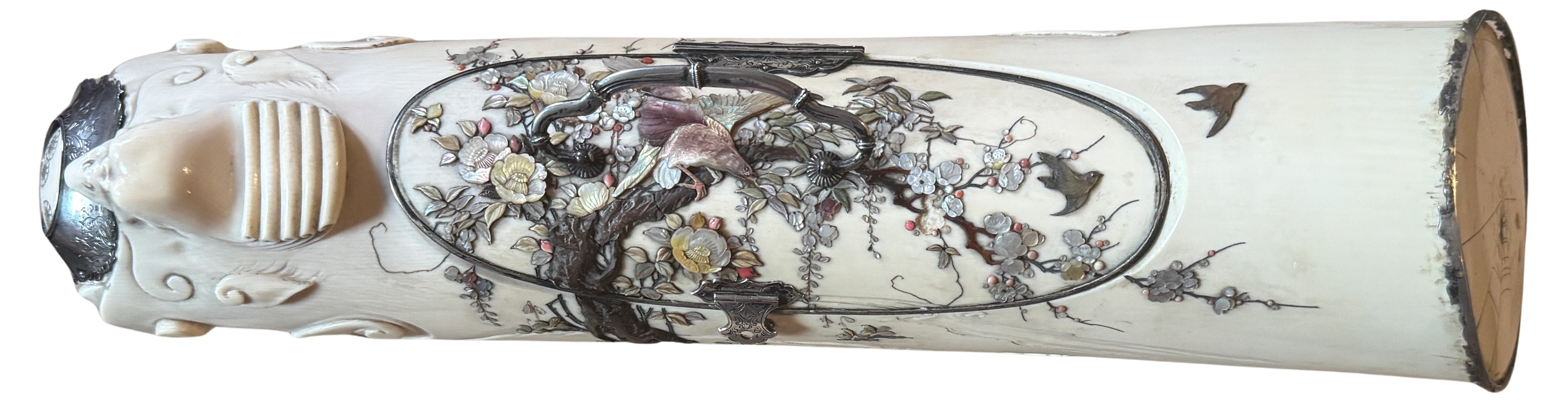
Silver mounted shibayama kodansu, length - 40cm. Meiji era.
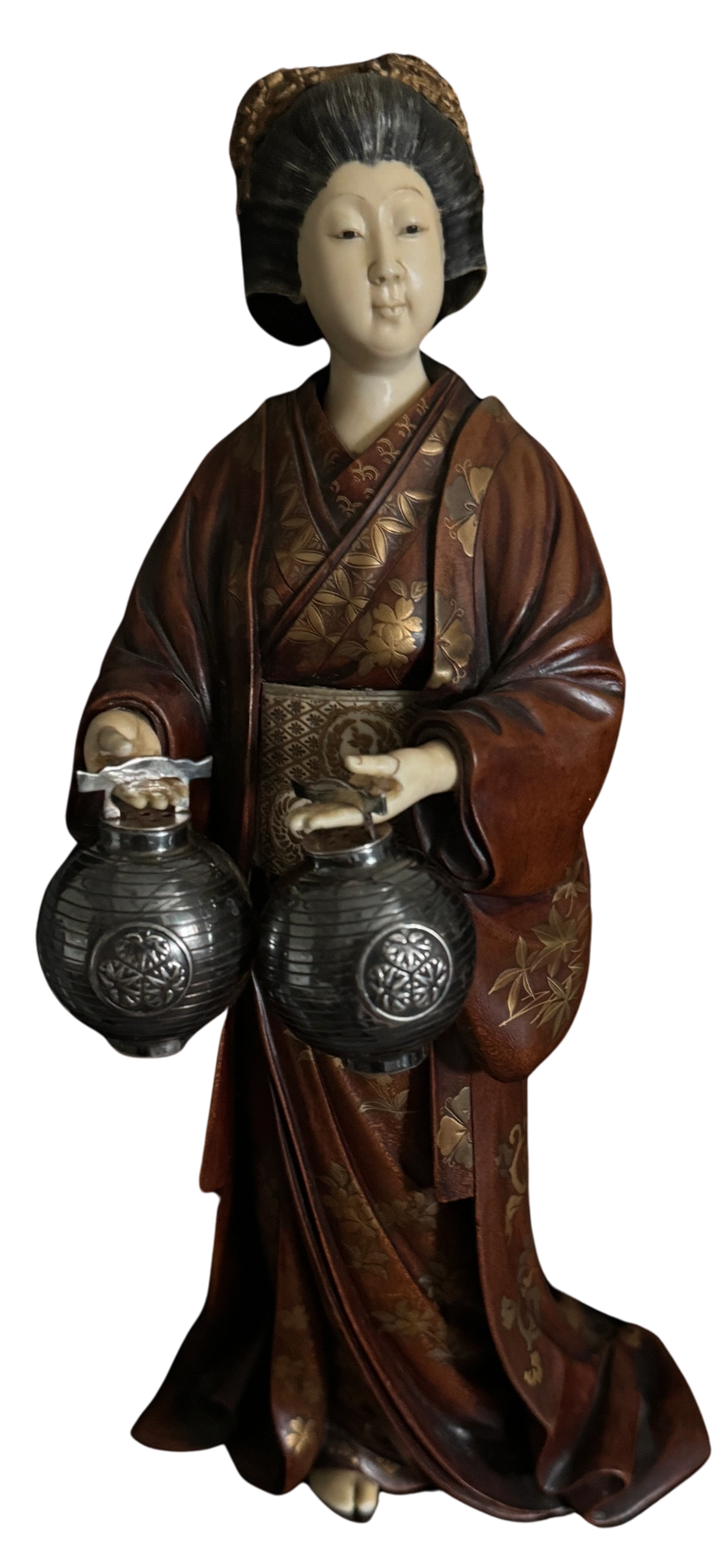
Carved wood Geisha wearing Tokugawa kimono holding silver lanterns. Signed Miyao in a mother-of-pearl reserve, Meiji era.
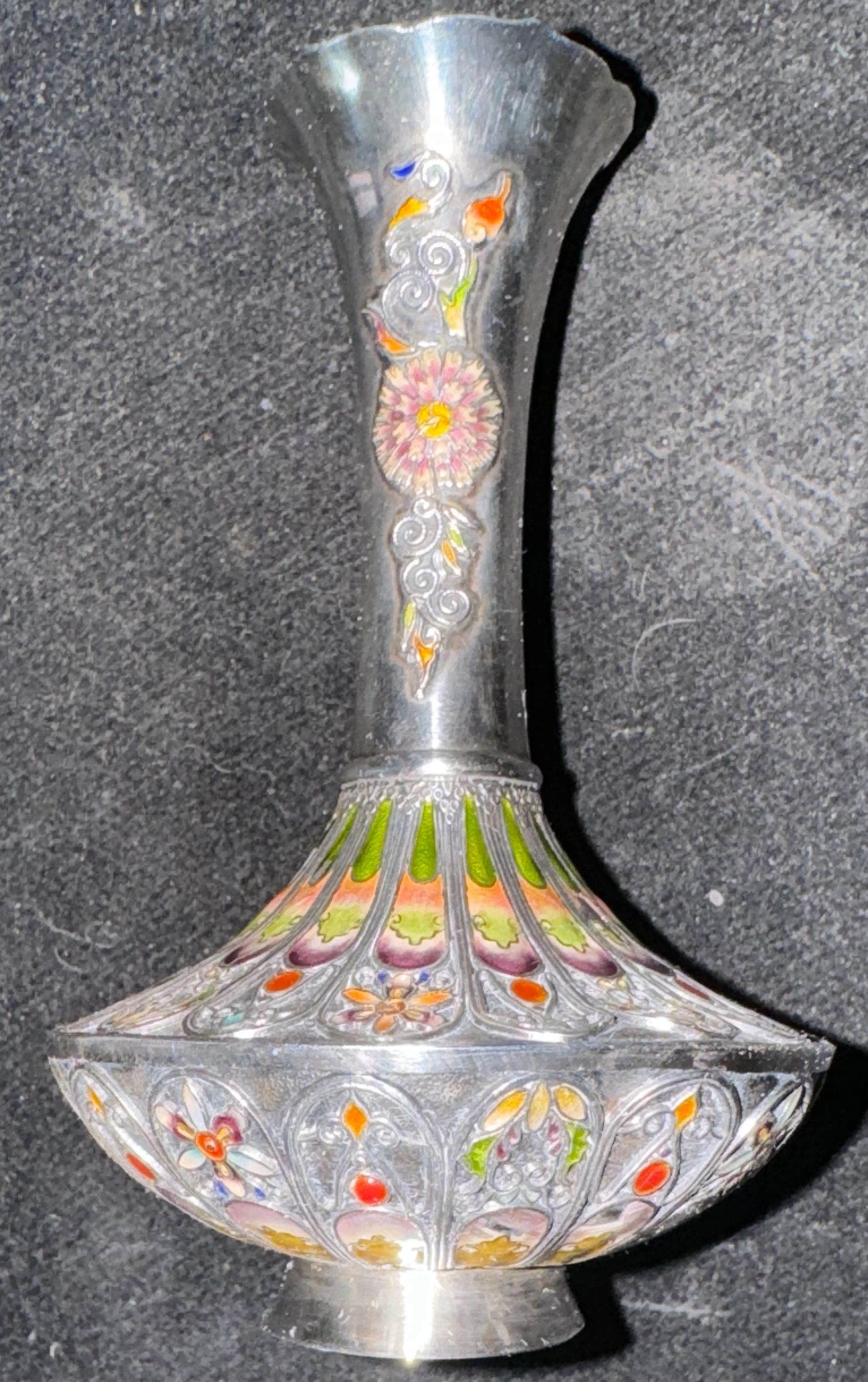
Enamel on silver vase by Mitsu Shige. Meiji era.
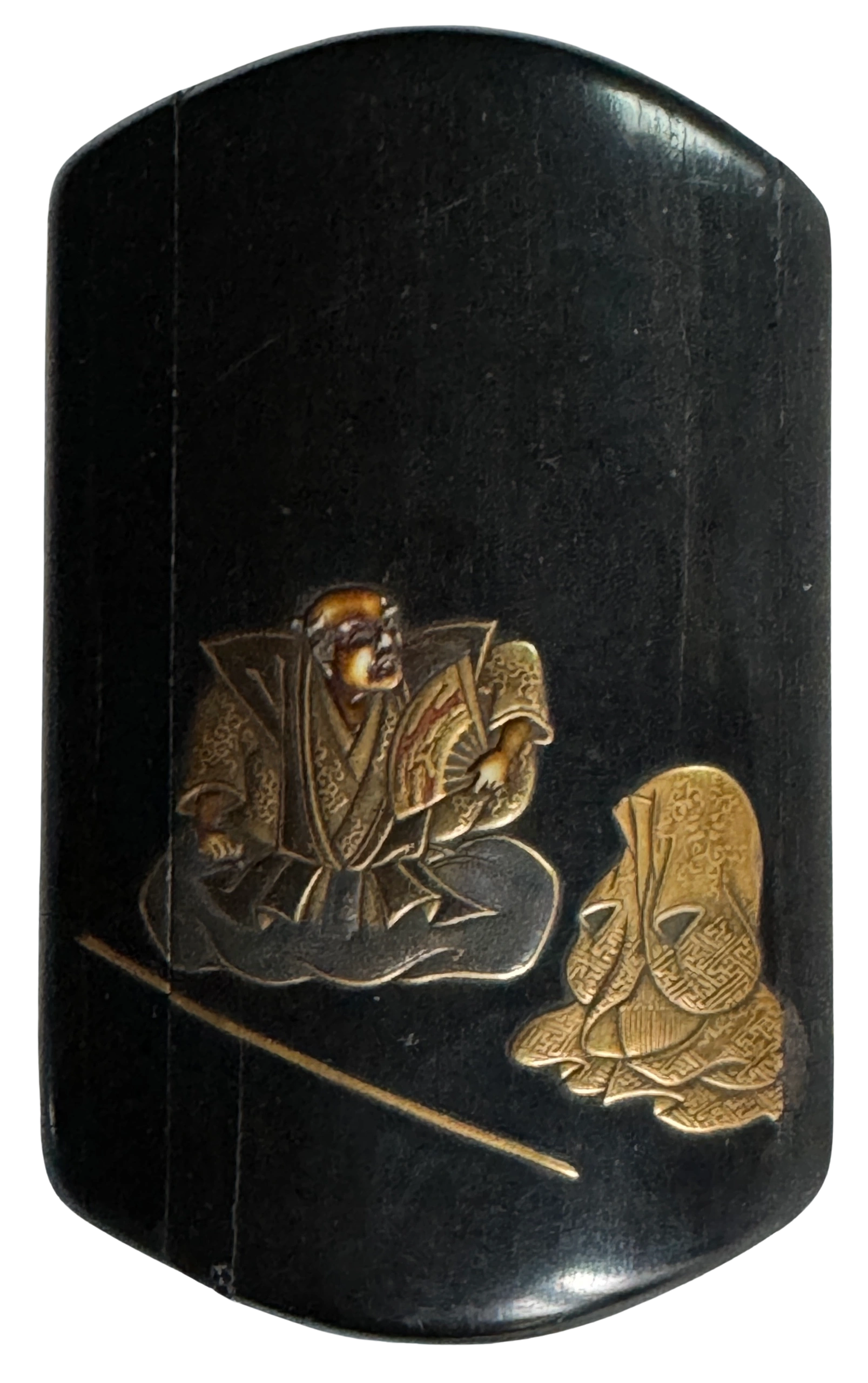
Lacquer and shibayama match safe depicting a Samurai teaching the martial art of Rokushaku-Bo (Bo-jutsu). Meiji era.
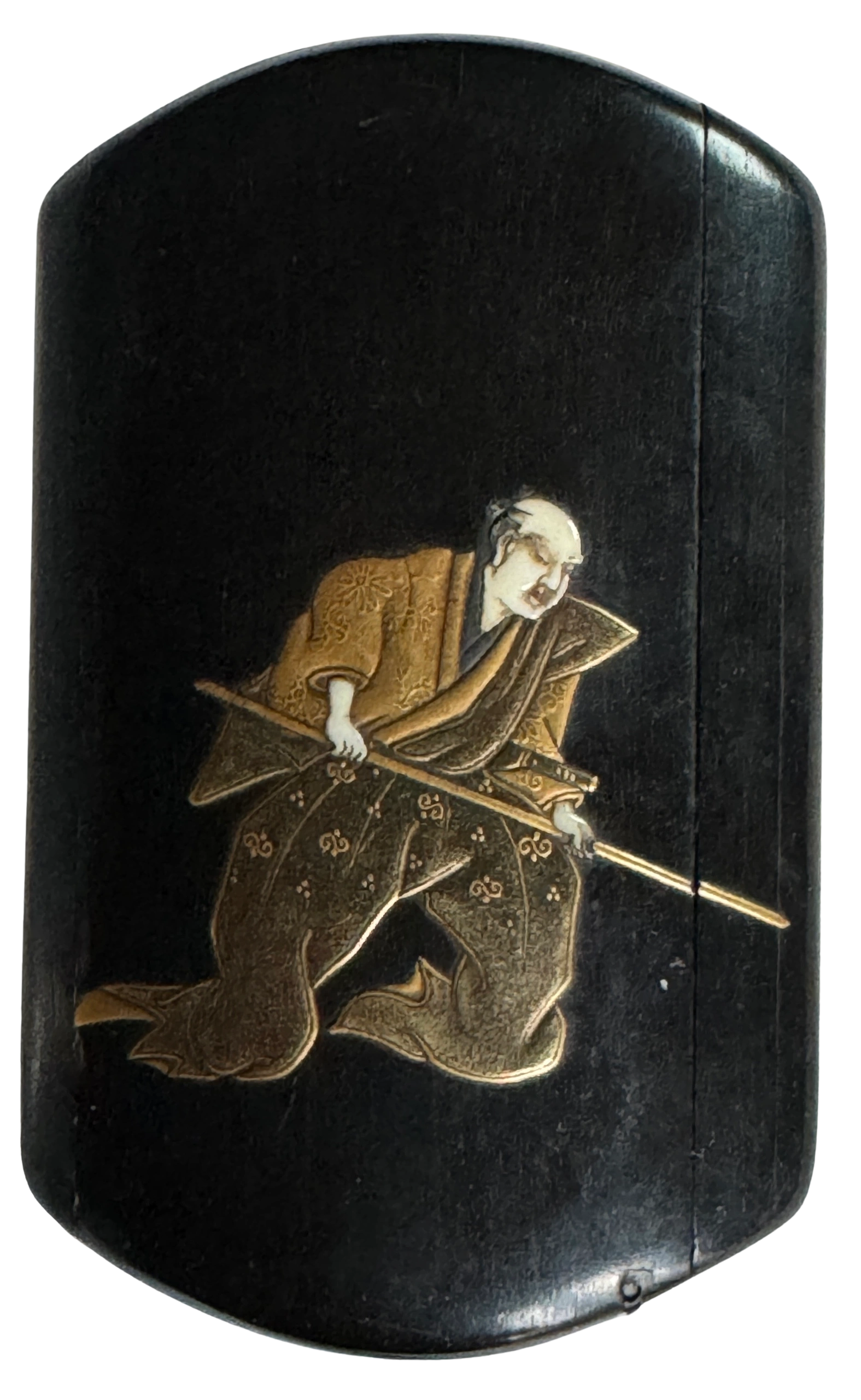
Lacquer and shibayama match safe depicting a Samurai learning the martial art Rokushaku-Bo (Bo-jutsu). Meiji era
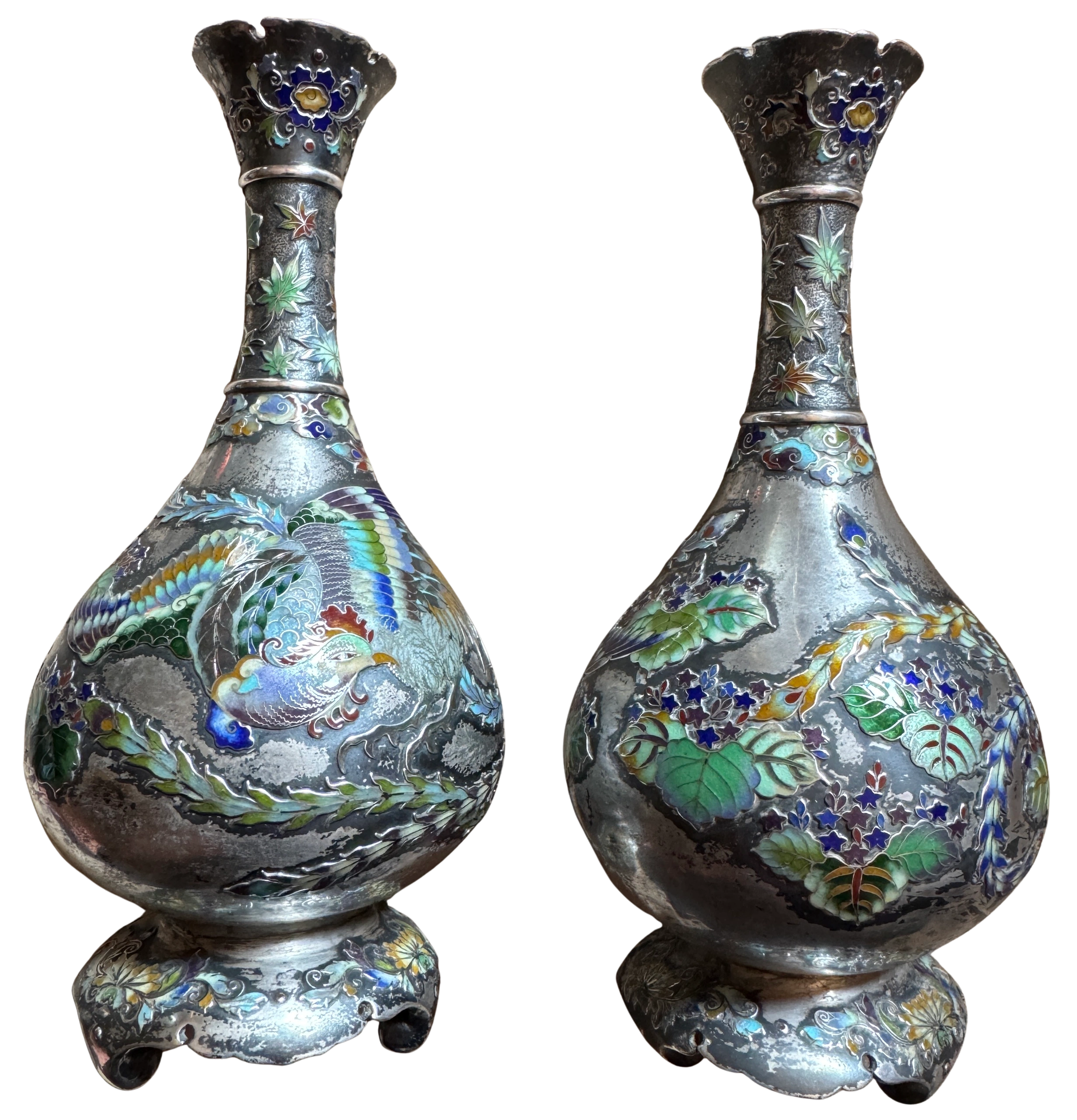
Pair of enameled silver vases signed Yoshiaki in gold reserve panels. Meiji era.
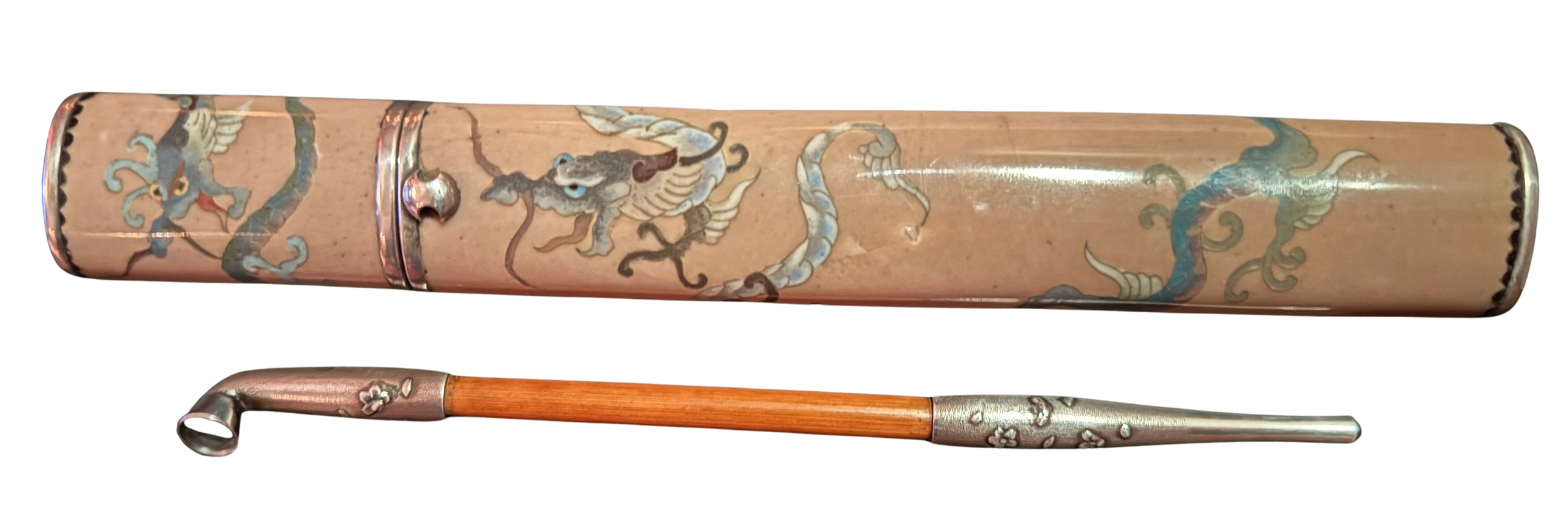
Enameled silver wired & wireless cloisonné kizeru zutsu (pipe case) by Ando Jubai together with silver mounted bamboo kizeru (tobacco pipe). Meiji era
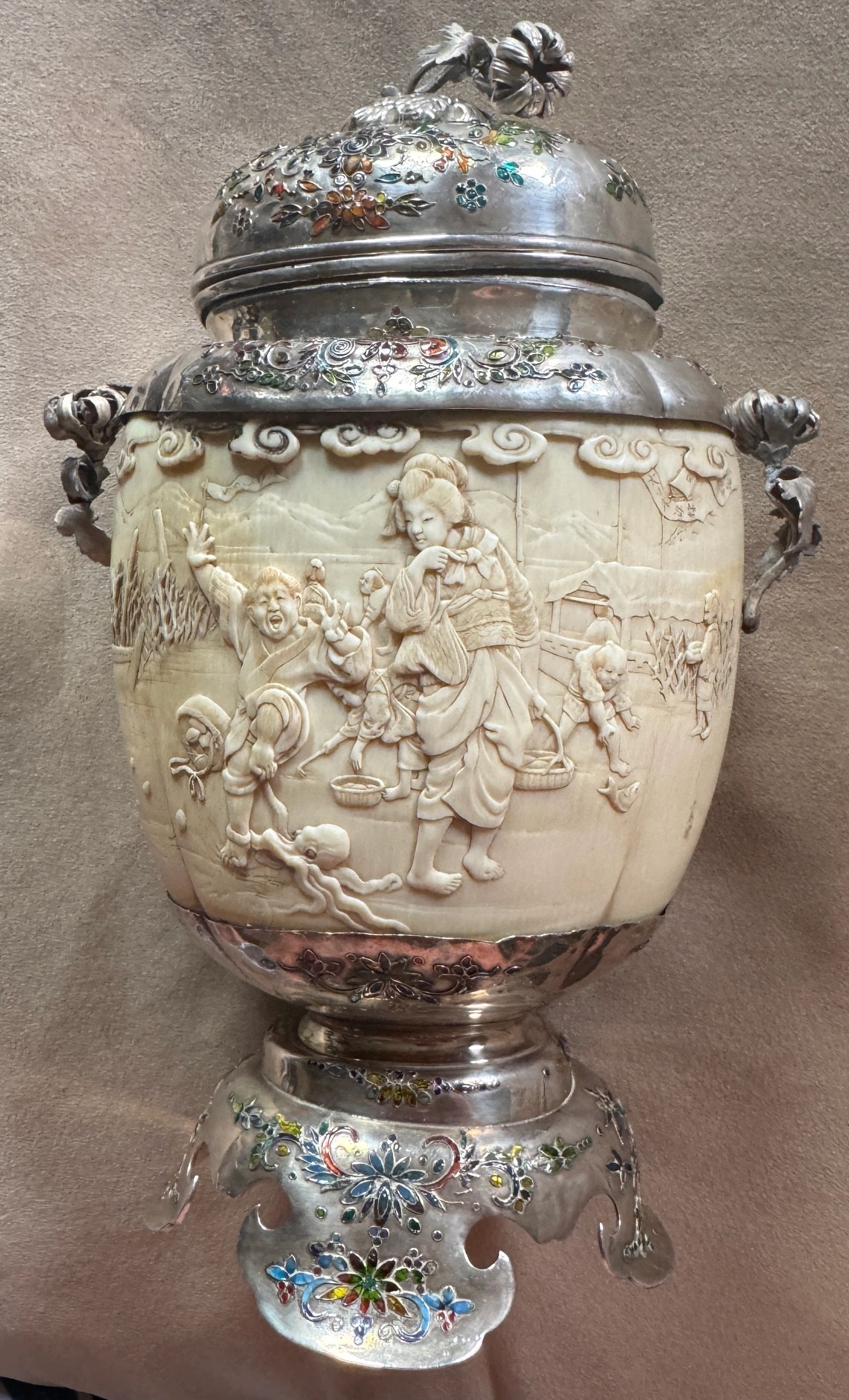
Enameled silver mounted ivory ginger jar. Meiji era.
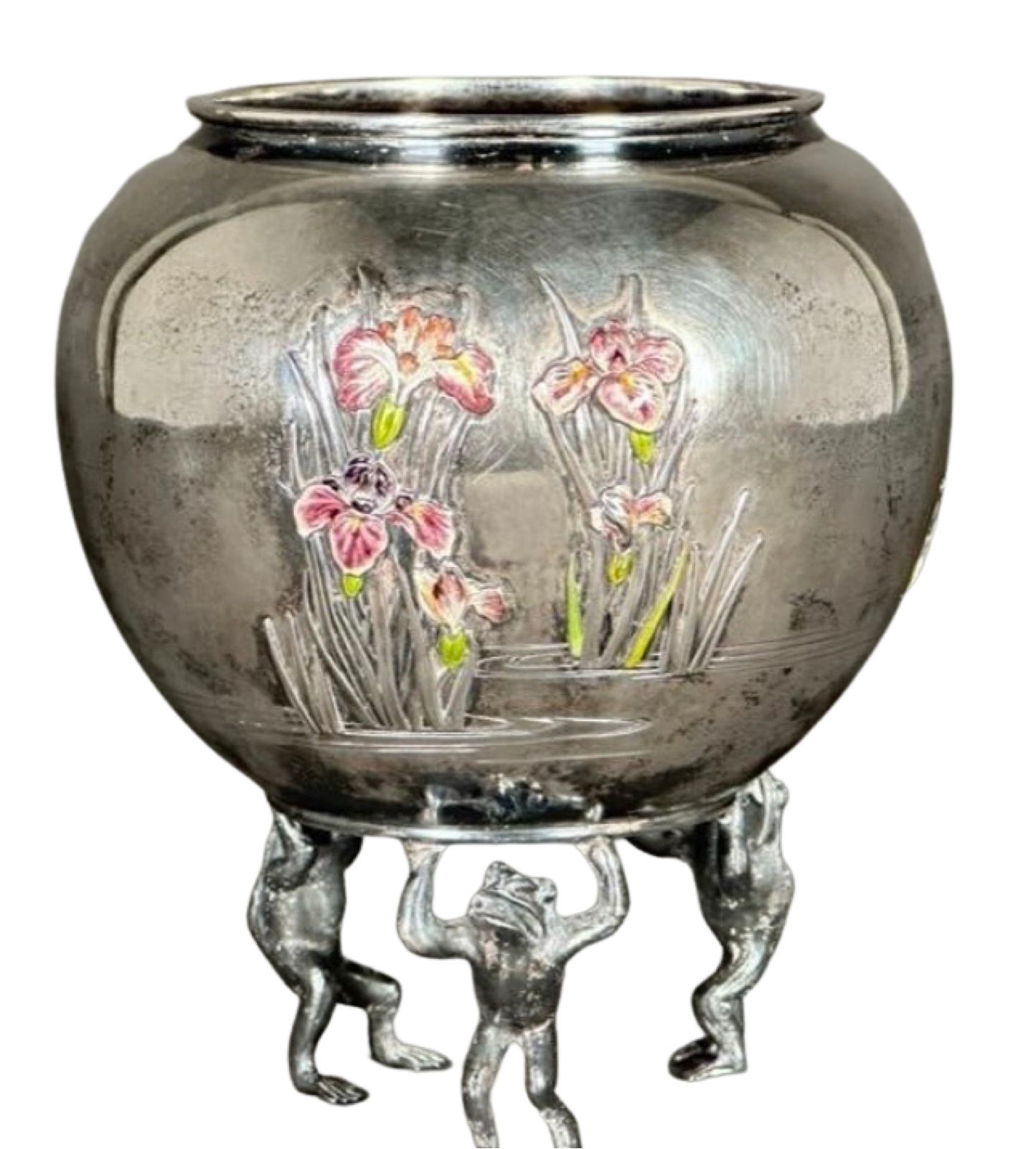
Enameled silver bowl by Masayasu Shoko for Sanju Saku. With original tomobako (box). Meiji era
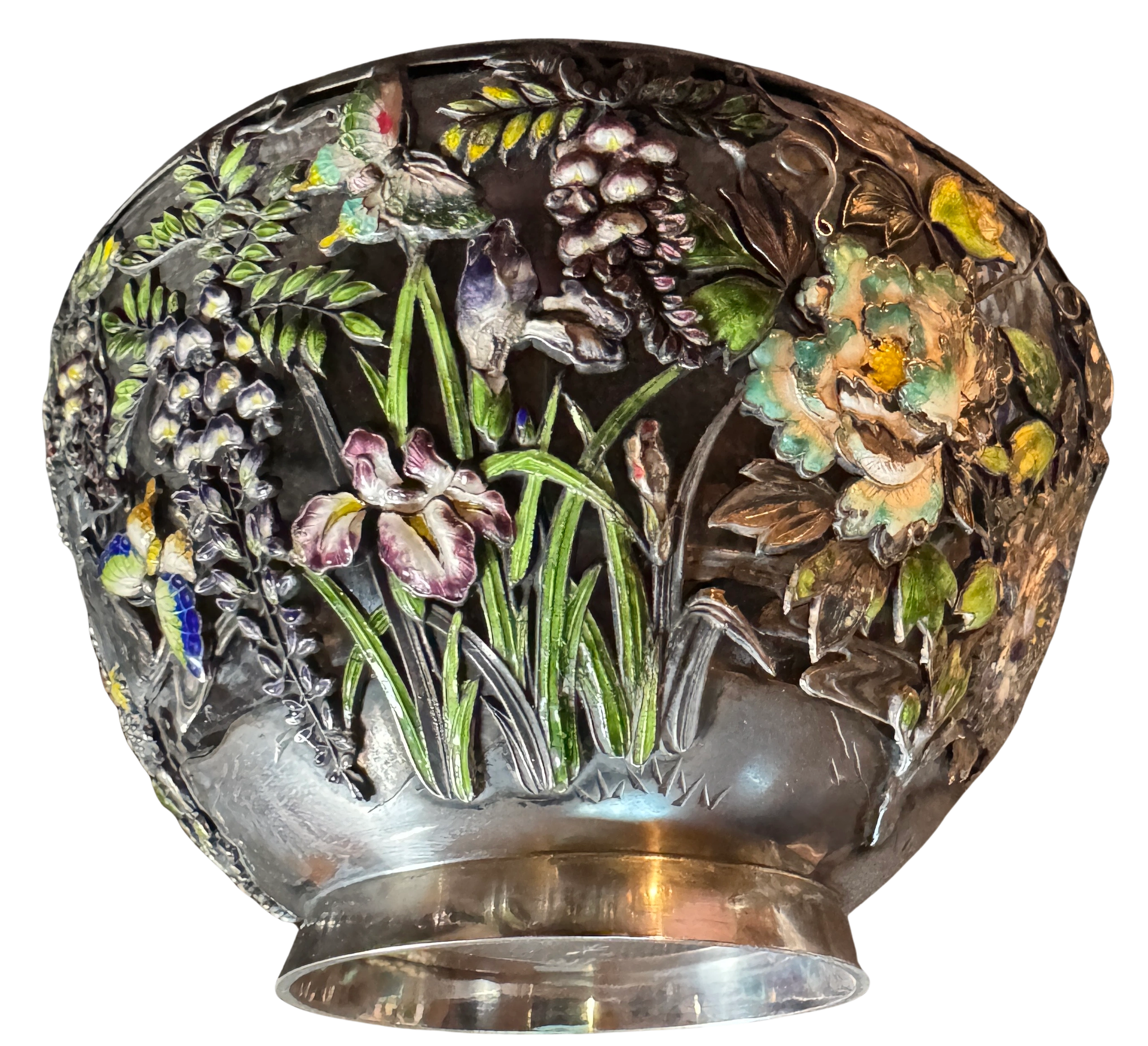
Pure silver bowl set in glass with enamel decoration, signed Komyo. Meiji era.
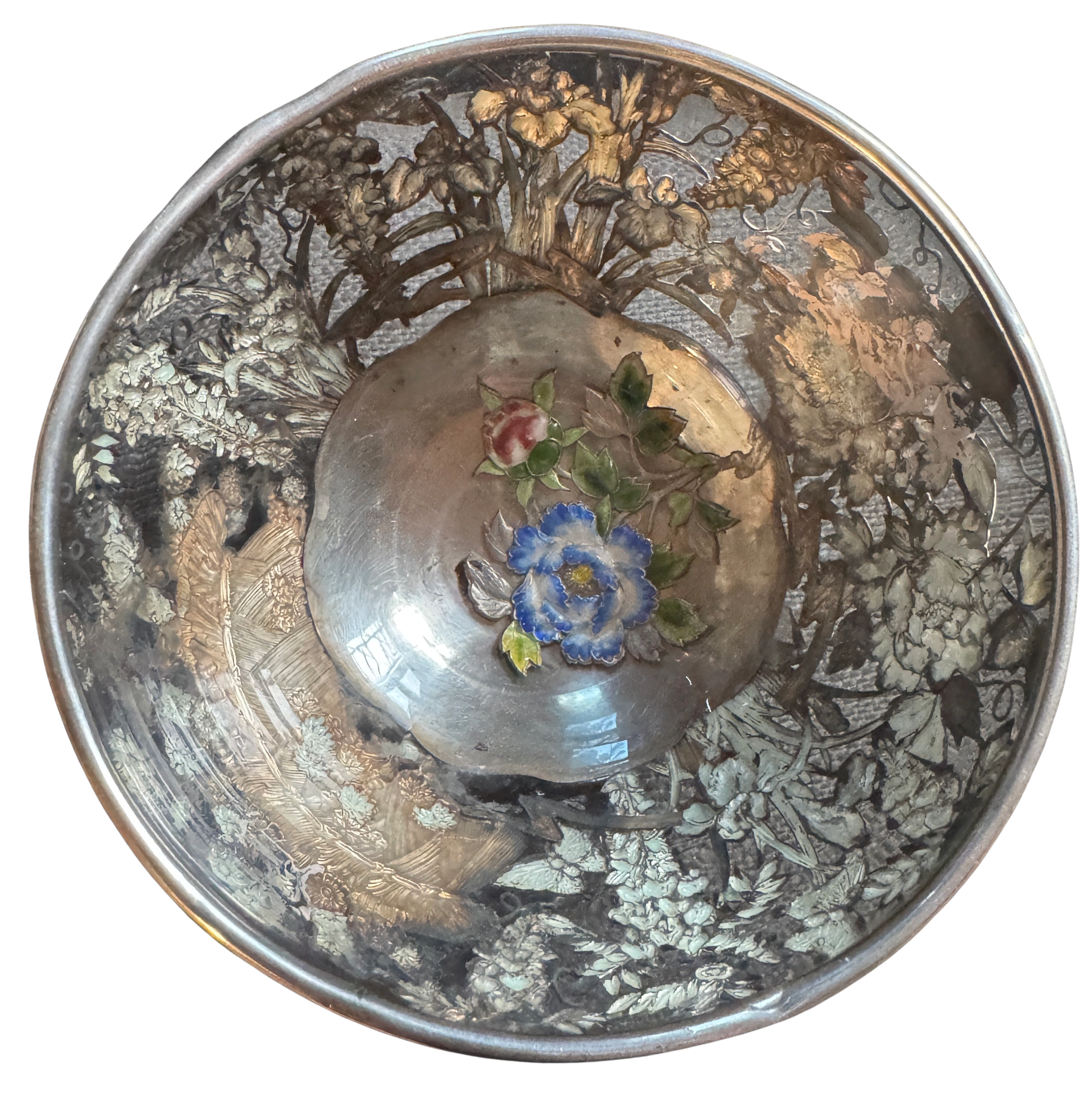
Interior decoration of Komyo bowl.
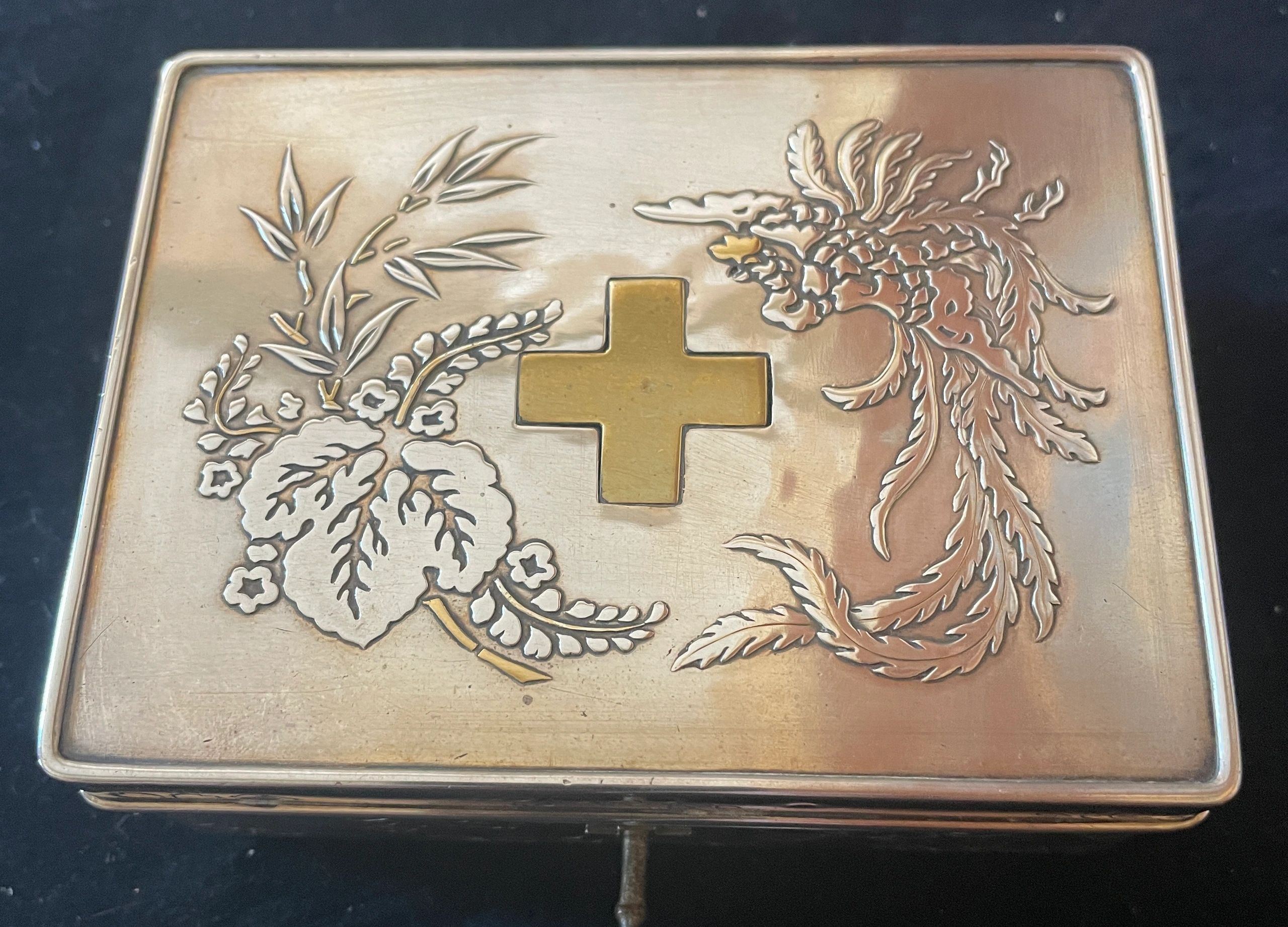
Silver presentation kobako commemorating the Japanese Red Cross Society. Signed Koji Saku for the Tenshodo Company.
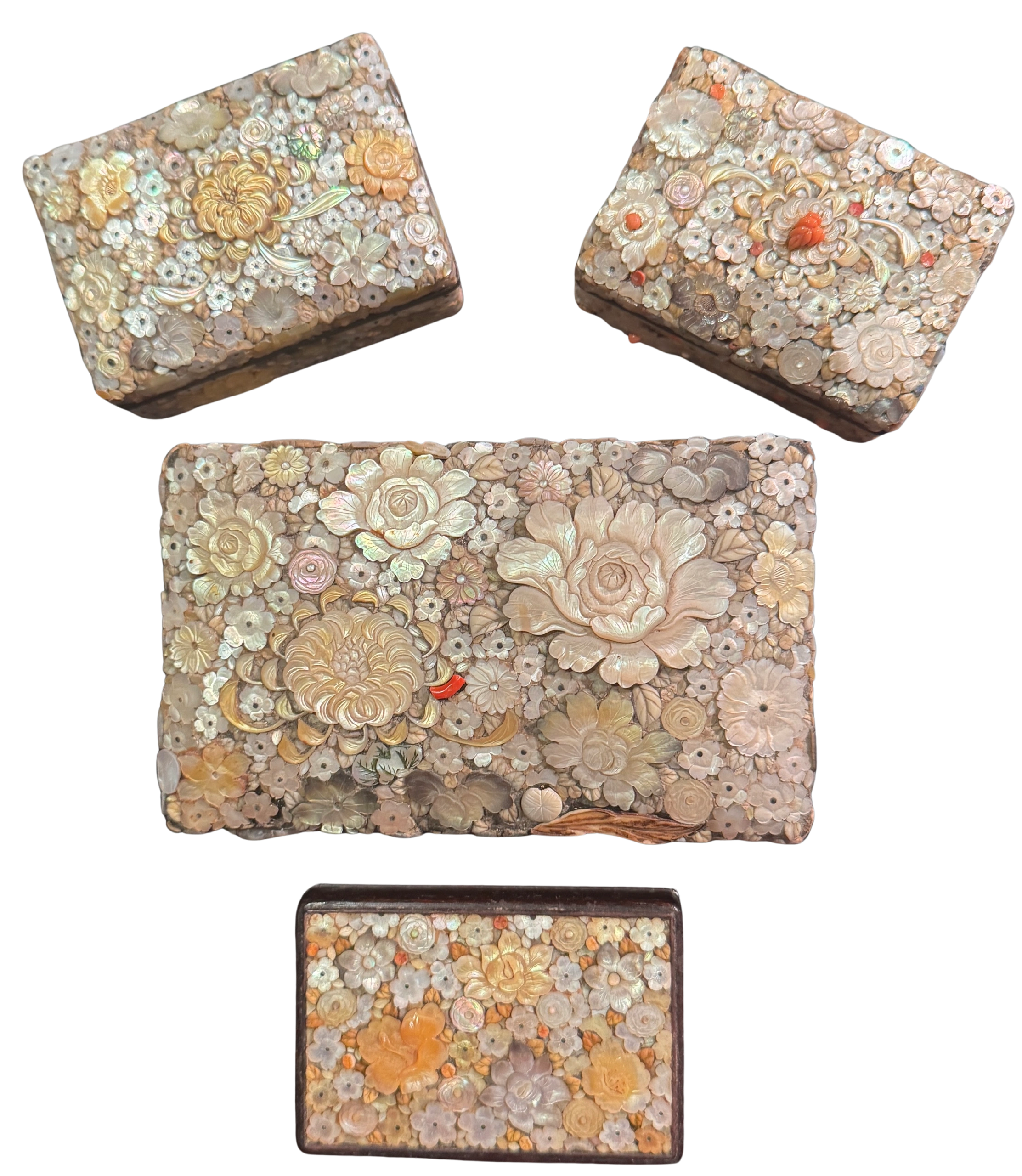
Shibayama ‘millefleur‘ kobakos (incense boxes). Masamitsu, Meiji era
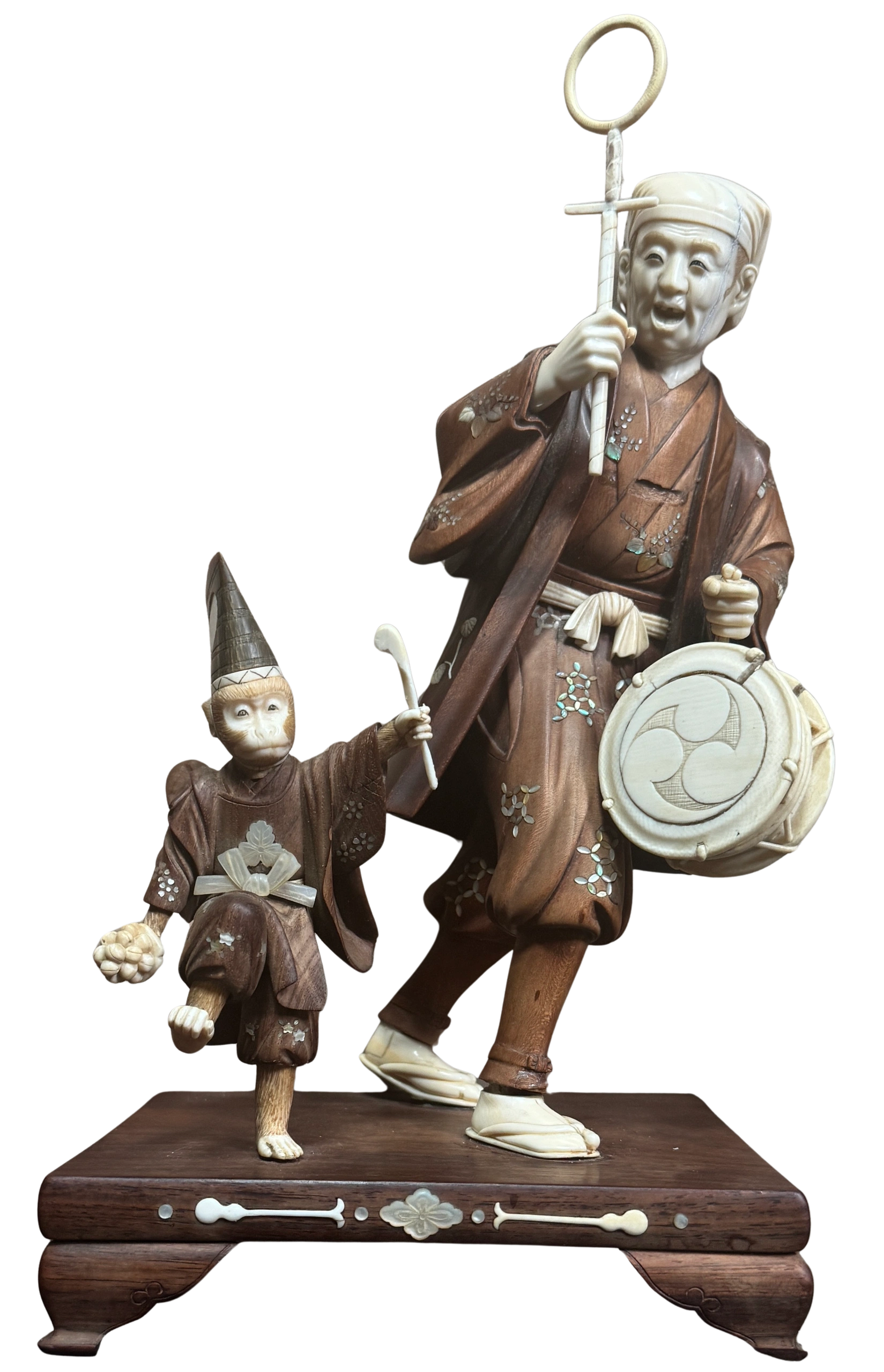
Sarumawashi (monkey trainer) with guiding staff, the monkey wears a saruni eboshi (court hat) and waves a drum stick. Boxwood & ivory figures both signed in mother of pearl reserves by Tsuneaki. Meiji era.
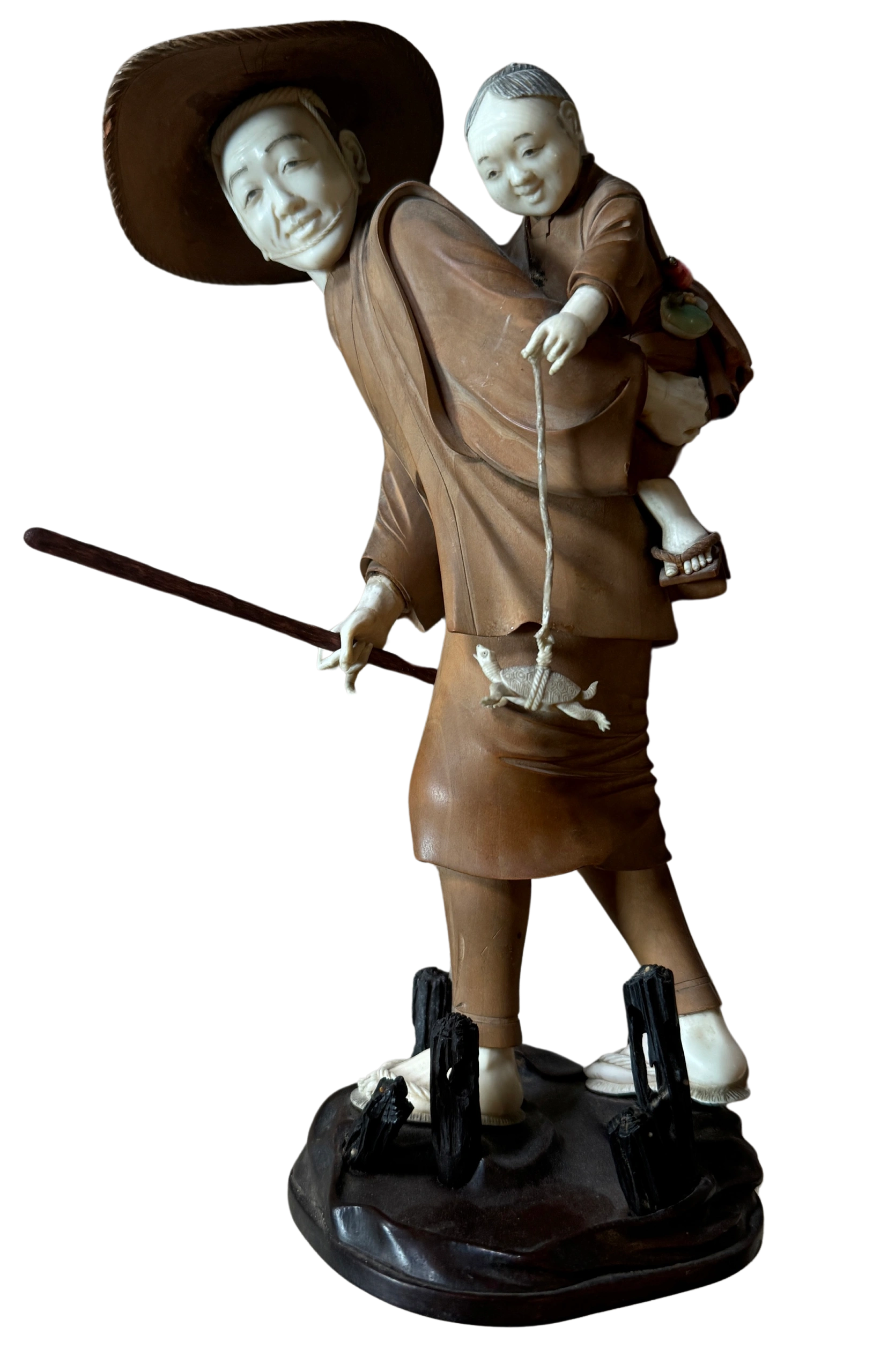
Father & son turtle catchers by Masayuki Kato. Meiji era.
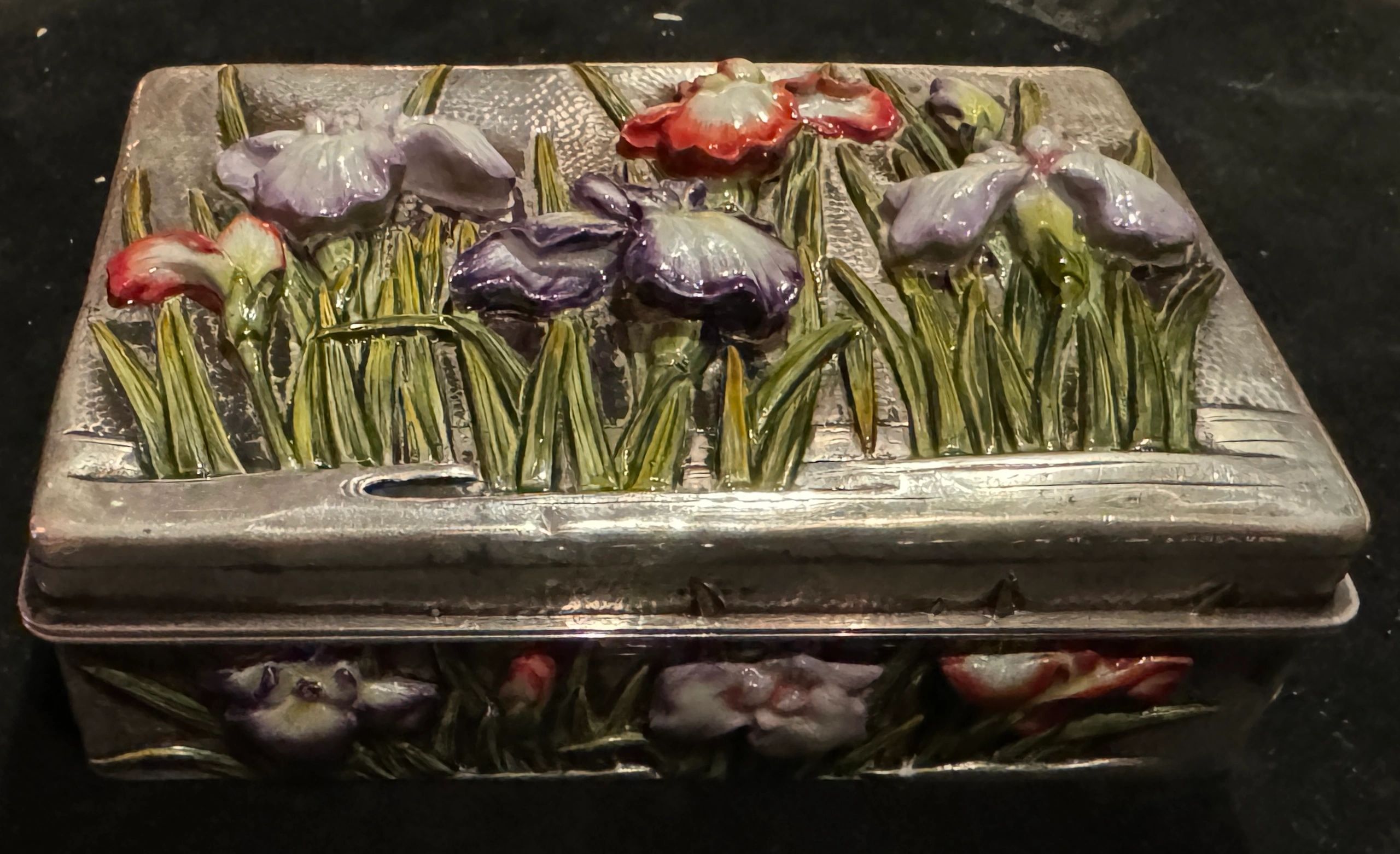
Chabako (tea box) with gindai jippo (enamel on silver) depicting hanashobu (irises). Meiji era.
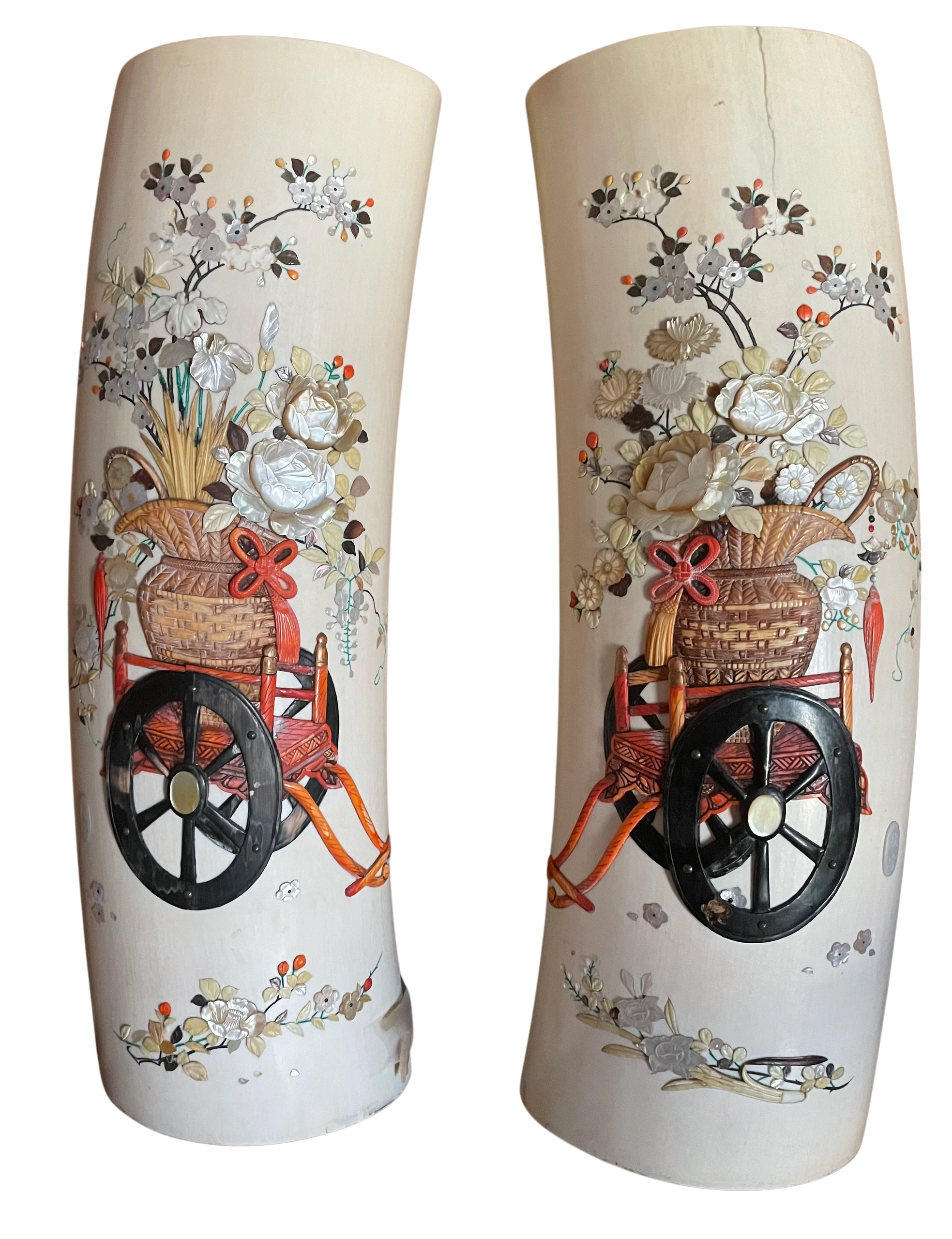
Shibayama tusks depicting hanaguruma (flower carts) by Masa Yasu, Meiji era.
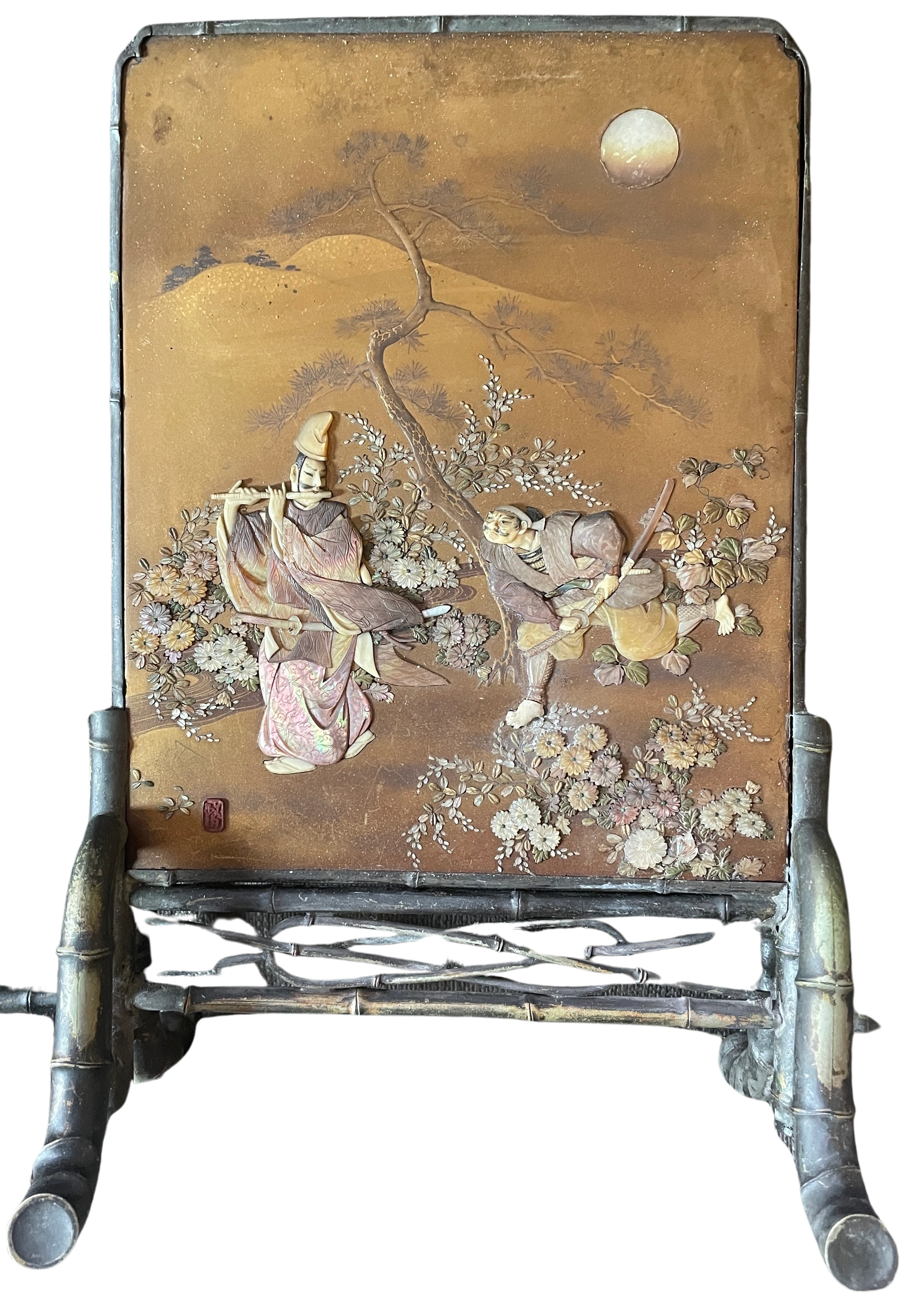
Shibayama table screen depicting the nobleman Fujiwara Yasumasu (958-1037) playing the flute at the Ichihara moor as he is stalked by the bandit Hakamadare Yasuyuki (Kidomaru), intent on stealing Fujiwara’s robe. Kidomaru becomes enchanted by the music and desists. Set against a gold ground in hiramaki-e, takamaki-e & kirikane lacquer on a nashiji ground in a silver frame with shibuichi decoration. Signed Masayuki in a tsuishu red lacquer reserve with metalwork by Ryuun. Meiji era.
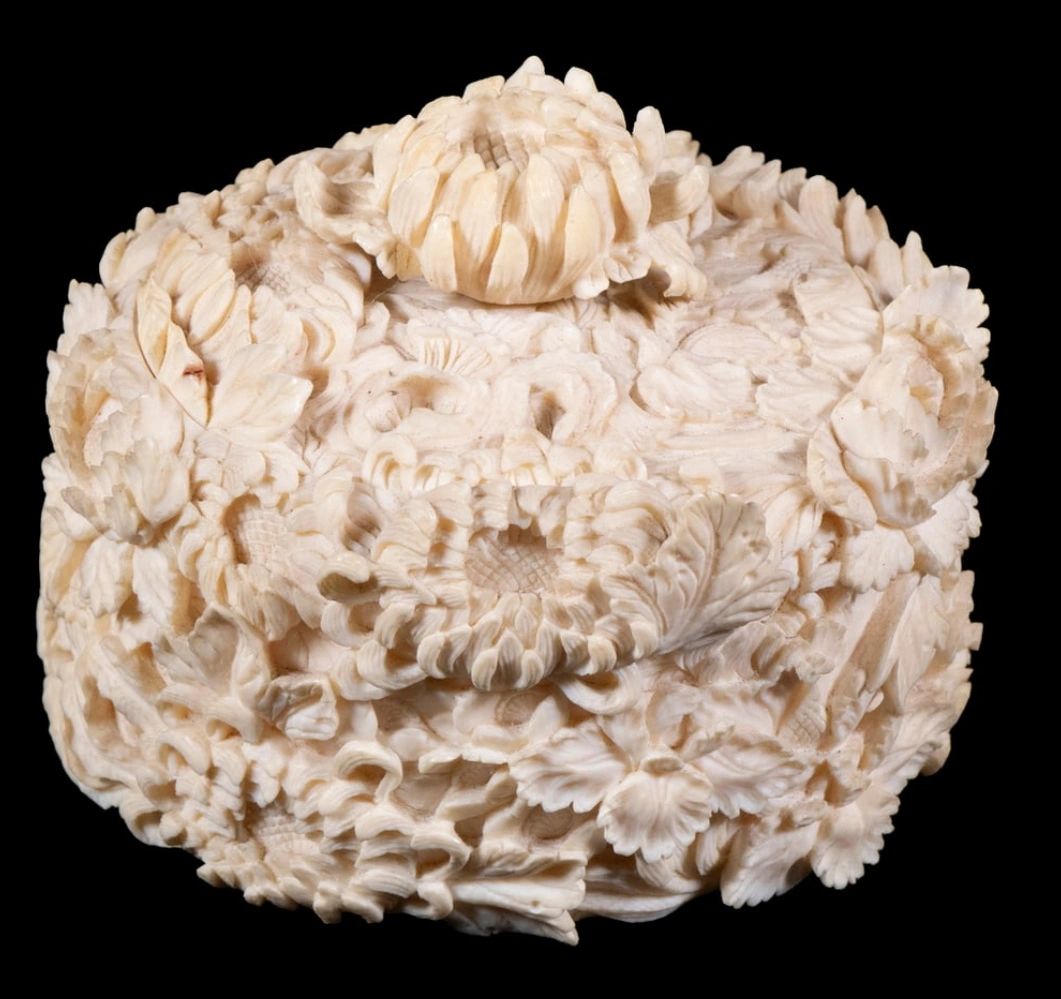
Chrysanthemum carved ivory box by Yoshihide. Meiji era.
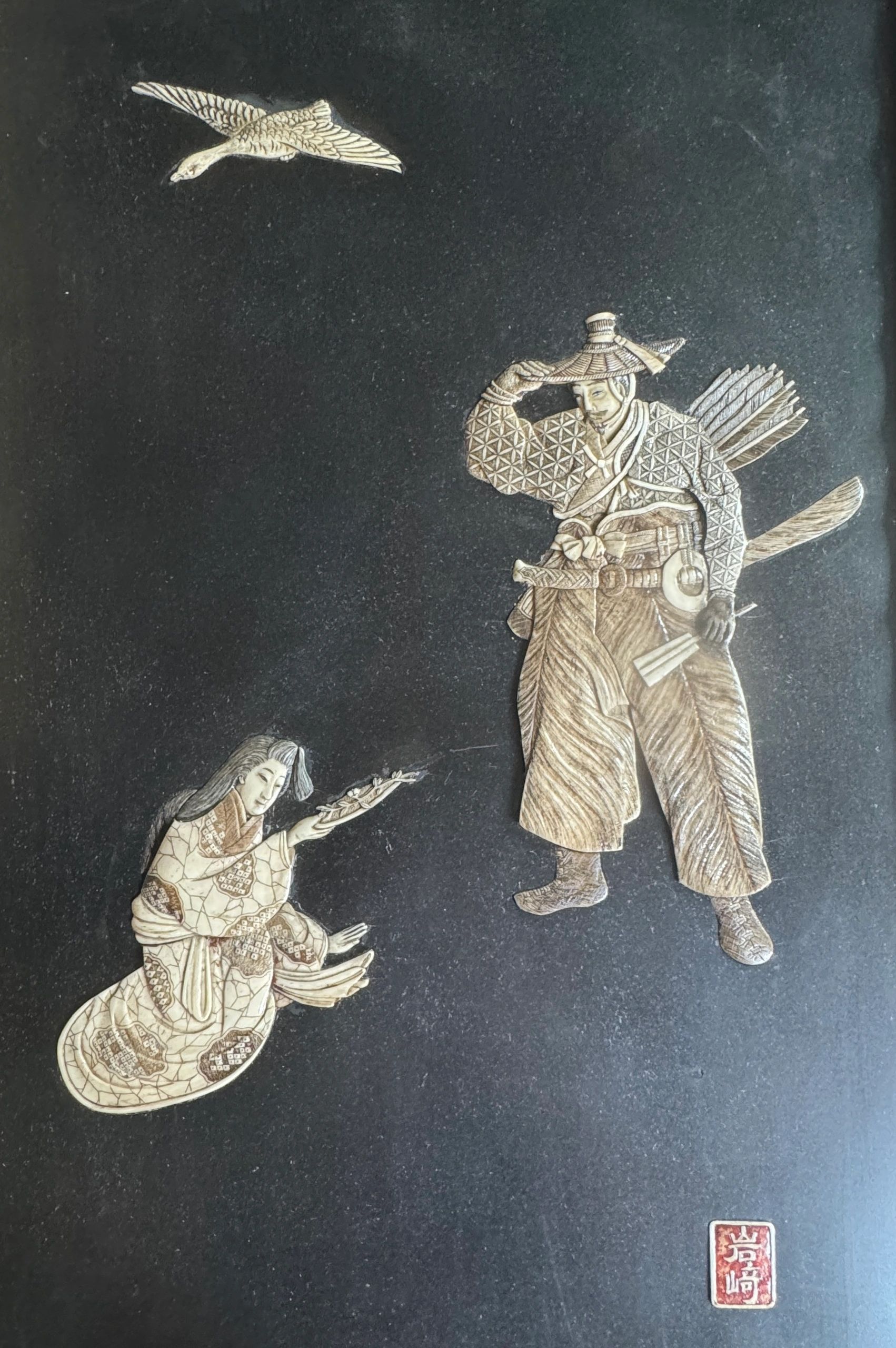
Shibayama plaque depicting the wife of a Kamakura era Bushi (warrior) presenting him a Sakura sprig (cherry blossom). Signed Iwasaki in a red lacquer reserve. Meiji era.
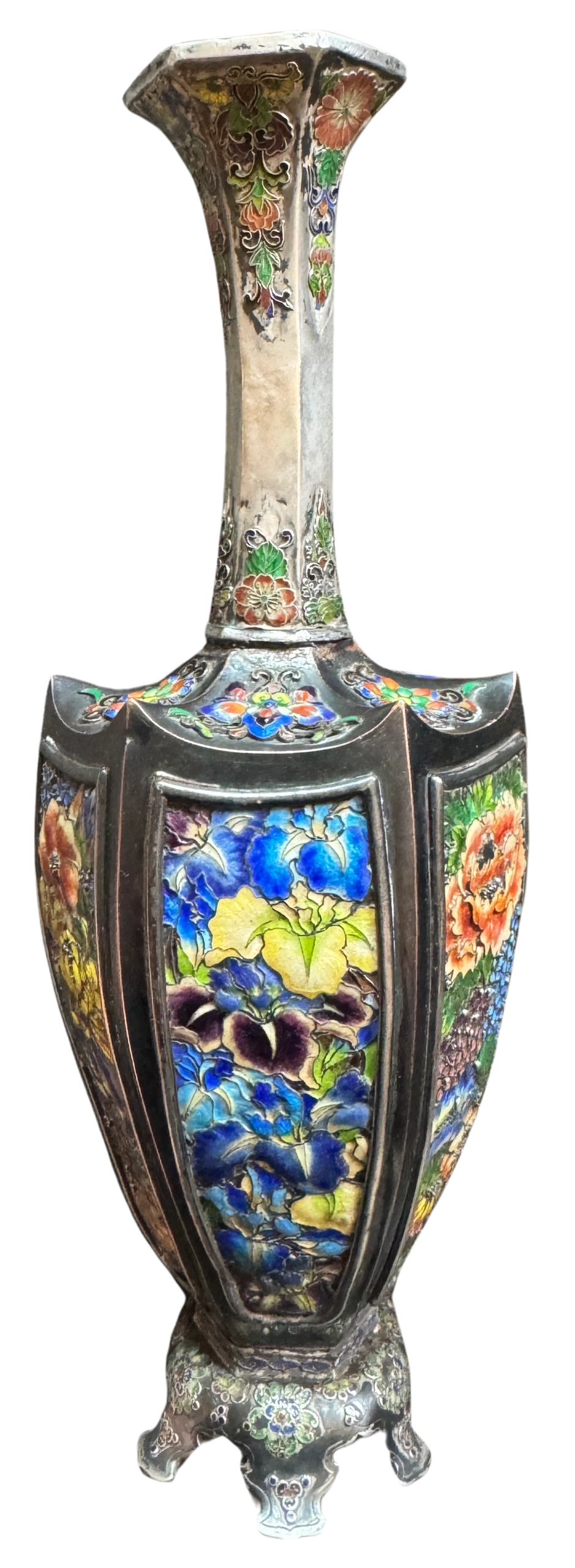
Shakudo & Gindai jippo (enamel on silver) vase, the six panels depicting chrysanthemums & irises. Attrib. Koichi Takasaki, Meiji era.
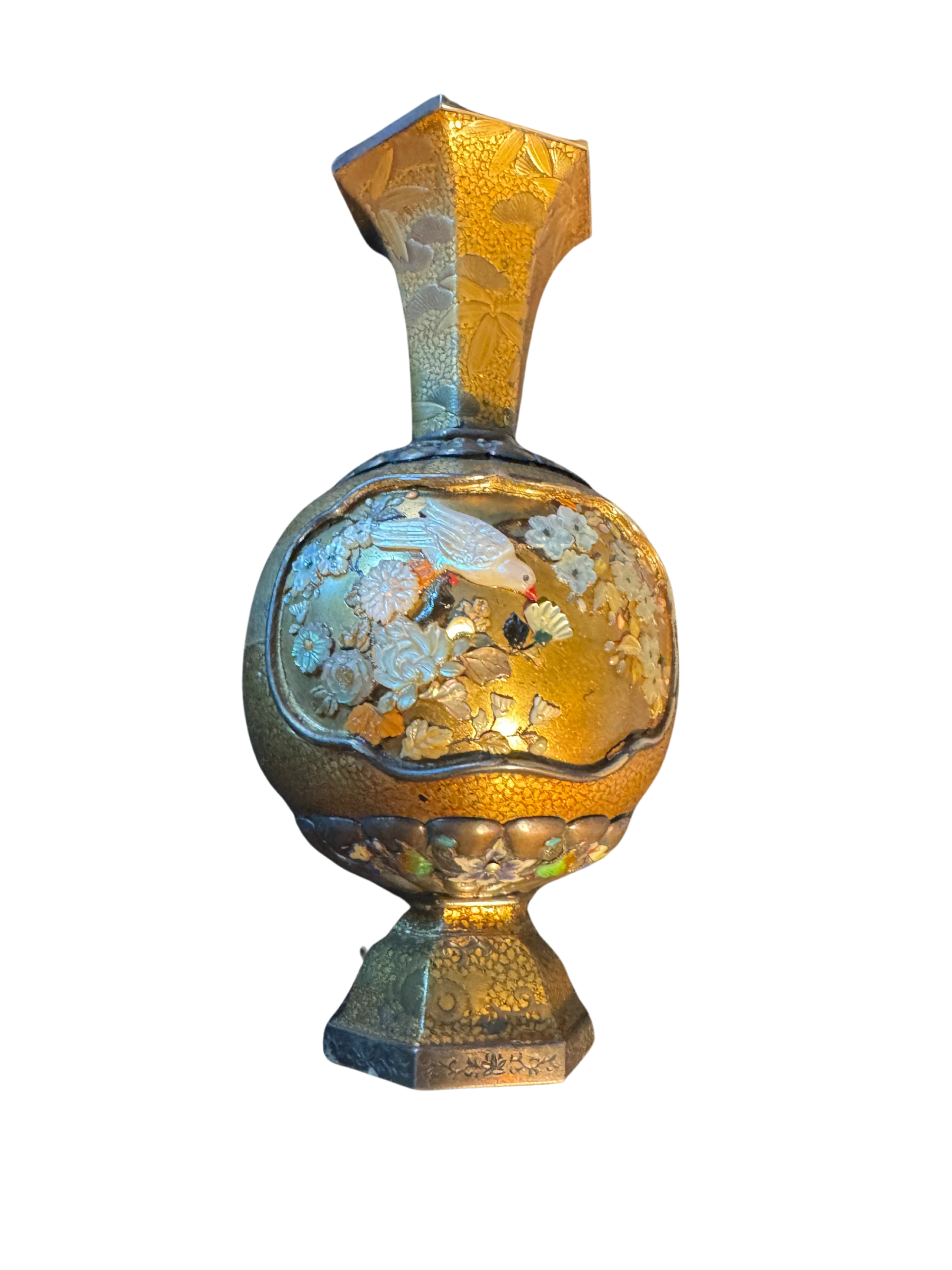
Shibayama vase with hiramaki-e, tagIdash maki-e lacquer & translucent cloisonné on silver mounts. Attrib. Nemoto, Meiji era
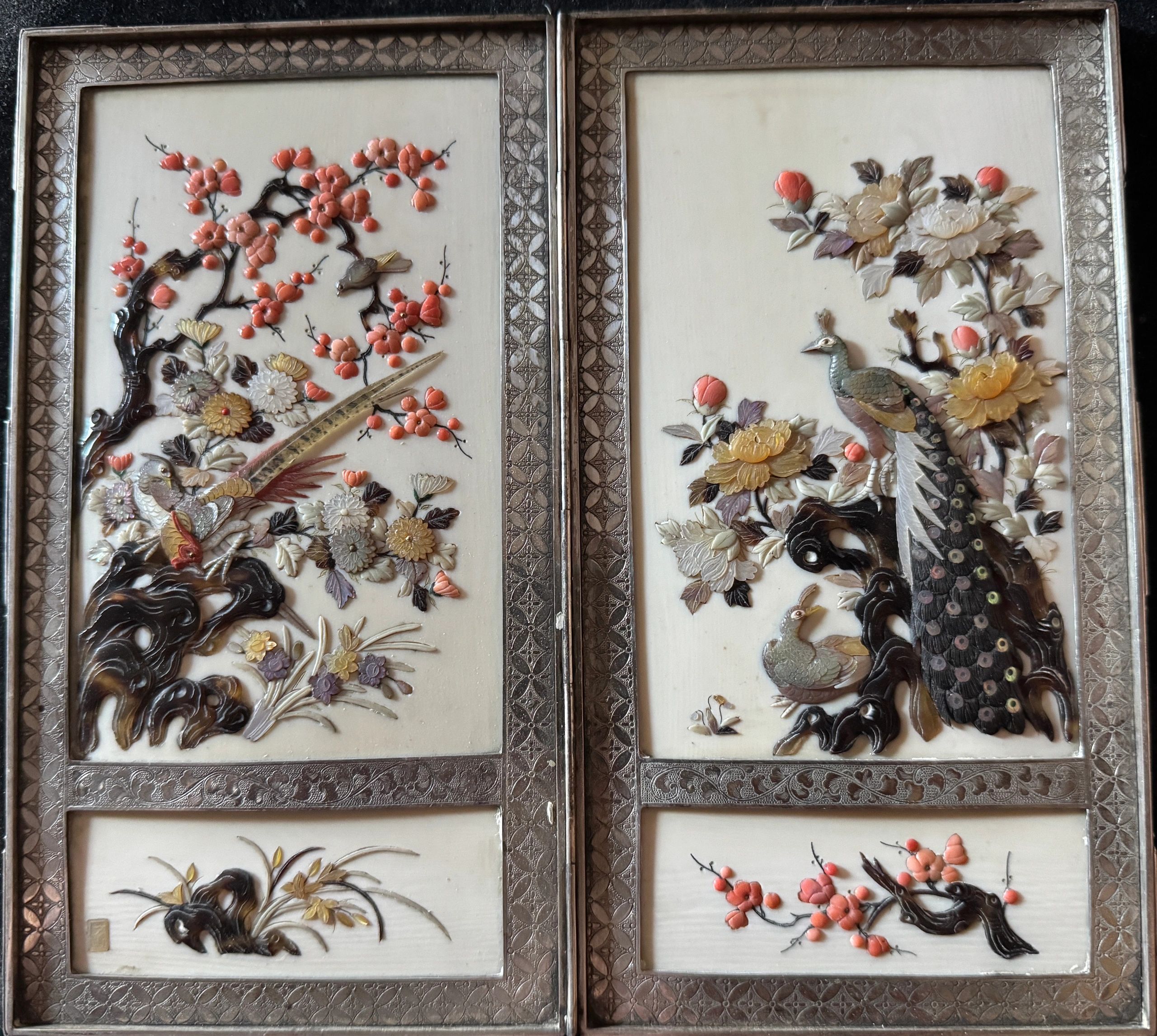
Silver framed shibayama diptych table screen signed with Shibayama seal in reserve. Meiji era.
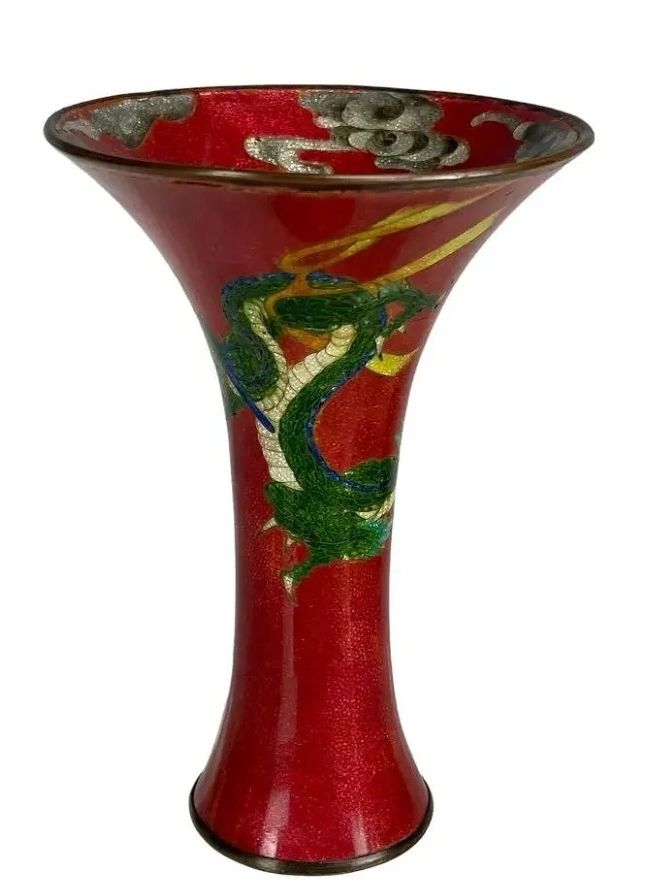
Cloisonné enamel archaistic style Gu (fluted drinking vessel), enameled within as without. Maker Ito. Meiji era.
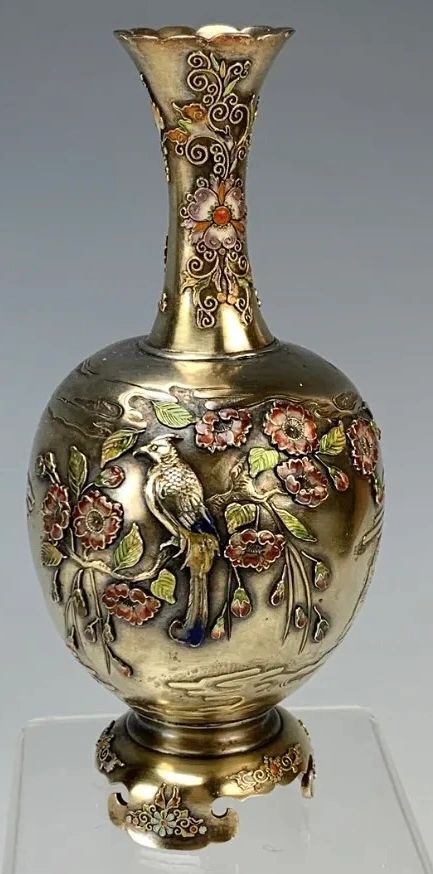
Silver gilt enameled vase by Shochoku, Meiji era.
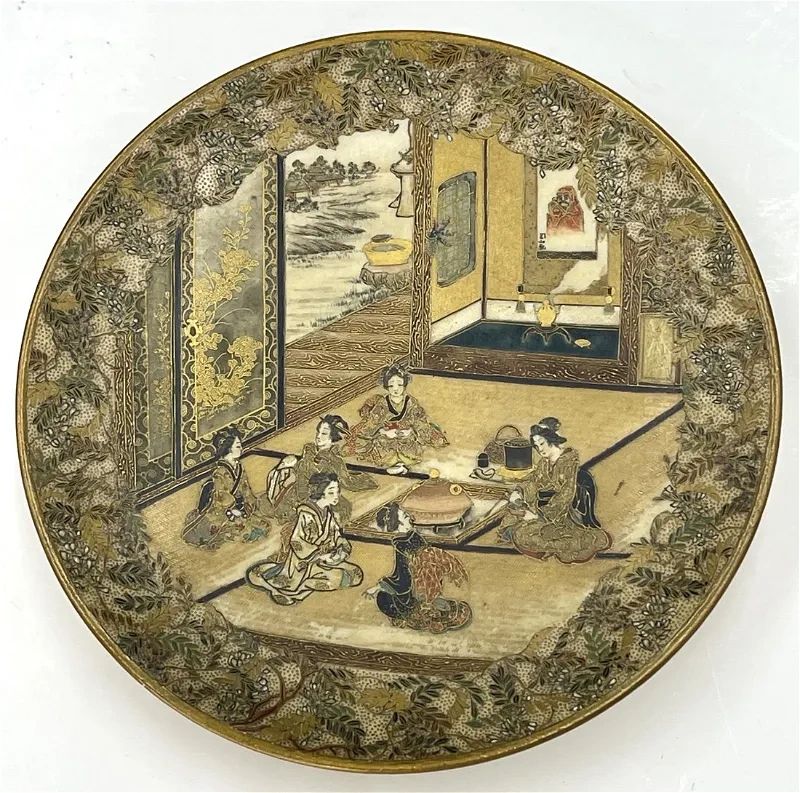
Satsuma saucer dish depicting the Cha No Yu (Way of Tea). Note the signed scroll depiction of Daruma (Bhodhidharma). Shizan Sei seal, Meiji era c.1890
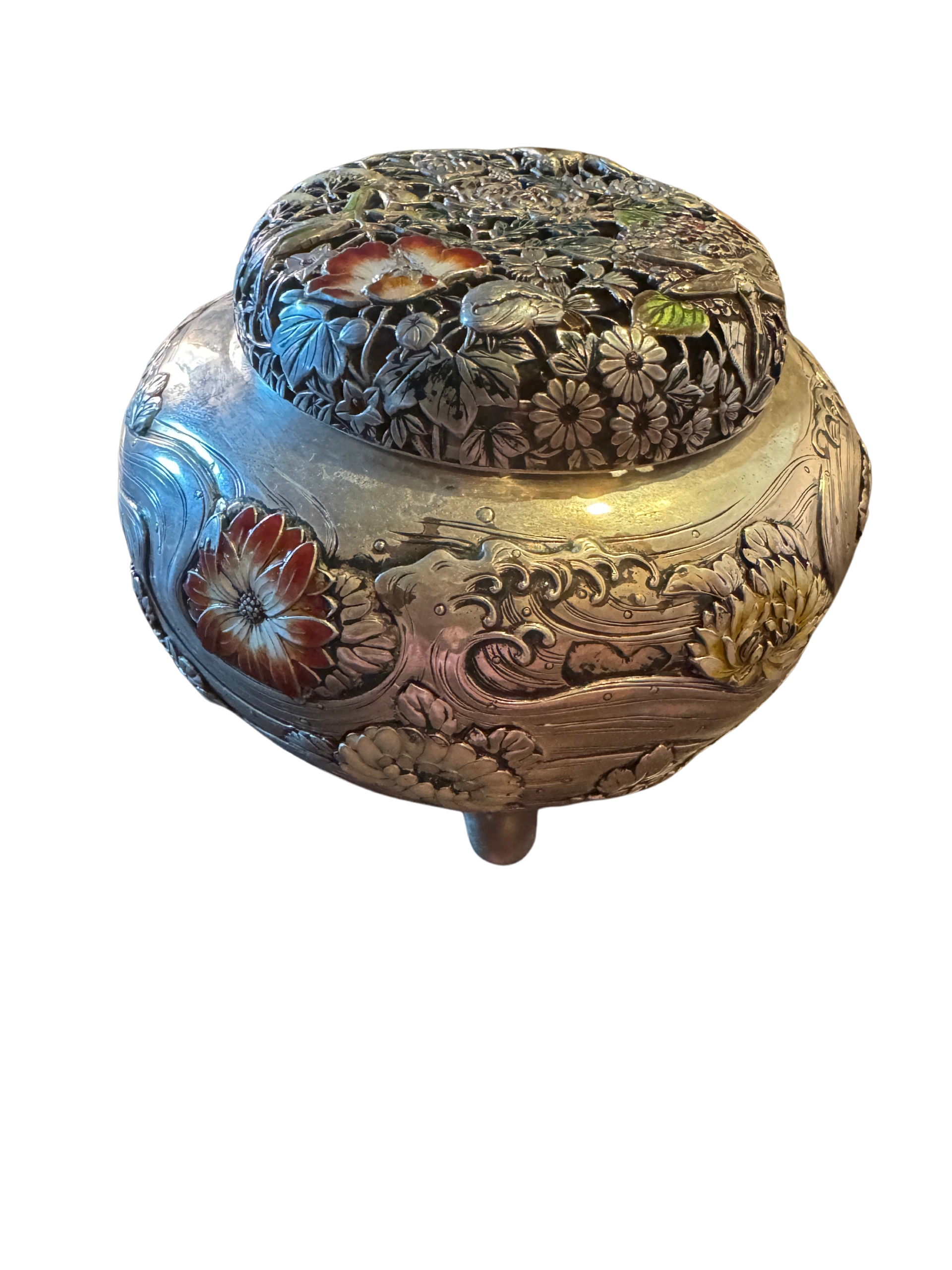
Hirata style enameled silver Koro by Noriaki. Meiji era.
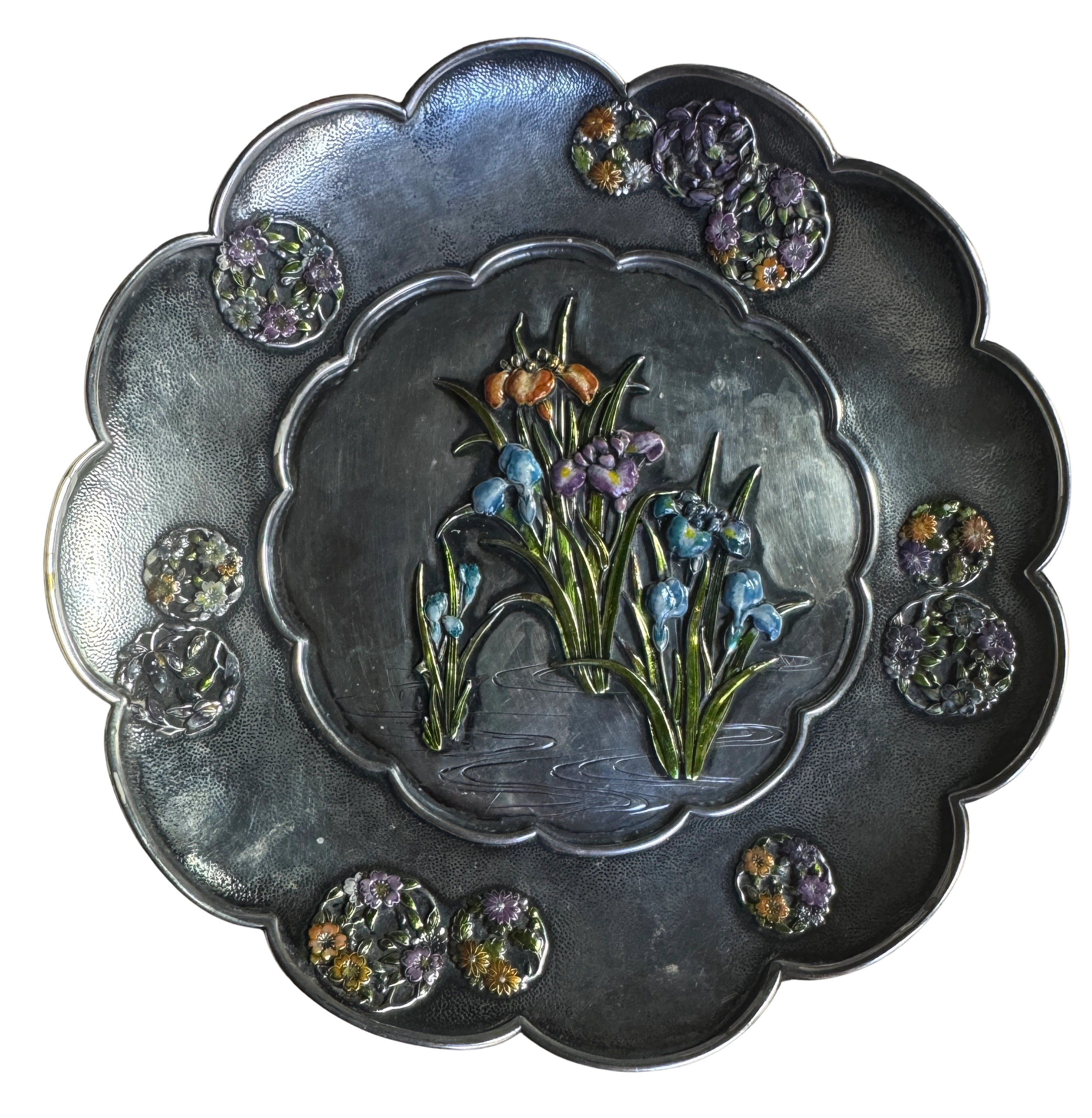
Pure silver dish enameled and with enamel appliqués. Meiji era.
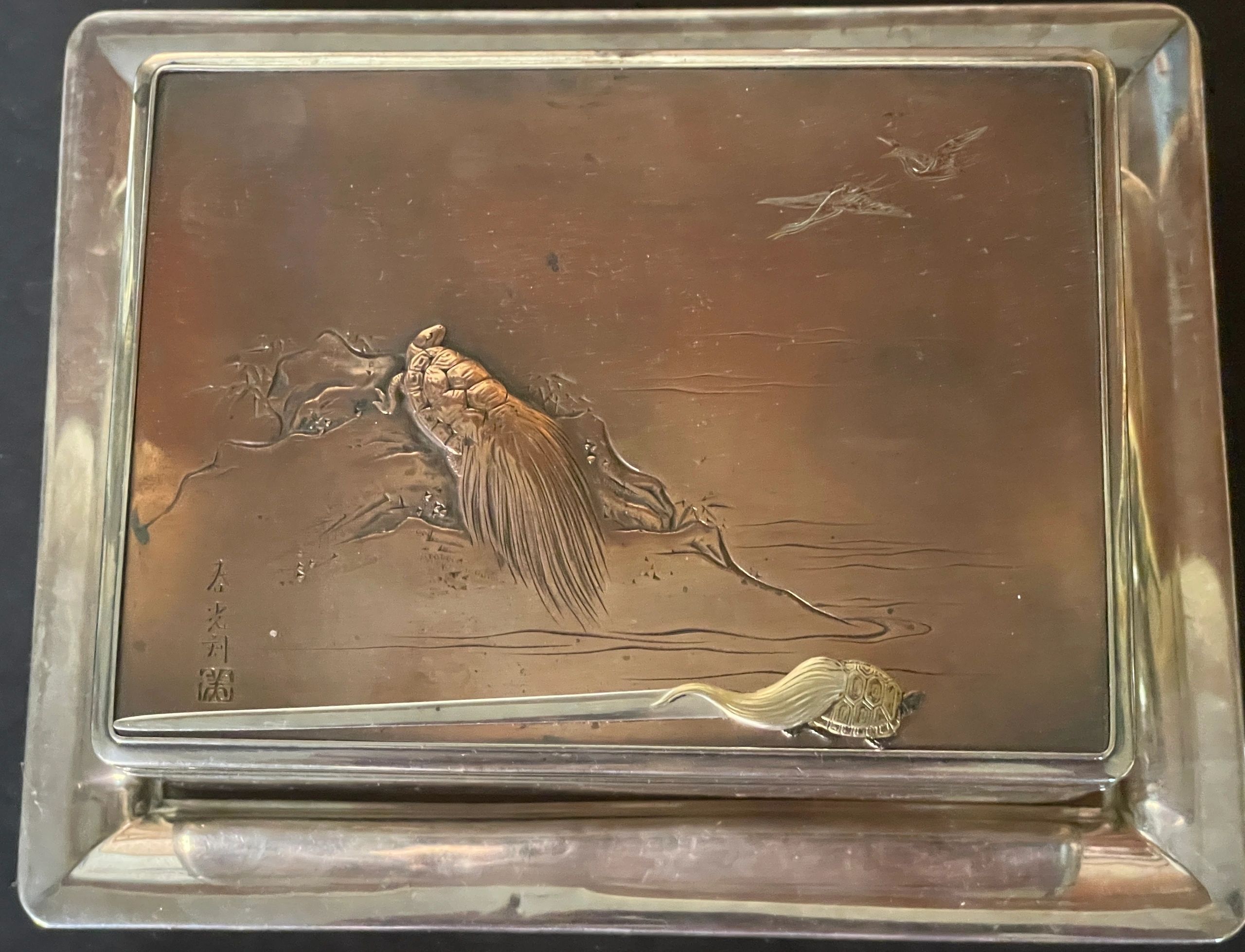
Mixed metal kobako depicting a Minogame (mythical turtle of longevity), viewing cranes. Ei seal for Miyao Eisuke together with a silver kanzashi (hair ornament) with gold decoration, depicting a Minogame; a motif often used on articles commemorating the 25th wedding anniversary of Emperor Mutsushito, March 1894.
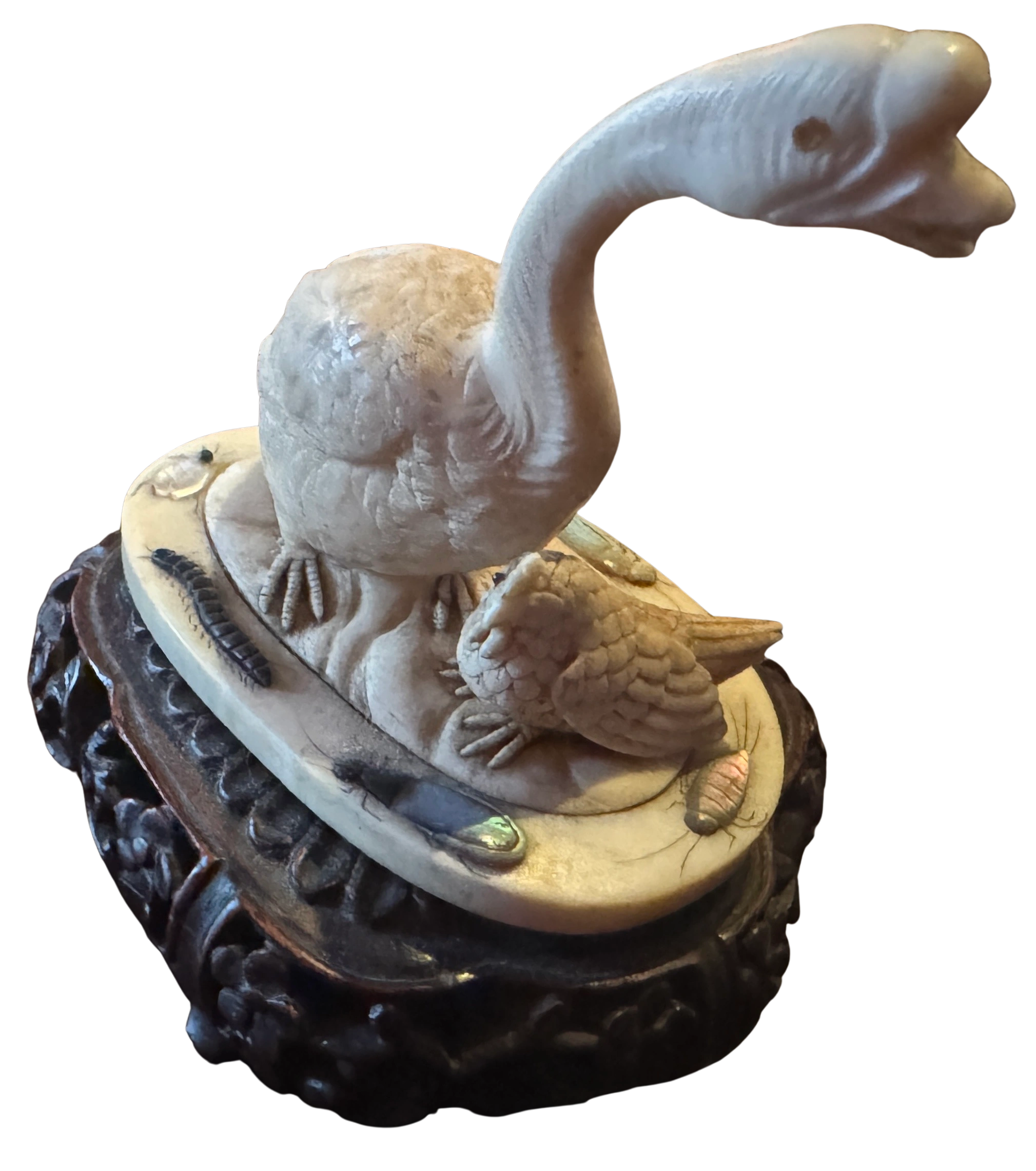
Ivory goose & hen with Shibayama accents. Meiji era.
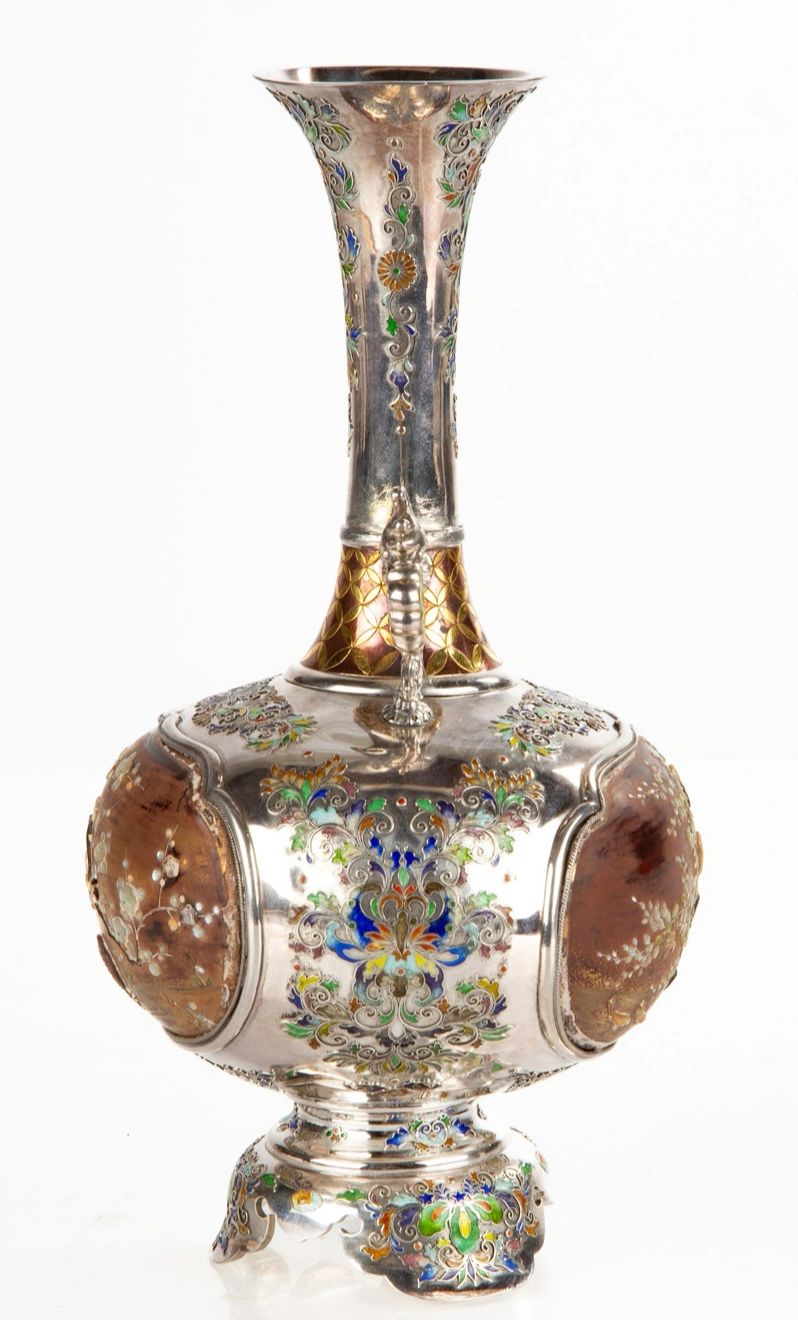
Silver vase with Maki-e, Chokin and shibayama & enamel decoration. Signed Shumei Haruaki on a gold reserve. Meiji era.
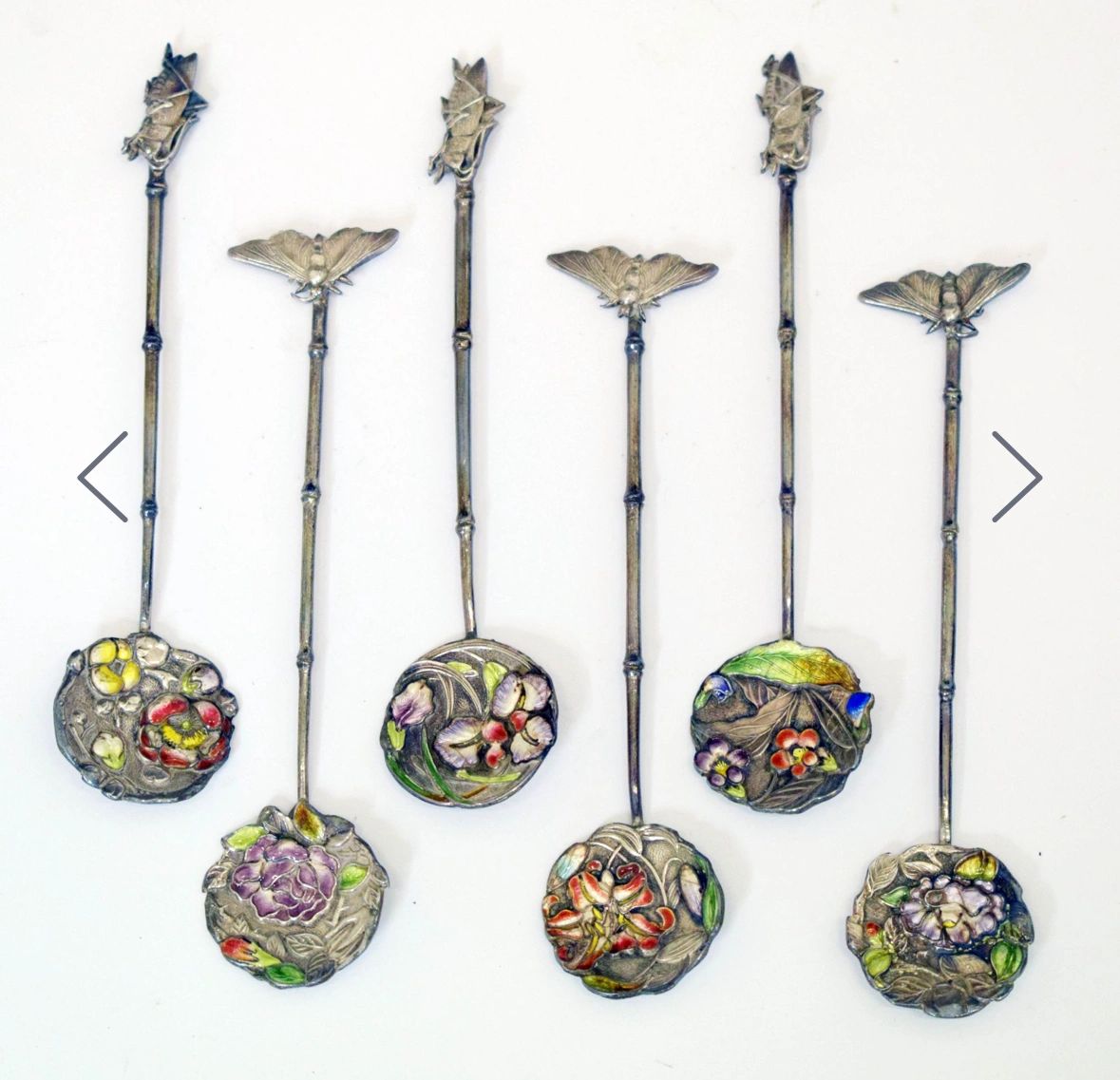
Enameled silver spoons. Meiji era.
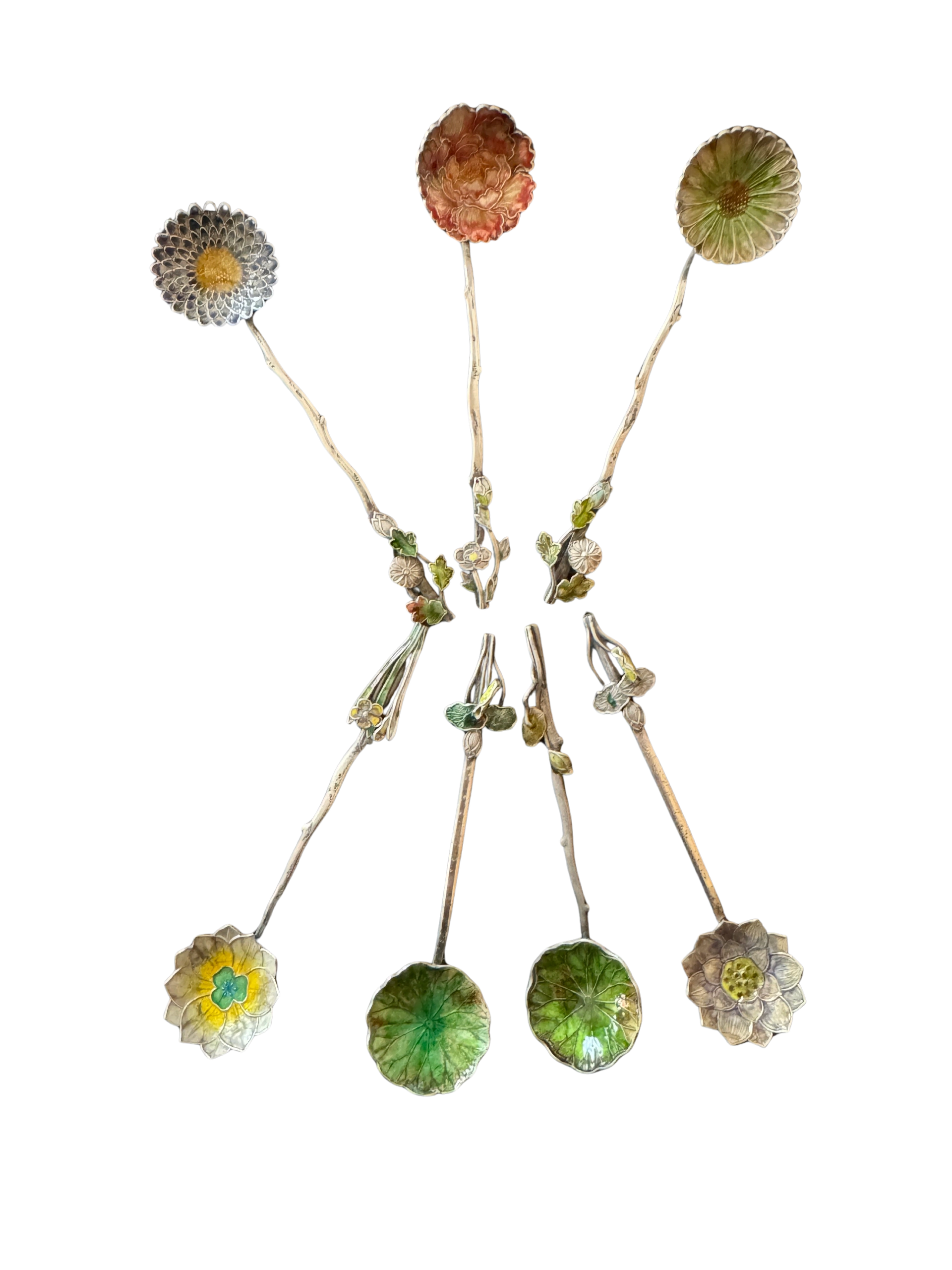
Enameled silver spoons. Meiji era.
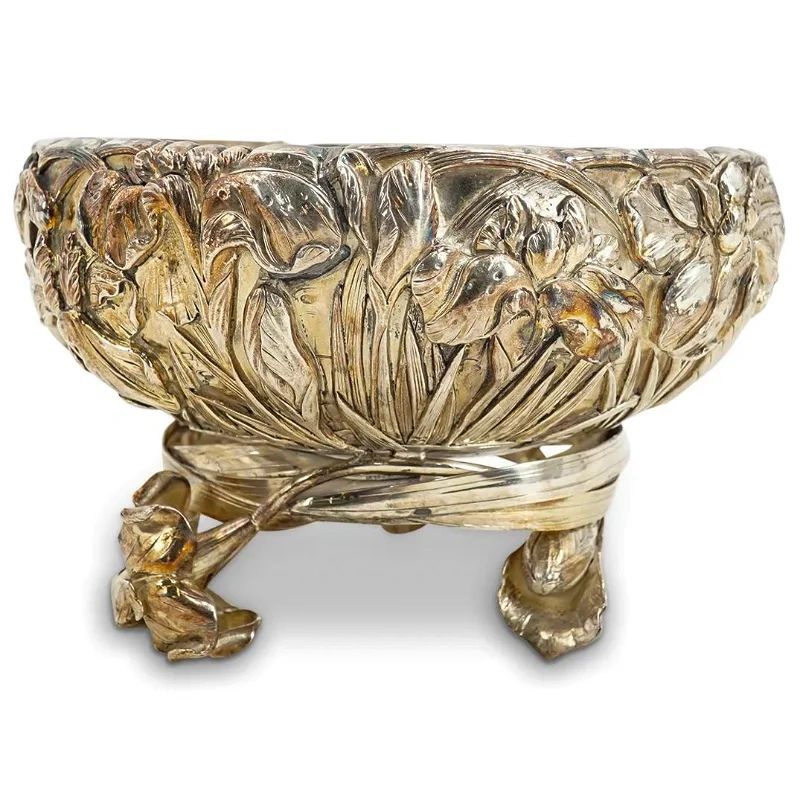
Silver double wall high repousee bowl. From G.T. Marsh & Co.’s Japanese Art Repository, exhibited at the California Mid-Winter International Exhibition, 1894. Meiji era
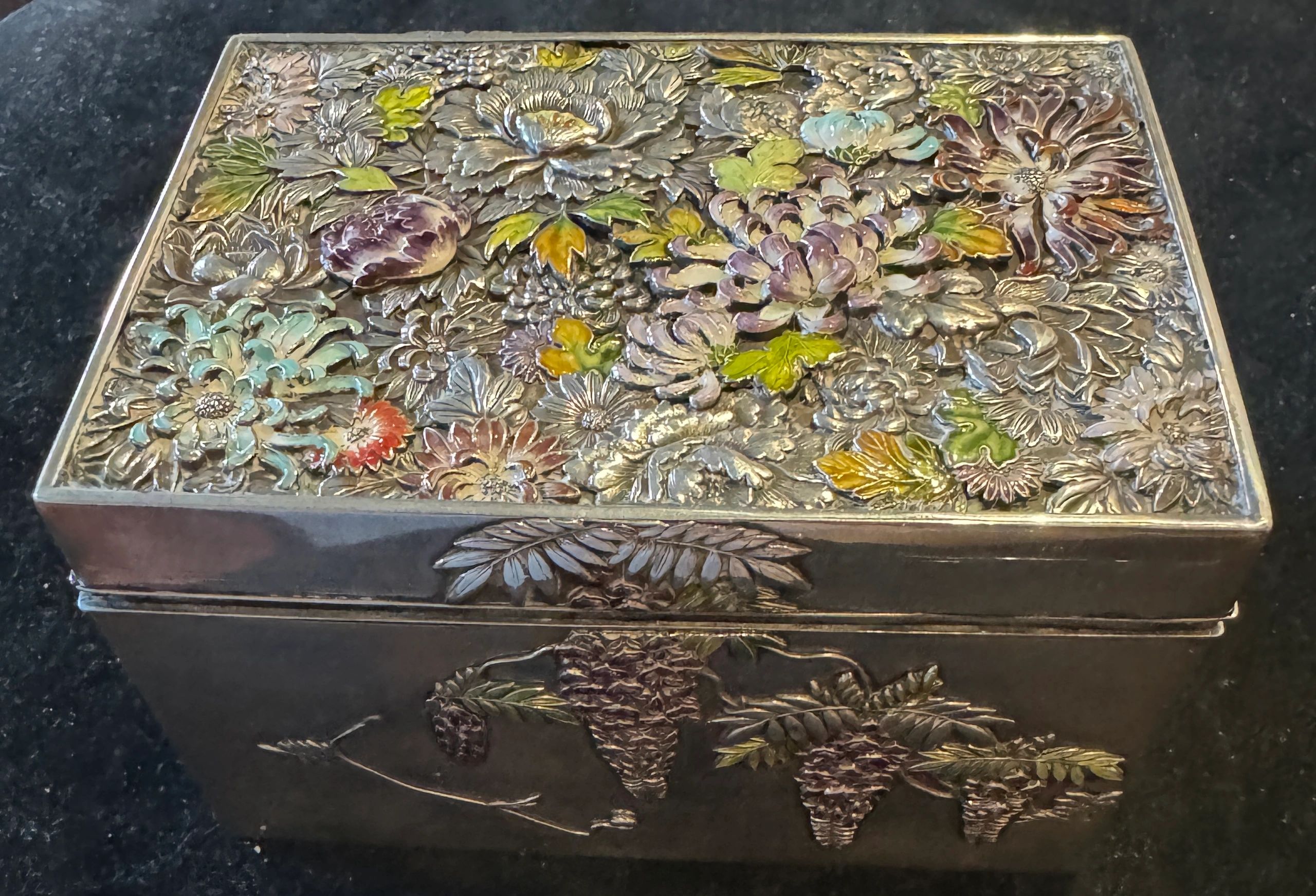
Enameled silver kobako by Sanso. Meiji era.
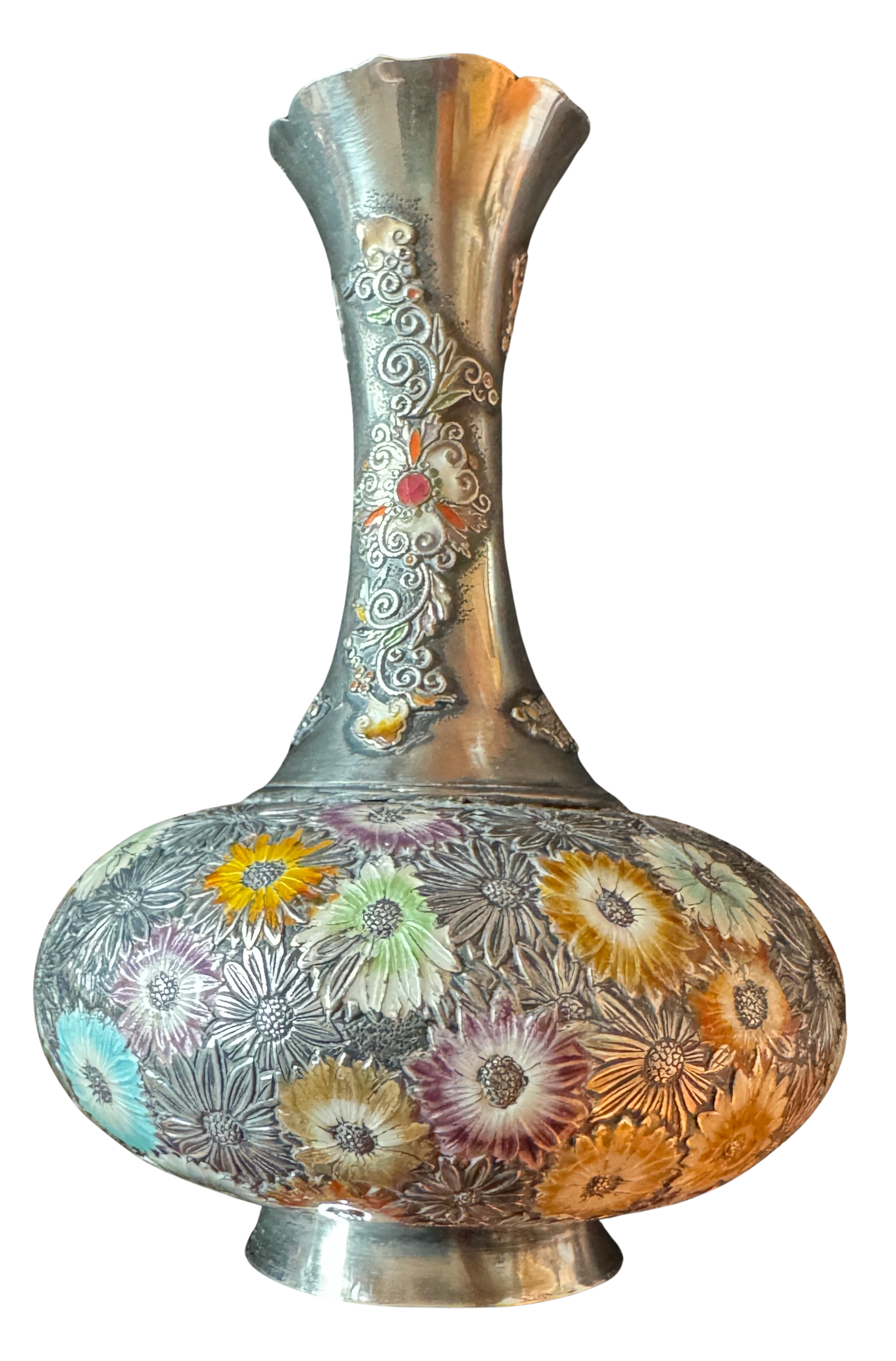
Silver vase with profuse chrysanthemum enamel decoration. Signed in gold reserve, Meiji era.
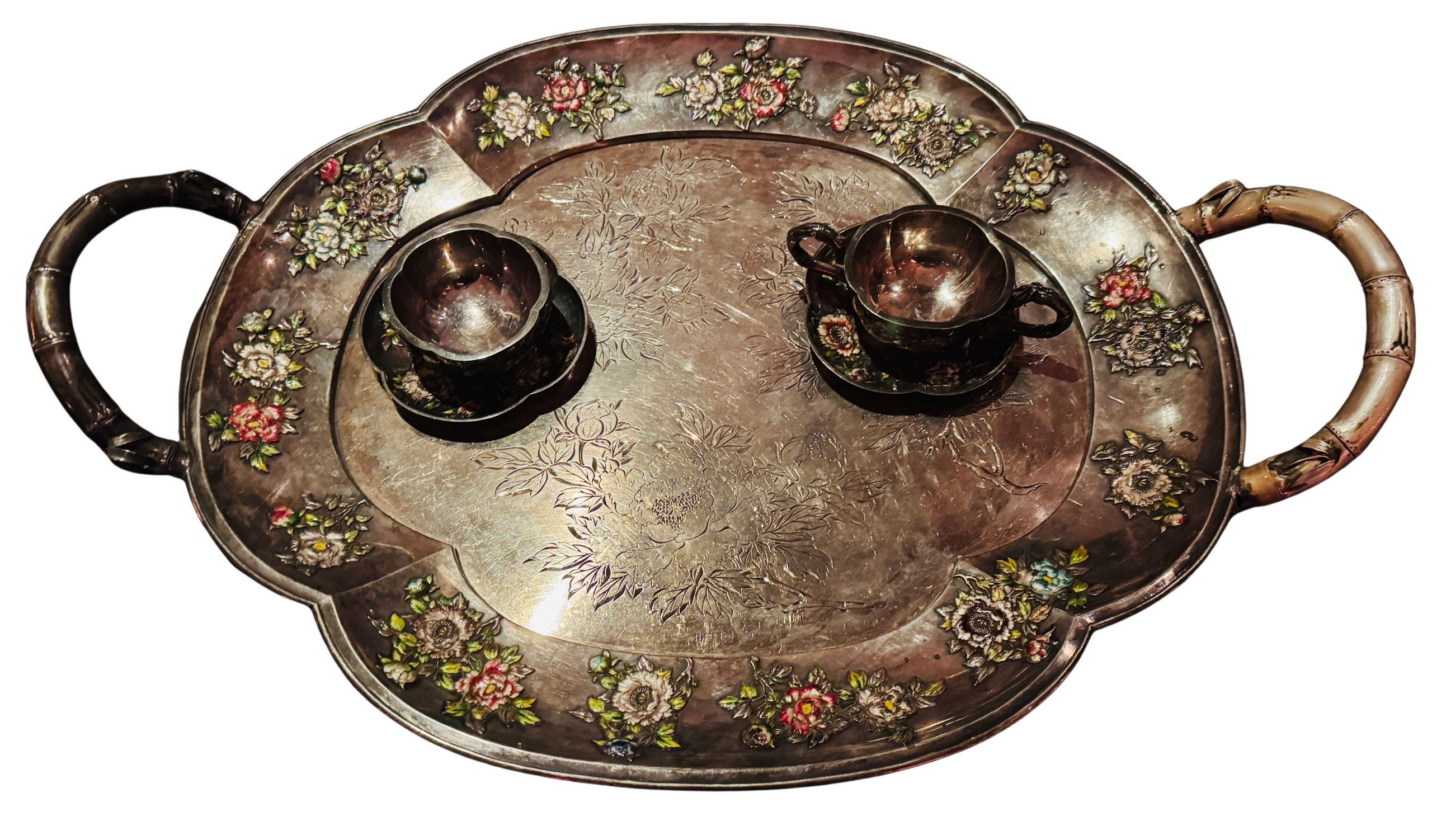
Enameled cups & saucers on an engraved silver tray, 60cm across, weight - 3200 grammes. Meiji era.
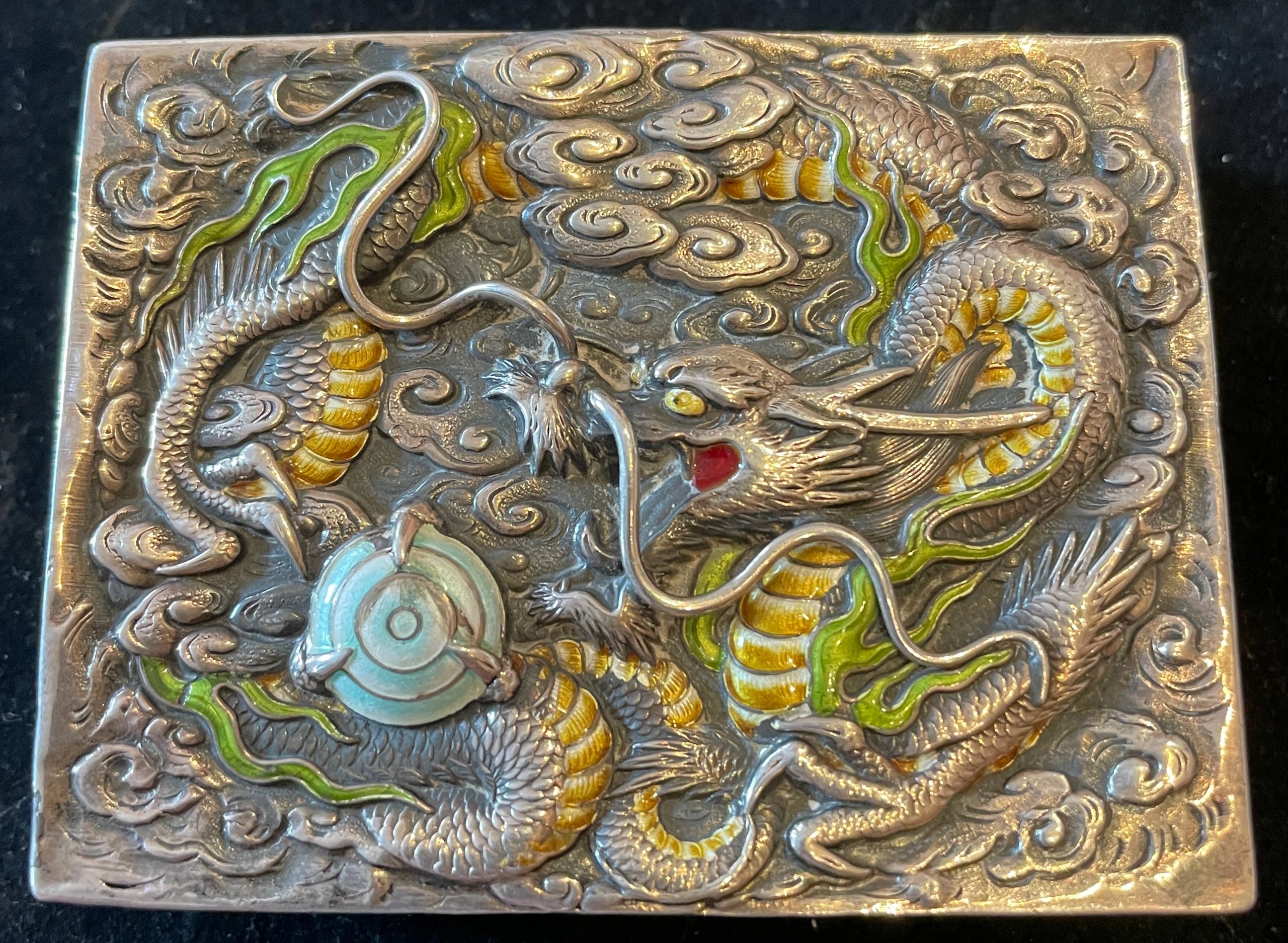
Enameled silver kobako showing a Ryujin (dragon) holding the tama (sacred pearl of wisdom). Meiji era
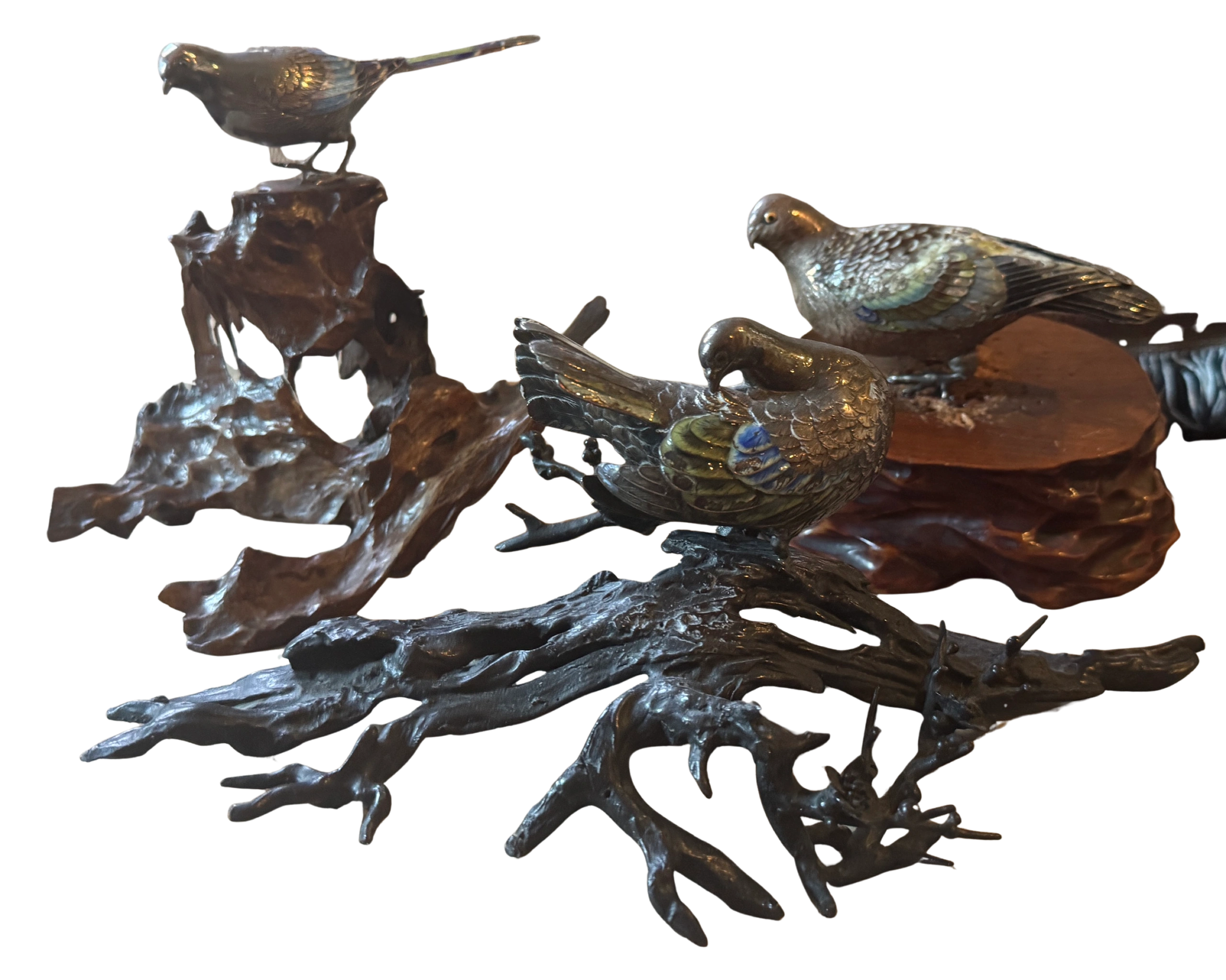
Group of enameled silver birds - a preening dove perched on stylized bronze branch, a wagtail signed by Kozan on a root wood stand and another dove. Meiji era
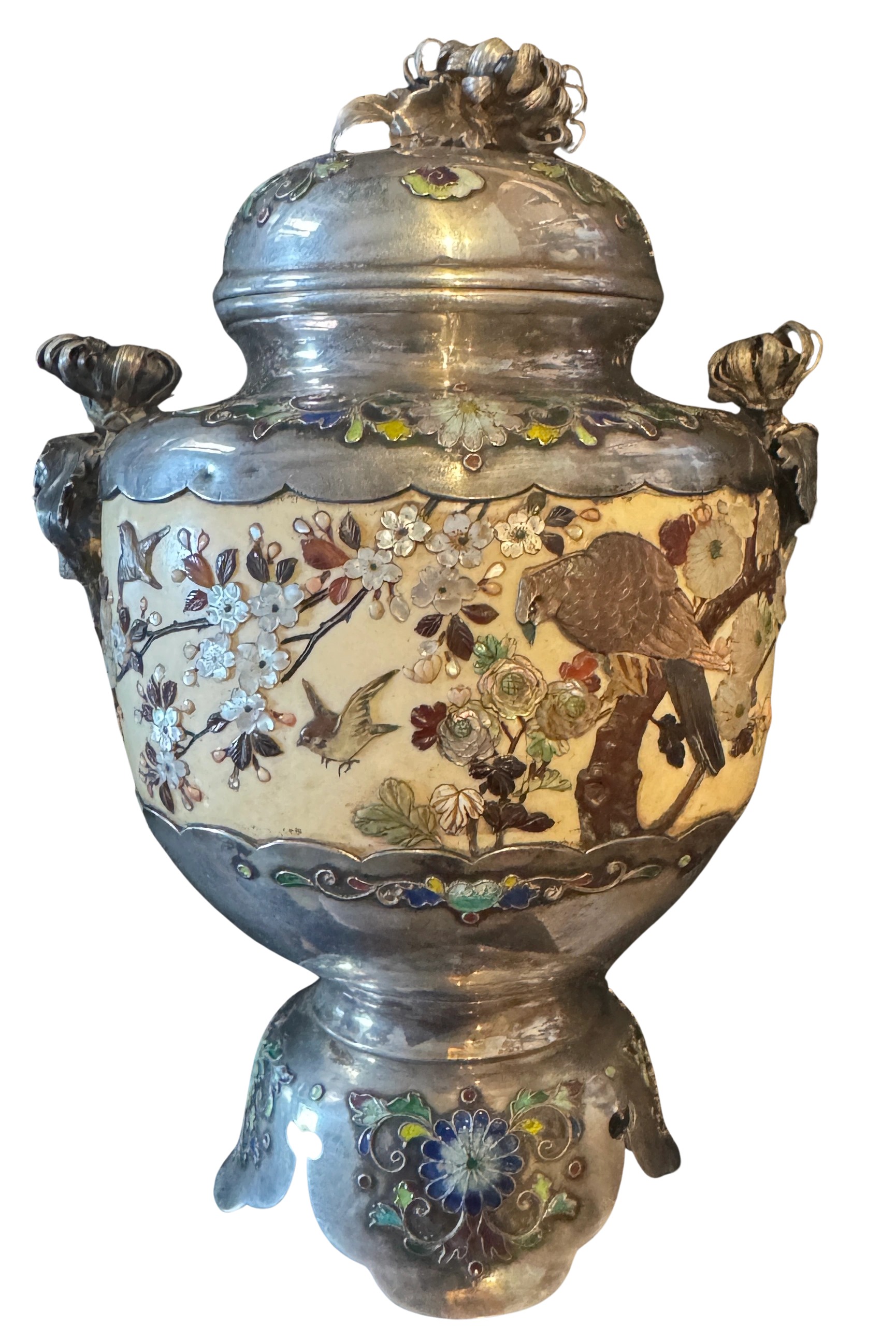
Shibayama & enameled silver ginger jar, signed Shibayama on tortoise shell reserve. Meiji era
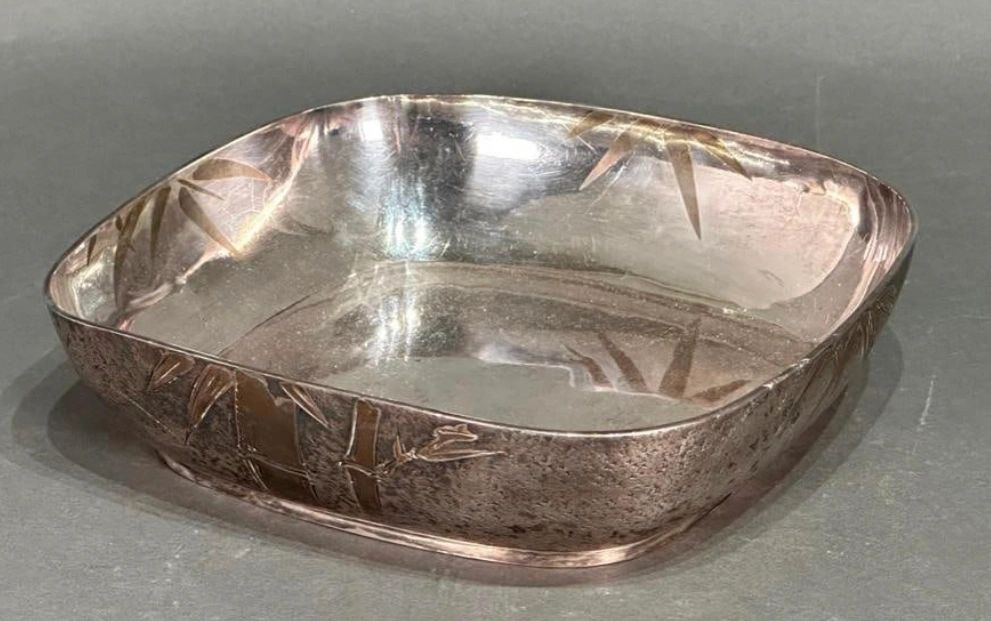
Silver bowl with shibuichi mirrored bamboo design inlay. Miyamoto Shoko, Meiji era.
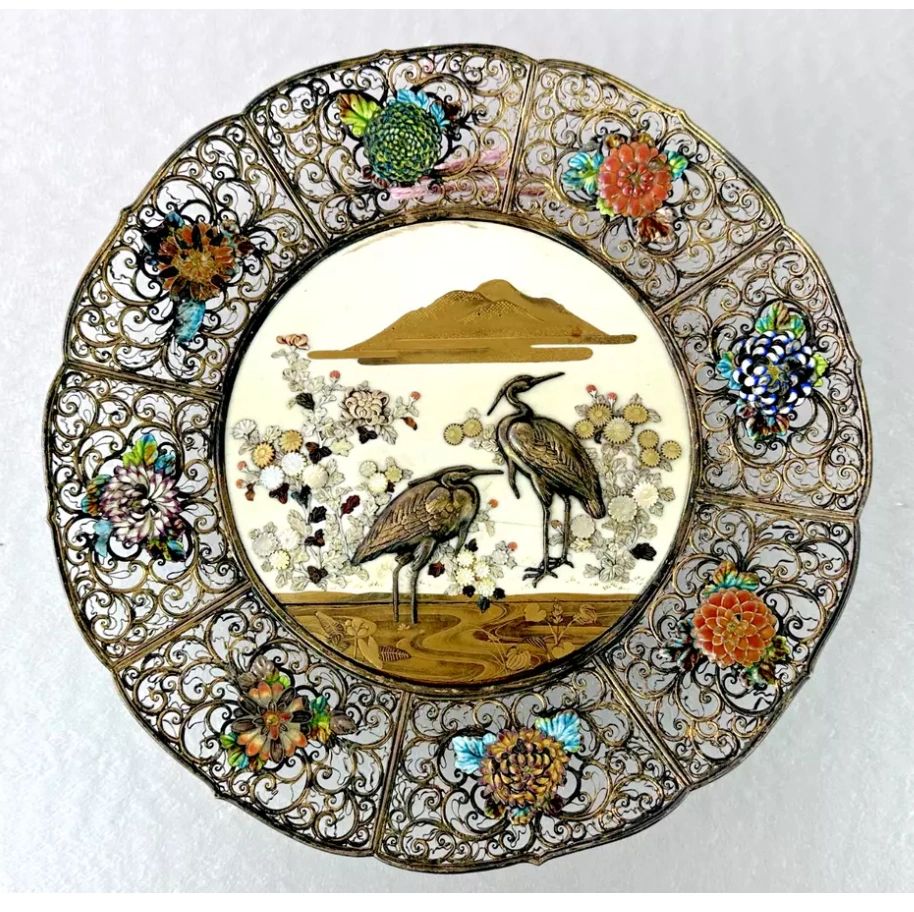
Silver platter with shibayama plaque and Hirata style floral enamel medallion appliqués. Nemoto School, Meiji era.
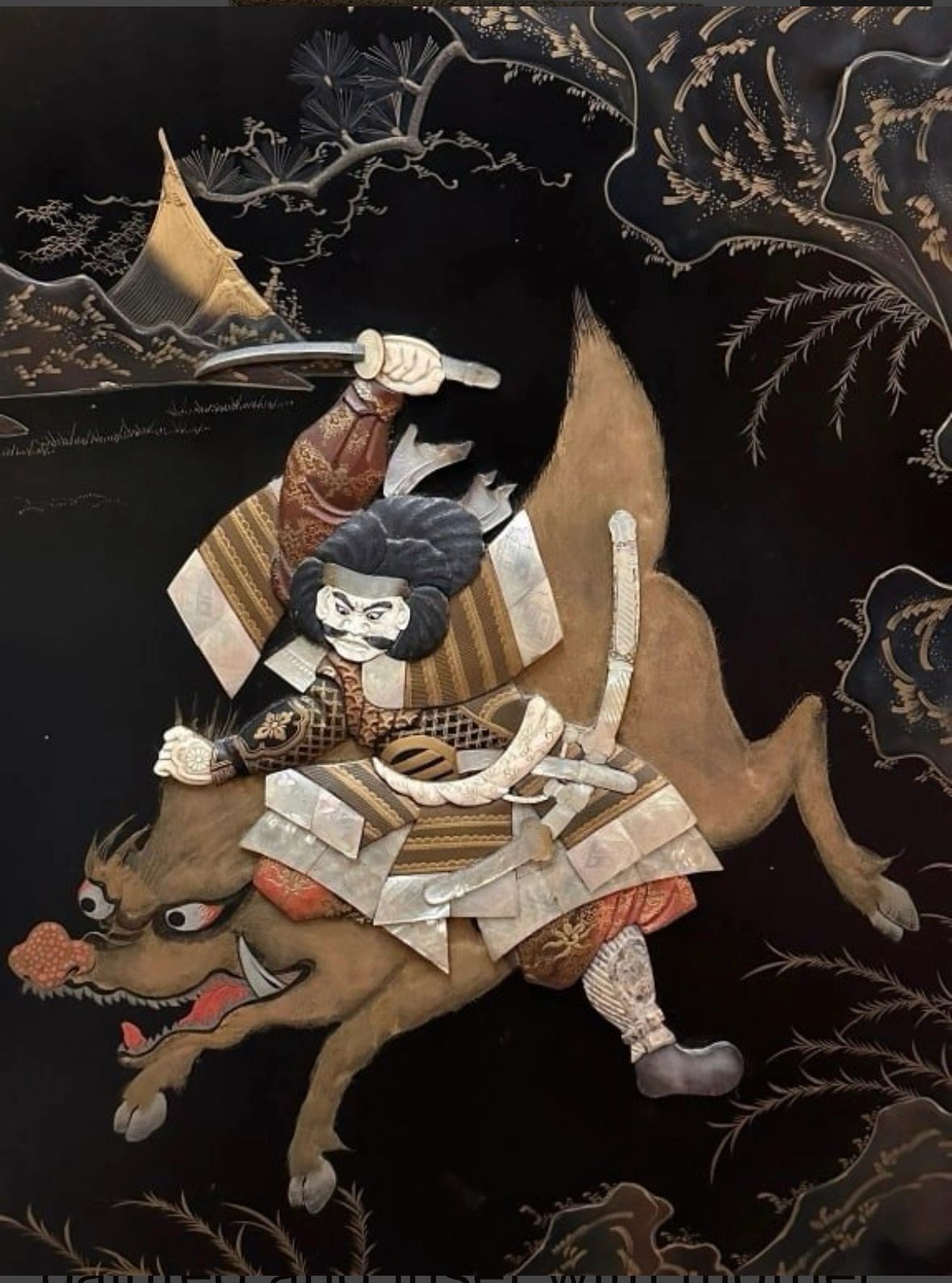
Shibayama and lacquer panel depicting Yamamoto Kansuke (1501-1561), one of Takeda Shingen’s ‘Trusted 24 Generals’, as he kills a wild boar attacking his master. Meiji era
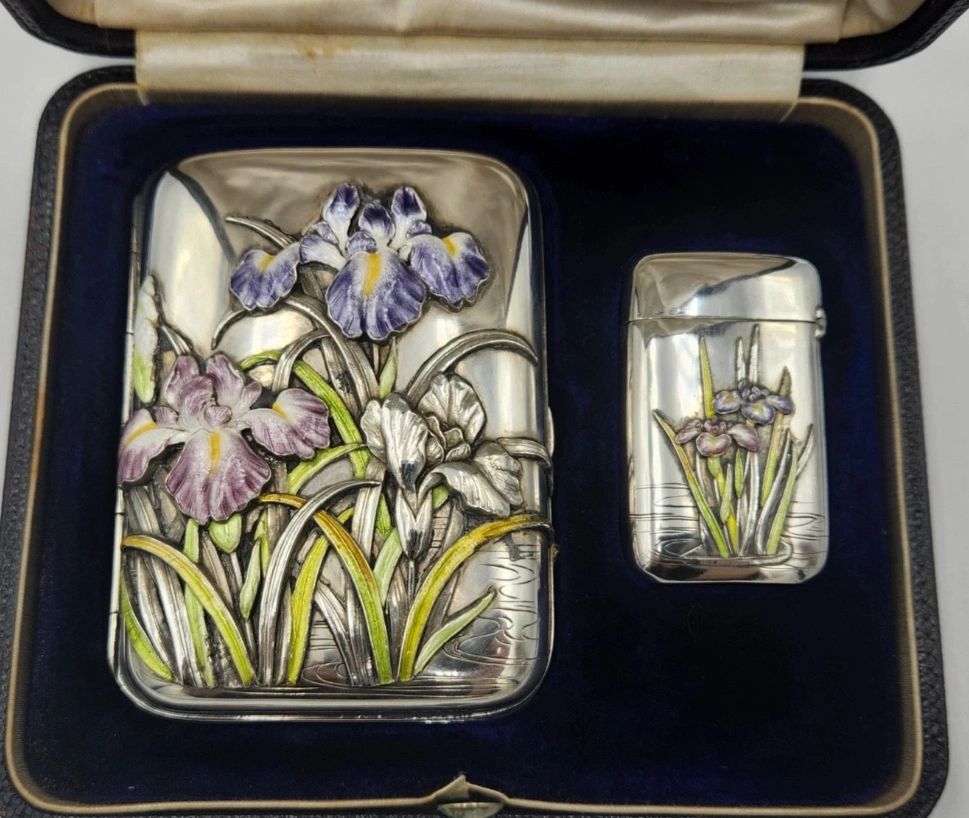
Enameled silver cigarette case & match safe, Meiji era.
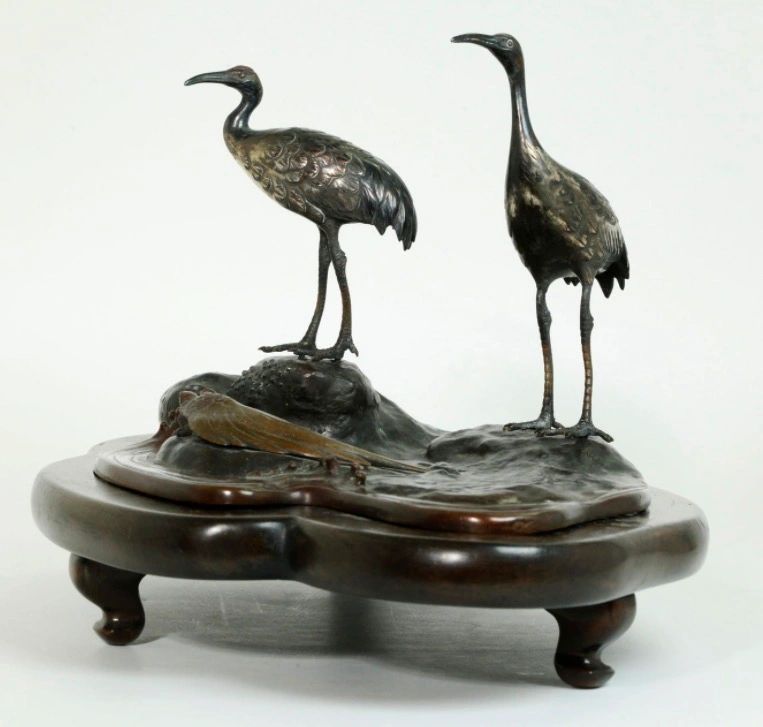
Bronze okimono depicting cranes and a turtle. Seal mark of Seiji Saku, Meiji era.

Enameled silver parasol handle. Hirata school, Meiji era.
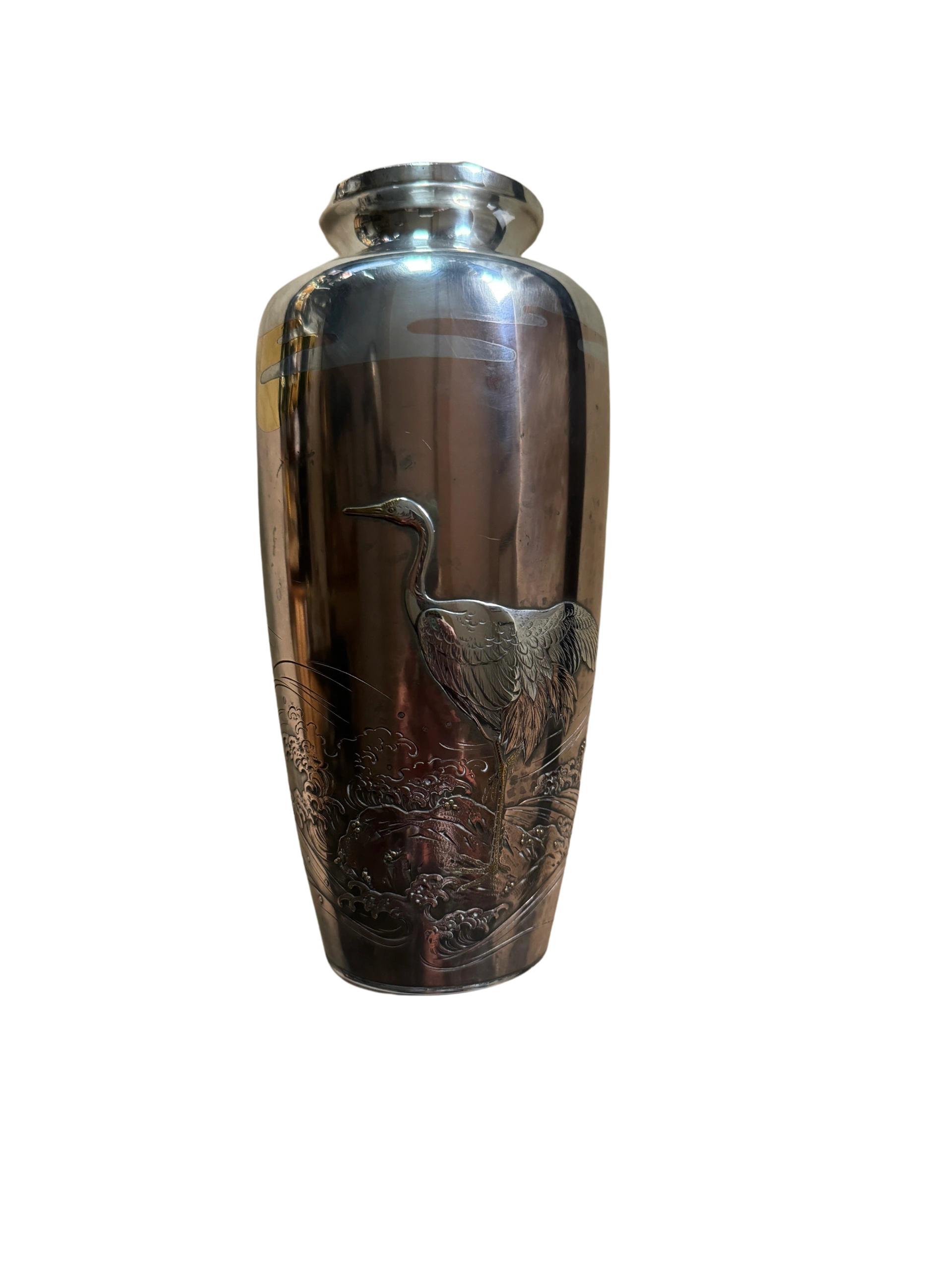
Silver vase decorated in kebori, hirazogan and takazogan with pure gold accents and a partial shibuichi ground. Signed Yoshiyama Zo with Maki studio seal. Meiji era.
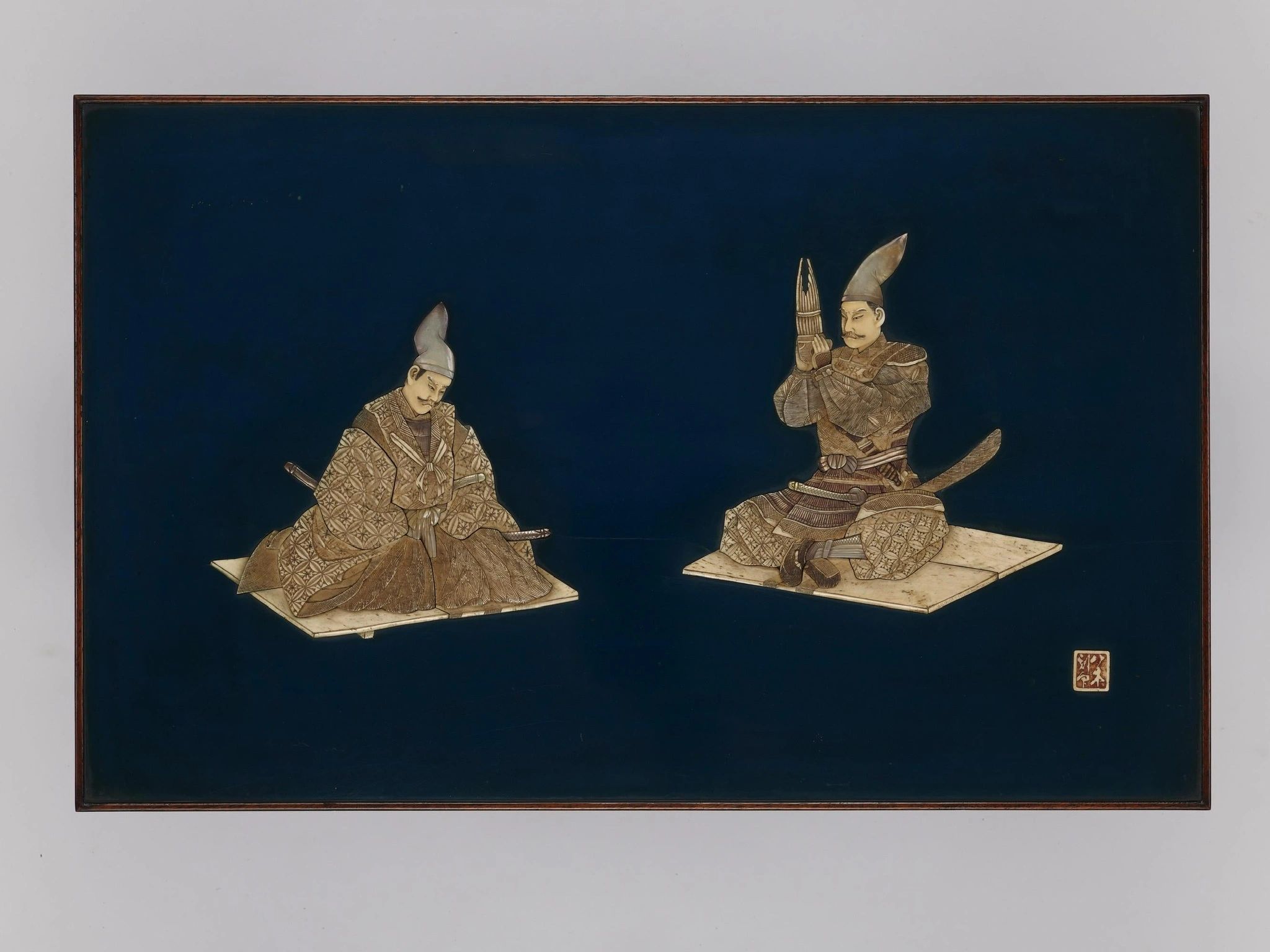
Shibayama panel depicting the legendary scene of Minamoto Yoshimitsu teaching the Sho to his disciple. Signed by Yagi, Meiji era.
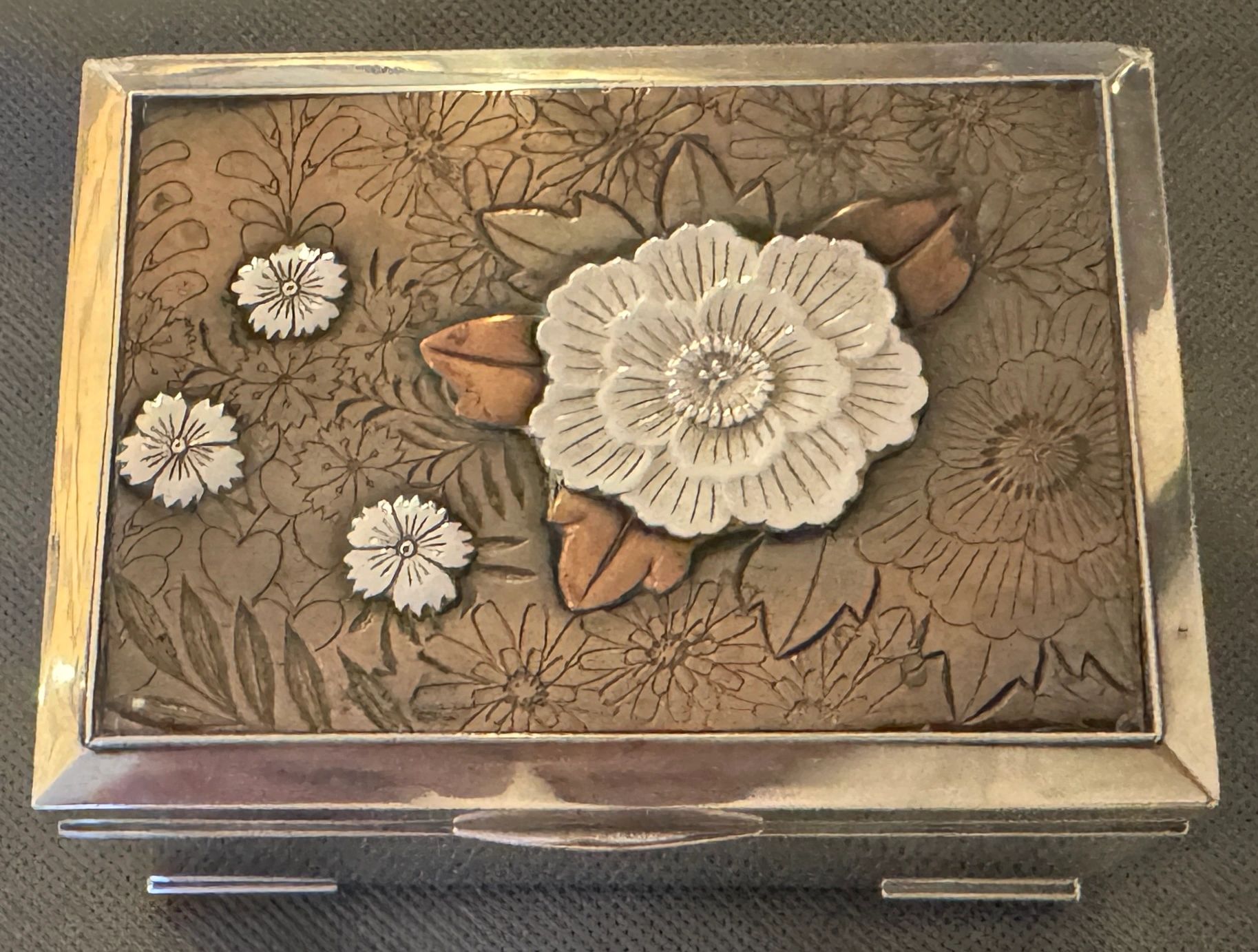
Silver box set with shakudo and mixed metals floral panel. Mitsukoshi, Meiji era.
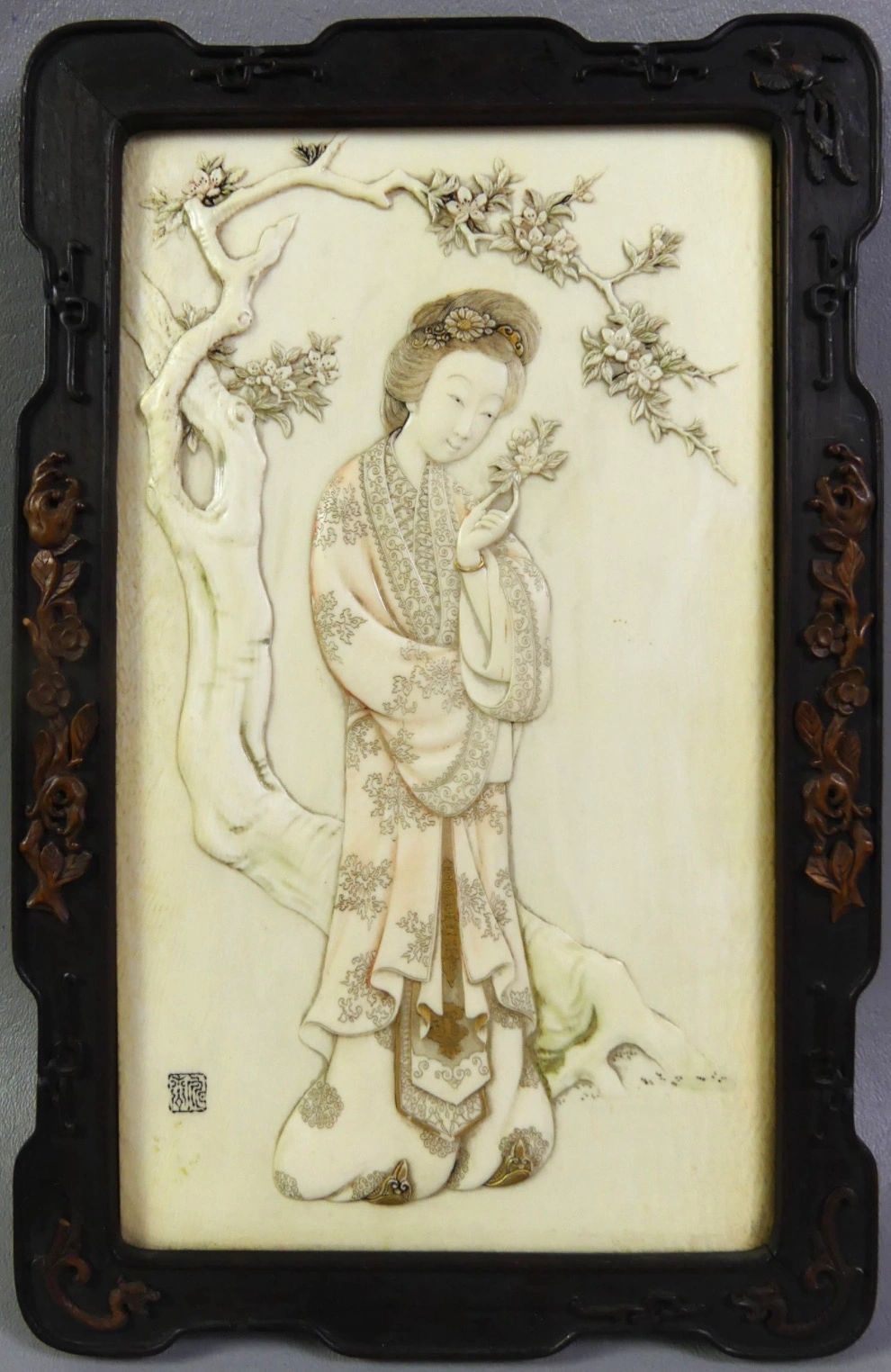
Bas relief shibayama panel depicting Yang Guifei (719-756), Tang dynasty courtesan of Emperor Xuanzong (685-762). Signed wirh seal of Kyokusai (1868-1926).
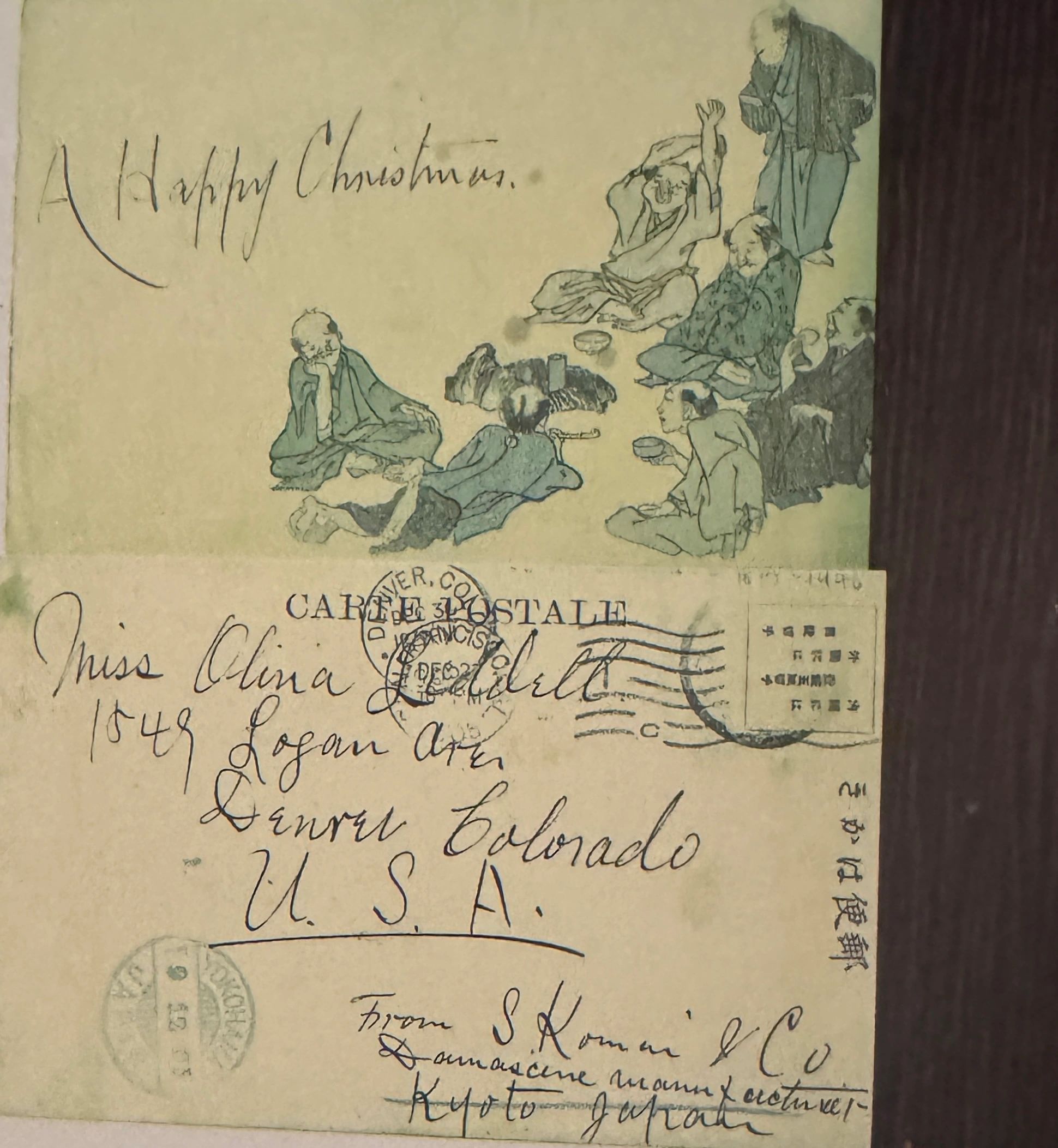
S. Komai & Co., Damascine manufacturers. Christmas card depicting workers relaxing with sake. Postcard sent to Miss Olivia Liddell, a frequent purchaser of Komai products.
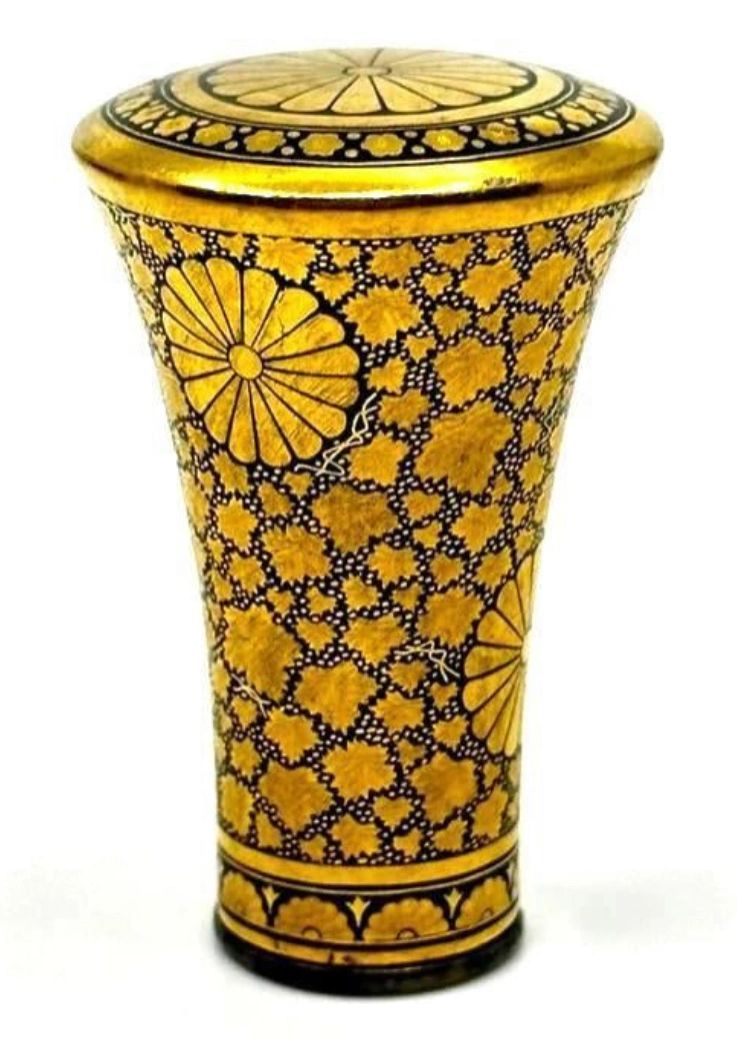
Gold inlaid on iron (nunome-zogan) stick handle with kikumon. Gift from Meiji Emperor Mutsushito to signers of the 1905 Treaty of Portsmouth. Komai Otojiro, Kyoto.
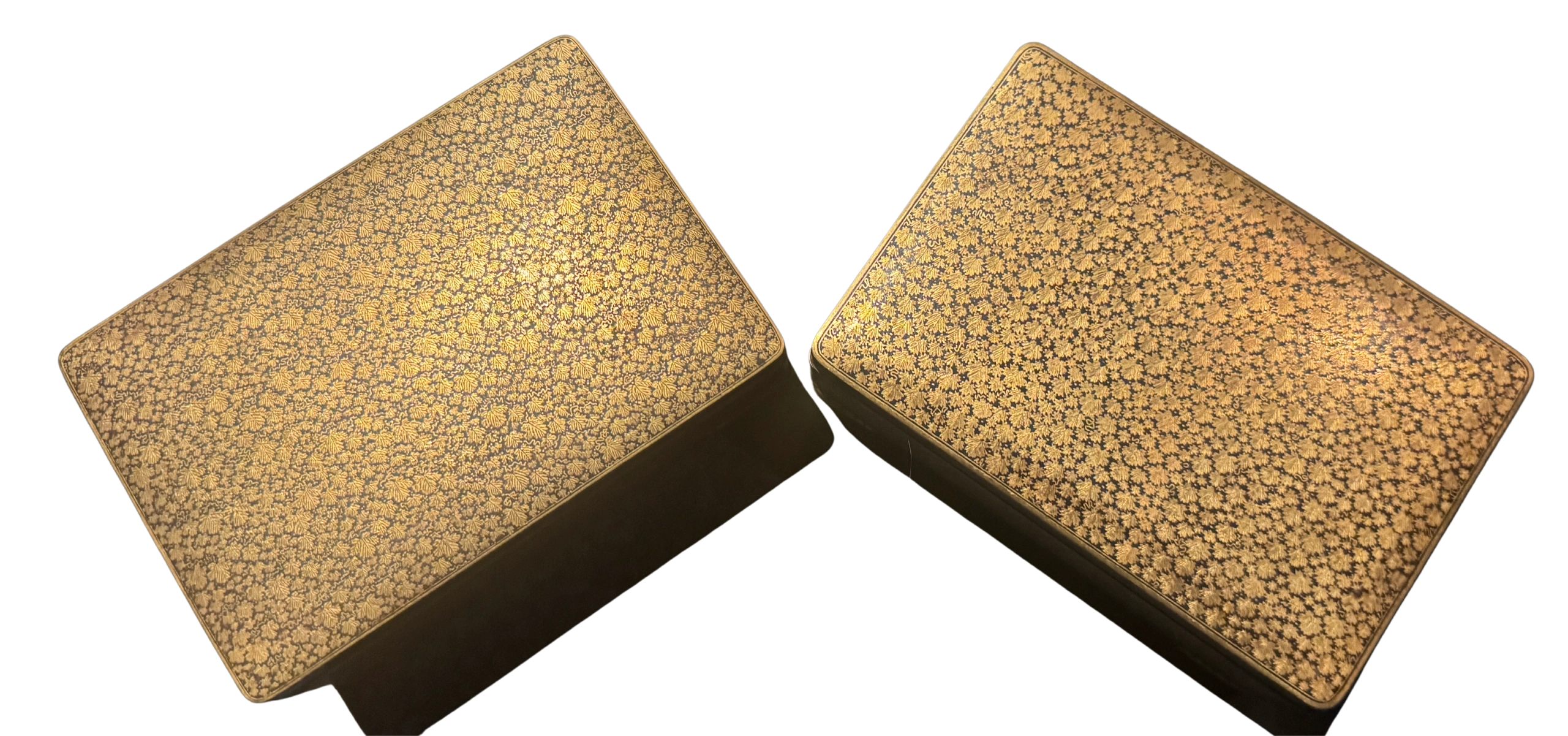
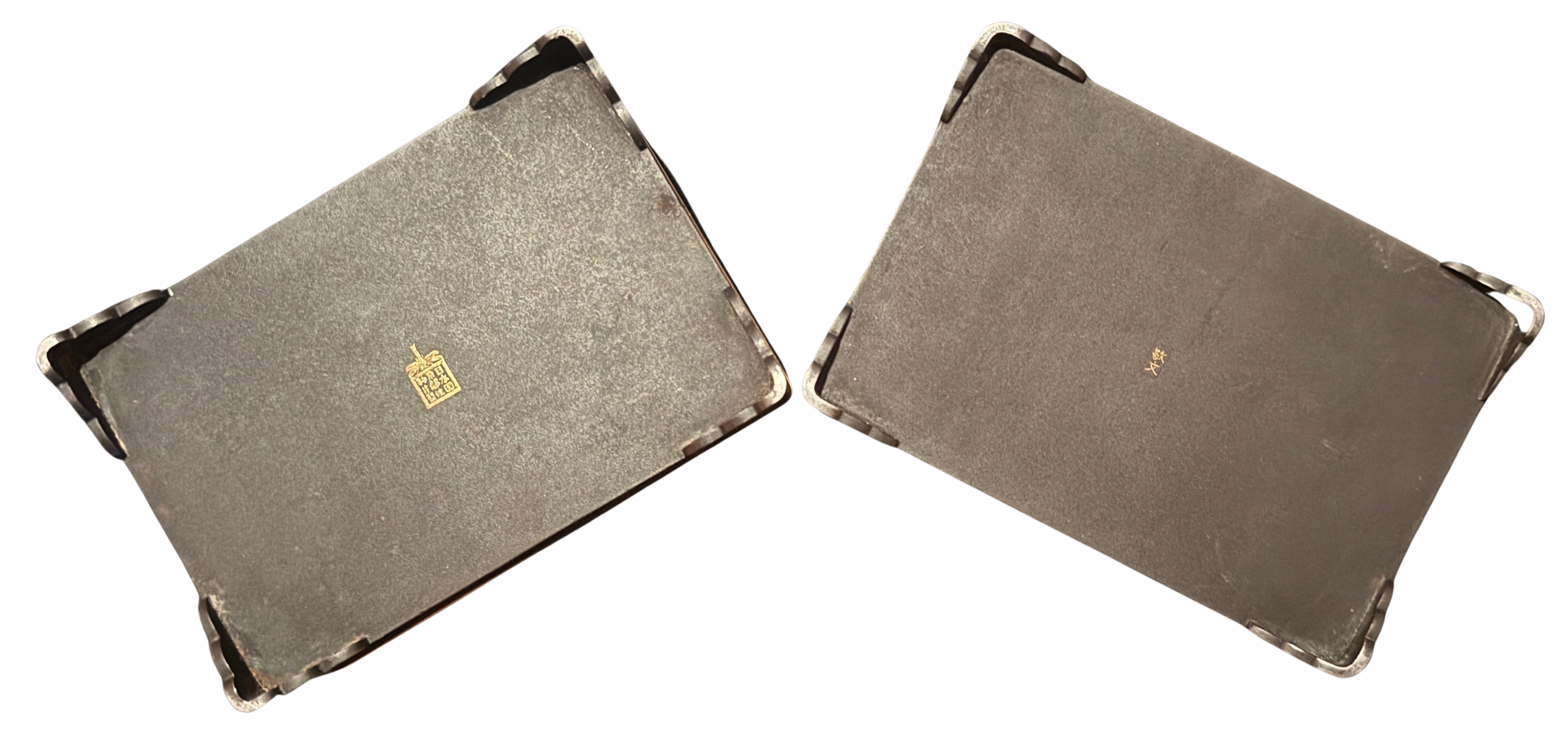
Numome zogan iron box by Komai and a pure silver lined exhibition example. Kyoto, c.1910.
Fine Japanese decorative art object
![Silver inkwell formed as a kabuto (helmet), the kawagata (crest) as antlers for the pen rest, the silver pen with katakiribori decoration. Inscribed in kanji Hei-Hachi-Ro by a junikiku mon and, in Englsh: Captain Dundas from Admiral Count H. Togo Tokyo 1910. [A gift from Gensui (Marshal Admiral) Count Heihachiro Togo (1848-1934) to Royal Navy captain (later Admiral) Charles Hope Dundas (1859-1924)]. Meiji era.](https://img1.wsimg.com/isteam/ip/aabb20b5-50d1-45ab-bf73-bdd30f2b31a0/IMG_2231.png)
Silver inkwell formed as a kabuto (helmet), the kawagata (crest) as antlers for the pen rest, the silver pen with katakiribori decoration. Inscribed in kanji Hei-Hachi-Ro by a junikiku mon and, in Englsh: Captain Dundas from Admiral Count H. Togo Tokyo 1910. [A gift from Gensui (Marshal Admiral) Count Heihachiro Togo (1848-1934) to Royal Navy captain (later Admiral) Charles Hope Dundas (1859-1924)]. Meiji era.
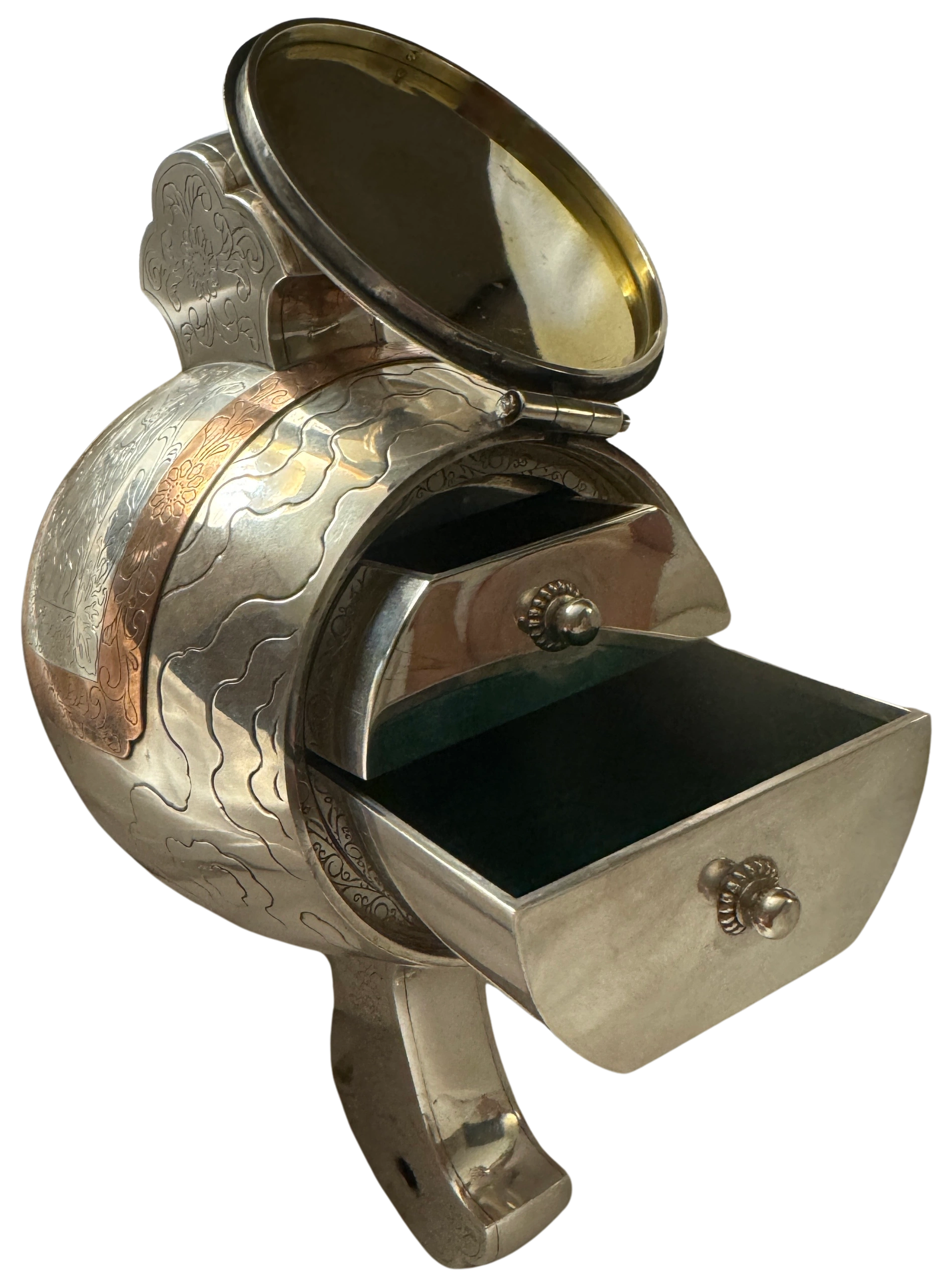
Silver Uchide no Kozuchi (Daikokuten’s magic Mallet) fashioned as a kodansu (small cabinet). Taisho era
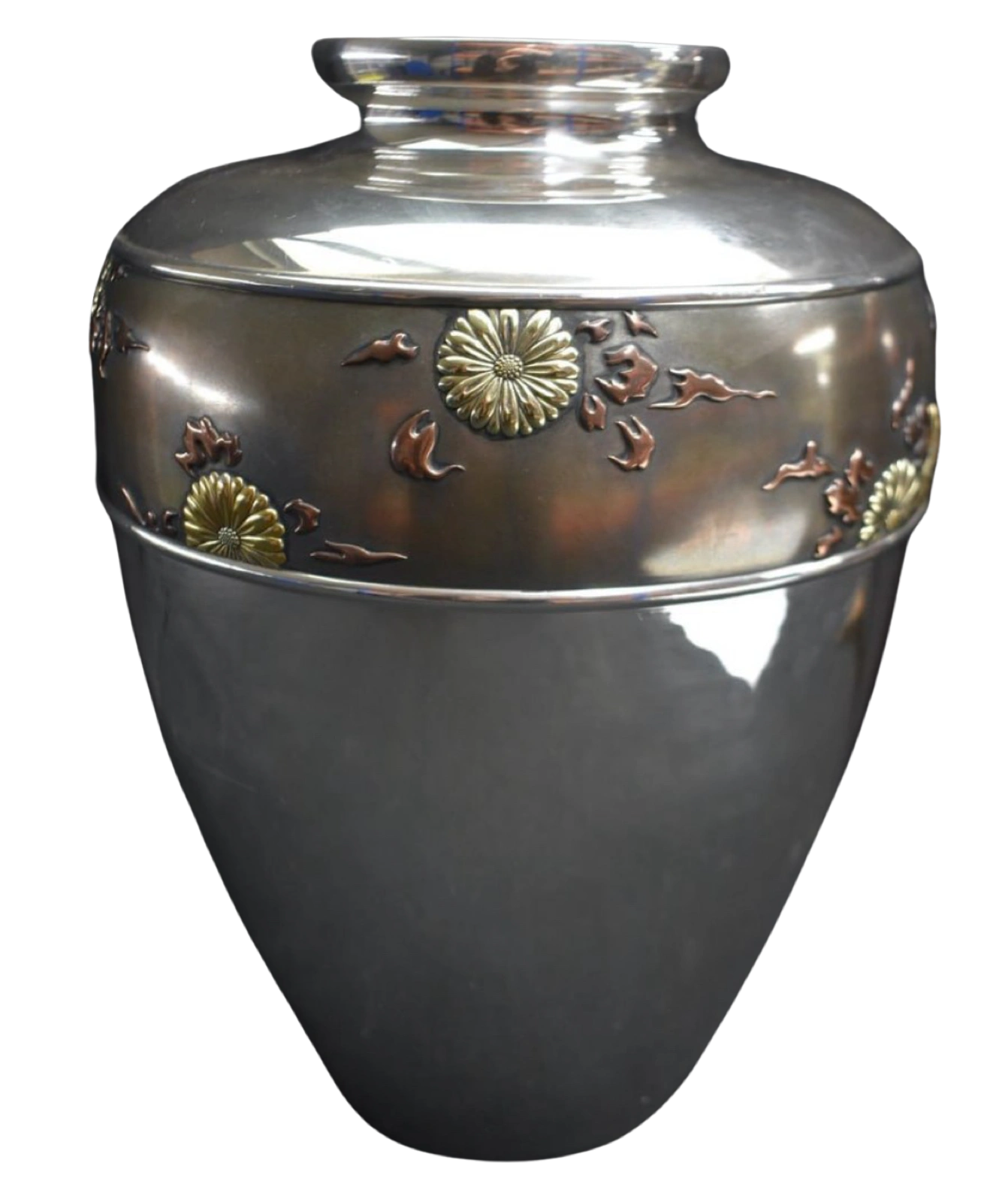
Silver & mixed metal presentation vase with applied gold & silver Imperial Kikumon. Signed Hirata Shigemitsu (1855-1926), Imperial Household Artisan & Tokyo Chokokai founder. Meiji/Taisho era.
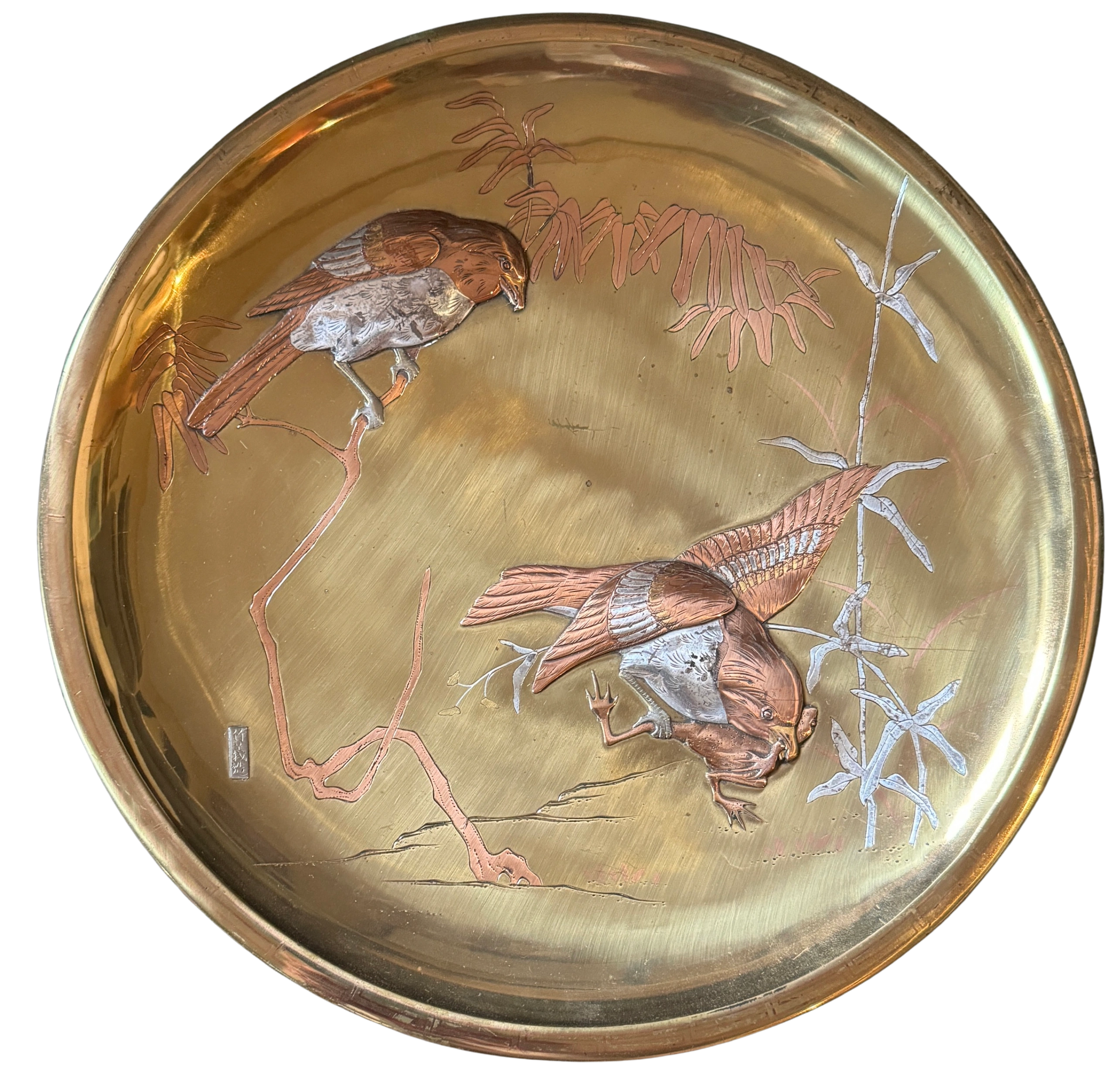
Cuckoos catching a frog. Mixed metal dish, signed Takeyoshi Zo, in a silver reserve. Meiji era.
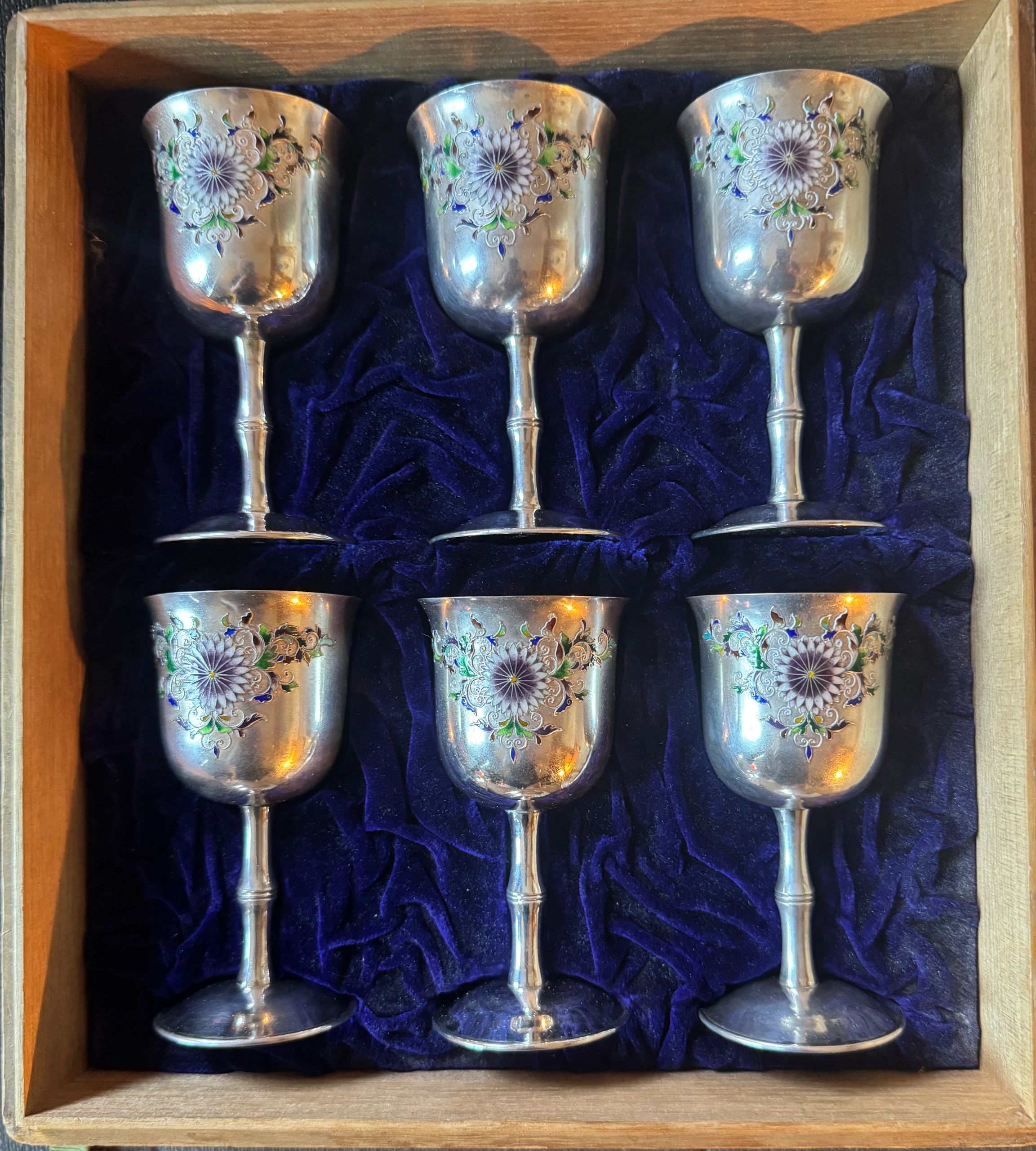
Enameled silver goblets. Maruki, Meiji/Taisho era.
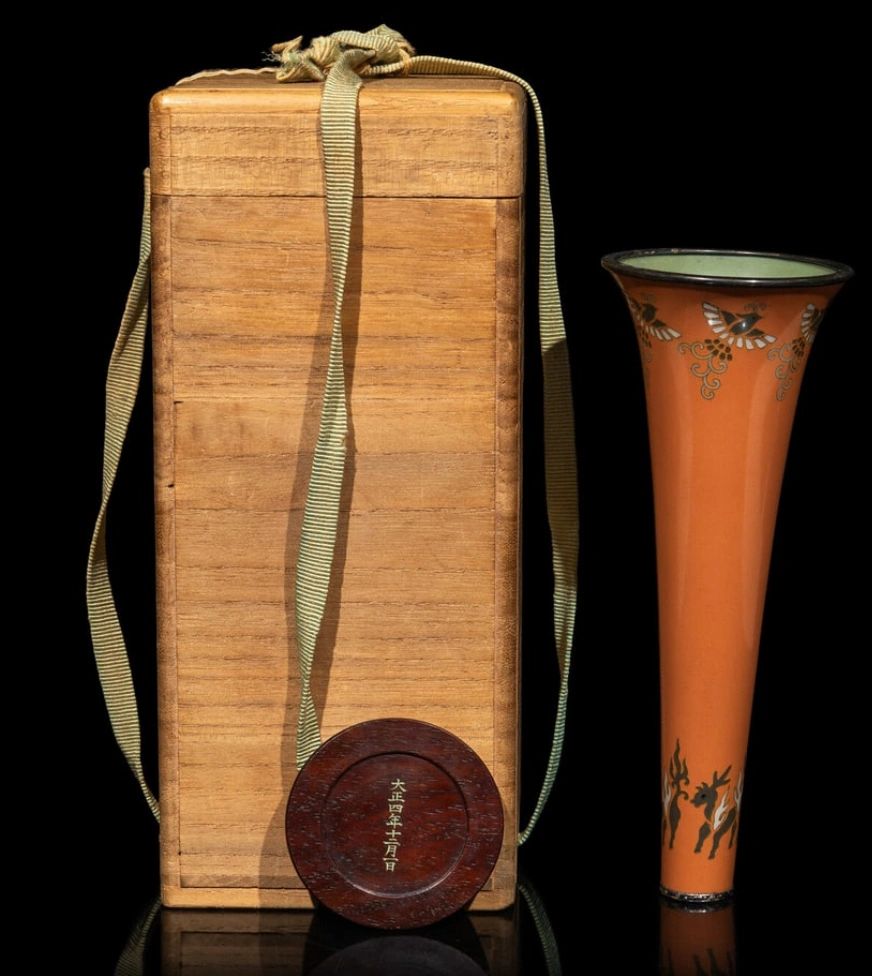
Imperial Enthronement (Sokui no Rei) of Yoshihito, commemorative cloisonné enamel vase with silver mounts & tomobako. Wood stand dated Taisho 4, 11, 10 for November 10th, 1915 by Ando Jubai.
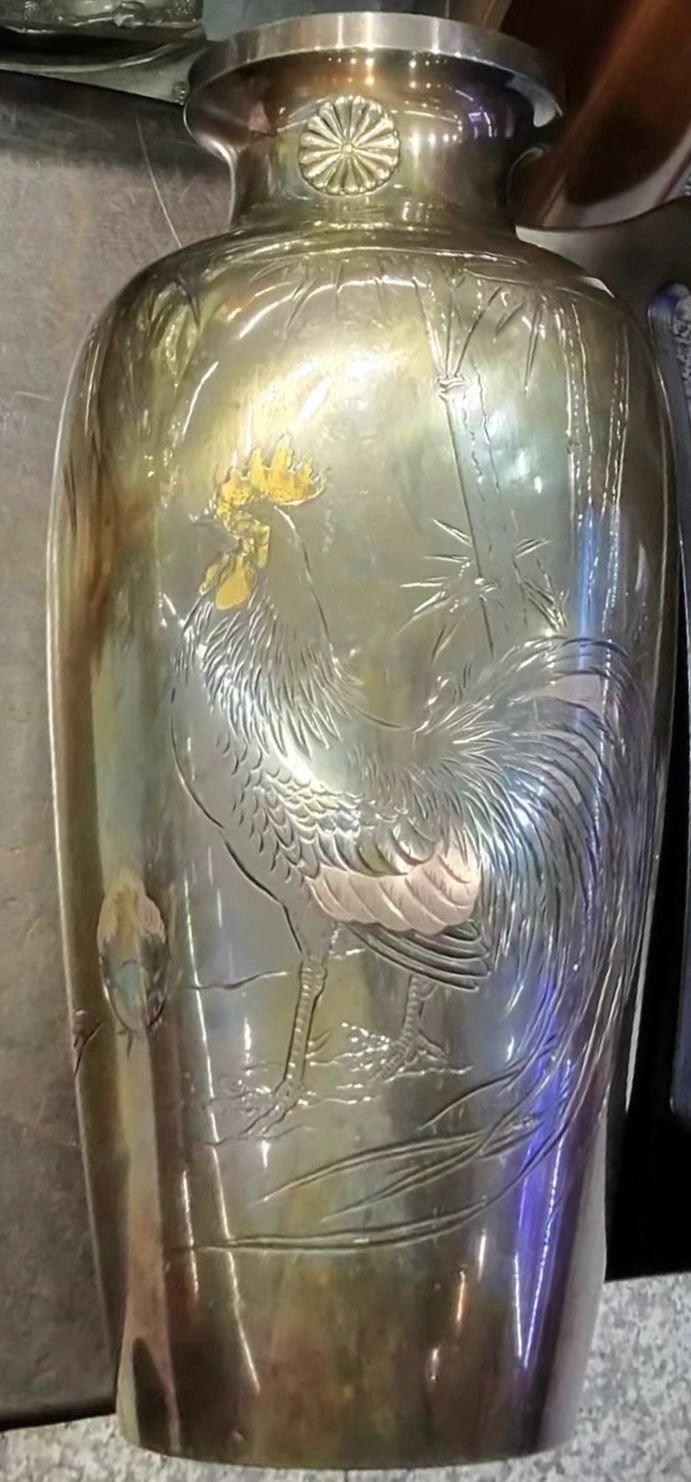
Pair of Imperial silver vases by Yamaguchi Kazuteru. Gift from Taisho Empress, Tokyo c.1920
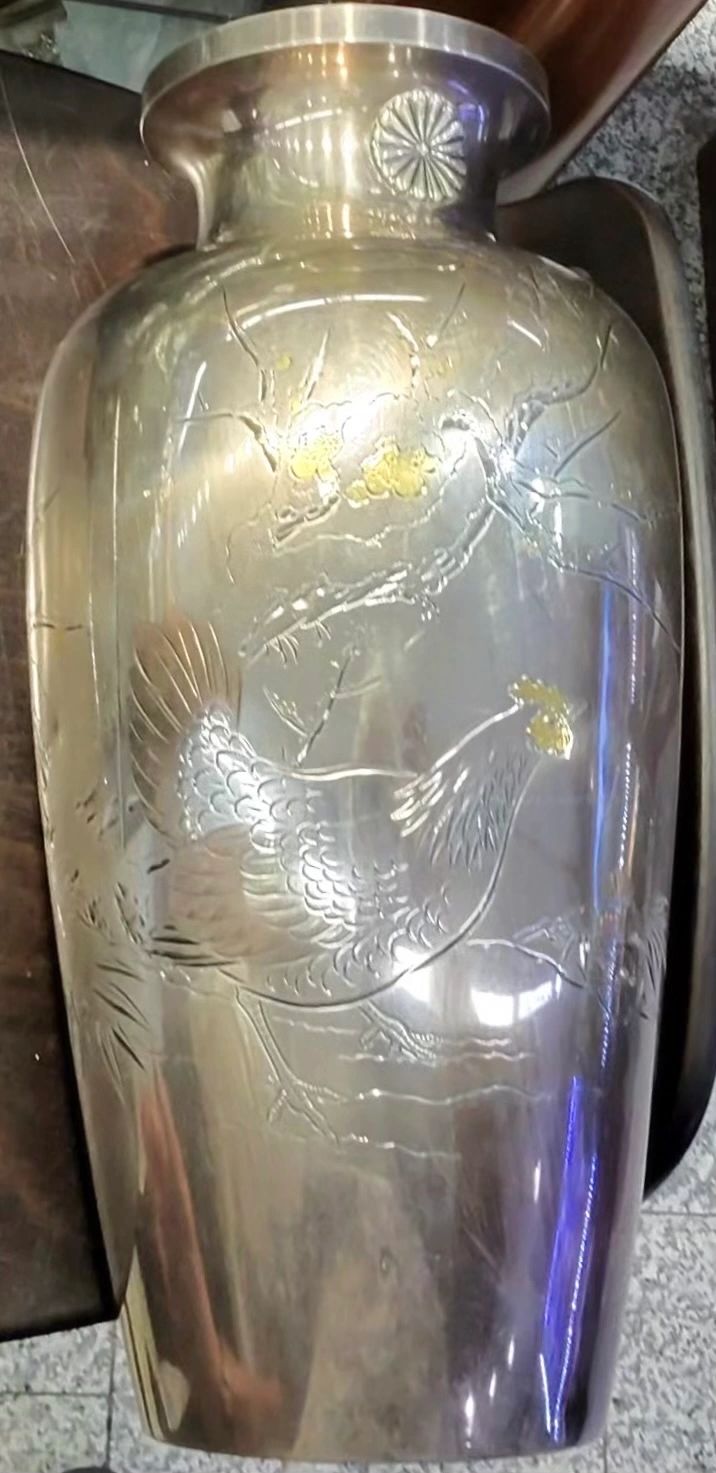
Fine Japanese cloisonné enamel work
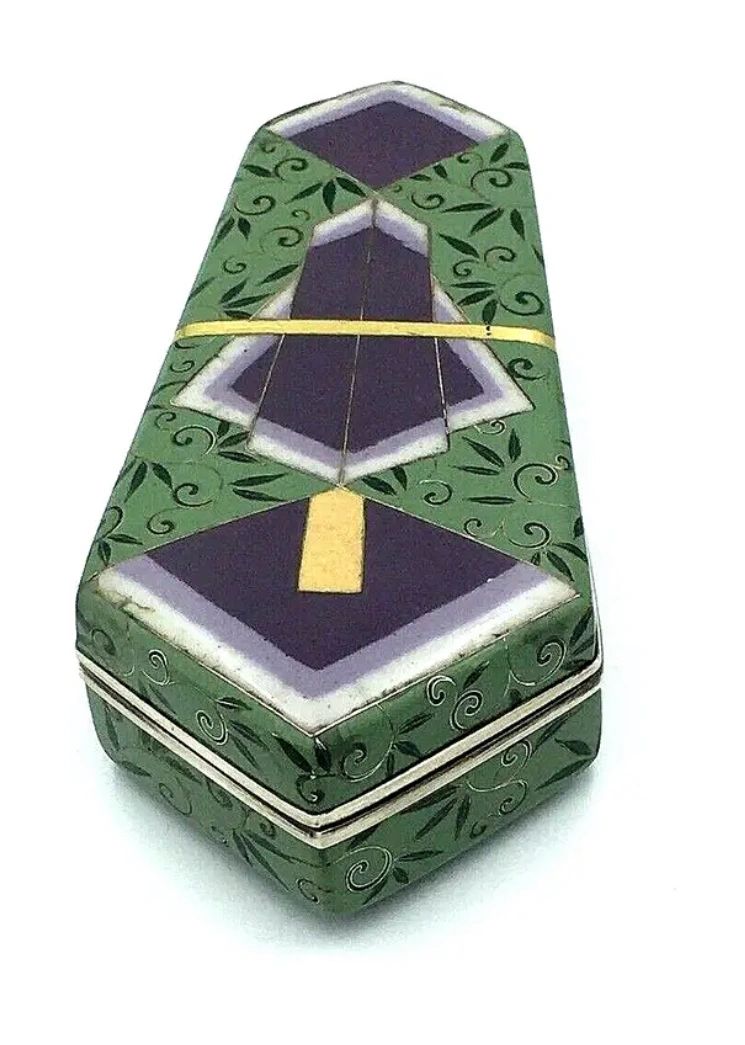
Cloisonee enamel on silver mounted kogo in Art Deco style by Hayashi Tanigoro. Taisho era
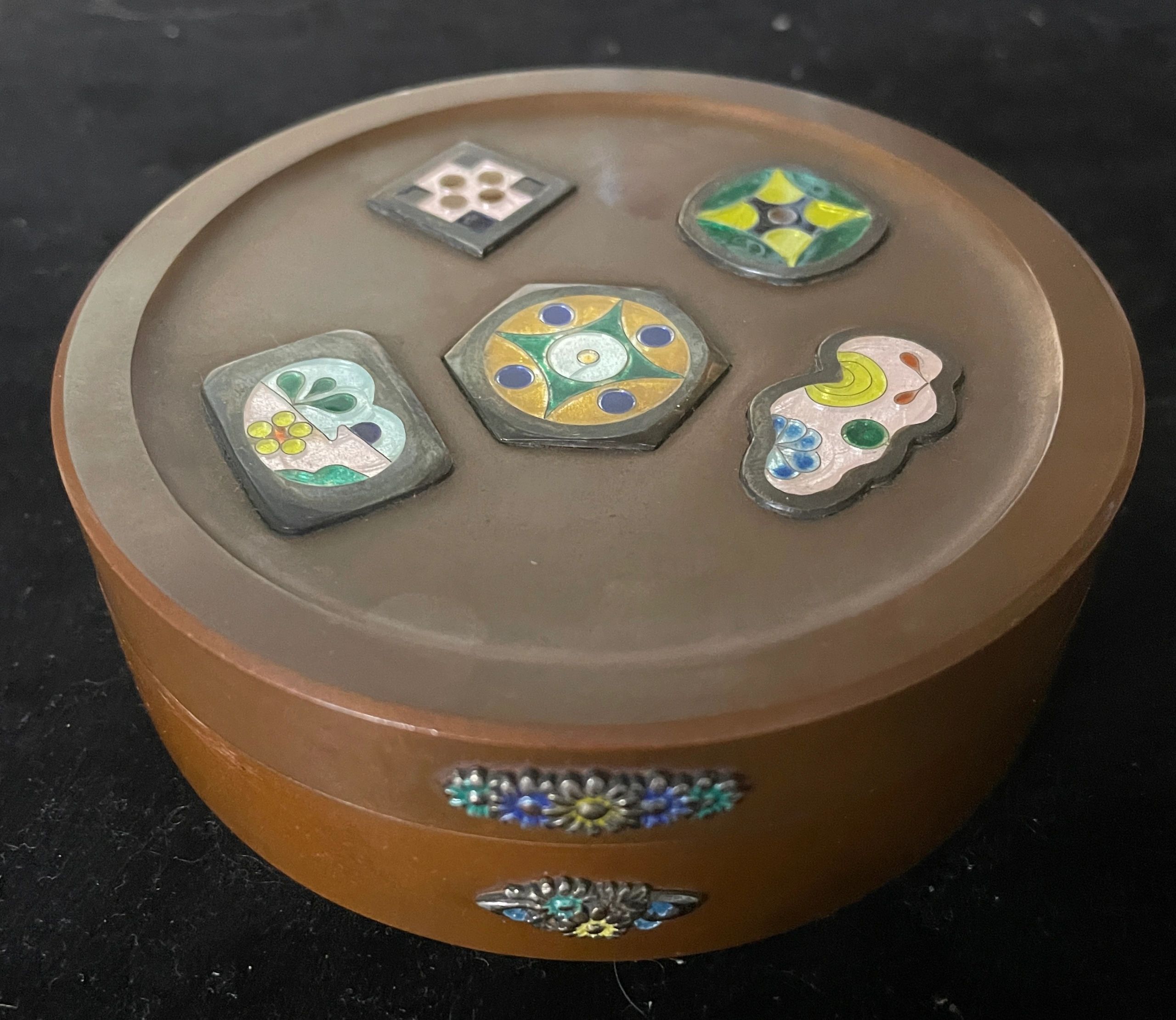
Medallion basse taille cloisonné enameled copper kogo (incense box), the rims decorated with enameled silver junikiku (12 petal chrysanthemum mon), after Hirata School. Meiji-Taisho era
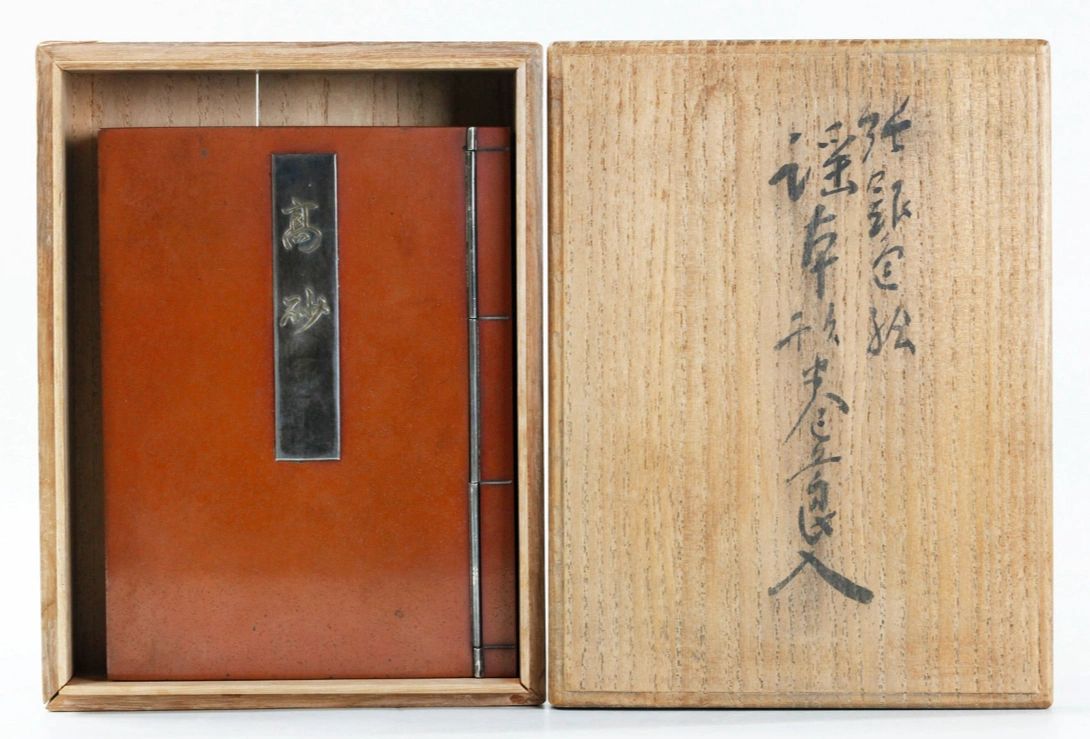
Silver Bunko Utaibon bako (Noh lyrics box) dedicated to the Noh play Takasago by Zeami Motokiyo (1363-1443). Taisho era.
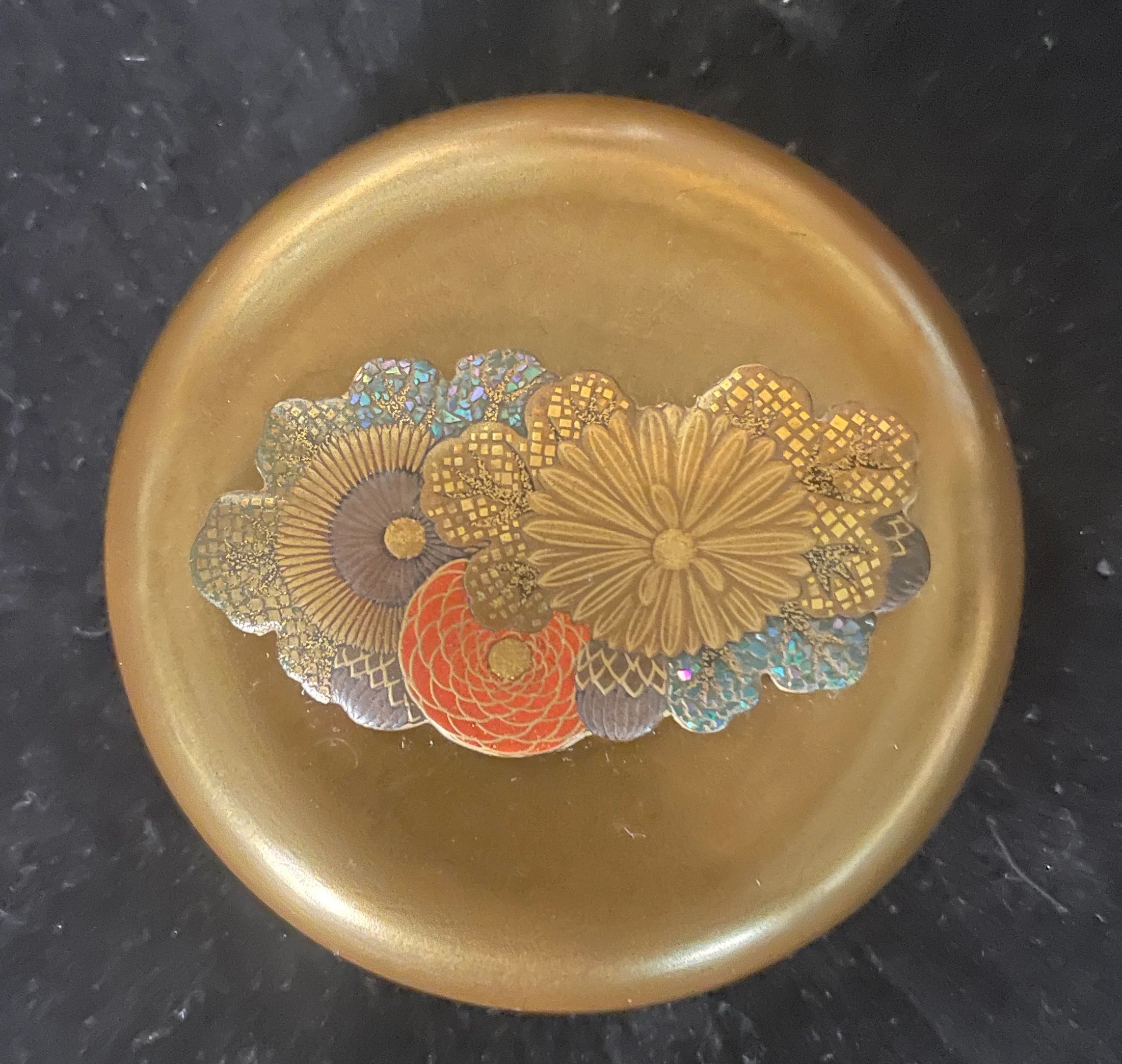
Kogo (incense box) with gold urushi maki-e, gold and colored taka maki-e lacquers & aogai decoration. Taisho era
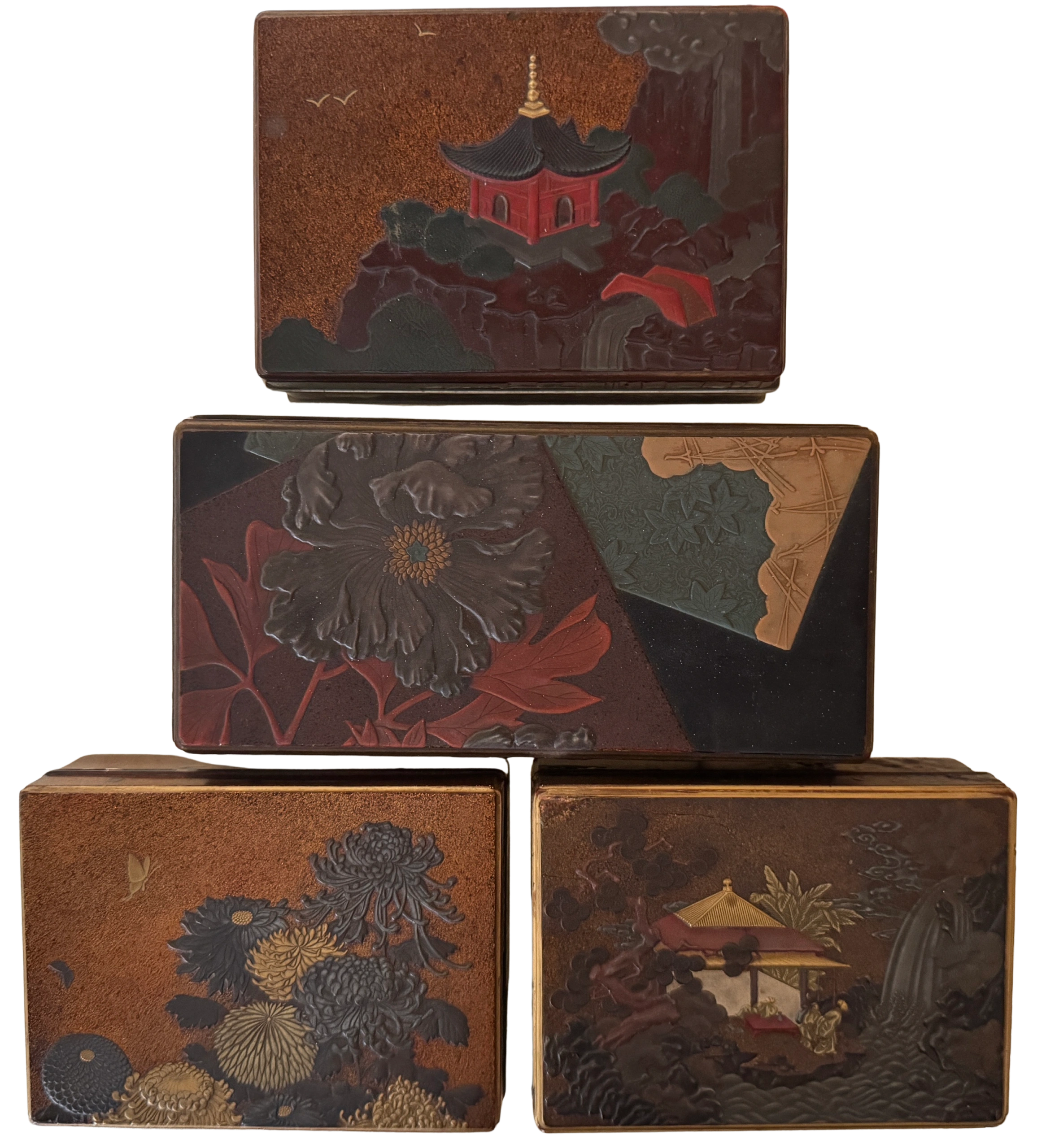
Ritsuo style lacquer boxes with silver mounts by Sempoh. Taisho/Showa era.
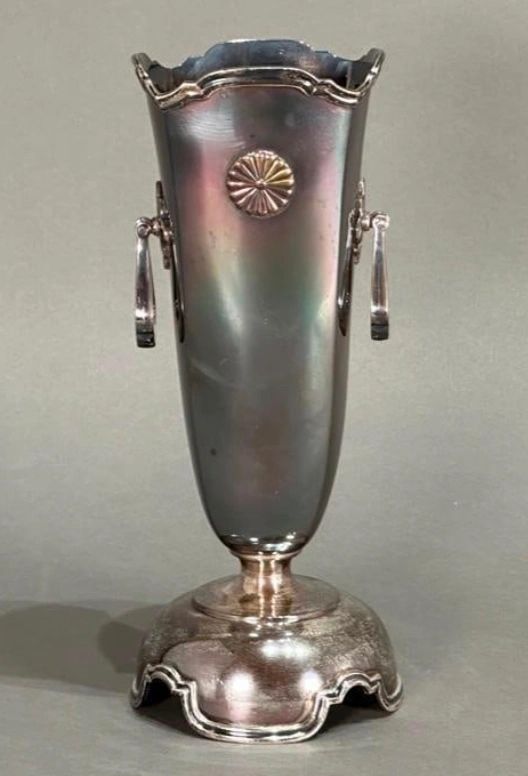
Imperial commemorative silver vase with gold kikugonomon. K.Uyeda, Showa era.
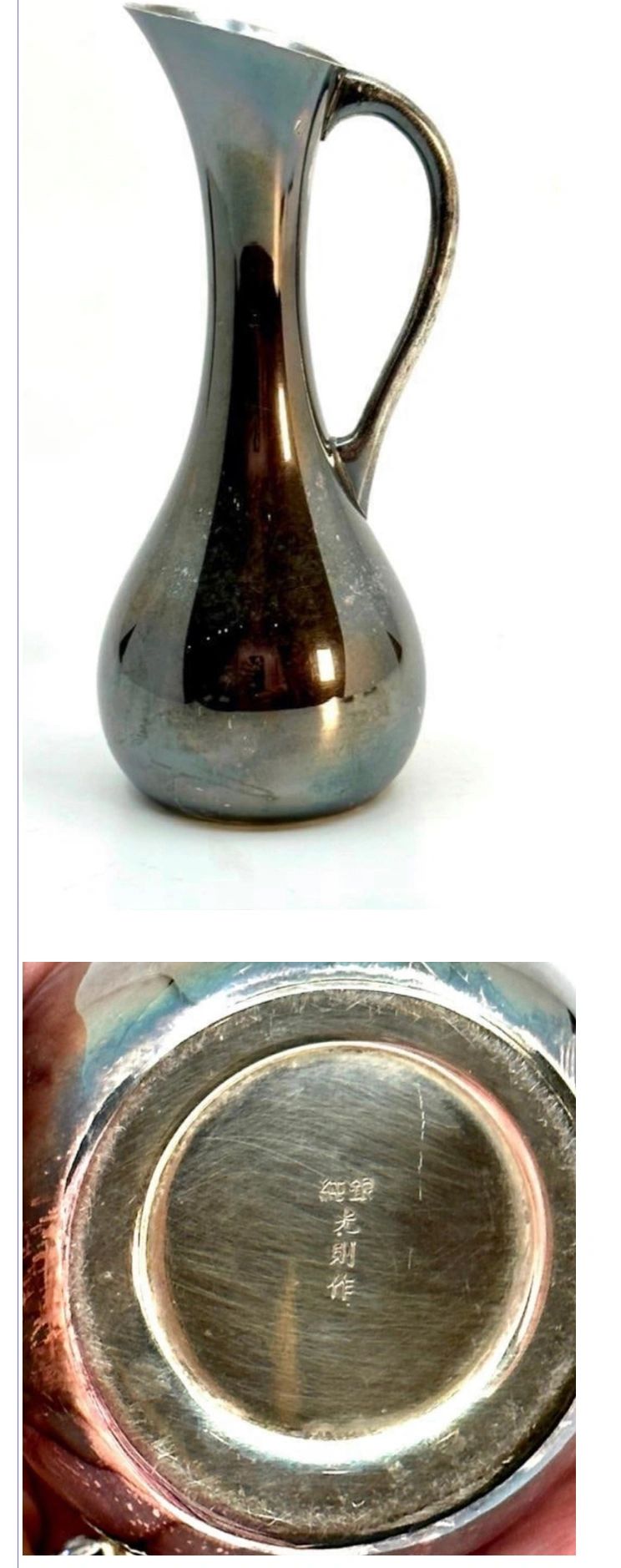
Silver jug by Takenori Obuchi, (Mitsunori), b.1932.
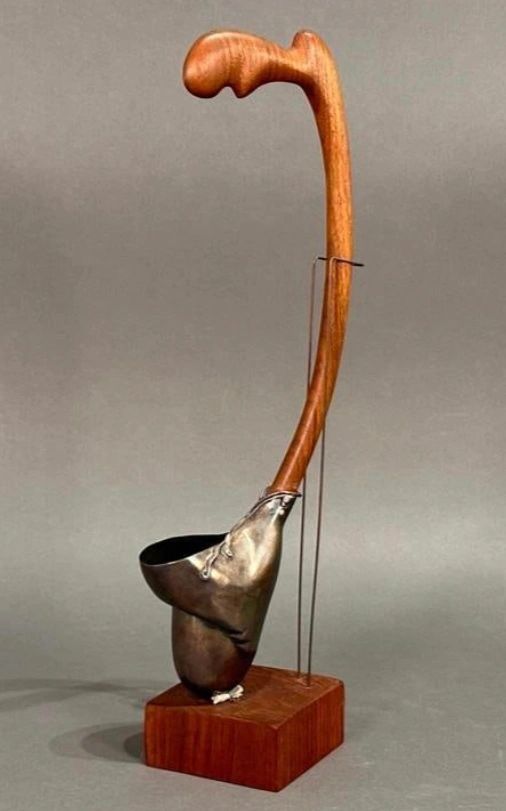
Silver sauna ladle with paulownia wood handle. Art for the sake of Art…🧐
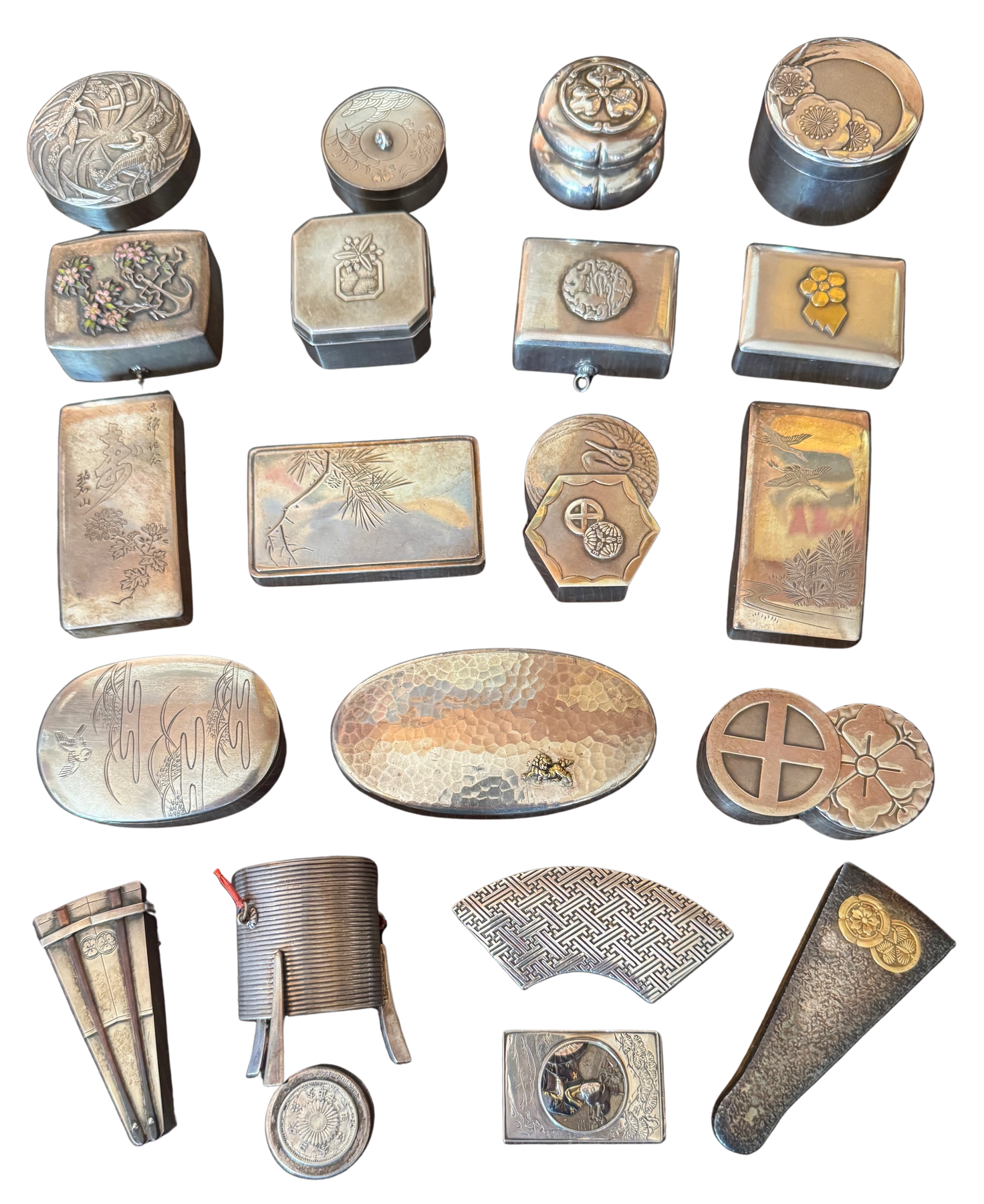
Silver bonbonnieres. Meiji, Taisho & Showa eras.
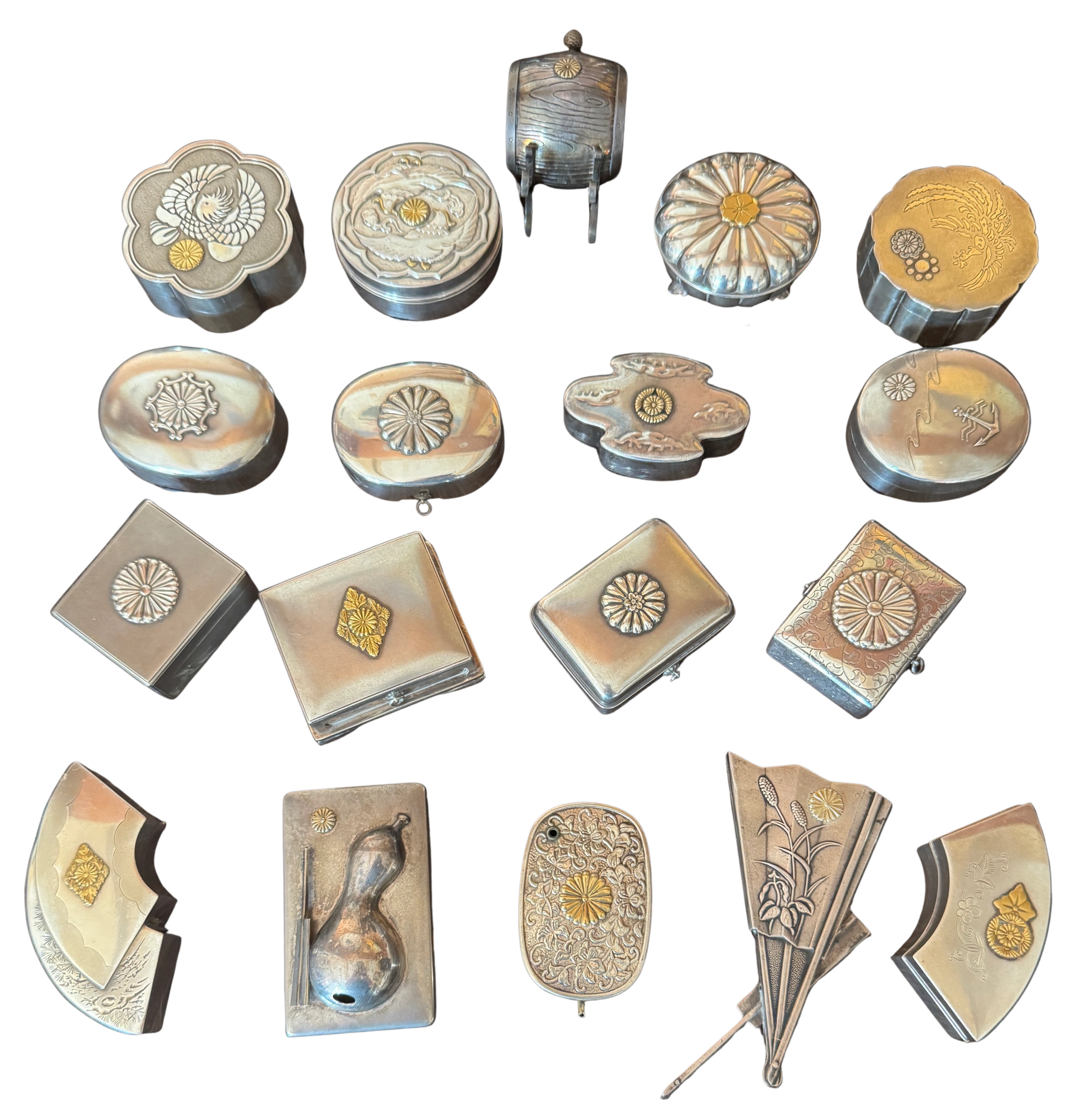
Imperial and Princely House silver bonbonieres. Meiji, Taisho & Showa eras.
Showing 223 works. Additional pieces available by appointment.